Principled Governance or Politics as Usual?

capitol-dome

By Gordon L. Anderson, UTS Class of 1978

GordonUnificationists live in a contemporary culture that champions democracy and instills the idea that politics is about influencing government to provide things or benefits that we desire. Like others in society, Unificationists generally support political parties and special interest lobbies designed to pressure lawmakers into delivering goods and services they believe in.

Politics is War by Other Means

However, “politics” in this sense is the application of “fallen nature” and not of Unificationism. In On War, Carl von Clausewitz described politics as “war by other means.” He meant that people engage in politics to manipulate the government in their fight for control over resources and power, or to gain another benefit for themselves at the expense of society. In this war by other means, people often use the rhetoric of justice and goodness and advocate rectifying the perceived social problem using everyone’s tax dollars. This political behavior is divisive and socially destructive. To the extent Unificationists engage in politics as a form of war, they are at odds with principled governance.

Unificationism is about principles. The main text is the Divine Principle, whose primary hypothesis is that principles underlie the entire created order, and that knowledge of and application of these principles is essential for living a life of happiness. This idea of collective happiness is not unique in political theory. Aristotle began his Politics by stating that the end of politics is human happiness. James Madison, in “Federalist 62,” reaffirmed that the object of government is the happiness of the people. Indeed, Buddha, Confucius, and the founders of the world’s great civilizations sought to explain how people should live and societies be organized in order to be happy.

Principled Governance is the administration of a society to achieve common ends

Any system, whether it is a social institution, the human body, a mechanical machine, an entire social system, or the universe, is governed by principles. When the principles that maintain a system cease to operate, the system breaks down and disintegrates. The design of any system requires knowledge of the purpose for which the system is being created, and the principles necessary for the system to fulfill that purpose.


Continue Reading

Welcome to the World of the Two Position Foundation

thumb_8380_story_large

by Richard A. Panzer, President, Unification Theological Seminary

Richard_PanzerWhen I first studied the Principle in the 1970s, I was struck by its description of the devastating impact of the misuse of love and moved by the possibility of lasting marriages centered on God. When I looked at American society I thought, “all we have to do is to introduce God into the picture, then people could create their own “Four Position Foundations.”

Four decades later, how the world has changed! We now live in a world in which not just the position of God is questioned, but the position of the man is no longer seen as essential either. More and more women are choosing to have a child with no committed father in the picture. In fact, more than half of births to women in their 20s in the U.S. are outside of marriage. This is also the case in many “advanced” countries around the world.

Men are typically seen as the aggressors in intimate relations, but in this case it’s usually the women who are making the decision that their sex partner is not father material. Their thinking seems to be, “good enough to have sex and maybe even create a child with, not good enough to actually co-parent the child.” As described in the book, Promises I Can Keep: Why Poor Women Put Motherhood Before Marriage, these women have decided that their children will do better without their fathers.

I wonder if anyone is asking the children what they think? We know that many children born from artificial insemination urgently want to know who their “father” is. In their simple desire to know who they are and where they come from, they seem to know something that our society has forgotten, their very identity is inextricably linked to the father who gave them half the DNA that courses through every cell in their body.

For children of those fathers not hidden behind a fertility company’s promise of anonymity, bitter questions rise: “Why didn’t my father want to stay? Why doesn’t he care about me?”

Continue Reading

An Inquiry into God as Our Heavenly Parents

Foundation Day

By Tyler Hendricks, Ecclesiastical Endorser, Unification Church of America

dr_tyler_hendricksI recall those boring accounts of the Church Fathers arguing over the Trinity. One of the views was that God is One who appears in different modes—sometimes as Father, sometimes as Son, sometimes as Holy Spirit. It is called “modalistic monarchism.” The view that came to the fore in the West asserted that God is not one person appearing in three modes, but is three distinct persons who are one. The problem with modalistic monarchism, they argued, was that it denied the personhood of Jesus.

How three persons could be one God they left as a mystery. Good for them!

I think that the view that God is our Heavenly Parent, who can appear as Father or Mother, is a repeat of modalistic monarchism. It’s not because I want to uphold the orthodox view of the Trinity that I say this. But I did want to begin by contextualizing the discussion in historical theology, and I do support, by and large, the Divine Principle view that God’s providence worked through the Western Church.

Now, to the main point.

I heard a story the other day on National Public Radio by a bisexual. It was one of their StoryCorps episodes, which are little vignettes of American life. The subject was a person who was born a man, married and fathered a child or children, and then changed his bodily make-up and became a woman. This person recounted how s/he related to the children he had fathered when a man. This person said, “I asked myself, am I their father or mother? I decided just to call myself their parent.”

By the doctrine that God is our Heavenly Parent, this person is the image of God.

This illustrates why I believe that the term “Heavenly Parent” is mistaken.

God as “Heavenly Parent” is androgynous. It is a trans-gendered existence that is neither male nor female in any common sense meaning. I find it hard to relate to such a transformer God.

Continue Reading

Educating the Whole Person: A Unification Improvement

Office training

By John Redmond, Chief Financial Officer, UTS

IMG_9544I spent ten years as a corporate training manager for community colleges.  My job was to go out to industry, large and small, and help design training for manufacturers.  Local manufacturing companies are highly prized as economic development engines.  Every job created by a medical products company for instance, whose customers are national and international, creates five to six other local jobs — teachers, tire salesman and restaurants owners to name a few.  Any improvement in the efficiency or effectiveness of a manufacturing company improves the community around it.

One thing I noticed is that modern companies hire very few people just because they have a strong back or only obey orders.  Karl Marx had a theory that people are just economic animals,  programmable entities that are interchangeable, like light bulbs.  He called it the Labor Theory of Value, and many companies built their success on this model in the 19th and early 20th centuries.  Since then, forklifts and robots have replaced a lot of the strong back, quick fingers work that used to characterize American labor.  Marxists adjusted their theory to include intellectual labor. They said the brain produces ideas like a gland secretes hormones.  This works for engineers, who work with “stuff” and can work alone, but it does not explain the modern creative wave that gave us, for instance, Apple, Inc., or GPS navigation systems.  Successful education in the real world includes creating the conditions that allow a continuous flow of “cool” ideas that can be marketed in “cool” ways and make lots of cash and stock options.

In modern companies, workers get promoted if they are responsible and creative and can play well with others. The creative ideas that a team can unleash often overshadow that of a lone genius toiling away in a lab.

Continue Reading

How Will God and Humankind Build an Ideal World?

Fields-of-Flowers

By Henry Christopher, UTS Class of 1980

Henry ChristopherThe scholarly study of religion and theology helps us to understand concepts of God, as well as beliefs, traditions, institutions, and behaviors of the various world religions. Many of these religions have some concepts about the coming of an ideal world, a “Kingdom of Heaven on Earth.” However, it seems that religious scholars, for whatever reason, steer wide of describing what that world will be like, and how people will transition from this world of suffering to a world of peace and happiness.

Some day it might be interesting to find a graduate level course in a seminary offering an Introduction to an Ideal World. It would have great appeal for someone who has been wondering what life would be like—from a Judeo-Christian point of view—if Adam and Eve had obeyed God, and an ideal world had begun. Is that world still attainable?

The course would be based upon discovering what the nature and character of an ideal human being originally was meant by God to be like.

The ideal human being might be likened to a golden urn, discovered on the ocean floor, and encrusted with so many layers of seashells and sand, that when first found, would be nearly unidentifiable. It would be the work of this course to carefully remove, layer by layer all the debris encrusted over the hearts and minds of fallen humankind, until the original character of the true sons and daughters of God was revealed, and could shine in its natural beauty.

What would “a day in the life” be like, if humans were truly loving, honest, trustworthy, patient, humble, happy, secure, confident but not arrogant, good, moral, pure of heart, and decent? What would the world be like if we lived by the tenets: “Love the Lord your God with all your heart, all your soul, all your strength, and all your mind, and love your neighbor as you love yourself,” “It is better to give than to receive,” or “Live for the sake of others”?

Continue Reading

Using Creativity with Moral Responsibility

18e eeuws orkest

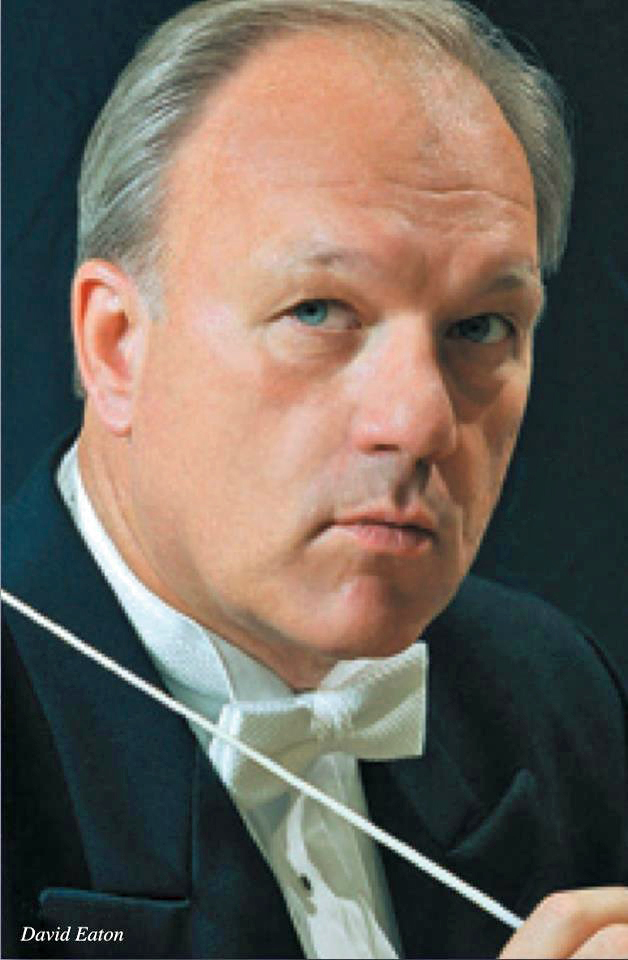
By David Eaton, Lecturer in Music and Culture, Barrytown College of UTS


david_eatonOver the years I’ve occasionally been asked if, as a composer and producer, I’m influenced by the environment around me, or do I attempt to change my environment through my creative endeavors.  The answer is: “Both.” Like any individual, I am affected by the happenings in my life and those experiences will undoubtedly affect my creative endeavors. It’s also true that those of us who are blessed with creative abilities do not create in a vacuum, and as such, that which we create and put before the public has consequences.

The more essential issue is how we use our creativity in the context of creating a culture of peace. As a composer I’m always asking myself if my music will take people to a higher, better place — or not. My responsibility as an artist to my community is something I take very seriously.

American painter, Jack Beal, recently opined: “The Platonic ideal of truth, beauty and goodness is not a bad set of ideals to live by. But where has that gone? For thousands of years art was seen as a source of responsible moral and ethical leadership. Today taking that stance is almost seen as being comic.”

When I read this it got me thinking about Divine Principle, specifically the Principle of Creation and the truth, beauty and goodness paradigm (the “big three” as American philosopher Ken Wilber calls them.) As Beal asserts, in contemporary culture these attributes are no longer given much credence, especially the moral and ethical aspects of art and its influence, and I believe we are socially and culturally poorer as a result. Assessing art from the perspective of the “big three” is not a new concept. The metaphysical aspect of music and art, as well as the moral and ethical dimensions (axiology) has fascinated philosophers and artists going back a few millennia.

Continue Reading

Mind-Body Unity: Beyond an Ethical Approach

kids-playing

By Keisuke Noda, Professor of Philosophy, Barrytown College of UTS

Keisuke_NodaMind-body unity is one of the central concepts in Unificationism. It is often construed within ethical contexts as the control of bodily desires by reason/will, or sometimes as a formation of virtuous character. There is great value in other approaches to mind-body unity beyond the dominant rationalist ethical model. I discuss two valuable ones, the Depth Psychology of Carl Jung, who tackled psychic problems, and from Flow theory by psychologist Mihaly Csikszentmihalyi, a pioneer of positive psychology.

Ethical Approach

Mind-body unity is commonly understood as an ethical issue. The most popular perspective is to understand the unity of mind-body as control of bodily desires by rational understanding of moral principles and/or the will. Faith is often added to enhance moral commitment. When one places the mind-body issue within a traditional ethical framework, one is led to interpret the issue within the framework of dichotomy between reason/will and the rest. The task of “unity” is understood as how to subordinate non-rational elements of the self (bodily desires and emotions) to reason/will. Within this framework, the problem is construed as a lack of or weakness of will or reason. The remedy is consequently understood as having stronger commitment or will and clearer understanding of truth.

However, the biggest problem is this framework itself. Within this framework, love, which is central to the unity of mind-body in Unificationism, loses its core role. Overemphasis of reason/will in dominant ethical traditions tends to devalue love as an “irrational” element that is hostile to reason.

Continue Reading

Towards God’s Ideal for Gender Relations

Foundation Day

by Andrew Wilson, Professor of Scriptural Studies, UTS


WilsonThis article was originally a sermon I gave in February shortly before Foundation Day. I am convinced that proper application of the Principle of Creation will require a better understanding of gender relations and of our relationship to a God who contains both genders within Him/Herself.  A better understanding of gender relations affects applications of the Principle at all levels, from our relationship with God, to building ideal families, and developing paradigms for good governance and peace-building. Nonetheless, many members have been content to conduct their life of faith according to the conventional Christian concept of the Fatherhood of God. Lack of attention to this matter may even be a fundamental reason for the movement’s current difficulties.

 A few days ago, True Mother, Mrs. Hak Ja Han Moon, made a very important proclamation, in which she said that we should not pray anymore to “Heavenly Father,” but to “Heavenly Parent.” There is a profound significance in this for the upcoming Foundation Day, which I want to explain.

Foundation Day is supposed to be the beginning of Cheon Il Guk, the Kingdom of Heaven on Earth. How does the Kingdom come into substantial reality? The Kingdom of Heaven is the family of God, and its citizens are people who are confident in God’s love for them and who love each other with God’s love. We all long for this to become a reality, yet all around us we see brokenness, imperfection and dysfunction. It is hard to find any true examples of the ideal.

Continue Reading

The Era of Applied Unificationism


0_River_And_Mountains

By John Redmond, Chief Financial Officer, UTS

IMG_9544I have been working the last two years to help launch the undergraduate program of the Unification Theological Seminary, Barrytown College.  One of the things I’ve noticed about working with second generation Unificationists is that they have a wide variety of interests, and for most of them, religion is not their #1 interest.

I imagine that 50% of their parents would have identified religion as their top concern; in fact, the first generation self-selected into an intense religious reality when they joined the young Unification Church.  While many first generation hoped that their children would grow up to be super theologians, my experience shows that second generation Unificationists have a normal distribution of interests. This may cause some consternation to their parents. However, they are well equipped to engage society across multiple fields of expertise and to embed unification values in many fields.

From a historical point of view you could say that this phenomenon is similar to the Israelites. The first generation Israelites followed a charismatic figure across the desert at the price of their life, gave up material and political success and chose to live for spiritual values rather than material ones. God did not expect that of their children. He expected them to learn to use money, power and influence to build a substantial kingdom of heaven in the Promised Land.

Continue Reading

Website Built with WordPress.com.

Up ↑