“Leave It to Beaver” and a Family Perspective

Cleaver_family_Leave_it_to_Beaver_1960

by Jeff Kingsley

KIngsley copyMany of us fondly recall watching a TV show called Leave It to Beaver, that ran from 1957-63, and laughing at the antics of little “Beaver,” enjoying the give and take (and teasing) between him and elder brother Wally, while admiring the wisdom of his parents, June and Ward Cleaver. Little did we know that this show, in one sense, held the key to creating the ideal world.  Not that it was perfect or that it can “easily” be applied to the perhaps more complicated world in which we now find ourselves firmly embedded. But the main elements that comprise an ideal family were there, and as Reverend Moon often said, consonant with the great sages of the past, the true society is like an ideal family writ large.

This concept reminds me of a matryoshka doll I purchased when I was in Russia helping with the Divine Principle workshops being held in the Crimea in the early 90s. It consisted of a finely crafted set of wooden dolls of decreasing size placed one inside the other.

Continue Reading→

The Feminine Spiritual Tsunami Headed Our Way

__Adrenaline___by_Surf_Snow_Street

By Tony Scazzero and Jeanne Carroll

Tony 1 W.I.M.G. thumbnail copy_edited-1Jeanne CarrollThe current patriarchal culture as seen in many societies has been perceived by some as the unseen cause of many problems in the world. Societies that have a strong masculine culture are suffering the effects of the imbalance of masculinity and femininity. Although there have been political, military and economic solutions aimed at the problem, has anyone declared that gender imbalance may be the cause as well as the solution to the current crisis?

The empowering of women is a revolutionary idea that has not gotten much traction in many cultures. Paradoxically, true brotherly love is absent when there are no mothers, aunts, daughters and sisters involved. Can a solution to today’s problems be traced back to a gender imbalance that has its cause in the misunderstanding of God’s original design for masculinity and femininity?

Continue Reading→

The God that Failed: When Selfishness is Legislated as Law of the Land

AlanGreenspan

Alan Greenspan, Federal Reserve Chairman from 1987-2006

By Wayne Hankins

HankinsHistory is written from the lives of good leaders with vision and principle, or bad leaders who led their people and countries to ruin and suffering because of their peculiar values, beliefs or ideas they felt were right and true. However, in following their ideal, something far different than they could have ever imagined or wanted came to be. When simply bad or false beliefs are carried to their logical ending, bad things follow. I will discuss the relationship between the ideology of Objectivism as defined by its creator, Ayn Rand, and the economic crash of 2008. I look closely at the steward of America’s monetary and regulatory policies, the Federal Reserve (the “Fed”). To correctly comprehend the workings of the Fed during the last two decades in large measure is to understand the beliefs of its past chairman (1987-2006), Alan Greenspan.

At 18, Greenspan first read Ayn Rand’s The Fountainhead and was immediately hooked on her views of individual rights and their broader expression economically within laissez-faire capitalism. He saw this also as a moral argument against totalitarian communism.

Continue Reading→

“You’re Not Really an Adult Until Your Father Dies”: Reaching the Highest Stage of Filial Piety

By John Redmond

IMG_9544In the current era of the development of our Unification movement, and the primacy of central blessed families, filial piety is an important measure of our behavior and an undeveloped aspect of the Divine Principle.  So what is it and how does it work?

According to Taoism.net:

“Filial piety consists of several factors; the main ideas include loving one’s parents, being respectful, polite, considerate, loyal, helpful, dutiful, and obedient.”

In our American experience, this narrow definition seems like an old-fashioned way of thinking about one’s responsibilities. The Sixth Commandment is “Honor thy father and mother,” but most Christians read that as respect, not worship.  They reserve worship and absolute obedience for the invisible God.

Confucianism does not have the common Judeo-Christian understanding of an invisible personal God. Rather, Confucius emphasized the ethical framework that automatically led to goodness, perhaps the way a good diet automatically leads to a healthy body.  His idea of the “Mandate of Heaven” was meant to occur naturally as people recognized goodness and naturally surrendered to it.

Continue Reading→

The Blind Leading the Blind (or, Life without True Parents)

Detail from “The Blind Leading the Blind” by Sebastian Vrancx.

By Gordon Anderson

Gordon“The blind leading the blind” can be used to describe Western politics and education today. There are, of course, very smart and shrewd politicians or scientists. But, when it comes to knowledge of where we want to go and how to get there, our present culture can be described by this ancient metaphor taught in the Bible, the Upanishads, and Roman classics. As Sextus Empiricus wrote in Outlines of Scepticism: “Nor does the non-expert teach the non-expert — any more than the blind can lead the blind.”

A civilization contains the accumulated experiences of those who have come before, and civilizations continue to adopt new discoveries. However, in the 20th century, the West largely put aside civilizational wisdom, taught by families and religions, and attempted to substitute it with a new-found faith in modern science and the state. The Encyclopedia Britannica exemplified this shift.

Continue Reading→

Moral Autonomy of the Blessed Couple/Family

Family

By Keisuke Noda

Keisuke_NodaThe radical nature of an idea is often exhibited by its power to transform our framework of thinking. As the word “radical” indicates (radix means “root” in Latin), a radical idea requires us to reexamine fundamental presuppositions we take for granted.

One radical concept in Rev. Moon’s philosophy is the Blessed Couple/Family. Marriage is generally understood as a social, religious, and legal union of a husband and a wife, which generates moral and legal obligations between them and their immediate family members. Marriage in the ordinary sense does not imply a change in the relationship between married individuals and God. Even within most religious traditions, which recognize marriage as sacred, a marriage blessed by God (or gods) does not alter in any way the relationship between human beings and God. Marriage is nothing more than another happy life event.

Continue Reading→

Time for a New American Unification Renaissance

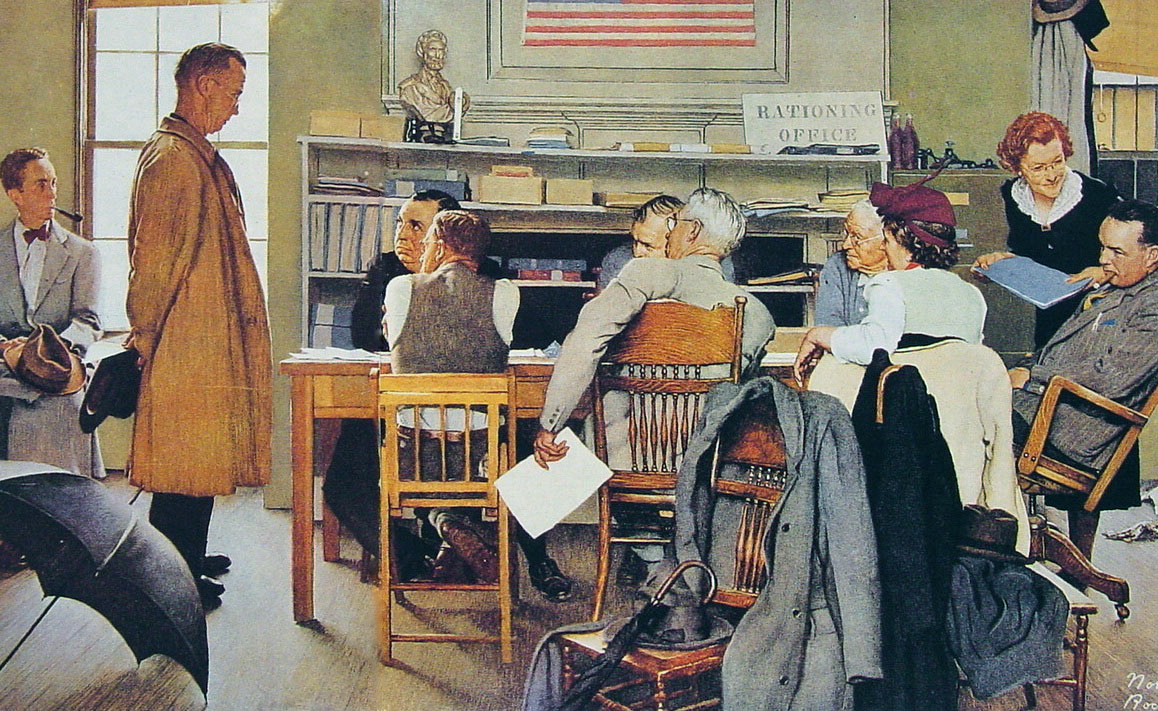
visits-a-ration-board-1944_edited-1

By John Redmond, Chief Financial Officer, UTS

IMG_9544I remember when we got the direction to return to our “hometowns” and make a tribal messiah foundation.  Looking around the room, one sister spoke for many when she said, “I grew up in five or six towns and my parents were divorced – where do I go?”

America has been the home of the seekers of new opportunity and new adventures since its founding.  Early settlers came for either God or gold, and sometimes both.  The waves of immigration that have filled America with every language and color have been good to America. The bravest and brightest often end up here as opposed to staying in a confined homeland of limited possibilities.

Continue Reading→

Living in the Kingdom of Heaven on Earth

nature-landscapes_hdwallpaper_in-heaven_4252

“But seek ye first the kingdom of God, and His righteousness; and all these things shall be added unto you.”   Matt. 6:33

“Now is an amazing time, when human beings in their everyday life can experience the absolute realm of God… People will increasingly be able to perceive God. They will perceive the spirit world and the works of spirits… [P]eople will undergo definite changes to their character and become true individuals. They will no longer be self-centered in relating to greater wholes in the universal order of being. They will learn to be altruistic, living for the sake of others.”  

 World Scripture and the Teachings of Sun Myung Moon, Feb. 6, 2004, p. 25

by Henry Christopher, UTS Class of 1980

Henry ChristopherI joined the Unification Church three times before I decided to stay: in Boston in June 1973; in New York City just before Father’s speech at Carnegie Hall that September; and lastly, at Dr. Edwin Ang’s center in Worcester, Massachusetts in spring 1974.

I left the Church even though I believed the Divine Principle and that Rev. Sun Myung Moon was the returning Christ. What drove me away was the chaotic way in which the Church functioned, which often resulted in sacrificing a loving and spiritual atmosphere inside the movement that was proclaiming True Love.

Over the fall and winter of 1973-74, while I worked in Florida, I began an intense study of the Bible and the lives of Jesus and Saint Francis. I wanted to become like them—to feel that same love from God that they felt, and to love others as they could. I was inspired by Jesus’ teaching that “the Kingdom of Heaven is at hand.”

By spring 1974, I had a showdown prayer with God on the beach, and made a commitment to dedicate my life to Him, and to start by returning to the Unification Church and to give it my wholehearted effort for three months, and see where God would lead me.

I worked very hard at fundraising, struggling to get my totals up each day, often with tears in my eyes at the end of the day. Dr. Ang then sent me to 100-Day Training at Belvedere, and almost before we could unpack, we went to Barrytown to prepare for the Three Day Prayer and Fast that was to take place on the steps of the Capitol Building on July 22. It was almost three months to the day that I came back to the Church.

The next morning at Barrytown, I suddenly saw the sun rising over the trees — a huge brilliant orange ball. My first thought was, “God, you have made such a beautiful world for us to live in which we love, but it is sad that we don’t feel thankful to you for it.”

In a flash, God poured pure love down my entire body from the top of my head right to the bottom of my toes. It literally washed away my sin, fears, and sadness—everything. In an instant, I was transformed. I felt so free and joyful I couldn’t believe what happened to me. I felt love for everyone and so happy to talk to anyone. No bad feelings or thoughts came to me the whole day on the trip to Washington and I went to sleep that night feeling wonderful. I thought this must be what it feels like to be a perfected individual of love.

Continue Reading→

Is Russia More Aligned with God’s Will than the United States?

aa_picture_20130917_631451_high-jpg20130920150203

By Michael Mickler, Professor of Church History, UTS

Michael_MicklerAnyone reading the news over past months cannot fail to notice that Russia has asserted itself in significant ways on the world stage. Some of its actions, such as sheltering former NSA computer analyst Edward Snowden, ran counter to American interests and prompted angry protests against America’s surveillance programs. Other actions, such as its intervention in Syria, helped the United States avoid a possible war, at least for the present. This article attempts to sort out these actions and others in light of what Unificationists would interpret as God’s will.

Rev. Sun Myung Moon declared the United States is the “elder son” nation in 1998. Most Unificationists understand this to mean that America is to be a model for the rest of the world, manifesting righteousness, upholding civil and religious liberties, and sacrificing itself or at least serving humanity. These ideals resonate with longstanding views of the United States as a “redeemer nation.”  America was great, Alexis de Tocqueville wrote, “because America is good.”  American democracy was, in Lincoln’s phrase, “the last best hope of earth.” In the 20th century, the U.S. saved the world from the twin evils of fascism and communism. In the process, it became the world’s lone superpower.

The idea of the U.S. as the world’s sole superpower seems almost quaint today, barely more than a decade into the 21st century. China has risen as a formidable competitor, militant Islam is on the march, North Korea regularly threatens the U.S. with nuclear weapons, Syria already unleashed chemical weapons, and America is not yet disengaged from wars of attrition in Iraq and Afghanistan much less from a global war on terror.  Internally, America is divided, mired in a government shut-down and debate over paying its debts. There is little question that Americans feel less secure today than at the turn of the century.

Many factors, both foreign and domestic, have hindered the United States in exercising its “elder son” role. However, two stand out.  First, U.S. leadership, especially since 9/11, has incorrectly interpreted the doctrine of American exceptionalism. Going back to the Puritans, the likening of America to “a city on a hill … a light to the nations” implied that it was the world’s great exemplar, the fullest embodiment of freedom, self-government and the rule of law. However, during the first decade of the 21st century, American exceptionalism has been reinterpreted to mean the United States was “above” or an “exception” to the law, specifically public international law, and privileged to act unilaterally.

Second, Americans have incorrectly interpreted freedom.  Again dating back to the Puritans, U.S. civil liberties have been securely anchored within a compass of moral values and the public good. America was great because she was good. However, in contemporary American society, freedom has come to mean the freedom to do most anything one wants so long as it doesn’t interfere with anyone else’s freedom to do most anything they want. As a consequence, the United States has become identified with moral decadence and individualism.

Continue Reading→

Website Built with WordPress.com.

Up ↑