Selfishness: The Greatest Challenge of the 21st Century

toot_c08b536e0c

by Bruce Sutchar

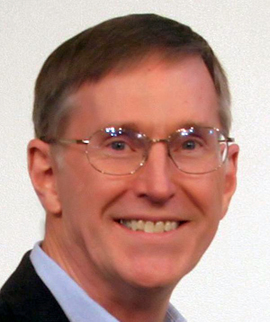
bruce_sutcharRev. Sun Myung Moon has always maintained that truly the greatest revolution in the world is the one from selfishness to unselfishness.  Likewise, nearly every spiritual teaching has always dealt with the idea of transcending the self and being one with the universe.  From Buddha, Lao Tse and Jesus, to Eckhart Tolle, Byron Katie, and many of today’s modern writers, all have focused on this critical point. In modern psychology, Sigmund Freud and Carl Jung also wrote of the importance of the self-centered ego in explaining our everyday actions.

Jesus taught it is better to give than to receive, but for most of us, this is little more than a nice phrase to quote—one that everyone agrees with, but few try to observe.  Some spiritual disciplines even equate our condition to having a raisin heart—one all scrunched up but with minimum capacity to give and receive love.  After we marry and start having children, it finally becomes opens up, when we actually experience more joy watching our children open their Christmas presents than our own.

Each of us has only one pair of physical eyes.  These eyes see the world from our own point of view.  The Divine Principle teaches that one of the four fallen natures is seeing only from our own point of view.

Continue Reading→

Challenges of Life: Why and How?

mountain-climbing-wallpaper-2

By Keisuke Noda

Keisuke_NodaHuman life is enigmatic. A variety of challenges falls unexpectedly on an individual and life can seem absurd. There are religious and scientific explanations, but we still wonder: Why? How do we make sense of the challenges we face in life?

This article attempts to shed light on this extremely complex problem by answering the questions of why we have challenges and how we can cope with them.

The most common approach to challenges in Unificationism is based on the concept of “indemnity.” The underlying thesis of this model is that challenges are “caused” by sins, evils, and problems from the past. Other religions also use this sin-redemption approach to challenge.  This model is one that looks backwards in time, but is this retrospective approach the only model that Unificationism offers?

I suggest that a model based on the Unificationist concept of the “original human nature” sets out a forward-looking model.  I argue that human life is “originally” designed as challenge-and-response.  In other words, some challenges (not all) are an intrinsic part of life.

Continue Reading→

God’s Original Design for Human Sexuality

golden_rings-1280x1121

By Jim Stephens

Jim Stephens_edited-1I’m almost 65, but many tell me I look very young for my age. Probably the major reason for this is I have been blessed with a wonderful wife. She understood from the beginning that one of the basic emotional, mental, and physical needs of a man, husband, and father is regular sexual relations about three times a week. And we are still doing it.

I studied engineering in college and I like things that are practical and down to earth. I encountered the revelations of Rev. Sun Myung Moon when I was 24. Over the last 40 years, I’ve had profound spiritual insights and experiences with God. For five years, I co-led with my wife the Blessed Family Department and studied all about marriage enrichment and research. More recently, I became a certified practitioner of an energy healing technique.

Recently, three men revealed to me in brief conversations that they wanted more sex with their wives. Then the pieces began falling into place and a strong impression came over me to write on this topic. Brothers and sisters could be so much happier, joyful, and fulfilled in their marriages than they are. The understanding that God “downloaded” to me I’m calling “God’s Original Design for Sex: Three Times a Week.”

Continue Reading→

The Providential Necessity of “Open” Blessings

intimacy-in-a-crowd-628x432

By Michael Mickler

Michael_MicklerUnificationists would do well to review accounts of Christianity’s rise, particularly the role of inter-marriage in its penetration of the Roman Empire.

One astute analysis is that of Rodney Stark, an eminent American sociologist of religion, who distinguishes between “primary” and “secondary” conversions in his Rise of Christianity: How the Obscure Marginal Jesus Movement Became the Dominant Religious Force in the Western World in a Few Centuries (1997) and The Triumph of Christianity: How the Jesus Movement Became the World’s Largest Religion (2011).

According to Stark, “In primary conversion, the convert takes an active role in his or her own conversion.” Secondary conversion, he says, “is more passive and involves a somewhat more reluctant acceptance of a faith on the basis of attachments to a primary convert.” Agreeing to “go along” with one’s spouse’s faith is an example of this.

Based upon this distinction, Stark argues that exogamous marriage (with pagans) and secondary conversions were “crucial to the rise of Christianity.”

Continue Reading→

God as the Heavenly Parent of Heavenly Father and Heavenly Mother

sun-rays-coming-out-of-the-clouds-in-a-blue-sky-wallpaper_edited-1

By Ye-Jin Moon

Note: This is an adaptation of a more detailed paper written for “The Unification Movement” course (LTR 5151) at UTS. Ye-Jin Moon consented to have an abridged version published on the AU Blog.

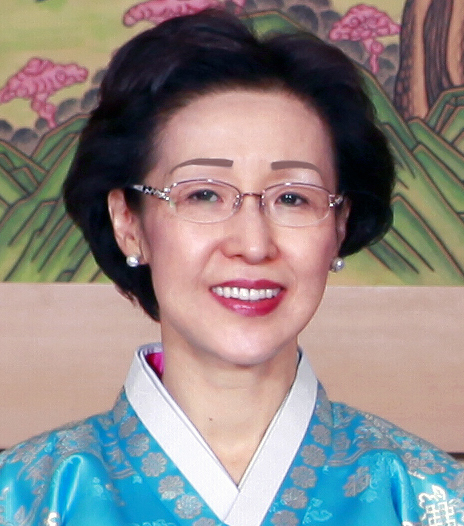
Ye-jin MoonOn January 7, 2013, True Mother made a truly momentous and historical announcement that from that date forward we in the Unification Movement (UM) should be addressing God not just as Heavenly Father, but as “Heavenly Parent,” which necessarily implies that God is equally Heavenly Father as well as Heavenly Mother.

In the UM, it had been customary to address God in the masculine as Heavenly Father, mainly because of the influence coming from the Old and New Testament Ages when God was regularly viewed in the masculine. However, if we are now living in Cheon Il Guk or “God’s Homeland,” the very first issue we need to address is who God is or why God is the Heavenly Parent of Heavenly Father and Heavenly Mother (HP of HF/HM).

Continue Reading→

My Neurons Made Me Do It: Neuroeducation at the Intersection of Religion and Science

brain

By Kathy Winings

(This is an excerpt from the full 2011 article published in the Journal of Unification Studies)

kathy-winings-2The cornerstone of the Divine Principle is its emphasis on the original ideal of God and the subsequent ontological understanding of men and women. The first chapter outlines the basic principle that guided the creation and interrelatedness of all life forms with God and provides a clear description of our ultimate purpose of life as God originally intended. An important component of that principle concerns the description of human beings as having a spiritual body and a physical body. Divine Principle further explains the process of growth and development for human beings as envisioned by God and describes how and in what way these two “bodies” interconnect.

Continue Reading→

Movement, Church or Business?

Direction-road-maze

By John Redmond

IMG_9544There is an old movie called The Poseidon Adventure, where a passenger ship has an accident and capsizes.  The passengers are all freaked out and although there is trapped air to breathe for a while, everything is upside down and all the passengers have different ideas about the best way out though multiple, dark, inverted passageways. Groups of them argue and head off in different directions, most coming to a cold and lonely end.

Feel a shiver?

Our organization is heading off in many directions. Some want to build churches along the Christian “praise church” model, with home churches becoming traditional churches becoming megachurches.  Others produce banquet events, seeking to publicize aspects of Unification values.  Still others have gone to the business world seeking to make a foundation for a future time when the money will be spent well.

Continue Reading→

The Economic System in Cheon Il Guk

world-economy

By Hideyuki Teshigawara

Teshigawara_edited-1As far as I know, there is no one who can explain the concrete system of Cheon Il Guk. But then is it possible to realize something without any clear vision and goal? Even if we have a clear vision and goal, it may be difficult to realize Cheon Il Guk.

Obviously, Cheon Il Guk is not the nation that can automatically be built by God’s miraculous power. The ideal of interdependence, mutual prosperity and universally shared values should be established through cooperation between God and human beings. It is wrong to think that the concrete plan for the society of Cheon Il Guk would be given by Rev. Moon or God unilaterally.

Regrettably, even inside the Unification Movement, a large number of people are reluctant to establish a concrete system for Cheon Il Guk. Their main insistence is that if the ideal world consists of “original” people (persons without fallen nature) and ideal families, the external structure will not be so important. However, it is a naive way of thinking that “original” people will do well whatever the system.

Continue Reading→

Faith and Giving

Rev. Sun Myung Moon 

By Bruce Sutchar

bruce_sutcharJesus taught us that it is better to give than to receive.  It’s hard to really believe this until we ourselves have children.  Then we realize at Christmas that it is more joyful to watch our children opening their presents than to open our own.  But there is a deep connection between giving and faith.  It doesn’t work if we give gifts in hope or expectation that we will receive something in return.

In summer 2012, I was given the blessing of going to a seminar in Korea.  On the very first morning, Rev. Sun Myung Moon spoke for about nine hours.

Mrs. Moon tried several times to get him to stop.  She explained that many of the guests had just arrived the night before, that they had not gotten any sleep or that they had not eaten since their last meal on the plane.  Rev. Moon could not be dissuaded, not even when Mother Moon asked him to meet her at the boat dock (an obvious ploy).  He said that if Mother Moon wanted to see him, she should come back to the hall where he was speaking.

Continue Reading→

Website Built with WordPress.com.

Up ↑