K-Dramas and the Global Reach of Korean Popular Culture

My_Love_From_Another_Star

By Mark P. Barry

Mark Barry Photo 2Unificationists were among the first binge-watchers in the world. Well before our era of watching multiple episodes of a previously aired TV show, many of us became consumed with enjoying Korean historical dramas (saeguks) at night. A lot of us started with DVDs of episodes of Jumong (whose lead actor met with Reverend Moon in 2007), and followed it up with Hur Jun, Jewel in the Palace or the modern romance, Winter Sonata (filmed at the Yongpyong ski resort). Amazingly, compared to binge-watchers of American television, we enjoyed it all even despite having to read subtitles since K-dramas are in the Korean language. These dramas typically were 20, 50, even 80 or more episodes long (many “seasons” of a U.S. drama are just 13 episodes).

For many Unificationists, our enjoyment of a steady diet of Korean historical dramas began six to eight years ago. If we couldn’t borrow the discs, sometimes we could find a show streamed — often in several 10 minute segments — from various transient websites. Real enthusiasts would learn how to download, through peer-to-peer sharing, “torrents” of episodes of dramas we wanted from fans who uploaded them for other fans. Ad hoc groups of English-speaking Koreans would create often high-quality subtitles for the original episodes so that non-Koreans could understand what was being said.

For Unificationists, above all, the reason to watch episode upon episode of Korean historical dramas was because of the heart expressed in the ways people cared for one other. It seemed that especially in Korea’s traditional culture, we could see a more idealized form of how people could relate. These drama episodes certainly had good guys and bad guys, and plenty of demonstrations of utmost loyalty and filial piety, but they also had real heart – the kind we would be hard-pressed to find on American television.

The irony is this mini-phenomenon among Unificationists, Western and Japanese, foreshadowed the growing phenomenon of the popularity of K-dramas not just throughout Asia but globally, including the United States.

Continue Reading→

The Glue-Like Nature of Evil: How Can an Innocent Girl Torture Hitler in Hell Without Being There Herself?

quick-sand-1_edited-1

By Larry Moffitt

Larry_Moffitt_edited-1This topic is central to human happiness. A couple of “givens” obvious to you, but which I have to insist upon when speaking to my glitterati ca­fé society friends, is that when people die they don’t just go poof. They still exist in some form. Their conscious spirit lives on some­where else. Some take their earthly baggage, and the worry lines on their faces with them, while others are able to put the past behind and start over.

The image of people sitting around on clouds, playing harps, is as clichéd as cops in donut shops, and I don’t expect to see that there. I think people have assignments and real work to do in the spirit world. They roll up their ectoplasmic sleeves and start taking names.

One of the most interesting dead people I know is Adolf Hitler, the pos­t­er child for evil, a man so wicked that today it’s against the law in Ger­many and Austria to have Hitler as a family name. They re­tired his jer­sey, so to speak.

I had read an article written by a man, Dr. Lee, who had died and was ap­par­ent­ly communicating via an earthly medium with some re­cog­niz­ed ability. He had been a scholar in his earthly life and had a general rep­u­ta­tion of being truthful and trustworthy. In his messages from be­yond, he said he had been assigned to visit all kinds of peo­ple and talk with them about their lives, what they did right and wrong, etc., and then report back to us, the so-called “living.”

I acknowledge that some people (but surely not you, gentle reader) don’t believe in the existence of a spirit world, and therefore don’t buy in­to the notion that spiritual communication is anything but bogus. Oth­ers believe everything.

Continue Reading→

Anger and Our Modern World

Road rage

By Bruce Sutchar

bruce_sutcharAs we grow into adulthood our adolescent anger subsides beneath our productive lives, but at some point it could begin to rear its ugly head once again. One day you just lose it — you start yelling at a clerk in a store, something you had never done before. Then you begin yelling at people on the phone (like computer repair people) and your kids begin to wonder why you are always yelling, on the phone or at their mom and them.

Some people get continuously frustrated driving and began to develop anger for people who, for example, drive slowly in the left lane. They would drive by them very closely in the right lane and give them a dirty look and sometimes even slow down in front of them until they moved into the right lane. At night some even turn on their bright headlights from behind until the other car finally changes lanes.

Most of these people already had college or even graduate degrees. None had ever gotten into trouble before the above incidents either as youths or as adults. So why all this anger and detrimental behavior?

What is anger? It can be hurt or frustration at not being able to get one’s way. Psychologists say that when a man is hurt he expresses anger and when a woman gets angry she expresses hurt.

Some people develop different levels of what is called a “Don Quixote Complex.” That is, they think that they can change someone else’s behavior. In reality, the only thing that they can even possibly change is maybe themselves. Some people arrogantly think the world should acquiesce to their needs and desires while others narcissistically believe somewhat similarly, that the world revolves around them.

Divine Principle teaches some very simple lessons. Terms like “love your enemy,” “love your neighbor,” “live for the sake of others,” and “Why do you see the speck that is in your brother’s eye, but do not notice the log that is in your own eye?” (Matt. 7:3)

Continue Reading→

“The Hundred-Foot Journey”: Food for the Soul

Film Review The Hundred Foot Journey

by Kathy Winings

kathy-winings-2An old adage used to be that there were two constants in life: death and taxes. For the 21st century, it seems that we have two new constants: cultural conflict and food. The news is replete with stories of the latest cultural clash, whether it is Palestinian/Israeli, Black/White, Muslim/Christian, Ukraine/Russia, and on and on. There seems to be no end to the cultural conflicts.

Then there is food. Food plays an important role in our lives. The popularity of top shelf cooking shows attests to this point. Food sustains our life, it comforts us during stressful or difficult times and it brings people together. It certainly isn’t by accident that food has played an important role in Christian ministry and spiritual life. Whether it is the feeding of the 5,000, the Last Supper with the disciples, or Holy Communion, food has been intimately connected with worship and liturgy. This is also true for other faith communities. Food’s ability to reconcile humanity — whether to God or with each other — and to heal our emotional and spiritual wounds is well understood.

This is what makes The Hundred-Foot Journey, based on a popular novel by Richard C. Morais, such a powerful and inspiring movie. Produced by Steven Spielberg and Oprah Winfrey, and directed by Lasse Hallstrom (The Cider House Rules; Chocolat), The Hundred-Foot Journey presents the challenges of getting along in our multicultural world and how food can be the vehicle for reconciliation and forgiveness during times of conflict as it focuses on the dynamic of a family from India and a French restaurateur.

The Kadam family business is food. The second son, Hassan, brilliantly played by Manish Dayal, is singularly blessed with a gift for cooking, a gift he inherited from his mother. Hassan is just beginning his training as a chef when his mother is tragically killed during a riot that also destroys the family’s restaurant. Having nothing left, the Kadam family leaves India and resettles initially in Great Britain before finally settling down in a small village in the south of France.

Continue Reading→

What is “Attendance”? Musings on a Core Unificationist Practice

76152-Korean-Temple-1920x1200-Wallp

By Andrew Lausberg

75995_459821110372_999357_nAccording to the Unification Principle, the Completed Testament era is the one in which human beings are to resurrect both spiritually and physically, justified by attendance. As one of the fundamental concepts of the practice of Unificationism taught by Reverend Moon, a clear understanding of “attendance” seems critical.

When looking at the question “What is attendance?”, one has to factor in Korean and, to a lesser extent, Far Eastern culture. On the other hand, Korean culture alone cannot provide a complete answer to this question because it has never yet risen to the level of a Completed Testament culture. The answer must bring together Completed Testament elements (as introduced through Father Moon, e.g., the supremacy of true love, purpose of creation, human responsibility) with the Korean context (Confucianism, Korean history, Korean character and environment).

In Korean, the word we use to signify attendance is 모심 — [moshim] (attendance, pronounced “moe + shim”) or 모심생활 [moshim saeng hwal] (attendance life/practice). Moshim derives from the verb 모시다 [moshida], which is related but not identical to the Japanese concept of [haberu] 侍る. The cultural interpretations of Korean and Japan are different when dealing with “attendance.”

Considering Korean culture, we should recognize that it comprises both “fallen” aspects, which we should avoid, and “original” (unfallen) elements we should learn to recognize and embrace. Unfortunately, just as is the case with Unificationists from other cultures, Korean Unificationists can also fall into cultural traps. A fallen expression of “attendance” in the Korean mode would be, for example, the expression of false loyalty, or the giving of reports designed to make Father (or the leader) “happy” but which, in fact, misrepresent how things actually are. This corrupted form of attendance is the semblance of loyalty at the cost of true inner service. It pays lip service with the primary goal of maintaining one’s position or perks, or avoiding difficulty.

Continue Reading→

Let’s Hear It for the Dysfunctional Family

august-osage-county-review-L-77TmxD

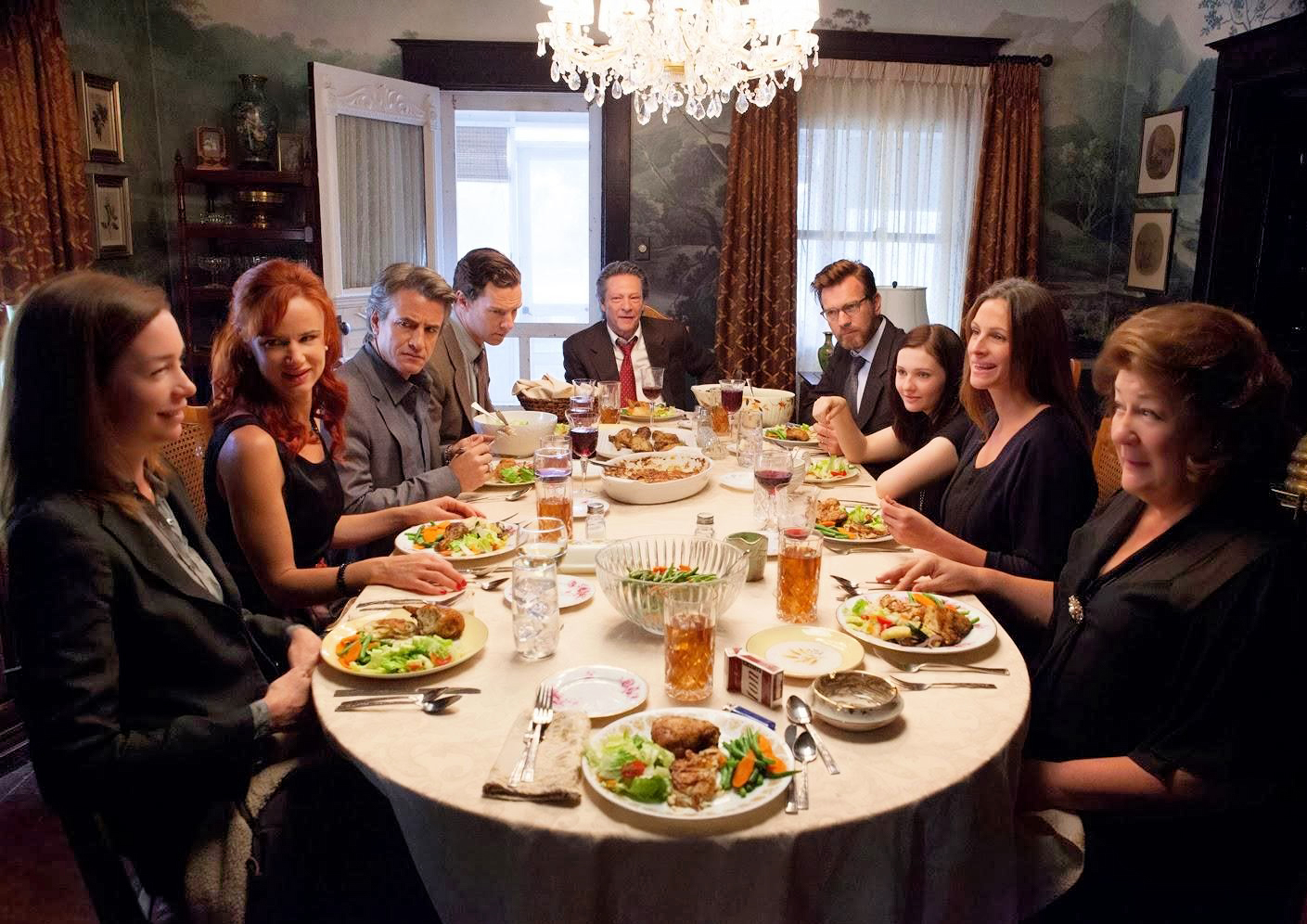
A review essay of the 2013 films “American Hustle,” “August: Osage County” and “Blue Jasmine.”

By Kathy Winings

kathy-winings-2If it were not for animated films, I’m not sure our children would see anything in today’s popular media that would recommend the beauty and value of marriage and family. Too many films that received Oscar nods this year portrayed marriage and family as either a lost cause or totally dysfunctional. I’m referring to three where either the film or its lead actors were nominated for the 2014 Academy Awards: “American Hustle,” “August: Osage County” and “Blue Jasmine.”

The acting in each was Oscar-worthy. However, anyone watching those films would come to the conclusion that the American family is lost forever and there is little hope of anyone reclaiming the ideal God envisioned for marriage and family.

Set in the 1970s, “American Hustle” portrays a con artist, Irving (Christian Bale), and his girlfriend, Sydney (Amy Adams), who spend their days setting up Ponzi and get-rich-quick schemes. Unfortunately, they get caught in a sting operation led by an FBI agent (Bradley Cooper). To avoid charges, Irving suggests he can help the FBI set up a major undercover operation that will expose a mafia boss and local politician. An elaborate operation is set up to catch the newly-elected mayor of Camden and a major mafia boss in the act of defrauding the citizens of New Jersey. There are plots and sub-plots with so many twists that the viewer isn’t quite sure until the very end who is crooked, who isn’t, who will end up in prison, and who will walk away.

But the sub-theme running throughout the film is the relationship between Irving, Sydney and his wife Rosalyn (Jennifer Lawrence) and young son. Irving views himself as a good husband and father, despite that he’s a con artist and has a mistress.

Continue Reading→

Lineage and God(zilla): 60 Years of a Film Icon

godzilla-2014-movie-still-04-27_1

By Andrew Stewart

(Note: This film review contains spoilers)

AndrewStewartThe newest Godzilla reboot starts with a nuclear bomb, a ridge of spines in the azure waters of the Bikini Atoll, and a clever retelling of some of the most painful parts of human history. Expectations are set high at the start of the movie with bits of nuclear testing footage interspersed with “secret documents” that turn into credits. An organization named Monarch, that was part of the movie’s viral marketing campaign, is revealed in snippets and glimpses. “Godzilla” gets the plot underway with a panoramic shot of a beautiful unnamed Pacific island, and an introduction to the bones of a giant prehistoric being.

It should be easy to figure out where the plot goes in “Godzilla;” it takes a backseat to the action and is rather simple with a heavy focus on wide shots of monsters, destroyed military bases, and burning cities. Humans unwittingly cause their own problems in the film by waking up monsters that should have been left alone. The militaries are very ineffective when dealing with the beasts and of course the brunt of the battle lies in Godzilla’s hands. It’s a common trope in Godzilla films that the monsters themselves represent nuclear power, but they are portrayed more as a force of nature rather than malicious beings, and there is an eco-friendly message that the monsters are merely seeking to restore balance. Perhaps the best feature of the giant monsters is that they absorb radiation, thus, a relic of the old Cold War fear of nuclear winters and radiation poisoning is dispelled by the very beings that come to destroy humanity.

Dr. Ishiro Serizawa (played by Ken Watanabe) basically reveals the message of the movie, that Godzilla himself is a balancing force, and humanity’s fate lies in his hands: An angry reptilian guardian angel who does not mind wrecking cars and knocking down buildings like bowling pins.

Continue Reading→

“Heaven Is for Real”: Profound Truths Are Not Complicated

Greg Kinnear

by Kathy Winings

kathy-winings-2Hollywood these days is rolling out religiously-themed movies for the big screen with marquee name actors. So far we have seen Son of God, God’s Not Dead and Noah.  Exodus: Gods and Kings, starring Christian Bale, will be released in December. Heaven Is for Real is the latest in this line-up of the faith-based genre.

Based on the bestseller of the same title written by Todd Burpo with Lynn Vincent, the film focuses on the experiences of Burpo, a Wesleyan pastor in a small Nebraska town and his four-year-old son Colton, who has a near-death experience while he is undergoing emergency surgery for a ruptured appendix.

Colton’s experience is unusual in that he does not die during surgery, which is the case with most near-death experiences. On the operating table, Colton sees himself being operated on and is then escorted to heaven by angels where he ultimately meets Jesus. Jesus then proceeds to take him on a quick tour, introducing him to some of Colton’s relatives including his great-grandfather and older sister who died in the womb. As Colton describes it, heaven is more beautiful than anything he has seen before. The remaining focus of the film shifts to his father’s struggle to make sense both personally and theologically of his son’s experience. This in turn has a serious impact on Todd’s congregation.

The movie paints a picture of a typical Midwestern farming community in which everyone, the Burpos included, is struggling to make ends meet. Todd pastors a small Wesleyan Church, but like so many contemporary churches, he must maintain a full-time outside job in order to take care of his family.

Continue Reading→

“Noah”: Reinterpreting Essential Truths in a Modern Context

noah7565775

By Andrew Lausberg

AL headshot 8_edited-1Since its release, the film “Noah” has generated a wide variety of responses. Reviews range from declarations of triumph to the dismissal of abject failure. This is not so unusual, but it does bring into focus the contrast between perspectives that prevail over religious topics in the world today.

As Unificationists, we have a strong desire to see enlightenment in the world. We know there is a much deeper level to God’s message to the world as it has been presented in history over millennia. We also know God is alive, that God can speak, and that the spirit world is constantly active in its interactions with humanity.

What can we learn from the film “Noah”? The recent film review by Andrew Wilson points directly to some potential learnings, in his reflection on the limitations of patriarchal religion and how the film highlights these. From a slightly different perspective, “Noah” also points the way to how Unificationists might present the value of the Principle in ways the current generation can accept and benefit from.

As a film, “Noah” is powerfully appealing in presentation. The special effects are top-notch, the location work and settings are spectacular, and the acting capable. There are many elements that reflect unique, cutting-edge forms of creativity, which in and of themselves are highly attractive to today’s generation (Gen Y and Gen X).

Continue Reading→

Website Built with WordPress.com.

Up ↑