
 “Marriage is a long conversation,” Friedrich Nietzsche said.
But how long, exactly? Can the conversation be eternal? Can lovers conjugate the verbs of their conjugal feelings beyond the veil?
Nietzsche didn’t say, but Elisabeth Seidel provides insights. Her new book, Letters Beyond the Veil, is not just another volume about life after death or communicating with the dead. It’s about the languages of conjugal love on earth and in heaven.
“Love is strong as death” said King Solomon in Song of Songs 8:6. In her Unificationist song of songs, Seidel suggests that love can be stronger than death. We learn how Dietrich and Elisabeth declared their nascent love when they were young, how they conversed while on earth, not always with romantic words, and how the quintessence of eternal love is expressed after Dietrich’s ascension in 2016. He is absent in the chores of daily life but remains a spiritual presence with whom the conversation continues on another level.
Before passing, Dietrich told Elisabeth that death is natural, as natural as life is. Those who were truly one in heart on earth continue to communicate with their beloved. Here, “truly one” means naturally one. Special powers, spiritual gifts, or techniques may help establish communication. However, a genuine and blissful communion can only come through natural feelings that connect hearts. The love after is only a prolongation of the love existing before.
Any person with a genuine heart may keep talking to the beloved, provided the couple has a record of saying love on earth and not just making love. Nietzsche said, “When marrying, you should ask yourself this question: do you believe you will enjoy talking with this woman into your old age? Everything else in a marriage is transitory, but most of the time that you’re together will be devoted to conversation.”
Why could Dietrich and Elisabeth keep a lasting love in their marriage, with the promise of living eternally together? The book provides some insights, especially this letter of Elisabeth to Dietrich:
I miss the places where we were together: my Alpine mountains, your Austrian Alps. When we saw mountains, we felt at home. We saw God in our mountains (…). We were sharing our dreams together with our Heavenly Parent. We wanted to be victorious for the sake of our Heavenly Parent.
Here, the couple is depicted in relationship to the Creator and His creation, which is like the shrine of love. Dietrich was a typical Austrian, whereas Elisabeth was born in France, near Mont-Blanc. Nature is omnipresent in their love story. Anyone familiar with European culture remembers how the Alps have constantly inspired modern lovers since the romantic age.
The Swiss writer Jean-Jacques Rousseau invented the romantic description of the landscape. His love stories have nurtured generations of romantic people. Dietrich and Elisabeth are romantic Unificationists, not unlike Reverend Moon, who said, “The ideal married couple referred to in the Unification Church is a couple who can truly manifest the highest forms of art and literature.”
Nature and the natural feelings of love create bonding and human affection, but without the spiritual commitment to God, the natural and human affection may not mature and can even fade away. Elisabeth speaks honestly about the many incidents that affected their married life. She confesses that their couple could have been mediocre without God and spiritual discipline. The secret of Dietrich and Elisabeth lies in the proper balance between romantic love and committed, ethical love. Before Dietrich passed away, she kept promising to continue and said to him:
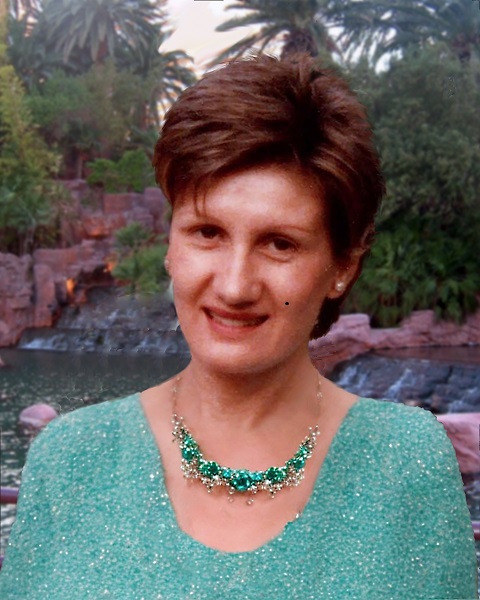
“Do not worry. I will take care of everything. How do you pay the bills and repair the house? How do you write emails and figure out how to use the computer? How do you keep in touch and spread love around? How do you figure things out without you around? Things left unfinished (…) All the wrongs I will make right. All the pains I will heal. All the miseries, I will make them joys. Because you left me with a reservoir of true love.”

On his side, Dietrich keeps showing signs of affection and tenderness, but from the afterlife, he keeps telling her, “My main mission is to love you.”
The book is written in an unusual format. It looks like a collage combining various literary genres. The book is partly a well-documented spiritual essay on life after death, with quotes from scholars. The book is also the memoir of Elisabeth but without any chronology. We jump from the present time to the remote past and from there to the future and future perfect. Rather than following a logical and rational order, the author follows the stream of consciousness, a typically American story-telling technique. The last part of the book belongs to a special genre called the epistolary novel. It was popular in the classical and pre-romantic French tradition. In the last 40 pages, the author presents the letters she wrote to Dietrich in the Spirit World and the letters she received from him. It is probably the most moving and thrilling part of the book.
The book covers many additional topics, such as the supporting role of a spiritual community and the life of Dietrich and Elisabeth’s children. Another topic is the role of angels. They seem to play an important role in the life of Dietrich and Elisabeth. We are reminded of the lyrics of Abba’s famous song “I Have a Dream”:
I believe in angels
Something good in everything I see
I believe in angels
When I know the time is right for me
I’ll cross the stream, I Have a Dream.
Elisabeth’s book will serve the Unificationist community, which already possesses a rich experience of preparing its followers for a noble death and rebirth in the Spirit World. Indeed, Elisabeth almost doesn’t mention the seonghwa ceremony or ceremony of ascension. Sometimes, it is useful not to speak too much about rituals. As precious as they are, they are not an absolute guarantee of a smooth transition.
We still lack accounts or testimonies of Unificationists’ experiences of contact with the departed ones when the ceremonies are over. As a result, many members of the Holy Community of Heavenly Parent often turn to non-Unificationist literature and traditions to strengthen their belief that the beloved is certainly doing well.

Elisabeth Seidel’s work will be extremely helpful for bereaved Unificationists. Despite their faith and resilience, they often go through a tough and gloomy period once the celebrations and rituals are over. Elisabeth offers a realistic account of the solitude and vacuum experienced by widows. She expresses her feelings of loss, vulnerability, lack, and distress. Yes, death is a hardship, and she does not repress her emotions.
She also educates the reader about coping with this because, as Dietrich said, “death is natural,” and death itself is not a tragedy. The book is full of life and reasonable hope, coming from a person who feels gratitude, confesses her weak points, and never complains about her fate.
On a more fundamental level, she pioneers a path that, hopefully, will be followed by many other Unificationists. Her Unificationist convictions are expressed naturally, with deep respect for other traditions. Her book gives precious insights on how to experience an absolute, eternal, unchanging, and unique love.
Most Unificationists hold these to be self-evident truths. Yet, no self-evident truth can be taken for granted.
Elisabeth clearly shows that the Blessing gives us insight and a foretaste of the absoluteness of love. For sure, she and Dietrich experienced complete communion from the start. But this was a sort of conditioned grace, a promise of an absolute and eternal bond between “you and me.” It takes a whole life of living together and aging together for the two actors to own absolute love and incarnate it until death and beyond.
Victor Hugo had this deep insight on love: “Love is the absolute, the infinite. Yet, life is relative and limited. From there all the secrets and deep anguish of man.”
Elisabeth reminds us about our condition: as humans, we are both completely mortal, finite, immortal, and infinite. Humans can only love on earth as mortals cherishing other mortals, whose life comes and goes and is so ephemeral and fragile. Though religion nurtures our belief in eternal life, only the experience of love, of loving well and living well on earth, may give us hope that the love experienced is indeed absolute, eternal, unique, and unchanging. Unificationists who want to herald these truths will enjoy reading this precious testimony of a sister who made sense of her union.♦
Letters Beyond the Veil, by Elisabeth M. Seidel and Dietrich F. Seidel, and edited by Jennifer P. Tanabe, is available to purchase in print and as an ebook for Kindle.
Laurent Ladouce is a French Unificationist who was awarded an honorary doctorate by Unification Theological Seminary (now HJI) in 2017. A prolific author of Unificationist publications, he also published the book Le Projet Pakxe: une contribution du Laos à l’unité de l’Asie du Sud‐Est et à la Paix Mondiale, which describes the rising role of city diplomacy and proposes a plan to make Pakxe, Laos, an international city of peace. He also regularly conducts tribal messiah activity in West Africa.
🦻Listen to this text using the NaturalReader Google Chrome extension. Download it here. 🙂


 Applied Unificationism
I like another quote from Nietzsche who was unmarried, so he didn’t talk from experience, but was probably a sharp observer. He said: “It is not a lack of love, but a lack of friendship that makes unhappy marriages.” In the spirit world we might see our thoughts, while on earth we are able to pretend or hide them. Although I know that my wife sends the sign “bored to death” when I watch soccer games or watch discussions about literature or politics, I don’t mind because I do likewise when she watches food shows or baking shows or whatever. Friendship means that we don’t have to discuss it, but let it be. As my wife is more the cowgirl who likes to talk to plants or animals, I respect her ways, because she knows that I love to discuss literature or music. My wife gives me the creeps when she says: ‘Sometimes I wonder where we will end up later. As long as our friendship remains it doesn’t matter, because we love to stick together.’
Is language the strongest bond between two hearts? Maybe for Victor Hugo, but not for everyone. When she asks me: ‘Will you marry again, when I’m dead?,’ I usually answer: Yes, a woman twenty or thirty years younger. My wife wasn’t even able to write letters. She proved to me that there is something deeper than words or language, something mysterious. Heart maybe. Abba doesn’t strike me as ethereal or magic or transcendent, but pretty much as materialistic and shallow, by the way. I would prefer The Doors “When the Music’s over” on the “Absolutely Live” album.
Thank you, Thomas, for your comment on this modest review of Elisabeth Seidel’s book. You are right to insist on the role of friendship in marriage. You also say that love is not only expressed in words or language. These two points matter for couples.
Indeed, husband and wife are lifetime companions, friends, comrades-in-arms. Marriage requires teamwork where a man and a woman are managing a household together and are to play the role of educators. Often they don’t really talk to each other but they do talk about “this” or “that”.
They find a common cause or goal, within the Origin-Division-Union action. All of this is true, and habit is sometimes a good synonym of love. We simply cannot live without the presence of the other one.
Yet, and this is not contradictory, our spouse can be much more than our “best friend”. A man should feel with awe, that he has created for this woman. My wife is not another “she” for me. If “I” am the first person of the singular, my wife is the second person in the entire universe. She will never become ordinary.
She is forever the only You for me. And vice versa.
The spouse represents God. We may not always feel it. But when the spouse ascends, it becomes crystal clear. The film “Okuribito” (https://en.wikipedia.org/wiki/Departures_(2008_film), illustrates this. Likewse, Friedrich Murnau managed to illustrate this theme, in “Sunrise,” a song of two humans (1927). https://www.youtube.com/watch?v=6NayFytQeBE)
Then, is it important to speak the love? Does language matter? The Bible is God’s love letter to us. God speaks to us. Monotheism teaches that there is only one God, who talks to me, personally. And monotheism goes with monogamy, I have to talk to her and listen to her. Dietrich said to Elisabeth, “it is my mission to love you.”
A husband’s voice is dear to his wife, and likewise, a wife’s voice is like gold for the husband. I remember my infinite joy when my wife, Shigeko Watanabe (1951-2011), first pronounced my name. I was reborn through this. I have kept all our letters. After she ascended, I kept writing to her every day, including today.
Another beautifully written essay by Laurent! Thank you very much.
I was fascinated by the book’s front-cover photo, which on one hand, helps to convey the message, and on the other hand, it is effective on a deeper level. Personally, I believe we (our movement) need this kind of literature and/or article to be available for members, especially for the 1st generation members. As we are getting older, the need for this kind of spiritual vitality becomes precious and a bonus in life.
Thank you, Laurent!
Thanks, Laurent. Without this review of the book, I would not have known of such a daring book authored by a Unificationist, or of many more Unificationists who contemplate love altogether in a non-dogmatic way.
I have spent the last decade trying to wrap my mind and heart around love in a cognitive as well as phenomenological understanding. At UTS, real love was not a subject of study. And the guidance most Unificationists receive at church and employ to raise their adolescent children is, perhaps, pretty coy about real love as well. So, we witness about the greatness of the founders of all things Unificationism, the imperative of the Blessing, and the unification of North and South Korea, when most people really want to know what love is, or not.
Thank you, Tom, for addressing the topic of real love. Elisabeth Seidel’s book shows how a husband and wife have worked their whole life (and beyond) to cultivate deep feelings for each other. Both were serious in the art of caring, empathizing and embracing.
Indeed some current practices of Unificationism focus more on the proper doctrtine or theology (orthodoxy) or the proper action (orthopraxy). Yet human beings grow and thrive through cultivating the proper feelings (orthophilia).
Then, why do we often diagnose symptoms of emotional illiteracy among our Unificationist believers? Why are so many members tired or fustrated in their capacity to feel?
This problem certainly does not come from the Divine Principle or from the founders. True Father gave hundreds of sermons and guidance about the art of loving. He spoke at length on the family as the school of love. He elaborated very deeply on the four realms of heart.
Many members suffer from emotional difficulties and cannot express them easily or freely. Why? Most of the so-called first generation had to deny or repress their natural attachments built during their childhood or adolescence, the period of life where we are so sensitive. We realized that most of our feelings before meeting God’s heart had been tainted with fallen nature. Indeed, some Unificationists managed very well to grow deep feelings for God, for True Parents, for other people. But we easily become mission-oriented, seeing ourselves as soldiers for a cause, or crusaders. We keep thinking in terms of “ought to”, “have to”, “should,” and “must”. It is also because the Korean culture is strict on these matters, even if the Korean language itself is rich in expressing feelings and sentiments.
True Mother does not elaborate much on feelings in her speeches. Yet, we may perceive that her heart is a reservoir of deep and pure feelings. After the inauguration of the Cheon Il Sanctum and even now through the cheonshimwon providence, we may hope that the gates of emotional life will be wide open. We shall express our hearts much more powerfully.
More efficiently than any other weapons, divine and holy feelings will transform the world. The revolution of love will create the new civilization. It will dawn when Cheonilguk citizens observe the heavenly constitution from the bottom of their heart and conscience. This starts right now.
I am not that optimistic. The Seidels were perhaps an exception to the rule. And while I can easily resonate with you on the compromised upbringing that most of us brought to the table of the Blessing, the matching happened so fatefully to many of us on the spot –- without any real preparation before and counseling thereafter. The proof is in the pudding and then some.
Laurent,
You said you felt reborn when your wife first pronounced your name! That is very beautiful!
I confess I remember one time calling my husband by name and it felt so wrong but he did not retaliate, instead I only remember when he was calling my name with sincere love, the vibrations of his voice made my name absolutely beautiful.
Once calling his name passed the veil, he answered me: “When you call my name I am here! I like when you call my name because this is the way I feel loved!” To conclude Heavenly Parent is present when unity is achieved.
Dear Elisabeth,
Thank you for joining the discussion. I hope that many people will buy and read the book and that it will trigger many good and positive reflections for our Holy Community.