Succession: An Open Letter to My Dear Unificationist Friends

moon_web_2224_r640x400-sepia

by Warren Lewis, Professor of Church History (1975-81), UTS   

(This is an excerpt from the full article published in the Journal of Unification Studies, Vol. 14, 2013, pp. 51-70)

True Father, Live Forever in the Spirit World!

Warren LewisThe writing of these lines began on the day following the passing into the spirit world of a splendid human being whom I counted as a friend: Sun Myung Moon. It was a sad day (“Jesus wept.”) for all who loved and appreciated the man, but a day of victorious celebration for all who understand that his mission to, and importance for, the world can now transcend his individual mortal life (“Where, O Death, is thy victory? Where, O Grave, thy sting?”)

This message is an “open letter” to all my dear Unificationists, former students of “Church History Survey” at the Unification Theological Seminary, Barrytown, New York, from 1975 to 1981, and beyond them to a sub-set of special Unificationists whom I knew then, barely, as young children. The time has now come, my friends, for you to take up your responsibilities as Church leaders in ways that you have not previously known or imagined.

Up to this moment, we, your non-Unificationist teachers, offered you our intense efforts and our truest knowledge, hoping to help you become “the best Unificationists” you could be. Whatever of value came to you through following the True Parents, through the Divine Principle, through your spiritual experiences, through our Seminary education, through your further higher education, and through your existential commitment to “the House of Jacob for ten thousand years,” you must now gather up all your strength to respond with passion and joy to the best challenge I ever heard Rev. Moon issue to his followers: “What better world can you imagine?”

In these few paragraphs, my intention was to accomplish three purposes:

  1. Juxtaposition of aspects of the history of the early Christian Church with aspects of the Unification Church as it moves from its first generation to its second.
  2. Reflection on the difference between “the Original Sin” and original sin.
  3. A look ahead to desirable Unificationist possibilities in the post-Sun Myung Moon era.

Continue Reading

An Ideal World: Inevitable or Impossible?

galex-20060823-browse

By Henry Christopher, UTS Class of 1980

◊ Second in a series of his commentaries on an ideal world ◊

Henry ChristopherAlthough many religious people consider themselves the “children” of God, the gap between God and His children is so wide, one wonders if an ideal world can ever be achieved. However, if we consider the origin and nature of God and ourselves as his children, there is ample reason to believe humankind will one day cast off its selfish nature and establish a long cherished world of peace and harmony with God, the creation and ourselves—the long awaited “Kingdom of Heaven on Earth.”

To understand why we can have confidence humankind will establish an ideal world, let’s first consider some fundamental questions about God: Who is God? How did God originate? Why do we say that God is love? Is God and His creation really eternal?

Over my years as a Unificationist, I have explored these questions. Some ideas I present may have little support in most scientific circles where atheism dominates, but they stem from a belief, shared with some of the great Western philosophers, that God exists, is an eternal being, and is the Creator of our eternal universe.

Although today many scientists assert that there is no God and the universe came about randomly, Aristotle, considered one of the first Western scientists, argued for the existence of an eternal God in his observations of the universe. In his book, The Metaphysics, he calls God the “Unmoved Mover”— a being of everlasting life who is the cause of the universe. His argument, taken up later by one of the greatest Christian theologians, Thomas Aquinas, is that things exist because they are in motion. Things cannot set themselves in motion, so something caused one thing to move, which caused the next thing to move, and so on. But if we follow the causal chain back, we can never discover what actually causes the first thing to move, unless it was moved by a being that is eternal: “The Unmoved Mover,” the “Prime Mover,” whom both men said was God.

If God really is the Unmoved Mover, who is the First Cause of the universe as Aristotle and Aquinas postulated, where did He get the energy to move things?

Many scientists claim the universe just happened by chance, that the origin of all things is energy, and that there exists no God who created it or who can hold it together forever.

Continue Reading

A Step Toward a “Unity” of Science and Religion

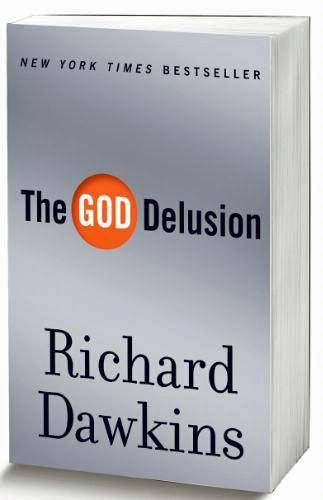
Dawkins Book

by Keisuke Noda, Professor of Philosophy, Barrytown College of UTS

Keisuke_NodaThe “unity” of science and religion is one of the central theses of Unificationism. In the Divine Principle, the “unity” of science and religion is discussed as one of the characteristics of “new truth” disclosed by the Principle. In practice, beginning in 1972, Rev. Moon held a series of International Conferences on the Unity of the Sciences (ICUS) in order to bridge science and religion. The sciences include natural, social, and human sciences, and religion includes Judeo-Christian and Islamic monotheism, non-Western religions, and various spiritual paths. Both in theory and practice, Unificationism seeks the integration of all knowledge within a theistic framework and the idea of a “unity” of science and religion  is part of this endeavor.

Recent atheist movements led by Richard Dawkins and Sam Harris have been undermining religion on the basis of “science.” Religious apologetics similarly attempt to justify their beliefs based upon “science.” Before we approach the question of the “unity” of science and religion, we need to clarify the nature of scientific knowledge as well as that of religious knowledge.

I challenge the popular belief that science is interpretation-free, a-historical, non-social knowledge, and argue that both science and religion have interpretive dimensions (whether there is any knowledge free from interpretation is a separate and open question). If science and religion are two types of interpretive theories, their frameworks of interpretation, including presuppositions and assumptions, require rigorous scrutiny. The hermeneutic structure of human understanding, the dynamic part-and-whole relationship between each element and the framework of interpretation, may be the most fundamental element in any human understanding.

What Does the “Unity’” of Science and Religion Mean?

There are two contrasting attitudes towards religion: one apologetic and another anti-religious. Others are somewhere in-between. Religious people often take an apologetic stance and try to find supportive evidence in the sciences. For them, “unity” means compatibility between or a justification of faith by science.

Continue Reading

Lessons from Apple under Steve Jobs

Apple-Tech-LiberalArts-680x327-1-520x250

By Mark P. Barry, Lecturer in Management, UTS

Mark Barry Photo 2When Steve Jobs took over in 1997, Apple — the company he co-founded in 1976 but from which he was fired nine years later — was just 90 days from bankruptcy. When he stepped down as CEO in August 2011, weeks before his death, Apple had just become the most valuable company (by market valuation) in the world. It remains so today. Apple, Inc., makes perhaps the most popular consumer products in the world, with instantly recognizable names such as the Mac, the iPhone and the iPad. Most observers agree that Apple changed the world. It did so through a passion to make the best products possible (but with just a few, focused product lines), a unique management style, and the goal of marrying technology and the liberal arts. From Apple’s example of success, there are lessons for Unificationists.

Steve Jobs was a very difficult person to work under. He was prone to calling people either geniuses or bozos; he could be wickedly cruel to those who received his ire. He often invoked his “reality distortion field” to convince others to believe the opposite of what was otherwise obvious. But he had a passion for excellence and would settle for nothing less. That’s why in the end people wanted to work under him. They knew he would make breakthroughs that no one else of his generation could.

Since his passing, many call him a combination of Thomas Edison and Henry Ford. And Apple’s greatest achievements occurred with Job’s “second coming,” the years after he returned to the company’s helm, in which Apple was the most productive and innovative. Jobs was not only a great visionary, but he had tremendous willpower to accomplish what he wanted no matter what the odds.

Jobs had been ill with pancreatic cancer since 2003. Though the tumor was removed, cancer recurred by 2008, necessitating a liver transplant the next year. He knew he could not lead Apple forever, that his time was very limited. In fact in his last years, Jobs led Apple under considerable pain and physical weakness. He sought to institutionalize Apple’s culture so that it would carry on with great energy and continuing success after his passing. He established an internal Apple University to teach employees the fundamentals of Apple’s corporate DNA and creative culture. The last thing Jobs wanted after his passing was for managers to ask, “What would Steve do?” He felt that tendency was what hurt the Walt Disney Company after the death of its founder.

Continue Reading

A Unification Position on Gun Control

AK-47_type_II_Part_DM-ST-89-01131

By Michael Mickler, Professor of Church History, UTS

Michael_MicklerThe Unification movement has an ambivalent relationship to guns and violence. On the one hand, Rev. Sun Myung Moon defined himself a “Peace-Loving Global Citizen,” stated he had tried everything except being a soldier because he never wanted to kill anyone, and dedicated his ministry to the reconciliation of former enemies. On the other hand, at the height of the Cold War, he warned that if “North Korea provokes a war against the South Korean people,” his followers would organize a “Unification Crusade Army” and “take part in the war as a supporting force to defend both Korea and the free world.”

Unification movement-owned factories in Korea manufactured M-1 rifles and the Vulcan Cannon.  During the 1980s, the movement-funded Washington Times supported intermediate-range missiles in Europe, SDI (i.e., the militarization of space), and violent revolt of the Nicaraguan Contras. More recently, Kook Jin Moon, the owner of Kahr Arms, a successful gun manufacturer, claimed, “In the Kingdom of Heaven, all people would…bear arms.” Abel, he said, should never have let himself be killed by Cain but instead used his creativity “to develop a weapon.”

Given its ambivalent relationship to guns and violence, does Unificationism have a word to contribute to the acrimonious and divisive gun control debate in the post-Columbine, post-Virginia Tech, post-Gabby Giffords, post-Aurora, post-Sandy-Hook era?

Some Unificationists maintain there should be no restrictions on gun ownership or usage. In his “Freedom Society” talks, Kook Jin Moon argues that the Swiss militia system best approximates Rev. Moon’s vision of “Peace Kingdom Police.” Everyone has their full-time job and career with all able-bodied male citizens keeping fully automatic firearms at home.

However, it bears mentioning that these arms are government-issued and Swiss citizens are not permitted to keep ammunition for them, it being stored in government arsenals. Until 2007, militia members were allowed a small emergency supply of ammo but it had to be kept in a sealed box and was subject to regular inspections to ensure no unauthorized use had taken place. In 2007, the distribution of ammunition stopped and militia were required to return what ammo they had. Apart from the heavily regulated militia, Swiss gun laws are considered to be restrictive. Gun purchases require a valid weapon acquisition permit and have to be registered.

Continue Reading

Principled Governance or Politics as Usual?

capitol-dome

By Gordon L. Anderson, UTS Class of 1978

GordonUnificationists live in a contemporary culture that champions democracy and instills the idea that politics is about influencing government to provide things or benefits that we desire. Like others in society, Unificationists generally support political parties and special interest lobbies designed to pressure lawmakers into delivering goods and services they believe in.

Politics is War by Other Means

However, “politics” in this sense is the application of “fallen nature” and not of Unificationism. In On War, Carl von Clausewitz described politics as “war by other means.” He meant that people engage in politics to manipulate the government in their fight for control over resources and power, or to gain another benefit for themselves at the expense of society. In this war by other means, people often use the rhetoric of justice and goodness and advocate rectifying the perceived social problem using everyone’s tax dollars. This political behavior is divisive and socially destructive. To the extent Unificationists engage in politics as a form of war, they are at odds with principled governance.

Unificationism is about principles. The main text is the Divine Principle, whose primary hypothesis is that principles underlie the entire created order, and that knowledge of and application of these principles is essential for living a life of happiness. This idea of collective happiness is not unique in political theory. Aristotle began his Politics by stating that the end of politics is human happiness. James Madison, in “Federalist 62,” reaffirmed that the object of government is the happiness of the people. Indeed, Buddha, Confucius, and the founders of the world’s great civilizations sought to explain how people should live and societies be organized in order to be happy.

Principled Governance is the administration of a society to achieve common ends

Any system, whether it is a social institution, the human body, a mechanical machine, an entire social system, or the universe, is governed by principles. When the principles that maintain a system cease to operate, the system breaks down and disintegrates. The design of any system requires knowledge of the purpose for which the system is being created, and the principles necessary for the system to fulfill that purpose.

Continue Reading

Welcome to the World of the Two Position Foundation

thumb_8380_story_large

by Richard A. Panzer, President, Unification Theological Seminary

Richard_PanzerWhen I first studied the Principle in the 1970s, I was struck by its description of the devastating impact of the misuse of love and moved by the possibility of lasting marriages centered on God. When I looked at American society I thought, “all we have to do is to introduce God into the picture, then people could create their own “Four Position Foundations.”

Four decades later, how the world has changed! We now live in a world in which not just the position of God is questioned, but the position of the man is no longer seen as essential either. More and more women are choosing to have a child with no committed father in the picture. In fact, more than half of births to women in their 20s in the U.S. are outside of marriage. This is also the case in many “advanced” countries around the world.

Men are typically seen as the aggressors in intimate relations, but in this case it’s usually the women who are making the decision that their sex partner is not father material. Their thinking seems to be, “good enough to have sex and maybe even create a child with, not good enough to actually co-parent the child.” As described in the book, Promises I Can Keep: Why Poor Women Put Motherhood Before Marriage, these women have decided that their children will do better without their fathers.

I wonder if anyone is asking the children what they think? We know that many children born from artificial insemination urgently want to know who their “father” is. In their simple desire to know who they are and where they come from, they seem to know something that our society has forgotten, their very identity is inextricably linked to the father who gave them half the DNA that courses through every cell in their body.

For children of those fathers not hidden behind a fertility company’s promise of anonymity, bitter questions rise: “Why didn’t my father want to stay? Why doesn’t he care about me?”

Continue Reading

An Inquiry into God as Our Heavenly Parents

Foundation Day

By Tyler Hendricks, Ecclesiastical Endorser, Unification Church of America

dr_tyler_hendricksI recall those boring accounts of the Church Fathers arguing over the Trinity. One of the views was that God is One who appears in different modes—sometimes as Father, sometimes as Son, sometimes as Holy Spirit. It is called “modalistic monarchism.” The view that came to the fore in the West asserted that God is not one person appearing in three modes, but is three distinct persons who are one. The problem with modalistic monarchism, they argued, was that it denied the personhood of Jesus.

How three persons could be one God they left as a mystery. Good for them!

I think that the view that God is our Heavenly Parent, who can appear as Father or Mother, is a repeat of modalistic monarchism. It’s not because I want to uphold the orthodox view of the Trinity that I say this. But I did want to begin by contextualizing the discussion in historical theology, and I do support, by and large, the Divine Principle view that God’s providence worked through the Western Church.

Now, to the main point.

I heard a story the other day on National Public Radio by a bisexual. It was one of their StoryCorps episodes, which are little vignettes of American life. The subject was a person who was born a man, married and fathered a child or children, and then changed his bodily make-up and became a woman. This person recounted how s/he related to the children he had fathered when a man. This person said, “I asked myself, am I their father or mother? I decided just to call myself their parent.”

By the doctrine that God is our Heavenly Parent, this person is the image of God.

This illustrates why I believe that the term “Heavenly Parent” is mistaken.

God as “Heavenly Parent” is androgynous. It is a trans-gendered existence that is neither male nor female in any common sense meaning. I find it hard to relate to such a transformer God.

Continue Reading

Educating the Whole Person: A Unification Improvement

Office training

By John Redmond, Chief Financial Officer, UTS

IMG_9544I spent ten years as a corporate training manager for community colleges.  My job was to go out to industry, large and small, and help design training for manufacturers.  Local manufacturing companies are highly prized as economic development engines.  Every job created by a medical products company for instance, whose customers are national and international, creates five to six other local jobs — teachers, tire salesman and restaurants owners to name a few.  Any improvement in the efficiency or effectiveness of a manufacturing company improves the community around it.

One thing I noticed is that modern companies hire very few people just because they have a strong back or only obey orders.  Karl Marx had a theory that people are just economic animals,  programmable entities that are interchangeable, like light bulbs.  He called it the Labor Theory of Value, and many companies built their success on this model in the 19th and early 20th centuries.  Since then, forklifts and robots have replaced a lot of the strong back, quick fingers work that used to characterize American labor.  Marxists adjusted their theory to include intellectual labor. They said the brain produces ideas like a gland secretes hormones.  This works for engineers, who work with “stuff” and can work alone, but it does not explain the modern creative wave that gave us, for instance, Apple, Inc., or GPS navigation systems.  Successful education in the real world includes creating the conditions that allow a continuous flow of “cool” ideas that can be marketed in “cool” ways and make lots of cash and stock options.

In modern companies, workers get promoted if they are responsible and creative and can play well with others. The creative ideas that a team can unleash often overshadow that of a lone genius toiling away in a lab.

Continue Reading

Website Built with WordPress.com.

Up ↑