Lessons from Reverend Moon’s New Culture Strategy

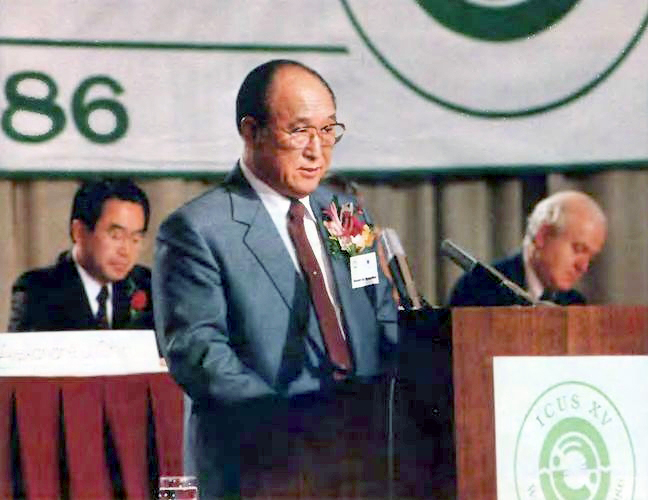
ICUS XV Washington 1986

By Glenn Strait

“Do you think you can create a new culture of peace by sitting down?”

— Sun Myung Moon

Glenn_Strait_edited-1From 1972-92, Reverend Moon invested huge resources in creating new culture. During this same period, he also invested vast resources in defeating international communism, while he simultaneously conducted major evangelical outreach efforts and established a global footprint of his movement.

The foundation for each of these components was a system of thought — Unification Thought, Victory Over Communism, and Divine Principle, respectively. My focus is Rev. Moon’s strategy for creating new culture.

In strategizing with God about how to usher in God’s ideal, peaceful and happy world, he determined his grand strategy would include a component focused on creating new culture undergirded by a new and comprehensive ideological framework built on the foundation of Divine Principle itself. Working directly with Dr. Sang Hun Lee, Rev. Moon elaborated upon Divine Principle to create Unification Thought to serve as that ideological framework.

My windows onto Rev. Moon’s new culture strategy were, from 1972-85, working on the core secretariat of the annual International Conference on the Unity of the Sciences (ICUS), and, from 1985-2004, as editor for natural sciences of The World & I monthly magazine.

Rev. Moon’s strategy had originally intended The World & I to be the vehicle for spreading new culture, as the magazine published articles written by academics and other prominent people inspired by Unification Thought. These authors were to have gained that inspiration in Unification Thought through their participation in ICUS and other conferences spun from it. One of my objectives on the editorial staff of the magazine was to assure that this pool of prepared authors became writers for the magazine.


Continue Reading→

Charting a Family Course Through Stormy Seas

3 Gen Family

By John Clark

JohnClarkThere is a lot of turmoil these days, both in our church and the world at large. It is a time of tremendous change. No one can confidently predict where we will be in five or ten years. To be a good ancestor, we should take responsibility for making a lineage tradition that will help guide our descendants through turbulent times and good times. Each of our descendants should feel a personal identity as part of a blessing lineage working to make true love foundations on the earth. This is what I want to accomplish as a first generation Unification Church member.

We have long preached world peace through ideal families, but what exactly does our ideal family look like? Are we known for creating such families or merely for organizing conferences that promote them? Are we better at making great families or at sacrificing our families? Our children would be best qualified to answer that last question. We need to be a movement that creates great families.

The world at large is also facing many problems. Economic crises and war threaten our future. It is easy to get depressed by the trend of current events. We need to demonstrate a strong way to survive and prosper through difficult times.

We should seek to distill our faith in practice so it is an undeniable truth in our children’s consciences. One of the great ethics of our faith is the true love lineage. We should give our children many happy, unforgettable family experiences when they are young so they will naturally want to seek happiness by continuing the same family tradition with their own children. True love lineage has a strong identity and responsibility for all family members.

Many of our youth programs would benefit by using true love lineage as the basis of their curriculum, rather than a general schedule of Divine Principle lectures. Long boring lectures probably drive most young minds away from the church and captivate only a small percentage of the children’s imaginations. If they are excited from the workshop, they can read a certain number of pages in Divine Principle every day the rest of the year as homework.

Continue Reading→

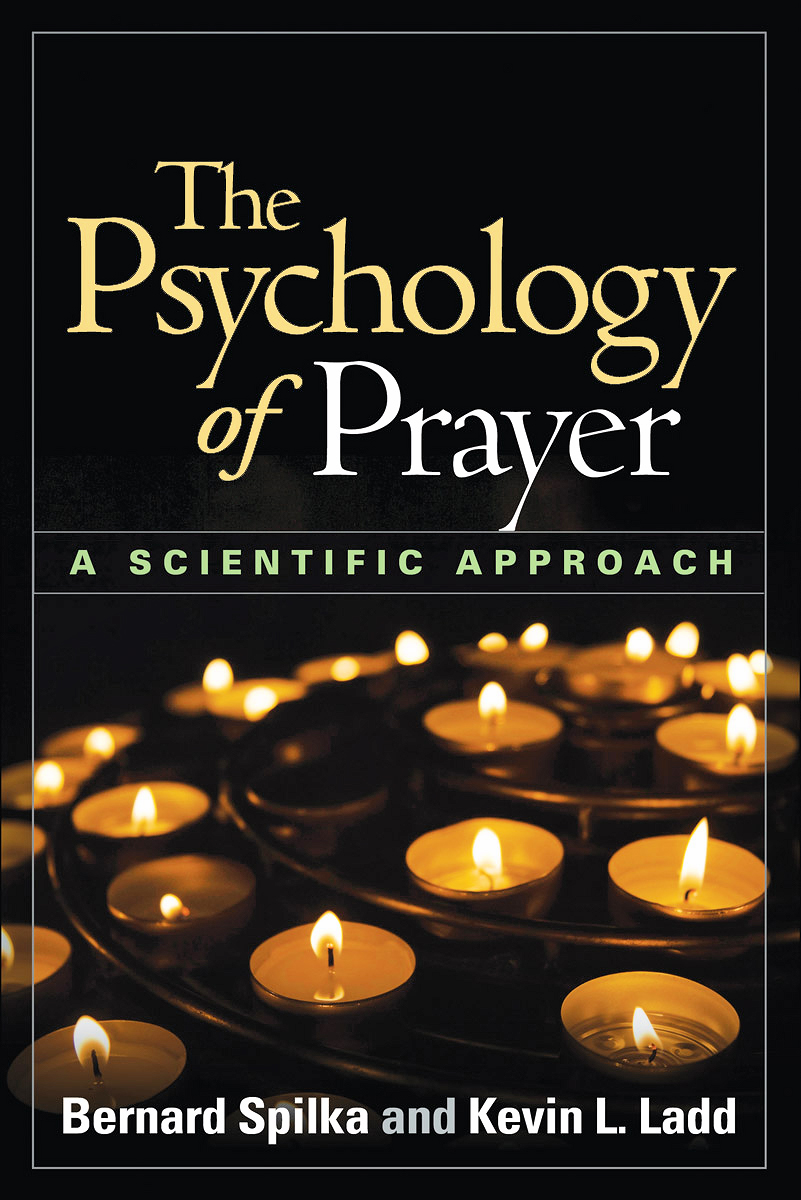
Book Review: “The Psychology of Prayer”

9781462506958

By Josephine Hauer

HauerThe Psychology of Prayer: A Scientific Approach, by Bernard Spilka and Kevin L. Ladd, New York: The Guilford Press, 2012. Excerpted from the Journal of Unification Studies, Vol. XIV, 2013. Dr. Hauer (UTS Class of 1990) is a family specialist with the Administration for Children and Families, U.S. Department of Health and Human Services.

The Psychology of Prayer: A Scientific Approach offers a dense yet remarkably useful tour de force through the last 30 years of social scientific research on prayer. It is a major contribution that highlights the expanding role of prayer in the psychology of religion. While authors Bernard Spilka and Kevin Ladd view prayer as a critically important personal religious activity, their discussion is uncompromisingly scientific and offers substantive insights and recommendations for an empirical study of this rich human experience. Locating prayer as a psychological phenomenon, the authors offer a straightforward conceptualization: “Prayer is the psychology of religion in action and literally reflects virtually every facet of behavioral scientific psychology, from its neural roots to complex social responsivity.”

This book is a useful introduction to the various ways researchers have approached prayer psychologically. My own experience of prayer seems to be more expansive than the categories covered, but this is understandable since empirical approaches necessarily slice up experience into quantifiable pieces. People have been praying for thousands of years, and it is heartening to see that social scientists are beginning to chart this vast territory replete with religious and psychological meanings.

Spilka and Ladd accomplish a remarkable undertaking, given the range of studies critically scrutinized. As respected leaders in this field, these authors stake out prayer’s central place in the psychology of religion….

⇒ Click to read the full book review from the 2013 Journal of Unification Studies.

Continue Reading→

A New Model for How We Gather in Our Local Faith Communities

sign

By Jack LaValley

Jack LaValleyAmerican Unificationist faith communities need to adopt a new model for worship. This will solve three major headaches currently facing our American movement: lack of numerical growth, aging local congregations and the absence of a compelling and persuasive national vision.

Robin Debacker’s recent article, The Present and Future of our Unificationist Sunday Service, provides a clear indication it is time for us to earnestly consider creating a new style and kind of worship program. I also believe the 1996 inauguration of the Family Federation for World Peace and Unification (FFWPU) in Washington, DC, marked the beginning point for the American movement to create and adopt a different model and style of worship.

A proposed new model

Under the old Sunday service model, we understood we were meeting to “hear the word of God” delivered through our local pastor (or someone else who volunteered to deliver a message). Through hearing the word, we would be edified and encouraged to better ourselves in all areas of our lives. Under the new model I’m proposing, the worship service style we’ve been using for the past 25 years will stop. Instead, we would start meeting as a faith community once every five weeks (maybe shorter or longer). When we do come together, we will do so with a different orientation and purpose for why we’re gathering.

This proposed new model calls for us to gather together and experience the presence of God as Blessed Central Families, without the burden of inherited sin and where all people can be “reborn” by receiving the Blessing from True Parents. Such a gathering will be, in effect, a recognition ritual where we share in how God’s love is revealed and experienced within the context of “Blessed Family Life.” Children will be recognized. Husbands and wives will be honored. Parents will be praised. Friends and neighbors will be invited to participate in this joyous gathering and they will want to return again and again to get more of the same.

Continue Reading→

To Promote the General Welfare

Hands_1

By Scott Simonds and Megan Simonds

SSimonds_1In my previous article, “The Freedom Society: Headwing Thought or Tea Party Politics?”, I said I would next take up the issue of government spending on human services.

megan-simondsThe political right advocates for smaller government, addressing domestic issues of poverty and healthcare through private enterprise.

The left advocates for government agencies and programs to provide healthcare, a safety net for people temporarily in need and ongoing support for citizens who cannot “enjoy the blessings of liberty” independently as social responsibilities.

The right claims that government power should be limited to the common defense, brick and mortar infrastructure, law-making and law enforcement. For them, government’s basic purpose is to protect individual rights and freedoms and should keep its hands off the free market system.

Although there is nothing inherently wrong with this worldview, it is not complete. The Preamble to the U.S. Constitution includes the phrase:

…[To] promote the general Welfare, and secure the Blessings of Liberty…

The right argues that protecting the free market system is promoting the general welfare. But is there such a thing as equal opportunity in a purely capitalist society? Do the values derived from capitalist principles, such as independence, self-reliance and faith, apply in every circumstance?

In fact, values such as “justice” and “compassion” (for those who cannot survive independently in civilized society) often conflict. Success and failure, right and wrong, are not as clear cut as some would have us believe.

Continue Reading→

Anger and Our Modern World

Road rage

By Bruce Sutchar

bruce_sutcharAs we grow into adulthood our adolescent anger subsides beneath our productive lives, but at some point it could begin to rear its ugly head once again. One day you just lose it — you start yelling at a clerk in a store, something you had never done before. Then you begin yelling at people on the phone (like computer repair people) and your kids begin to wonder why you are always yelling, on the phone or at their mom and them.

Some people get continuously frustrated driving and began to develop anger for people who, for example, drive slowly in the left lane. They would drive by them very closely in the right lane and give them a dirty look and sometimes even slow down in front of them until they moved into the right lane. At night some even turn on their bright headlights from behind until the other car finally changes lanes.

Most of these people already had college or even graduate degrees. None had ever gotten into trouble before the above incidents either as youths or as adults. So why all this anger and detrimental behavior?

What is anger? It can be hurt or frustration at not being able to get one’s way. Psychologists say that when a man is hurt he expresses anger and when a woman gets angry she expresses hurt.

Some people develop different levels of what is called a “Don Quixote Complex.” That is, they think that they can change someone else’s behavior. In reality, the only thing that they can even possibly change is maybe themselves. Some people arrogantly think the world should acquiesce to their needs and desires while others narcissistically believe somewhat similarly, that the world revolves around them.

Divine Principle teaches some very simple lessons. Terms like “love your enemy,” “love your neighbor,” “live for the sake of others,” and “Why do you see the speck that is in your brother’s eye, but do not notice the log that is in your own eye?” (Matt. 7:3)

Continue Reading→

Divine Principle, Quantum Physics and Interstellar Migration

1280px-Andromeda_Galaxy_(with_h-alpha)_1

by Richard L. Lewis

rlluti0289The Divine Principle is unequivocal in its view that the vastness of space, with its quintillions of stars, was carefully designed to be the home for humankind to mature, multiply and have dominion of love. This is implicit in the Divine Principle, since an unfallen human race would quickly outgrow a single planet.

In modern cosmology, the Earth is at the center of the visible universe, a sphere with a radius of 13.5 billion light years. The boundary is 80 quintillion miles away in every direction and is visible in the light of cosmic microwave background radiation. The modern concentric spheres are crystalline but it is the Earth that rotates so that our view of them repeats every 24 hours. These spheres are not simply spatial but spatiotemporal; as we observe farther away in space, we also observe farther back in time. The Sun, for example, is eight light-minutes distant in space and eight minutes in the past as we see it.

The only galaxy visible to the naked eye (other than the home galaxy we are embedded in, the Milky Way) is Andromeda, which is 2.5 million light years distant and we see it as it was 2.5 million years ago.

With a modern telescope, however, we can see billions of galaxies out as far as 12 billion light years and as they were 12 billion years ago. There are about 100 billion stars in the Milky Way and about the same number of galaxies in the visible universe. It is only recently that technology has developed to the point that it is apparent that most of these stars have planets revolving about them, the exoplanets.

In a True Love culture, we can reasonably expect the human population to double every 50 years or so. So Y years after Adam and Eve, the population P of the Earth would have grown to P(Y) = 2Y/50 and the exponential growth would reach, according to the logarithmic graph below, current population levels in only 1,500 years.

Continue Reading→

The Present and Future of the Unificationist Sunday Service

0001Oy

By Robin Debacker

Photo on 2014-03-29 at 18.55 #2My husband and I were empty nesters when we realized that our expectations and needs were no longer being met by the weekly Sunday service. We were newcomers to Europe, having spent 12 years in Korea, but we’d been feeling the same there, too. An idea whose time has come, mixed with the need to become an agent of change, plus the prospect of a long, dark Belgian winter — these are what propelled me in fall 2013 to begin a survey that became a labor of love, and helped me identify what was missing, and what I could do about it.

I set about asking Unificationists in various parts of the world, “What is the format of your service, what inspires you, and what would you change if you could?” I realized quickly that many were also longing for a more authentic spiritual experience. The responses I received were thoughtful and honest and I think they deserve to be shared with the wider Unification community and beyond.

The process

My instincts told me to avoid using SurveyMonkey and make personal contact with each person instead. I sent a private Facebook message to 930 people from September through November 2013. I was blocked three times, and Facebook eventually threatened to shut me down permanently, which halted the surveying stage and kick-started me into the data-coding process.

By that time I had collected 350 responses — two-thirds from the 50+ age group, and 103 from second gen. Meant to take the temperature of the average Unificationist, this grassroots survey focused primarily on people who are not in leadership positions. They came from 195 cities around the world — 38 states in the U.S. and 32 countries worldwide. Because so many thanked me for asking them, I called it the Thankyou4asking! project.

Continue Reading→

The Growth Period: An Opportunity for the Unification Movement

Canoe

By John Redmond

JohnRedmond2My niece recently had a baby. My family and I went to see him after they recovered from the first wave of family visits. The great thing about a baby is that although he is tiny, all the pieces are there. He is in the formation stage.

In contrast, I have a teenager. Since he’s been gone for a few weeks, we’ve saved $15 or $20 a week on milk bills. He is not tiny at all; in fact, he’s pretty big.

When my kids were little and I said that clouds were made of dandelion fuzz that floated up and clumped together, they believed me because I was their dad. However, when they become teenagers in the growth stage, you can tell them the absolute truth and they won’t believe it. “Yes, that T-shirt looks really ugly, don’t wear it.” They wear it anyway. Your position shifts and your relationship changes.   In the growth period, all relationships shift and there is a different approach to how good things happen.

All things reach perfection (completion), after passing through a growth period, by the authority and power of God’s principle.  So this experience, passing from the formation stage to growth stage and at some point on to the completion stage, is not unusual or weird; it’s how things are supposed to work.

We, however, often get locked into a snapshot. We forget that things are going through a growth period and get stuck in a concept that things will always be like this. So, your kid is six or seven years old and he behaves a certain way. As he grows up a little and starts behaving in a different way, it surprises you.

Continue Reading→

Website Built with WordPress.com.

Up ↑