The Power of Words

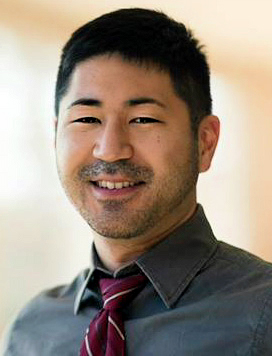
By Hiroshi Nakata

Nakata_IMG_01Human communication is fundamentally mediated by words. Even though there are many different languages in the world, they all utilize words. Although there are numerous studies on communication, less attention has been given to the words that constitute the basic elements of communication. What are words? What is the purpose of words? Do words contain an essence or power intrinsic to themselves? Uttering certain words can affect human relationships for good or bad. Speaking fitting or poorly chosen words can even affect one’s health.

This article investigates the power contained in words. This power can operate in two directions: for good or for bad. If we are aware of this fact, we can change the way we use words. We will use them only for good purposes and apply them with a positive attitude to daily life. Words constitute a big part of the environment of everyday life. According to Unification Thought [UT], human beings stand in a subjective position to nature and all things.

Among the elements of nature, water is fundamental and crucial for life. All plants and animals require water for their existence, and human beings do as well. If our water is polluted, it brings serious problems. In this light, I examine evidence that water is affected by human words. If there is a resonance between water and the words we use, then this would mean that bad words can pollute the human environment no less than toxic waste.

People use words to hurt others. Yet the words we use affect not only the other person, they also affect ourselves. When we use good words when speaking to others, our words foster meaningful human relationships and help to raise humanity. Furthermore, good words nourish health, both spiritually and physically. The contents of words relate to the Three Great Blessings: maturity of individual character, building a good family, and dominion over the natural world.

This article offers useful information for understanding the power of words and their value for building of one’s character, improving communication, and improving the environment. It is particularly important for parents, who are constantly speaking to their children, and educators, who are every day speaking words to their students, to be aware of the power of words.

Continue Reading→

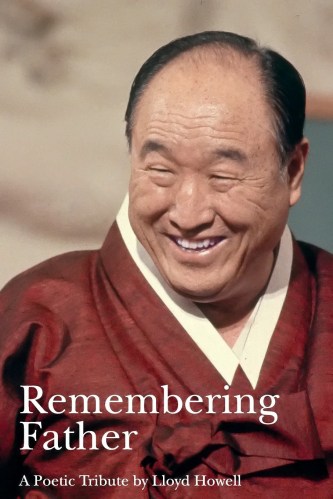
Remembering Father: A Poetic Tribute

71s2M-4lFHL

By Lloyd Howell

LloydTo “remember Father” is to remember what it is to love, to remember how to give unconditionally, to remember how to laugh when weary and burdened and how to press on in the face of enormous obstacles. The writing of this book was an attempt to come to terms not only with the departure/loss of True Father’s day-to-day earthly presence but also to grasp the impact and significance his life had on mine and the greater Unificationist community. The reflections were various and often moved me to tears. I include four poems for the reader’s interest.

The following poem began with a random thought of how pure the snow must’ve been in the remote countryside of Rev. Moon’s boyhood (north) Korea. I could easily imagine the forceful winds driving it across the land and next I realized that an invisible wind was also blowing into the life of the young Sun Myung Moon. And I understood how he opened his heart and let it take him along and thus, as I too opened my poetic sails letting this concept carry me along, the poem then became something parallel with Father’s life.

The Wind in Your Sails

Father, I can see you as a young boy –
pure as the wind-driven snow of northern Korea,
even then there was an invisible force gathering behind you
and to it you dared to open your sails
thereafter finding yourself doing strange things:
inviting beggars home for dinner,
sharing the melons of your uncle’s field
with the village boys –
even then seeds of concern for others
were taking root deep in your soul –
single-minded, nothing could stop you –
certainly not the fear of punishment.

Continue Reading→

My God Has Morphed: My Journey to Heavenly Mother

8

By Jeanne Carroll

A testimony of the unfolding of my relationship with God, our Heavenly Parent.

Jeanne CarrollBeing raised a Catholic in a family of three girls, I had my issues in relating to God. There was a point in my mid-teens when I decided I was finished with all the religious dogma I had toyed with. I knew it was easy to say you believed in something but just as easy to live your life as if your belief was not true or vital to all decisions made on a daily basis.

I just wanted to connect with God. Those days of my youthful quest led me to the “peace movement” of no war, flower children and back to nature. I moved into an adobe house with no running water in the mountains of northern New Mexico.

In my quest to “see God’s face,” I fasted for 40 days on water. I saw lots of colors and entities, but no God. A few weeks later, I did another 40 day water fast, figuring I’d get it right this time. It ended with a horrid experience in which the devil peeked out from behind the mountain and laughed until the whole world vibrated. With that, I headed off to really find God. I did not want any part of living in Satan’s land.

I landed at the Denver bus station and sat on the floor. It was 2 a.m. and I was faced with the night life of downtown Denver after living in a simple, safe cocoon for two years in my adobe house. I was then approached by an understanding fellow who offered me a place to stay until morning. How nice, he was going to take care of me.

But he brought me to a basement apartment in an urban neighborhood. Inside there were more men. Apparently I was to be the life of the party. After being assured that the gun was loaded with one bullet and the trigger pulled once to prove they were serious, I was raped by several of these men. As they proceeded, I called out to God. I said these guys should kill me since I had pretty much screwed up my life until that point. But I added, “If you can be in charge of my life absolutely, then let me live.”

Continue Reading→

Mormon Lessons for the Unification Church

mormon-church-missionary

By Takayoshi Sugawara

TakaSugawaraThe rise of The Church of Jesus Christ of Latter-day Saints (LDS or Mormon Church) is an incredible story of a persecuted Christian offshoot that has grown to become the most successful, new global religion in the 14 centuries since Islam. It boasts 4.5 million active members worldwide (15 million recorded), and the church itself is estimated to be worth $40 billion. Its membership has included a 2012 U.S. presidential candidate.

All this membership, wealth, and a permanent footing in mainstream consciousness was achieved within a 185 years of its founding. This is a monumental achievement. Rodney Stark, a highly regarded sociologist of religion, declared this ascent to be “one of the great events in the history of religion.”

In contrast, the Holy Spirit Association for the Unification of World Christianity (Unification Church) is a new faith experiencing difficulties in all these areas. Currently, the church finds itself in much turmoil in areas such as finances, leadership and growth. If the Unification Church is to survive and grow, changes need to be implemented.

It is fortunate for the Unification Church that the Latter-day Saints have proved it possible for a new religion to find success globally, bucking declining trends experienced by other Christian sects. Many studies of the Church of the Latter-day Saints have attempted to explain its enviable growth. Let’s consider ways the Unification Church might attempt to replicate its success.

To begin with, the development of the two faiths are strikingly similar. A charismatic leader raised in the Christian faith started a new religion upon experiencing a supernatural vision. After initial growth and success, both their fledgling churches experienced severe persecution from their communities, and the founders were jailed several times during their ministries. And now, the factionalism that Unification Church is experiencing soon after the death of its founder is eerily similar to the “Succession Crisis” experienced by the Mormons following the assassination of its founder.

Continue Reading→

Neo-Confucian Principle(s) in the Thought of Sun Myung Moon

sun_an_moon_yin_yang__acrylic_painting_by_meta_mask-d79b5nh

by Thomas Selover

2014-04-23 15.01.09 croppedReverend Moon was arguably one of the most influential of modern Koreans, and certainly one of the most controversial. In order to better understand his thought, it is natural and helpful to pay attention to Korean cultural influences, including Confucian and Neo-Confucian content, which have helped to shape the patterns of his thinking.

In his autobiography, As a Peace-Loving Global Citizen, Rev. Moon recounts his early childhood in an environment where fervent Christian revivalism was spreading in a society deeply imbued with Confucian patterns of life and thought. He noted,

When I turned ten, my father had me attend a traditional school in our village, where an old man taught Chinese classics… At school, we read the Analects of Confucius and the works of Mencius, and we were taught Chinese characters.

Through this education, he developed a life-long love of Chinese characters, and he delighted in expounding new insights from the form of the characters. This article explores some family resemblances between Neo-Confucian thought and Unification thought in four areas, hoping to shed some intriguing light in both directions.

Li  理 as “Principle”

The first evidence of Neo-Confucian content is in the phrase “Divine Principle” or “The Principle,” used in ordinary Unification parlance as shorthand for Rev. Moon’s teachings, particularly insofar as those teachings are understood to be revelatory. Because the Divine Principle (DP) text relies on biblical quotations to advance its philosophical and theological points, it has generally been  viewed in relation to Christian theology. However, the background for many of the ideas contained in the DP book, including the title itself, can be traced to Confucian and Neo-Confucian themes instead.

In Neo-Confucian thought, li (principle) signifies the inherent principles of the natural world, as well as our human ability to understand those principles (intelligibility). For Neo-Confucian thought, li are immanent in the world of experience, rather than being primarily conceptual or formulaic.

Continue Reading→

Saints Behaving Badly: Nothing New

reims-portail_nord-st_calixte_1

by Jim Dougherty

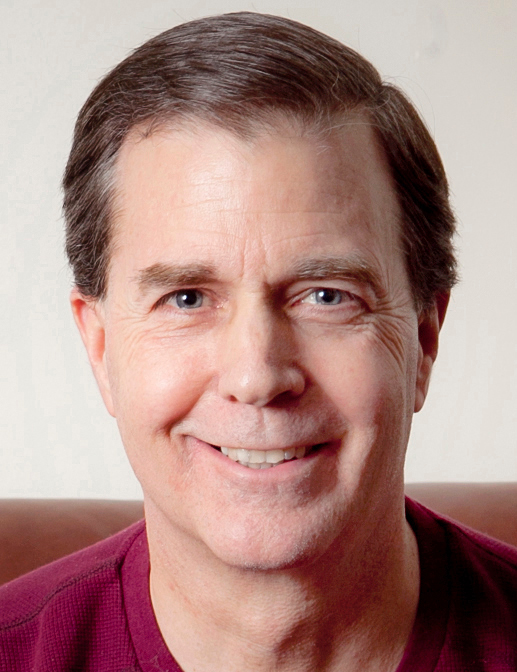
Jim DoughertyIn the midst of struggles, early Puritan minister, Massachusetts Bay Colony political figure and Harvard president Increase Mather famously paraphrased I Cor. 10-13 as “Nothing has befallen you, but what is common to men, yea, and to the best of men.”

As Unificationists face the somewhat ironic spectacle of a movement dedicated to unity struggling to unify, amidst faction, division and strife, it’s important to remember we are not the first to stride, stumble, trip, and crawl down this path, and ask ourselves: “What has befallen us, that is not common to people?” — Nothing.

Most, if not all, of the problems we face are the same as others have faced before us. Those problems should not be dismissed or treated lightly, even if we’ve seen them many times before. Indeed, they should be taken all the more seriously as they have proven to be difficult, in many cases almost impossible, to solve. But neither should we be dismayed by those problems, or draw the false conclusion of discouragement because we still face them. Looking at history and what others have gone through can give us perspective, help us manage our expectations, and encourage us to work steadily on the problems we face with the many solutions at our disposal.

Great examples of historical church figures not always living up to our high expectations are found in Saints Behaving Badly: The Cutthroats, Crooks, Trollops, Con Men, and Devil-Worshippers Who Became Saints (2006) by Thomas J. Craughwell, a respected Catholic newspaper columnist.

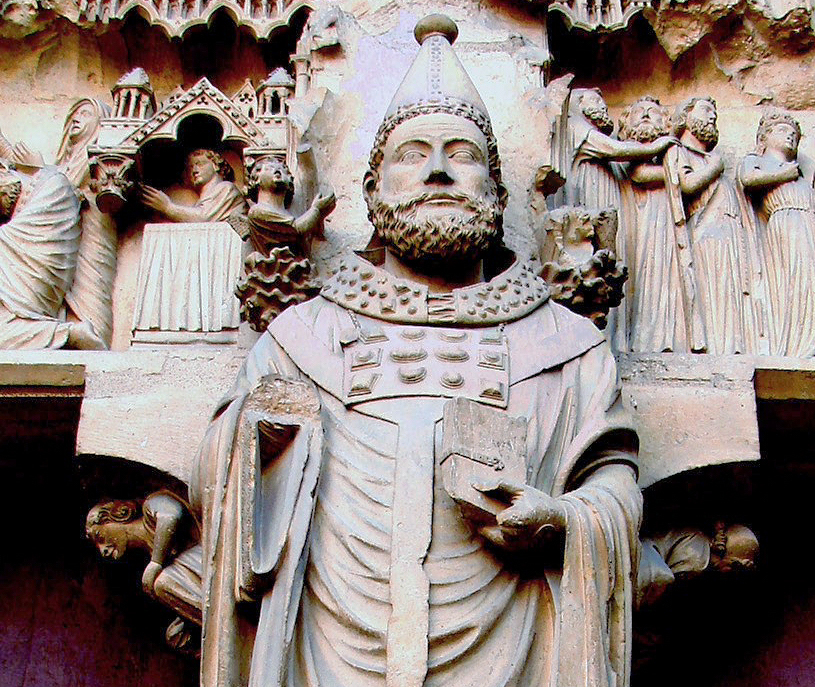
Pope Callixtus I, for example, martyred in 223 CE and canonized, was originally a Christian slave of another Christian, Carpophorus, who had Callixtus set up a bank of sorts for fellow Christians, to protect and invest the savings of widows and orphans, and to collect donations for them. Carpophorus had come to believe that Callixtus was a man of some financial acumen who could handle the job, but it turned out that trust was misplaced. Callixtus succeeded in losing all the money invested, and embezzled some of it in the process. With Roman Christians stripped of their savings and enraged, Callixtus fled to the nearest harbor and booked passage on the first ship he could find.

Continue Reading→

The Internet as Intentional Communities

website-hosting-1024x780

By Andrew Stewart

I.

AndrewStewartAn anecdote often shared among Unificationists about the spirit world is that it is composed of places where like-minded people congregate together. The same largely applies to the Internet, for the most part composed of entirely intentional communities. Every decision to go to a website is mostly intentional, so where you go is very much an expression of personality.

Consider the news websites people go to, the videos they share, the comments we leave. These are all expressions of our unique online personalities. Overall, they generally reflect what we may really think, but doubly so if it’s possible to have a mask on to let no one know who we are.

This is not an assault on anonymity, but consider how anonymity removes the fear of backlash. It usually lets people find out exactly what they think when the pressures of society to conform or behave are removed. What is left is raw personality, which can be very scary, and yet very comforting. A person who behaves exactly the same way knows that they own their own behavior, and for others it lets them know what others have pushed on them. Your spirit is also likely on the same wavelengths as your online behavior, because in the spirit world there is no gap between what you think and what is created around you.

II.

Think of something which makes people very mad, and go to the comment section of any regular news story that deals specifically with that very thing. There’s no guarantee that comments will be intelligent, but people will be posting what they think or feel. Even without anonymous posting, people are probably very quick to judge that specific issue harshly, and the section escalates into an argument. Although it may be a very toxic environment, it means they are being exposed to different ways of thinking, and it is easy to disassociate that the words belong to a living breathing person with hopes and dreams.

On the other hand, it’s very easy to tell when you are in an echo chamber. Everyone agrees with what has been posted, with the things you say. There are no voices of dissent. Echo chambers are much more dangerous to be a part of, because there is no dialogue.

Continue Reading→

Reconsidering Divine Principle’s Call to Create a Socialist Ideal

Capitalism-Socialism

By Jack LaValley

Jack LaValleyDivine Principle claims the ideals and values embedded in capitalist democratic free markets will give way to a socialist ideal:

“Because human beings are created to live in an ideal society, they will inevitably pursue a socialistic ideal as they strive for freedom and democracy and further search into their original nature (Exposition of the Divine Principle, p. 342).”

Regarding the economic system organized in a socialist society, Divine Principle:

“God’s plan is to develop a socialistic economy, although with a form and content utterly different from the state socialism that communism actually established (p. 341).”

Let’s examine Divine Principle’s call for the creation of a socialist ideal.

In the last 150 years, the Western capitalist system has proved better than any other method devised to produce politically and legally free individuals, distribute products via the free market mechanism and create material prosperity for the individual. In America — still the most prosperous country in the world — people enjoy the freedom to pursue material comfort, a stable democracy, limited government, and peace.

Yet great numbers of individuals in our midst suffer from various forms of mental illness. Available data in the United States on destructive acts such as suicide, homicide, alcoholism, illicit drug use, and a multitude of other psychologically-based disorders, can give us cause to ask if there might be something wrong with our way of life and the aims we are striving for.

Mental health professionals identify three causal factors to mental illness: biological; psychological, and environmental. Outside of genetic factors, brain trauma injuries and neurological disorders, mental illness is often viewed as a deviation from expected social norms and behaviors. Those individuals who break with established social norms and behaviors are viewed as abnormal or mentally ill.

One extreme example of this can be found in the 1970s anti-cult deprogramming phenomenon.

Continue Reading→

The Only-Begotten Daughter

20150303-main-8

By Andrew Wilson

WilsonSometimes we need theology. In Christian church history, the time theology becomes important is when there are differences of opinion between various leaders or groups of the church, or sects — what in church history came to be known as “heresy.” But “heresy” simply means opinion. To identify truth and distinguish truth from heresy shouldn’t mean to condemn the heretic to the stake — although that often happened in church history. Rather, to distinguish truth from heresy is to properly understand what God is doing and correct misunderstandings. It is the job of the theologian to clarify truth, but not to condemn; it is to clarify what is the core of our salvation.

These days some question, “How can True Mother call herself God’s only begotten Daughter? Was she born sinless? How could she be, when only the Messiah is born sinless?” Nevertheless, True Mother confidently stated at the second anniversary of True Father’s Holy Ascension (Seong Hwa), “I am God’s only-begotten Daughter.”

In fact, this idea can be found in Father’s words. It is in the Cheon Seong Gyeong (both old and revised versions) from a June 1972 speech in which he said, “Where there is an only-begotten Son, there is also an only-begotten Daughter.”

It’s important to understand the meaning of this term to properly honor True Mother as the True Parent, now that True Father has ascended to the heavenly realms.

We are well aware of the common view that True Father, coming on the foundation of Jesus Christ, is sinless. He then takes a woman from the fallen world and raises her up to be the Bride, at which point they become True Parents. From that point of view, Mother up to that time was just an innocent girl living a protected life. All her merit, and everything she had, came from Father.

God’s Equal Love to Man and Woman in the Original Creation

But think about Adam and Eve when God created them. They were brother and sister, each created out of a portion of God’s divine essence. As God is the Heavenly Parent having dual characteristics, God must have poured all of His masculinity into Adam and all of Her femininity into Eve. God then would have raised them individually as His son and Her daughter.

Continue Reading→

Website Built with WordPress.com.

Up ↑