Same-Sex Marriage: A Unificationist Response

Gay-marriage-ruling-e1435341862437

By Robert Beebe

Dr BeebeSame-sex marriage is now the law of the land, thanks to the recent 5-4 ruling by the U.S. Supreme Court. Despite 30 states enshrining in their constitutions that marriage was the union of one man and one woman through the combined votes of 50 million people, all this was swept away in two years largely by federal court rulings that made same-sex marriage legal in 37 states, culminating in the Supreme Court decision. Along the way, a majority of Americans are said to now support same-sex marriage. The culture war is over, advocates say. The traditional view of marriage has been cast aside.

All this has occurred not for want of effort on the part of traditional marriage supporters. The National Organization for Marriage, the Family Research Council, and other Christian-based groups have fought tooth-and-nail for many years to prevent what has just happened. Despite their confidence in their cause, and believing that God was on their side, they ended up fighting a losing battle. How did this happen?

Looking back, it seems now an inevitable result of a half-century of cultural change beginning with the sexual revolution of the 1960s. Traditional marriage lost its honored place in American culture long ago when the divorce rate began to skyrocket towards 50%, where it remains today. What are we to expect when millions of children fail to experience the benefits of traditional marriage in their own homes during their formative years? Why should we be surprised when, as teens and young adults, they begin to look elsewhere and experiment in unorthodox ways in their desire to find love? The seeds for legalization of same-sex marriage can be found in the breakdown of the traditional two-parent family.

This has been accompanied by the indoctrination of our young people by a public school system that promotes in the name of diversity not only tolerance but the celebration of all sorts of lifestyles and personal expression. The Judeo-Christian values that once provided the moral foundation for our culture and informed the nation’s education system have been replaced by a godless secular perspective in which anything goes. From this new perspective, once accepted traditional values are now regarded as oppressive and bigoted. Having breathed this atmosphere day-after-day in the public schools, many of our own children have adopted the values of the popular secular culture.


Continue Reading→

Mormon Lessons for the Unification Church

mormon-church-missionary

By Takayoshi Sugawara

TakaSugawaraThe rise of The Church of Jesus Christ of Latter-day Saints (LDS or Mormon Church) is an incredible story of a persecuted Christian offshoot that has grown to become the most successful, new global religion in the 14 centuries since Islam. It boasts 4.5 million active members worldwide (15 million recorded), and the church itself is estimated to be worth $40 billion. Its membership has included a 2012 U.S. presidential candidate.

All this membership, wealth, and a permanent footing in mainstream consciousness was achieved within a 185 years of its founding. This is a monumental achievement. Rodney Stark, a highly regarded sociologist of religion, declared this ascent to be “one of the great events in the history of religion.”

In contrast, the Holy Spirit Association for the Unification of World Christianity (Unification Church) is a new faith experiencing difficulties in all these areas. Currently, the church finds itself in much turmoil in areas such as finances, leadership and growth. If the Unification Church is to survive and grow, changes need to be implemented.

It is fortunate for the Unification Church that the Latter-day Saints have proved it possible for a new religion to find success globally, bucking declining trends experienced by other Christian sects. Many studies of the Church of the Latter-day Saints have attempted to explain its enviable growth. Let’s consider ways the Unification Church might attempt to replicate its success.

To begin with, the development of the two faiths are strikingly similar. A charismatic leader raised in the Christian faith started a new religion upon experiencing a supernatural vision. After initial growth and success, both their fledgling churches experienced severe persecution from their communities, and the founders were jailed several times during their ministries. And now, the factionalism that Unification Church is experiencing soon after the death of its founder is eerily similar to the “Succession Crisis” experienced by the Mormons following the assassination of its founder.

Continue Reading→

Preparing for Our Seonghwa: Life as an Exclusively Spiritual Being

June 2005

By William Selig

William SeligWe live in a death-denying culture, the result of a human-centered worldview instead of a life centered on God. Because of the Fall, we lost not only the true understanding of life, but of death as well.

Reverend Moon said:

“I talk about death in order to teach the meaning of life. Who really knows the value of life? It is not the person who is going all out to preserve his life. The only person who really knows about life is the one who goes into the valley of death. He confirms the meaning of life as he desperately cries out to Heaven at the crossroads of life and death.” (“Understanding Life and Death,” Dec. 18, 1998)

Most people don’t think about death until we are forced by circumstances beyond our control, primarily, from illness or accident. Those fortunate enough to recover know how precious life then seems. When we assume that our life here on earth will go on as normal, we tend to take it all for granted, but when we are reminded that it has an end, then every moment and every day takes on a new and revitalized meaning.

We Are Not Alone

For the past six years, I have been working in a hospice or hospital environment. It is a precious and profoundly spiritual experience. Based on my observation, one of the biggest challenges facing a patient, particularly those in an end-of-life situation, is the sense of loneliness. Spirituality and religion offer patients a chance to reconnect to themselves, family, community, traditions, and ultimately to God.

According to the Principle, the cause for this sense of loneliness can be traced back to the Fall. By disobeying God and succumbing to temptation, our ancestors inherited the element of fear, which comes from a guilty conscience. This unnatural element has been transmitted from generation to generation. It is fear that drives people apart from one another, but most significantly, from our Creator.

Continue Reading→

Charting a Family Course Through Stormy Seas

3 Gen Family

By John Clark

JohnClarkThere is a lot of turmoil these days, both in our church and the world at large. It is a time of tremendous change. No one can confidently predict where we will be in five or ten years. To be a good ancestor, we should take responsibility for making a lineage tradition that will help guide our descendants through turbulent times and good times. Each of our descendants should feel a personal identity as part of a blessing lineage working to make true love foundations on the earth. This is what I want to accomplish as a first generation Unification Church member.

We have long preached world peace through ideal families, but what exactly does our ideal family look like? Are we known for creating such families or merely for organizing conferences that promote them? Are we better at making great families or at sacrificing our families? Our children would be best qualified to answer that last question. We need to be a movement that creates great families.

The world at large is also facing many problems. Economic crises and war threaten our future. It is easy to get depressed by the trend of current events. We need to demonstrate a strong way to survive and prosper through difficult times.

We should seek to distill our faith in practice so it is an undeniable truth in our children’s consciences. One of the great ethics of our faith is the true love lineage. We should give our children many happy, unforgettable family experiences when they are young so they will naturally want to seek happiness by continuing the same family tradition with their own children. True love lineage has a strong identity and responsibility for all family members.

Many of our youth programs would benefit by using true love lineage as the basis of their curriculum, rather than a general schedule of Divine Principle lectures. Long boring lectures probably drive most young minds away from the church and captivate only a small percentage of the children’s imaginations. If they are excited from the workshop, they can read a certain number of pages in Divine Principle every day the rest of the year as homework.

Continue Reading→

“The Hundred-Foot Journey”: Food for the Soul

Film Review The Hundred Foot Journey

by Kathy Winings

kathy-winings-2An old adage used to be that there were two constants in life: death and taxes. For the 21st century, it seems that we have two new constants: cultural conflict and food. The news is replete with stories of the latest cultural clash, whether it is Palestinian/Israeli, Black/White, Muslim/Christian, Ukraine/Russia, and on and on. There seems to be no end to the cultural conflicts.

Then there is food. Food plays an important role in our lives. The popularity of top shelf cooking shows attests to this point. Food sustains our life, it comforts us during stressful or difficult times and it brings people together. It certainly isn’t by accident that food has played an important role in Christian ministry and spiritual life. Whether it is the feeding of the 5,000, the Last Supper with the disciples, or Holy Communion, food has been intimately connected with worship and liturgy. This is also true for other faith communities. Food’s ability to reconcile humanity — whether to God or with each other — and to heal our emotional and spiritual wounds is well understood.

This is what makes The Hundred-Foot Journey, based on a popular novel by Richard C. Morais, such a powerful and inspiring movie. Produced by Steven Spielberg and Oprah Winfrey, and directed by Lasse Hallstrom (The Cider House Rules; Chocolat), The Hundred-Foot Journey presents the challenges of getting along in our multicultural world and how food can be the vehicle for reconciliation and forgiveness during times of conflict as it focuses on the dynamic of a family from India and a French restaurateur.

The Kadam family business is food. The second son, Hassan, brilliantly played by Manish Dayal, is singularly blessed with a gift for cooking, a gift he inherited from his mother. Hassan is just beginning his training as a chef when his mother is tragically killed during a riot that also destroys the family’s restaurant. Having nothing left, the Kadam family leaves India and resettles initially in Great Britain before finally settling down in a small village in the south of France.

Continue Reading→

The Sin in the Garden of Eden and Where America Is Headed

10Commandments

By Bruce Sutchar

bruce_sutcharGrowing up Jewish, I never understood original sin. I can remember my non-religious parents equating original sin with something that Christians believed, regardless that the story is wholly contained in the Book of Genesis. For those growing up in the 1950’s, the baby boomer generation continued the age-old tradition that no one ever talked about sex.

I remember in eighth grade we had a sex education class. This left me with the understanding that parents could conceive a child even though they slept in twin beds (just like all the TV parents on “Leave it to Beaver” or “Father Knows Best”).

I remember a friend telling me that when he was 14 he had visited a 13-year-old girl in her home when her mother was not there. The mother then called his father about the matter. One day his father, while sitting in the backyard mentioned the fact to him as he was walking by. He said, “Now that you are older you have to take more responsibility.” My friend was so embarrassed that he just kept on walking. And that was the only conversation that they would ever have concerning sex.

I grew up in the era before AIDS. In my generation, gonorrhea and syphilis were the only dangers from unprotected sex. I remember in high school several boys in my class had an experience with a prostitute and were so that maybe they had contracted syphilis. I also had one friend who was frightened to death that his date might have gotten pregnant (I grew up with a group of friends who never drank even beer or smoked, so imagine the impact of the above two incidents)

As I entered college, like every one of my best friends, I was still a virgin (how does that compare to the average high school graduate today?). I remember being so disappointed because one of the elders in my fraternity, whom I really looked up to, had to move out of our fraternity house because he had gotten his girlfriend pregnant.

Continue Reading→

Let’s Hear It for the Dysfunctional Family

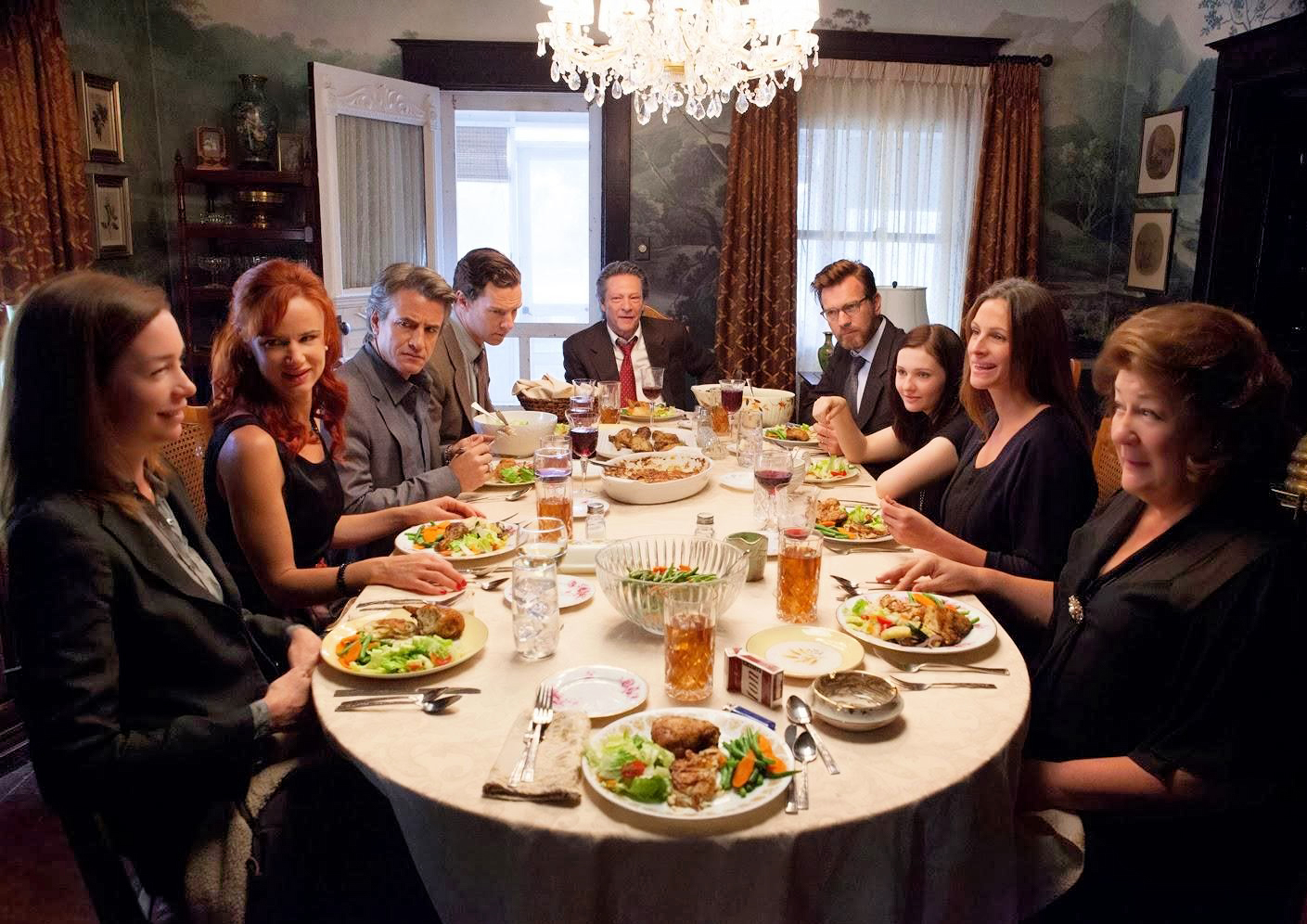
august-osage-county-review-L-77TmxD

A review essay of the 2013 films “American Hustle,” “August: Osage County” and “Blue Jasmine.”

By Kathy Winings

kathy-winings-2If it were not for animated films, I’m not sure our children would see anything in today’s popular media that would recommend the beauty and value of marriage and family. Too many films that received Oscar nods this year portrayed marriage and family as either a lost cause or totally dysfunctional. I’m referring to three where either the film or its lead actors were nominated for the 2014 Academy Awards: “American Hustle,” “August: Osage County” and “Blue Jasmine.”

The acting in each was Oscar-worthy. However, anyone watching those films would come to the conclusion that the American family is lost forever and there is little hope of anyone reclaiming the ideal God envisioned for marriage and family.

Set in the 1970s, “American Hustle” portrays a con artist, Irving (Christian Bale), and his girlfriend, Sydney (Amy Adams), who spend their days setting up Ponzi and get-rich-quick schemes. Unfortunately, they get caught in a sting operation led by an FBI agent (Bradley Cooper). To avoid charges, Irving suggests he can help the FBI set up a major undercover operation that will expose a mafia boss and local politician. An elaborate operation is set up to catch the newly-elected mayor of Camden and a major mafia boss in the act of defrauding the citizens of New Jersey. There are plots and sub-plots with so many twists that the viewer isn’t quite sure until the very end who is crooked, who isn’t, who will end up in prison, and who will walk away.

But the sub-theme running throughout the film is the relationship between Irving, Sydney and his wife Rosalyn (Jennifer Lawrence) and young son. Irving views himself as a good husband and father, despite that he’s a con artist and has a mistress.

Continue Reading→

Perverse Incentives: When Uncle Sam Becomes Dr. Ruth

Capitol in Shadow copy

by Richard Panzer

Richard_PanzerEvery area of life involves choices that have a moral dimension. Whether we enter careers in business, education, government, science, health, art, or religious ministry, each one of us needs to be aware of incentives that could bring us closer to or further away from the original purpose that motivated us to begin with. After all, each system has its own openly stated, or sometimes hidden, incentives.

In this context, the recent article by Scott Simonds provides a valuable discussion about the role of government and its benefits to society. He makes compelling arguments, and certainly there are many dedicated people doing important work in government service, but if one looks closely, it also becomes apparent that governmental incentives can lead to the opposite of what any fair-minded person would want.

The federal Temporary Assistance to Needy Families (TANF, or welfare) program, where substantial benefits are offered to mothers with dependent children based on one main condition — that the mothers not be married — is just a small part of a larger, disturbing pattern.

Simonds expresses doubt that religious agencies would be able to take on the burden of caring for the needy in this country. Maybe so, but when Uncle Sam gets involved there are often strings attached. Consider government actions that force religious organizations that do help those in need to choose between following government regulations and the dictates of their faith. Catholic adoption agencies in Massachusetts, Illinois, and Washington, DC, have been forced to shut down because they believe that, all else being equal, it is best for orphans to be placed with an adopting mother and father who are married. Isn’t that what most Americans believe? Isn’t that what you and I believe? Even if not, shouldn’t there be room for diversity in adoption agency policies? After all, isn’t the goal to help more, not less, orphans find loving homes? How does shutting down faith-based agencies help needy orphans?

Continue Reading→

“Heaven Is for Real”: Profound Truths Are Not Complicated

Greg Kinnear

by Kathy Winings

kathy-winings-2Hollywood these days is rolling out religiously-themed movies for the big screen with marquee name actors. So far we have seen Son of God, God’s Not Dead and Noah.  Exodus: Gods and Kings, starring Christian Bale, will be released in December. Heaven Is for Real is the latest in this line-up of the faith-based genre.

Based on the bestseller of the same title written by Todd Burpo with Lynn Vincent, the film focuses on the experiences of Burpo, a Wesleyan pastor in a small Nebraska town and his four-year-old son Colton, who has a near-death experience while he is undergoing emergency surgery for a ruptured appendix.

Colton’s experience is unusual in that he does not die during surgery, which is the case with most near-death experiences. On the operating table, Colton sees himself being operated on and is then escorted to heaven by angels where he ultimately meets Jesus. Jesus then proceeds to take him on a quick tour, introducing him to some of Colton’s relatives including his great-grandfather and older sister who died in the womb. As Colton describes it, heaven is more beautiful than anything he has seen before. The remaining focus of the film shifts to his father’s struggle to make sense both personally and theologically of his son’s experience. This in turn has a serious impact on Todd’s congregation.

The movie paints a picture of a typical Midwestern farming community in which everyone, the Burpos included, is struggling to make ends meet. Todd pastors a small Wesleyan Church, but like so many contemporary churches, he must maintain a full-time outside job in order to take care of his family.

Continue Reading→

Website Built with WordPress.com.

Up ↑