The Puritan Model of Success

hp_mayflower_arrival_1

By Michael Mickler

Mickler full-sizeReverend Sun Myung Moon was a great admirer of the Puritan movement, especially the pilgrims who migrated to Plymouth, Massachusetts in 1620.

In “God’s Hope for America” he stated, “The story of the Pilgrims is a classic in God’s history. It fits into the pattern of the righteous people of history.”

What is that pattern?

Rev. Moon highlighted three elements. First, he said, the pilgrims “longed for … [a] new world … [a] new heaven and new earth where they could find freedom to worship God.” Second, they gave up “their families, their relatives, their surroundings, and their country.” Third, they exemplified “total reliance on God.” As Rev. Moon put it, “Their only hope was in God. Every step they took they depended upon God … When they were sick and dying … they turned to God … their life from morning to night, from dusk to dawn, was centered upon the will of God. God was their only comfort, their only hope and their only security.”

These attributes comprised the “internal” aspect of the Puritan pattern or, in Unification terms, their “foundation of faith.”

Rev. Moon also spoke about the “external” aspect of the Puritan pattern. He stated, “the first thing they built was a church … I am sure that after their church they built a school. They wanted outstanding schools for their children, better than any schools existing in the Old World. And their homes came last.”

Mrs. Moon made the same point in a recent address. Referring to the “Pilgrim fathers,” she said, “Before they built homes for themselves, first they built a church; then, for the sake of the future generations, they built a school, and then finally they built their own homes. That’s the … course that humankind should follow.”

Church, school and family (represented by homes) comprised the “external” aspect of the Puritan pattern, their “foundation of substance.”

Taken together, the internal (attitudinal) and external (institutional) patterns constituted the Puritan model of success.

How does this relate to Unificationism?

Continue Reading→

The Greatest of These Is Love

713px-Saint_Paul,_Rembrandt_van_Rijn_(and_Workshop?),_c._1658

The Apostle Paul,” by Rembrandt van Rijn

By Dan Fefferman

Dan FeffermanMany times I heard it said that in the early days of the Christian church, it was of one accord, sharing all things in common, united by the Holy Spirit. Certainly this is the view of the church we get from the Book of Acts, which emphasizes the theme of unity through the Holy Spirit:

And they, continuing daily with one accord in the temple, and breaking bread from house to house, did eat their meat with gladness and singleness of heart, Praising God, and having favour with all the people.  (Acts 2:46-47; KJV)

But from Paul’s letters we get a different viewpoint, in which factions and sometimes angry discord can be seen.

In Paul’s letter to the Galatians he speaks of a public argument between himself and Peter over the question of whether Jewish Christians were allowed to eat at the same table with Gentile Christians. And in the letter to the Corinthians, he speaks of factions centered on different leaders.

Now I appeal to you, brothers and sisters, by the name of our Lord Jesus Christ, that all of you be in agreement and that there be no divisions among you, but that you be united in the same mind and the same purpose. For it has been reported to me by Chloe’s people that there are quarrels among you. (I Cor. 1:10-11)

“What I mean,” Paul explains, “is that each of you says, ‘I belong to Paul,’ or ‘I belong to Apollos,’ or ‘I belong to Cephas,’ or ‘I belong to Christ.’”  We don’t know a lot about these factions, but we can deduce some things that may interesting.

Peter

Peter, of course, is traditionally known as the chief disciple of Jesus, the one whom Jesus appointed to be the head of the church. But as already mentioned, Peter and Paul fought about whether Jews and Gentiles could eat together.

Continue Reading→

A Medal for Michael Brown, Eric Garner and Tony Robinson

handsupdontshoot

by Jim Dougherty

Jim DoughertyCould the military doctrine and experience of “friendly fire“ be used to help the country heal, reform and move forward from the recent police-involved deaths of unarmed African-American men, Michael Brown in Ferguson, Missouri, Eric Garner in Staten Island, New York, and Tony Robinson in Madison, Wisconsin? Can we “restore” a wrong that legal and political institutions do not seem to be able to come to grips with?

Many investigations, reviews, legal cases and reform efforts will and must follow in the wake of such tragedies, and they are essential in advancing justice and improving the police and related political structures that govern our lives and protect our rights, lives and property.

And, efforts aimed at reconciliation must not be used to deflect criticism or blame where it is due.  In addition to assessing any criminal responsibility, police procedures, training and technology must be reviewed, in Ferguson, New York City, and elsewhere, to do everything possible to minimize the risk of this happening again — while still allowing, and hopefully improving, the ability of the police to do their job in protecting the public.  The U.S. Department of Justice in its just-released report, while clearing the officer involved in Ferguson of any wrongdoing, nevertheless found a persistent pattern of racism in the Ferguson police department that may require remedies up to and including closing the department entirely.

Even if nothing different could have happened given the circumstances, still, unarmed men were killed by police officers — tragic losses that call out for some kind of action.  The protesters know this, that whatever explanations are given or investigations find, still, something profoundly wrong and unjust has occurred in the deaths of these men. Something that cannot be completely made-up for by criminal penalties, procedural reforms and civil damage awards. Most of our political and civil culture in such situations revolves around finding out what went wrong, who to blame and how to fix it.

Continue Reading→

“American Sniper” and Moral Injury

AMERICAN SNIPER

By Kathy Winings

kathy-winings-2Clint Eastwood’s powerful film, “American Sniper,” dares to bring to public consciousness the hidden side of war. This hidden side is the tremendous toll war takes on the moral and psychological dimension — the soul — of the men and women who serve on the front lines. The film is based on Navy Seal Chris Kyle’s autobiography by the same title and follows his experiences as one of the most lethal snipers in U.S. military history with 160 confirmed kills.

Posted in Iraq, Kyle, brilliantly played in the film by Bradley Cooper, served four tours of duty before being honorably discharged in 2009. On coming home, like many returning veterans, Kyle had the difficult task of adjusting to civilian life in Texas as a husband and father to his two children. In 2013, he and fellow veteran, Chad Littlefield, were shot and killed by another veteran, Eddie Ray Routh, while at a practice range. Routh, who had been recently discharged from a mental health facility and been diagnosed with Post Traumatic Stress Disorder (PTSD), had arranged to meet with Kyle, who was trying to help him with his depression. The poignancy of the film was heightened when Routh’s trial began as “American Sniper” was being shown across the country. Routh was convicted of the murders two days after the February 22nd Oscars telecast, and immediately sentenced to life in prison without parole.

The film brilliantly and poignantly presents the personal turmoil that a soldier faces when holding a life in the crosshairs of his or her rifle. One particularly heart-wrenching scene shows a moment of decision when Kyle has a small Iraqi boy and a woman, who we assume is his mother, in his gun sights. The young boy is given an anti-tank grenade by the hijab-clad woman and begins to walk toward the column of approaching American soldiers. Kyle is praying for the child to stop or at least indicate he means no harm. But the boy doesn’t, and Kyle must do what he is trained to do  —  shoot him. When the mother then rushes to her child, picks up the grenade and runs toward the soldiers, Kyle must shoot her as well.

Continue Reading→

Cultural Wars and Headwing Alternatives

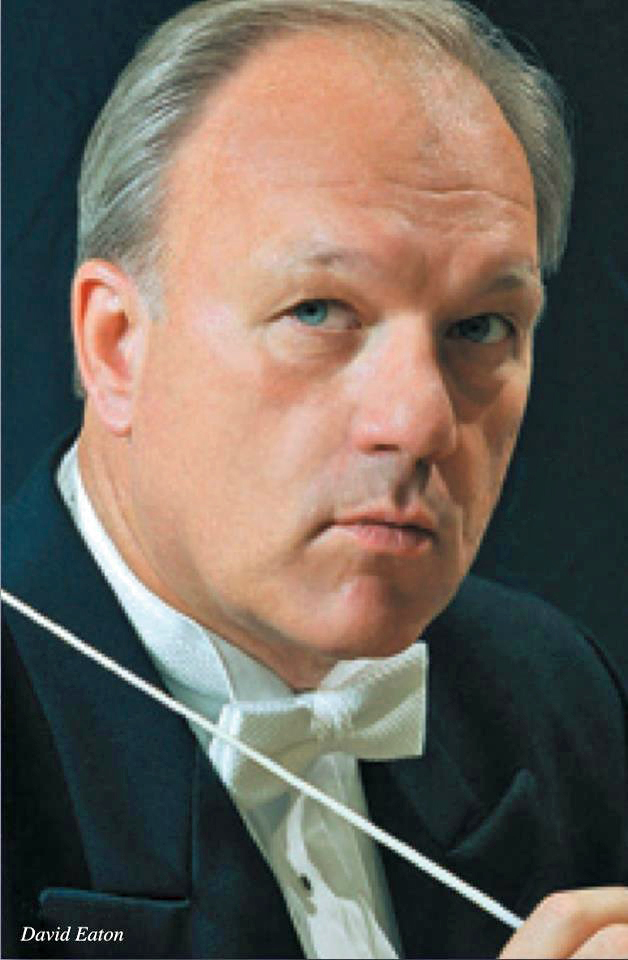
By David Eaton

david_eatonDoes the “Culture War” actually exist or is it purely a myth?

In the aftermath of the 2004 presidential election, Morris P. Fiorina of Stanford University and the Hoover Institution, published his book, Culture War? The Myth of a Polarized America, in which he contends that the idea of America being a “deeply divided” nation is a specious claim. Offering copious data, Fiorina makes the case that a high percentage of Americans possess moderate viewpoints regarding social issues and politics, and as such, we are not as “deeply divided” as those on the fringes of the political/cultural spectrum (or news media) would have us believe. According to Fiorina, these fringe elements tend to confer with coteries who reinforce their particular perspectives and as such, do not represent the large, moderate and politically ambivalent demographic that seeks pragmatic solutions to problems.

This is a counter to the views of Pat Buchanan and others who have long held that America is under siege due to the encroachment of non-traditional religious (or anti-religious) influences and not-so-well intentioned multiculturalists. For Buchanan, nothing less than the soul of America is at stake. That said, Fiorina admits that there is something to the “newly emergent” idea of “Two Nations Under God.” He writes:

The culture war metaphor refers to a displacement of the classic economic conflicts that animated twentieth-century politics in the advanced democracies by newly emergent moral and cultural ones… [m]any contemporary observers of American politics believe that old disagreements about economics now pale in comparison to new divisions based on sexuality, morality and religion, divisions so deep as to justify fears of violence and talk of war in describing them.

By characterizing the idea of a culture war as a “myth,” while admitting that cultural concerns have displaced what heretofore had been conflicts born of economic concerns, is Professor Fiorina conceding that the “culture war” is more than just a metaphor?

Continue Reading→

The Heart of a Dreamer: Father’s Vision for UTS

TP & 3 Presidents

By Tyler Hendricks

tyler_hendricks_edited-1I believe that True Father did not establish Unification Theological Seminary primarily for the sake of educating Unificationist ministers. Of course, Father’s mind is 360 degrees and ministry preparation was part of the picture, but he already had fine ministry preparation with the workshop system. The main purpose for UTS, as far as I am aware, was that of teaching our leaders about what the other religions believe, so that we could, 1) have intelligent and respectful dialog; 2), help them succeed in their ministry by introducing True Parents’ spirit and truth; and 3), build coalition with them that would eventually create the foundation for what Father later came to call the spiritual “upper house” of the United Nations.

I won’t rehearse the history of that plan and the role of UTS in it, but simply say that even in failing to reach the heights of Father’s vision, UTS accomplished an incredible feat, and that the vision is still worthy and true and capable of achievement, and that its achievement—at least until the people God has prepared to partner in it (e.g., the UN) do so — would cost our movement a huge amount of money.

In the latter years of my UTS presidency, I outlined to the UTS Board of Trustees this interfaith path, including the broad stroke path that UTS was designed to take. The Board liked the path, and said to follow it. Unfortunately, they didn’t pay enough attention to the price tag (which I actually low-balled).

I also informed the Board that if they did not want to undertake that expense, there is an alternative path, and that is to learn from the grassroots Christian start-up churches and how they are educating their pastors. I’m talking about the Vineyard movement, the Calvary Chapel faith movement, Saddleback, Willow Creek, and something that emerged since then, Nelson Searcy’s Renegade Pastors; and there are many others. These churches are educating hundreds of thousands of pastors around the world, in-house and online, at very low cost. I advised the Board that going online would require care in terms of preserving the accreditation, but that the industry is changing.

Continue Reading→

Creating a System That Reflects Our Own Values

Handsinair

by Alison Wakelin

Alison WakelinRecurrent woes are symptomatic of an underlying problem, and Unificationists are experiencing issues with stewardship of external resources. This has potential to create deep rifts unless we manage the transition from a system where a leader could remove manpower and resources from any project at a moment’s notice, and place both elsewhere. In moving beyond continued emergency status, we must establish stability and settlement in accordance with our own values.

The Western world is struggling with its relationship with the creation, just as are Unificationists. Americans and Europeans are facing a new reality of poverty and real challenges to economic growth. We find ourselves trapped in a system where governments have caused the population to become dependent on government income and support, and we seem powerless to go beyond this state of affairs.

But there are solutions, and we must look clearly, then make the requisite changes.

Firstly, women especially do not find it acceptable that any person should be impoverished and left to die by a system that demands they must work in order to survive, and yet cannot come up with enough jobs, let alone reasonable incomes. We cannot accept that humans should be thrown away because they didn’t work hard enough. A reasonable distribution is not a distant goal to be desired, but an immediate reality that must be accomplished.

When it comes to inequality, people get upset (depending on where they are in the distribution), but so far none of the attempts to put things right have worked. This is because any plan encompassing the ownership of property comes up against very deeply hidden barriers.

Historically, there was plenty of land and villages could easily be arranged so that each householder had access to land and the crops he could grow. Simple arrangements for simpler times – and simplicity is usually the best guide even when things seem to have gotten very complicated.

Continue Reading

Power and Its Distribution

Big3at2014APECSummit

by Alison Wakelin

Alison WakelinA revival of authoritarianism and fundamentalism is sweeping the world today. As Unificationists, this presents a challenge, because post-Foundation Day an encroaching darkness is stealing the hearts and lives of so many millions.

We must ask ourselves, if we truly have a foundational spiritual role to play in the development of society in the near future, how has this come about? The answer seems that there is still an outstanding issue within our movement, one that Reverend Moon spoke of as the failure of Christianity, and which we now see clearly from our Western perspective embodied within a Cheon Il Guk Constitution. We do not see Western values expressed within our own projected future.

We must look at this directly, and accept that action is needed. Too much centralization of power is fine when the person at the center is trusted and admired by everyone, but it leaves only one option when people disagree with the central person. We indeed see several instances where splinter groups have arisen from within our movement. In a post-Messianic era, we cannot cling to too much authoritarianism, and certainly as a prescription for a nation, it is a major problem.

A society with a well-educated populace can only be harmed by a concentration of power and decision-making in too few hands. People grow and mature throughout their lives by making responsible decisions and learning through the outcomes, and if the majority are expected to live solely within the parameters defined by a central powerful body, then vast numbers of people are deprived of the right to self-determination. Thus collective life is reduced to a very circumscribed existence and growth is thwarted.

Of course, it is quite acceptable that some decisions are left to a few representatives, because they know the issues best, and may have the most experience and wisdom to make decisions for the whole — but this only works if there are many levels of decision-making between the individual and the central power. On this basis, those making final decisions do so aware of the opinions and desires of others.

Continue Reading→

No One is Minding the Store in Our Two-Party System

the-collection-of-20-healthier-halloween-candy-choices-2

by Gordon Anderson

GordonMany people do not like President Obama’s executive actions on immigration, but in his November 20 speech, he stated that if Congress did not like his solution they could pass their own bill for his signature. The failure of Congress to pass an immigration bill reflects a larger problem in the U.S. political system: our current two-party system.

Political parties, almost by definition, do not serve the nation. Rather, they serve the interests of their financial contributors, who do not contribute to the nation, but seek to get something for themselves from the government. With our current two-party system, no one is minding the store. The current U.S. Government can be compared to a Wal-Mart in which people bribe a security guard to get in the store, and, once they do, take what they want from the shelves without paying at the cash register. Our elected representatives are those security guards, and, instead of representing the people, they have become operatives of political parties.

American political parties are coalitions of economic interests justifying themselves through ideological rhetoric. They have become the factions that so worried the U.S. Founders, particularly James Madison:

By a faction, I understand a number of citizens, whether amounting to a majority or a minority of the whole, who are united and actuated by some common impulse of passion, or of interest, adverse to the rights of other citizens, or to the permanent and aggregate interests of the community.

— James Madison, The Federalist 10

U.S. government policies today are determined primarily by political parties, not by citizens. As much as possible, political parties place party loyalists on the ballot as candidates. Once elected, party contributors prepare legislation and hire lobbyists to help these loyalists shepherd it through.

Continue Reading→

Website Built with WordPress.com.

Up ↑