
God Has Been Homeless

By Tyler Hendricks

A homeless shelter. Eww, who wants to go to a homeless shelter? Who wants to be with beggars, vagrants and derelicts?

That was my attitude toward the homeless my entire life if I so much as ventured to think on the subject. So, here I am, living in the upscale town of Milford, CT, a beach town on Long Island Sound, full of pricey Airbnb’s, a village green, quaint neighborhoods, and picturesque churches.

Oh-oh, I see a homeless person. He’s got a shopping cart full of plastic bags stuffed with who knows what. He is on a corner with a sign asking for help, for prayer. Oh, wow, glad it’s a green light.

This spring, I returned from Korea, moving from a lovely mission assigned by True Mother, with her permission. She agreed that, at this point, I have work to do in the United States. My lovely mission now is under a new central figure, our local pastor, Simone Doroski.

Milford is a place to make the Principle real and the theory into reality. So, I get involved in the community. I ended up meeting the director of the local homeless shelter, the Beth-El Center, and participating in one of their weekly meetings for spiritual guidance.

Grace at the Beth-El Center

A woman named Tess led the spiritual guidance meeting, and seven women with three little children participated. It was noisy, unorganized, informal. We set up chairs as needed, no refreshments, no music, just sitting in a circle in the shelter’s kitchen.

In that one hour, I heard twenty sermons from them. Some of them knew the Bible quite well, although one did mix up Corinthians with Chronicles. They all shared their real heart, the grit and grime of life, and drew lessons from a poem by Pierre Teilhard de Chardin, read by the hostess. The poem was about patience, that God works slowly. I realize that these homeless people are just like all of us. And their hearts are eloquent.

Based on that experience, I had a realization: God is homeless. I recently heard someone say that God did not kick Adam and Eve out of the Garden; they kicked God out. I agree. God is our Heavenly Parent, and parents do not kick out their children. I used to think that God lived in a palace, and once in a while, I had a glimpse and experience of it. No. God is in the darkness just as I am. God experiences the light and love together with me. Love and light come through give and take. God is my light, and I am God’s light. True Father expressed this well:

“God’s joy remains dormant until He can have full give and take with us. So far in Christianity, many churches placed God so high up in heaven and pushed humanity so low in hell that there has been an uncrossable gap between us and God.” (God’s Warning to the World, pp. 7, 12)

We left God homeless, and True Father was no stranger to homelessness. Of his life as a refugee in Pusan, he said:

Continue reading “God Has Been Homeless”

Drawing Parallels Between Reagan and Trump

By Serge Brosseau
I recently watched the movie “Reagan” with some friends at a local theater. It is based on the book, The Crusader: Ronald Reagan and the Fall of Communism.

We follow former KGB agent Viktor Petrovich, played by Jon Voight, recounting and commenting on the life of the 40th president to a young Russian agent. Dennis Quaid plays Reagan in a convincing way. I find that actors do well when they have affection for the characters they play, and clearly, this is the case here. The love story between Ronald and Nancy brings also a romantic touch to the narrative.

This independent production illuminates Reagan’s life of faith. It is part of a new trend in Hollywood of Christian-based productions, like the 2022 movie “Sound of Freedom” about sex trafficking, that were successful at the box office. The critics gave it mostly negative reviews, but it draws public interest as the election season is heating up.

One of the happy memories I have of my early years in the movement was the night that Reagan was elected. I joined in Berkeley, CA, in June 1977, and by November 1980, I was fundraising with a team in Little Rock, AR. We stayed at the church center where Rev. Richard Buessing was the state leader. We celebrated the election result with a few members, which we felt was very hopeful for the country. Watching the movie brought some of this back. It inspired me to draw several parallels between the presidency and the personalities of Reagan and Trump in connection with this current election season, namely Ronald and Donald.

First of all, the movie opens up with the scene of Reagan delivering a speech at the Washington Hilton on March 30, 1981. He is shot and wounded as he departs. Three people are injured, including his press secretary, James Brady. When Reagan arrived at the hospital, he was considered ‘’right at the margin of death,’’ but he recovered quickly. It is said that Reagan came to believe that God had spared his life ‘’for a chosen mission.’’ We know that True Father, Rev. Sun Myung Moon, went deep into prayer, considering how important Reagan’s life was to be spared as the nation’s political leader.

Some 43 years later, Trump is holding an open-air rally in Butler, Pennsylvania. He is shot and wounded in his upper right ear. He is one inch away from being assassinated. One man in the audience is killed, and two others are critically wounded. On the day of the rally, on July 13, True Mother, Dr. Hak Ja Han Moon, is in Las Vegas. Upon hearing of the shooting, she sends a message delivered to Trump expressing the fact that it is ‘’providential’’ that his life was spared. He has frequently stated that it was God who saved his life.

Continue reading “Drawing Parallels Between Reagan and Trump”

Unrest in America: What is Going On?

By Sandra Lowen

There have “always” been enslaved peoples in the history of the world. The slavery of the Israelites and of Africans have been considered among the most heinous, however, because of their severity.

Unlike the Israelites, who were made slaves in their own or neighboring countries, Africans were carried far away across a great ocean, where nothing was familiar to them. Israelites and the Egyptians who enslaved them did not look that dissimilar, while the Africans, with their dark skin and other prominent racial features, stood out among the people around them.

Although they were ostracized from Egyptian society, there is no record of the Israelites being deprived of family, religion, language, or culture. However, African slave families were purposefully separated and placed with other Africans who did not speak their language. Learning to read or showing those skills was punishable, in a significant number of incidents, by death. Whippings and forcible rapes were a matter of course.

How were Christian White people able to do such contemptible things? They went to the Scriptures and dredged up the story of Ham, Noah’s second son, whose offspring Noah cursed to be slaves to their relatives. White religious people designated Ham to be a Black man, destined by God to be a slave to justify their treatment of the Africans.

But even this was not enough. Ultimately, they labeled the Black race as “beasts,” who, like other animals, could be beaten and maltreated. Some “studded” their slaves, forcing them to have sex even with close relatives or with the owners themselves. In the latter cases, the mixed-race offspring were not acknowledged as a part of the White family, but were banished to the slave quarters with the rest of the Blacks.

When changing political and social pressures made it no longer easy to bring slaves to America, the Whites coupled with Black women, willing or not, to make more slave offspring. At auction, these mulatto and quadroon children sold for a higher price than their black-skinned half-brothers.

Many people called for slaves to be treated better, but they were shouted down. Ultimately, in political circles, it was allowed for a Black man to count as having the value of three-fifths of a White man. Independence Day — July 4, 1776 — granted neither freedom nor citizenship to Africans in America. A slave might be freed for extraordinary service to his master or upon his owner’s death. However, there was no guarantee, even with legal papers attesting he was free, that an African might not be recaptured by “slavecatchers” and returned to servitude without recourse.

Continue reading “Unrest in America: What is Going On?”

Socialism and Capitalism from a Headwing Perspective

By David Eaton

In the current iteration of the so-called “culture wars,” a primary narrative deals with the debate between those advocating a socialist modality and those advocating free-market capitalism. Unificationists have been debating the pros and cons of these modalities as well.

The 1996 Exposition of the Divine Principle references (p. 342) the Welsh socialist pioneer Robert Owen (1771-1858) in the context of establishing a culture predicated on the ideals of interdependence, mutual prosperity and universally shared values. As Divine Principle notes, our original mind and our “inmost hearts,” aspire to “the world of God’s ideal where the purpose of creation is fulfilled.”

Though Divine Principle characterizes Owen’s brand of socialism as “humanistic,” his attempts at striving for fairness and equality tend to be in accord with what might be termed, “heavenly socialism” in the context of achieving mutual prosperity.

Regarding capitalism from a God-centered perspective, we read from our founder, Rev. Sun Myung Moon, in Book 10 of Cheon Seong Gyeong:

“If America is armed with Godism, rooted in Headwing thought, Godism and free-market capitalism will become like inner and outer halves. Then, through my guidance America can progress in a perpendicular line straight toward God.”

This statement may seem to be at odds with Divine Principle’s reference to a society predicated on heavenly socialism, however, our founder defines the “-ism” in Godism as “the way of living.” Thus Godism ought to apply to all human endeavors — politics, education, commerce, journalism, and the arts and sciences. Book 10 of Cheon Seong Gyeong also emphasizes the importance of the Three Blessings as described in Genesis as the basis for a culture predicated on Godism.

Robert Owen and the Early European Socialists

I confess I didn’t know much about Robert Owen until recent debates regarding the merits of socialism with other Unificationists prompted me to investigate. Owen and early European socialist advocates, Sylvain Maréchal (1750-1803) and François-Noël Babeuf (1760-1797), pre-dated Karl Marx by several decades. Like Marx, their primary focus was on the question of how societies should live in a fair and equitable manner as the old feudalist modalities were giving way to the new ideas of the Enlightenment vis-à-vis individual rights, free markets, laissez faire economics, and private ownership.

Continue reading “Socialism and Capitalism from a Headwing Perspective”

Patient Love Is More Important Than Doctrine

By John Redmond

When I was a shiny new member of our Unification Family, I was completely entranced with the Divine Principle.

I had spent the previous several years seeking an intellectual framework that could bridge the gap between Catholicism and the scientific method.  I flirted with Marxism until I got to know some of the “leadership” of the campus Marxists and was not impressed with their sense of self-importance.

However, I didn’t have any constructive way to respond to the arguments they advanced — until I encountered the Principle.

The second thing that impressed me about this group of fellow seekers, who believed as I did, was we could be a model of the things we were talking about, and together, we could heal God’s broken heart, and significantly improve the world.  Those people, currently both in and out of the various parts of the movement, remain my best and most admired friends.

I still believe that living our ideal is the primary providential responsibility of our rank-and-file members.

I fired out of three weeks of workshops with a conviction that anyone who could hear this new truth would instantly be overwhelmed and brought to the realization that we could indeed, as one elder assured me, “reach perfection in three years if we were sincere.”

I started out as a good fundraiser but frequently would get drawn into long involved discussions with interesting individuals, Christians, communists, rabbis, and drunks, frequently resulting in me missing my pickup time and my captain having to send team members into stops on my run and reminding me about what I was supposed to be focused on.

At evening programs, and in workshops, I was the guy locked in detailed arguments with guests about how “Jesus didn’t come to die” or why dialectical materialism was a limited point of view.

As Jonah Goldberg recently wrote, I was a captive of reification:

 “…’the act of treating something abstract, such as an idea, relation, system, quality, etc., as if it were a concrete object.’ This confusion of words for things is a great peeve of mine. In logic, there’s a reification fallacy, in which we confuse the model for the reality: The map isn’t the territory.”

As I came to understand, no matter how clever the argument, how powerfully and clearly stated, no one could “hear” the Principle until they were understood and accepted it as a person.  A few precepts come to mind:  “Actions speak louder than words,” “I can’t hear what you are saying because of what you are doing,” and “Always be witnessing, and sometimes use words.”

A second round of this understanding was deepened by my children.  I came to understand that “free will” is not a political concept, but the primary spiritual gift from God to all His/Her children — including mine.  Our family is now on the 400-year plan to create unity.  It may take less time but it won’t be because I explained about the Principle one more time to anyone.

As a family, we have decided that love is more important than doctrine, and that a successful defense of God is through a lifelong example rather than clever lectures.

This same lesson is now coming to our Unification Family.  The Divine Principle explains that objects grow vertically through three stages of growth and make horizontal progress through Origin, Division, Union action.

Continue reading “Patient Love Is More Important Than Doctrine”

The Next Great Awakening Through the Convergence of Science and Religion

By John Redmond

Students of human history are very aware of patterns and cycles that define our intergenerational experiences. The hope is that by discovering the systemic causes of failures in the past we can prevent or reduce the consequences of failures in the current age.

Karl Marx hypothesized that the important cycles of history were the ones defined by the conflict dialectic and that the arc of history is bending toward worldwide socialism, where material wealth is uniformly distributed.

In the Divine Principle, history moves by the Principles of Restoration in cycles, but the length of the cycles is dependent on the providential response of the central figure and chosen people of an age.  The arc of providential history creates a society spiraling upward in increasing beauty, truth and goodness, in addition to the abundance of material prosperity.

The last 400 years of human history have been a golden age of prosperity by any historical measure.  There is widespread anxiety that the scientific forces unleashed by the Enlightenment will cause humanity to end in disaster as previous golden ages have. Elon Musk said he’s determined to create another populated planet in case humans render earth uninhabitable.  The Dark Ages, which followed the Roman Empire and birth of Jesus, led to 1,000 years of dystopia.

Recent political polarization, exacerbated by Internet information algorithms, have created toxic levels of political discourse in America.  This was predicted by Marx, who thought that escalating conflict created conditions for a revolution that would destroy an old structure so that it could be replaced.

The Divine Principle also predicts that conflict can clarify roles of a subject and object, but that in cases where the opponents can be reconciled to a higher truth, a system of higher complexity, unity and effectiveness can be created.

A good example of this success is the creation of the United States.  The mounting conflict of the American colonies with England from the 1770s could have resulted in some representation in England, lower taxes, or a humiliating loss.  However, the Founding Fathers and Mothers of America were moved to create something new and higher than a simple political win, and indeed, America has been the indispensable nation for the last 100 years.

It seems that human history may be at a turning point from both the materialist and spiritual points of view.  What are the forces that affect that turning point and how can we influence the course of history to create an upward spiral rather than a 1,000 year decline?

History has some precedents for how society has been shaped by spiritual and religious movements.

This response from ChatGPT, an artificial intelligence chatbot, was to the question: “What were the Great Awakenings and what were the consequences for America?”

“The First Great Awakening took place in the 1730s and 1740s. It was sparked by preachers such as Jonathan Edwards and George Whitefield, who emphasized the importance of personal conversion and a direct relationship with God. The movement had a profound impact on colonial society, as it challenged traditional religious authority and hierarchical structures. It led to the growth of new religious denominations, such as the Baptists and Methodists, and promoted ideas of equality and individualism.

Continue reading “The Next Great Awakening Through the Convergence of Science and Religion”

Enlarged Freedom for a Safer World: A Unificationist Approach toward Human Security

By Laurent Ladouce and Carolyn Handschin-Moser

After the end of the Cold War, many hoped the 21st century would be one of lasting peace. It actually started well with the International Decade for a Culture of Peace and Non-Violence for the Children of the World.

During this period, Rev. and Mrs. Sun Myung Moon launched the Universal Peace Federation (UPF). With its network of Ambassadors for Peace worldwide, it has an impressive record of peace initiatives. Hopefully, the emergence of a graduate school for peace and public leadership in the Unification movement will also bring innovative and creative ideas to the philosophy of peace studies.

Regrettably, peace studies often stop at conflict resolution or conflict transformation. We need more “positive peace studies.” We keep viewing peace as pacification, the return of tranquility after a period of conflict. According to Heraclitus, the founder of dialectics, “Polemos (war) is both the king and father of all.” We still live in a culture where there is only a truce between two wars. The term “irenology” (from the Greek irene, meaning peace) exists, but is rarely used.

The Genesis of Human Security

Peace is more than the absence of war, we say. But what should be present when war is absent? The revolution of Satyagraha, launched by Gandhi, went far beyond the Home Rule movement which had blossomed in India in 1916-18 and was to end the British colonial occupation. Satyagraha literally means that truth has an element of love and an element of energy within itself. Gandhi added:

“Truth (satya) implies love, and firmness (agraha) engenders and therefore serves as a synonym for force. I thus began to call the Indian movement Satyagraha, i.e., the Force which is born of Truth and Love, and gave up the use of the phrase “passive resistance” in connection with it.”

Gandhi wanted to make Indians the actors of their own destiny, free to build a peaceful and good society. He noted:

“I would like to see India free and strong so that she may offer herself as a willing, pure sacrifice for the betterment of the world. The self, being pure, sacrifices himself for the family, the latter for the village, the village for the district, the district for the province, the province for the nation, the nation for all.”

We often chant “study war no more” (see Isaiah Wall photo below), but study what, then? Indeed, we accumulate valuable knowledge to gradually change from a very violent to a less violent world, and ultimately to a world with zero violence. But what stands above the zero? Unificationism states that Cain and Abel should reconcile and settle their disputes, then live together. In practice, most Unificationists still seek a roadmap for a feasible universal concord. The Unificationist community, not unlike most religious organizations, believes in some form of utopian universal concord. A proper understanding of human security may be an eye-opener to arrive at something more concrete.

Continue reading “Enlarged Freedom for a Safer World: A Unificationist Approach toward Human Security”

A Manifesto for an Integral Society

By Gordon L. Anderson

Societies have become very complex since early nation-states formed in the 17th century.

Corporations, central banks, political parties, government bureaucracies, and many other social institutions have arisen to assert great control over individual citizens. These institutions can be of great service or harm to individuals, depending on their purpose and how well they are managed.

Will a way be found to keep them in the service of the people, or will they create a dystopian future in which people have little value except as serfs to those who control these institutions?

Much of the strife in our societies results from the loss of freedom and personal sovereignty as social institutions expand, taking control of governments, land, food, money, health, and energy.

Self-sufficient individuals, small businesses, and small towns are threatened by wealthy elites, global financial conglomerates, and the financial, ideological and political hijacking of institutions. Inflation, the fear of rigged elections, and energy shortages are causing populist uprisings as those who control governments, banks and resources threaten them with indignity.

We have reached a critical point in the evolution of human society. The array of highly developed social institutions in our complex post-modern world can either be put to the service of individual sovereignty and happiness or, left unchecked, put to the service of elites who use these institutions for their own power and wealth as sovereign citizens become a new type of feudal serf.

The Divine Principle refers to this time as the “Last Days,” when the Messiah will appear with a higher truth that can usher in the Completed Testament Era. Rev. Sun Myung Moon spoke about headwing thought that would transcend both the right and the left centered on Godism.

In a Journal of Unification Studies article, “Toward a Headwing Society: The Harmony of Three Social Spheres,” I explained how important elements in Unification Thought fit with a developing school of integral thought: stages of growth to perfection in both individuals and society, internal and external aspects of human life, and the preparation for the ideal world with developments in the last 400 years in which feudalism gives way to individual sovereignty.

An integral society can be viewed as Completed Testament society.

This book intends to show the way forward and stimulate discussion on how to achieve an integral society. In an integral society, social institutions exist for specific purposes that serve human beings. Integral society is created by an integral consciousness. That consciousness is rooted in a view of the whole that respects the value of each individual.

Integral consciousness is developing in our world as reflection on the nature and purpose of our post-modern life accelerates. The most popular pioneer in the field of integral studies is Ken Wilber, whose A Theory of Everything: An Integral Vision for Business, Politics, Science and Spirituality was a bestseller.

Continue reading “A Manifesto for an Integral Society”

Unearthing My DNA: The Lost Sister

By Eileen Williams

It’s natural to presume that family are the people who think like us, are born into the same cultural group, share similar political stances, and even look like us. A homogenous comfort zone called “family” might be nice to ponder, but the reality is often a far cry from this rosy Rockwell-esque tableau.

The unexpected discovery of a half-sibling made me re-think “family” and my place in it down to my very core. To put this in a Unificationist perspective: the reality of tribal messiahship with diverse members spanning two coasts and two continents sometimes requires both flying far and digging deep.

It was Thanksgiving 2020, and I was participating in a Zoom meet-up through my local library with Libby Copeland, author of The Lost Family: How DNA is Upending Who We Are. That might make a good Christmas present for someone, I thought, unawares that the very person to benefit from the book would be me.

Inspired by Copeland’s case studies delving into family heritage — its twists, turns, and surprises, the medical miracles, the family drama — I turned to my sister Mary: “Let’s buy ourselves Ancestry.com DNA test kits for Christmas.”

Mary and I were curious about where in Ireland our relatives came from; she was readying to visit my father’s second cousins in Germany. However, we had not anticipated that we were about to “out” our own family skeleton, although that doesn’t seem a nice way to describe a newly-found half-sister.

After Christmas, I received my test results, and there staring back at me from the Ancestry.com website was a photo of a woman tagged as a first degree relative. I determined after a few stunned moments that she could neither be aunt, niece, nor cousin but rather was/must be a half-sister (really?).

She had lurked on the Ancestry.com site for two years hoping to “strike” a match. I would come to learn that she had longed most of her adult life for someone — anyone — she could call family. And strike a match she did.

Although myself and three of my siblings had managed to forge a bond despite the childhood rupture of divorce, my younger adopted sister cut all ties with the rest of us. Sadly, family is not always what folks want to find, and sometimes it’s even those we want to lose. Yet, here on the site was a half-sister hoping desperately to discover family connections.

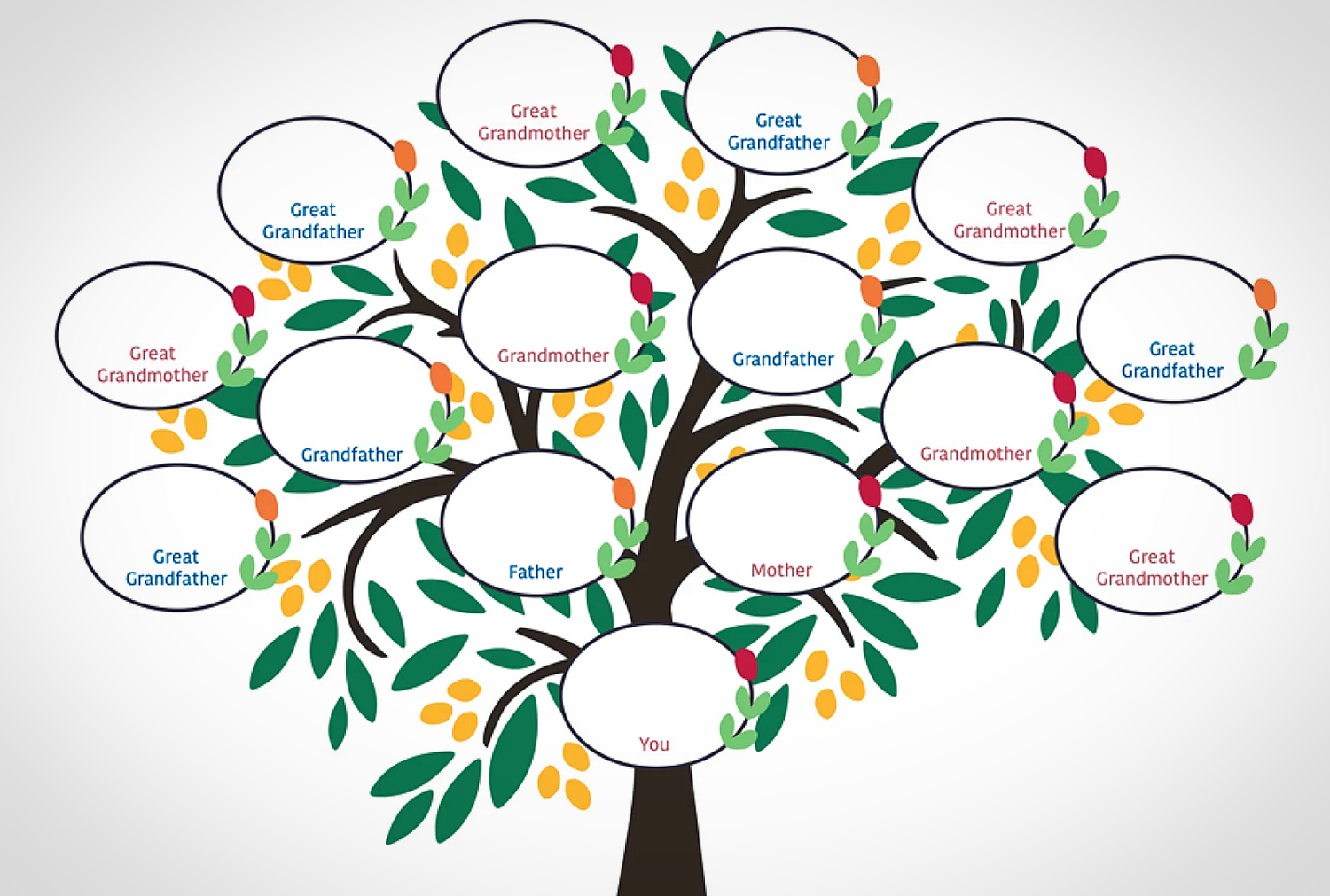
The first thing I learned about DNA testing is people can inherit different pieces of DNA from their ancestral gene pool. One does not neatly inherit 25% of your genetic traits from each grandparent, and then 12.5 % from each great grandparent; rather hereditary traits are expressed in a random manner.

My sister and I share a 58% DNA match, which is normal for siblings or fraternal twins; identical twins share a 100% DNA match. My sister has a higher percent of Scottish DNA than I do (ah, the red in her hair!).  My half-sister was a 27% DNA match with me.

All humans share 99.9% percent DNA in common, so why bother researching your genealogy at all?  Some DNA test sites suggest you can form meaningful connections from doing this — second and third cousin discoveries, famous relatives. Maybe your ancestors go back to a signer of the Declaration of Independence, as a proud friend of mine discovered.

Continue reading “Unearthing My DNA: The Lost Sister”

Website Built with WordPress.com.

Up ↑