“Still Alice”: Holding on to Who We Are

la_ca_1202_still_alice

by Kathy Winings

kathy-winings-2When we were younger and just beginning to study Principle concepts concerning the purpose of life and about the nature of our lives as children of God, many of us tended to think in simple, basic terms.

In terms of our life journey, we often taught that we were conceived and nurtured for nine months in our mother’s womb as our first stage of existence. Our life continued as we burst on the scene and embarked on a journey through this earthly existence for our second stage of life, hopefully looking forward to a long and healthy life. Ultimately, we would pass into our eternal home to live with God and rejoin our loved ones who had gone on before us. We learned in those early days that in the grand scheme of things, our physical life would be but a passing moment, as it were, when compared to our eternal life. Yet how we lived in this second stage of life, how well we loved and how well we lived according to God’s life-giving words were of prime importance. Most of the content though was fairly theological and did not deal with the practical dimension of our daily life.

I don’t know about you, but for me, I did not give much thought to the numerous physical challenges that might make our life on earth difficult. I was too busy going about the work of God to think too long or hard about such things other than to perhaps feel that somehow we might be shielded from some of these challenges because of the importance of the work we were doing.

However, I was reminded of this overly simple view of life while watching the sobering and powerful film “Still Alice.” Julianne Moore, in an Oscar-winning performance, masterfully portrays Alice Howland, a linguistics professor at Columbia University and sought after guest lecturer, who, just after celebrating her 50th birthday, is diagnosed with a rare form of Alzheimer’s disease that manifests at an early age. An intelligent and active woman, and mother of three adult children, this diagnosis cuts to the quick. Here is a woman whose life is defined by words, language and a life of the mind now rapidly being deprived of her thoughts and ideas as well as her memories.


Continue Reading

“American Sniper” and Moral Injury

AMERICAN SNIPER

By Kathy Winings

kathy-winings-2Clint Eastwood’s powerful film, “American Sniper,” dares to bring to public consciousness the hidden side of war. This hidden side is the tremendous toll war takes on the moral and psychological dimension — the soul — of the men and women who serve on the front lines. The film is based on Navy Seal Chris Kyle’s autobiography by the same title and follows his experiences as one of the most lethal snipers in U.S. military history with 160 confirmed kills.

Posted in Iraq, Kyle, brilliantly played in the film by Bradley Cooper, served four tours of duty before being honorably discharged in 2009. On coming home, like many returning veterans, Kyle had the difficult task of adjusting to civilian life in Texas as a husband and father to his two children. In 2013, he and fellow veteran, Chad Littlefield, were shot and killed by another veteran, Eddie Ray Routh, while at a practice range. Routh, who had been recently discharged from a mental health facility and been diagnosed with Post Traumatic Stress Disorder (PTSD), had arranged to meet with Kyle, who was trying to help him with his depression. The poignancy of the film was heightened when Routh’s trial began as “American Sniper” was being shown across the country. Routh was convicted of the murders two days after the February 22nd Oscars telecast, and immediately sentenced to life in prison without parole.

The film brilliantly and poignantly presents the personal turmoil that a soldier faces when holding a life in the crosshairs of his or her rifle. One particularly heart-wrenching scene shows a moment of decision when Kyle has a small Iraqi boy and a woman, who we assume is his mother, in his gun sights. The young boy is given an anti-tank grenade by the hijab-clad woman and begins to walk toward the column of approaching American soldiers. Kyle is praying for the child to stop or at least indicate he means no harm. But the boy doesn’t, and Kyle must do what he is trained to do  —  shoot him. When the mother then rushes to her child, picks up the grenade and runs toward the soldiers, Kyle must shoot her as well.

Continue Reading→

“March Madness” and a Real Spiritual Life

UVA vs Duke

by John Redmond

JohnRedmond2We are big basketball fans at my house. Every March we fill our brackets and root for our team to go all the way. I usually pick the underdogs and end up enduring a lot of “trash-talking” when they lose.

For the people who are focused on things like jobs, politics and careers and missed the text message, “March Madness” refers to the NCAA Division I national men’s and women’s tournaments of the top 68 teams (64 for women) in college basketball, “win or go home” contests with no consolation prizes. For most of these athletes, this represents the biggest stage they will ever perform on. Very few will continue on to pro basketball after college, and most of those that do will have unremarkable careers. This is their big moment!

What makes this tournament so special is the unscripted drama of ten young men or women and countless coaches, parents, students, and alumni locked in a battle that will never be replayed. Players have prepared their whole lives for this moment: morning practices, evening games, endless drills, miles of laps around the gym, that lead to a nationally televised championship game in front of a full field house of screaming fans.

Professional sports often seem like a soulless battle of technically excellent players with no feeling required. College students do not have the cynical detachment of the pros; they believe, and pour themselves into their game with raw emotion.  Victories often hang on a lucky, last second shot, the momentum swings back and forth, the fans sometimes seem to boost their team over the opponent in spite of impossible odds. This tournament sees all of these moments.

Continue Reading→

Cultural Wars and Headwing Alternatives

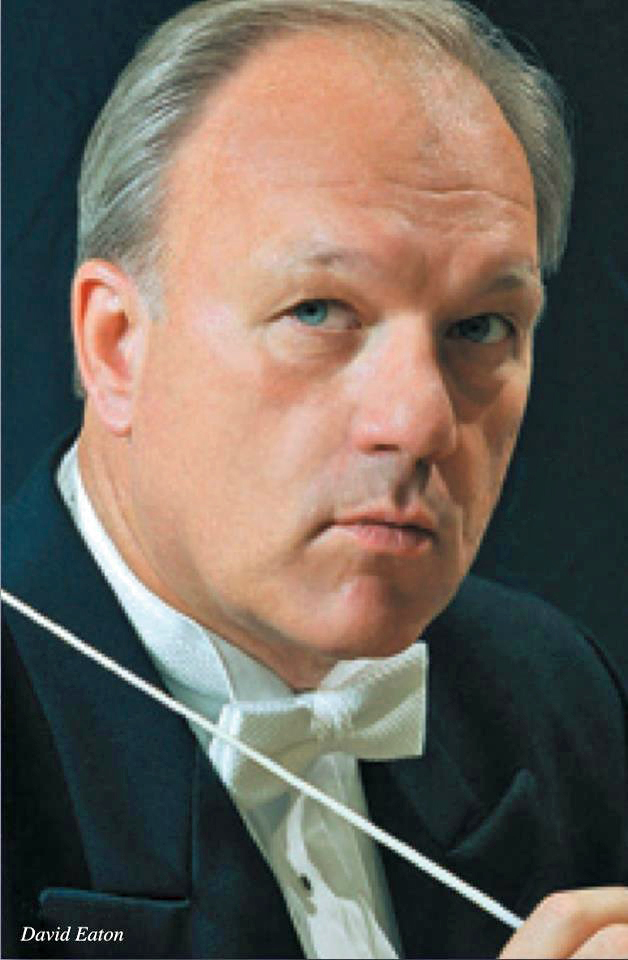
By David Eaton

david_eatonDoes the “Culture War” actually exist or is it purely a myth?

In the aftermath of the 2004 presidential election, Morris P. Fiorina of Stanford University and the Hoover Institution, published his book, Culture War? The Myth of a Polarized America, in which he contends that the idea of America being a “deeply divided” nation is a specious claim. Offering copious data, Fiorina makes the case that a high percentage of Americans possess moderate viewpoints regarding social issues and politics, and as such, we are not as “deeply divided” as those on the fringes of the political/cultural spectrum (or news media) would have us believe. According to Fiorina, these fringe elements tend to confer with coteries who reinforce their particular perspectives and as such, do not represent the large, moderate and politically ambivalent demographic that seeks pragmatic solutions to problems.

This is a counter to the views of Pat Buchanan and others who have long held that America is under siege due to the encroachment of non-traditional religious (or anti-religious) influences and not-so-well intentioned multiculturalists. For Buchanan, nothing less than the soul of America is at stake. That said, Fiorina admits that there is something to the “newly emergent” idea of “Two Nations Under God.” He writes:

The culture war metaphor refers to a displacement of the classic economic conflicts that animated twentieth-century politics in the advanced democracies by newly emergent moral and cultural ones… [m]any contemporary observers of American politics believe that old disagreements about economics now pale in comparison to new divisions based on sexuality, morality and religion, divisions so deep as to justify fears of violence and talk of war in describing them.

By characterizing the idea of a culture war as a “myth,” while admitting that cultural concerns have displaced what heretofore had been conflicts born of economic concerns, is Professor Fiorina conceding that the “culture war” is more than just a metaphor?

Continue Reading→

‘Exodus: Gods and Kings’: God versus King

exodus-gods-and-kings-christian-bale-joel-edgerton

By Andrew Stewart

AndrewStewartIt’s been a good year for biblical movies. “Exodus: Gods and Kings” is the last major biblical film to hit theaters this year, with “Son of God” and particularly, “Noah,” making waves earlier on. The first two films met many expectations, yet surprisingly, the third falls short.

Advertised as a biblical epic, “Exodus: Gods and Kings” has issues with characterization, pacing, as well as wardrobe. In contrast with 1956’s “The Ten Commandments” (starring Charlton Heston and Yul Brynner), “Exodus: Gods and Kings” is shorter, covering less of Moses’ life. Directed by Ridley Scott of “Gladiator” fame, it takes a much more unconventional approach to a well-known story. So which does “Exodus: Gods and Kings” resemble more: Cecile B. DeMille’s epic or Scott’s 2001 “Best Picture” Oscar winner?

“The Ten Commandments” is the standard by which any film about Moses should be measured, and is probably the best known religious film alongside the 1959 “Ben-Hur.” “Exodus: Gods and Kings” (not to be confused with the 1960 film “Exodus,” about the founding of the state of Israel) like “The Ten Commandments,” focuses on the extra-biblical side of Moses’ life. There are a few themes present in “Exodus: Gods and Kings” that might be a homage to those same extra-biblical themes, such as an exchange where Moses asks Ramses to improve the lives of the Hebrews and pay them wages. But that is where the similarities end, with even some biblical story elements missing. The question of why they were not included is that they probably are not realistic enough to fit into the feeling of the movie. The film tries very hard to be faithful to a realistic approach, becoming a battle between Moses and the Hebrews versus the Egyptians. The film attempts too much, and ends up not progressing much in any one area it tries to tackle.

It all begins with a prophecy, that God has not forgotten his people. After a few epic CGI renditions of Memphis at the height of its glory, Moses (Christian Bale), Ramses (Joel Edgerton), and his father, Seti (John Turturro), are sitting around a table, arguing about going to war with the Hittites.

Continue Reading

The Geese at Belvedere Holy Rock and Other Poems

Canada_goose_flight_cropped_and_NR

By Donna FerrantelloDr.Ferrantello edit

The Geese at Belvedere Holy Rock

It was early morning.
Walking at the Belvedere Estate along the Hudson River…

I heard a great flock of Canadian geese from afar away,
And then, saw them circling around in the sky.
They flew off in the distance…honking, honking, honking,

I continued my walk…
in prayerful wondering about nature’s ways…

Then, one flock of geese returned,
Riding high — as though on an invisible highway
of going places at high speeds —
and somehow, almost decidedly
circling and returning to see the rock where I stood,
their honking stopped…

One by one —
each goose slowed to an abrupt stop way above my head….
Each one glided down,
braking like tiny airplanes preparing for landing…
and each landed gently on the ground near me….

A congregant of geese now stood attentively on the grass,
next to our Holy Prayer Rock on the hillside
(where many prayers have been offered here….)
All awaited in this landscape amidst the spacious beyond.

Again, from the distant sky,
a second honking flock of geese circled around above me
and they too stopped honking….

Noiselessly, one by one,
each began to float down,
with wings extended like a parachute.
Each floating goose
made landing on the grassy hillside.

Continue Reading

How New York City Invented the Holiday Season

5308741695_6c2a5fcd31

By Ronald J. Brown

Ronald_BrownThe celebration of a mid-winter holiday is as old as humanity. The sadness of death and desolation that surrounded our ancient ancestors mingled with hope that the days would lengthen, the sun would grow stronger, the trees would burst into bloom, the animals would give birth, and the crops would again ensure their survival. In keeping with the mid-winter celebrations of their neighbors, the three early Christian Churches in Rome, Greece, and Egypt, assigned Christ’s birth on or near December 25 already by the 4th Century.

But the Protestant Reformation began to question any celebration that was not Biblical. Luther, Calvin, Zwingli, Huss, Knox, and other reformers sought Biblical justification for saints, statues, indulgences, seven sacraments, nuns, monks, popes, and Christmas. If none was found, then they were relegated to the dustbin of Christian history. Scotch Presbyterians, Baptists, Methodists, and Quakers flatly rejected Christ’s-mass and even forbade its celebration while the Lutherans, Anglicans/Episcopalians, Dutch Reformed, and French Huguenots admitted that frail humans needed such holidays and it did little real harm even if there was no Biblical justification for it. The Dutch Reformed Church also allowed a sober celebration on December 25 but reserved the real fun for the December 6 feast of their patron saint, Saint Nicholas.

When the newly-founded Dutch colony of New Amsterdam was established in 1624 it literally threw the doors of immigration open to anyone willing to work and defend the colony from Indian, English, French, and even Spanish attacks. Soon the great Christmas controversy that divided Catholics and Protestants, and Protestants and Protestants, filled the streets and villages of the Dutch colony.

Continue Reading→

‘Mother, I Thank You’ and Other Poems

abstract-flowers-wallpaper_edited-1

Paul Hermanby Paul Herman

Author’s note: Here are three of my poems. The first is about the preciousness and grace of mother’s love. The second, about the central person or savior that brings God’s love to us and awakens that love for others in us. The third is about the parental heart — our parental heart reaching out for all God’s lost children.

Mother, I Thank You

Mother, I thank you

For the wind isn’t hollow

And the air isn’t dry

And the world isn’t over

And I didn’t die

A gentle breeze blows and tears fill the sky with your heart of compassion

My God am I…

To live with you present in the depths of my soul

Thank you dear mother, my one and my all


Mother, I thank you

’Cause you can’t turn away

When you know that I’m hurting yet I’ve nothing to say

For the mistakes that I’ve made and the pain that I caused

Still my life didn’t end

It just paused…


And yes, I can feel you deep in my soul

In a land that is barren

In a land that is old

The sadness arises

Continue Reading→

‘Sleepless in Jerusalem’ and Other Poems

jerusalem

Howell-7By Lloyd Howell

Note: The following poems originally appeared in the 2010 issue of the Journal of Unification Studies.

Sleepless in Jerusalem

for M, a Jewish friend

Behold, he who keeps Israel will
neither slumber nor sleep. Ps. 121:4

Visiting your ancestral homeland for the first time,
you say that you had the best sleep
of your life –
the kind that only babies have!

I know what you mean but I pray
that you wake quickly
to the facts across town;
where the lines are being redrawn
and homes declared illegal
by bureaucratic fiat
to be bulldozed, without compensation.

Occupants,
no, I mean families;
to be exact, non-Jewish families,
removed by armed soldiers
following faceless orders from above
to soon stand, teeth gnashing,
in utter despair
amid unrecognizable rubble
children screaming, crying
their toys crushed,
their world gone,
now exposed to life’s inequities
at all too young an age.

Wake up!
There on the other side of town
enemies are being made;
yea, mass produced –
a house goes down,
a wall goes up
cutting off the ‘Arabs’ from you
and each other and jobs.
Soon you both will be totally
estranged from each other.

Wake up –
there on the other side [of town]
someone
is having a nightmare,
someone’s
arm is reaching out
as they are being pulled under by a tide of hate!

Continue Reading→

Website Built with WordPress.com.

Up ↑