
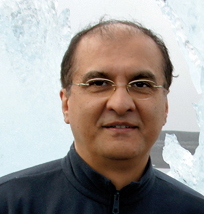
Robert James Fischer has always been a fascinating and mysterious figure in my life, especially during my early years. It was around the time I discovered chess and eventually became a club player. My own chess career was modest—after joining the church as a teenager, I never pursued it competitively. My best (and only notable) result was ranking sixth at the Hamburg Open.
Due to my work as a journalist, I once requested an interview with Fischer—unaware at the time that such a request stood no real chance of being granted. Many others also tried in vain to interview him or even to have a photo taken with him, but without success. Had I known about his religious interests, I might have taken the opportunity to discreetly pass him a Divine Principle book at the library where he spent hours each day—just 100 meters from my home in Reykjavik. In the end, I never met him in person, and perhaps that was for the better, given the role this distance may have played in his eventual path to liberation.
What makes Fischer truly great is his ability to teach himself the game at the highest level, while his major opponents from the Soviet Union were part of well-organized chess schools and often collaborated during tournaments. Despite this, he managed to rise above them.
When he famously defeated one of the Soviet greats with a staggering score of 6–0, the player reportedly consoled himself by saying, “At least I still have my music.” Back home in Russia, however, punishment awaited him for such a loss.
During Spring Great Works 2025, he received liberation in Cheongpyeong.
A New Perspective on the Chess Legend Who Made History in Iceland
An Exploration of the Man Behind the Name: Robert James (Bobby) Fischer
From March 2005 until his death on January 17, 2008, one of the greatest chess prodigies of all time lived in Iceland. With his legendary match against reigning World Champion Boris Spassky in 1972, Fischer not only broke the Soviet stranglehold on the chess world but also challenged the presumed intellectual superiority of the Marxist-Leninist worldview. That iconic showdown may even have foreshadowed the East-West summit of 1986 between Ronald Reagan and Mikhail Gorbachev—an event now widely viewed as a pivotal moment in the end of the Cold War.

Bobby Fischer and his Father Paul Nemeny
This article sheds light on Fischer’s life through the lens of personal memories and accounts shared by his close friend, Garðar Sverrisson, who stood by his side during his final years. It was Garðar who played a critical role in bringing Fischer to Iceland from Japan—just in time to avoid the execution of an American extradition order.
Robert Fischer, the late chess prodigy, is remembered by many for his rants against Judaism (prosecutable in Germany) and his fierce criticism of his home country. His legacy might have remained permanently tainted—were it not for Garðar Sverrisson, who offered a different narrative. Fischer shunned the public and avoided journalists, but when pushed, he could lose his composure.
The close friendship between Garðar and Fischer forms the heart of this article. The two spent extensive time together—so much so that Fischer bought an apartment in Garðar’s building to live nearby. This exceptional closeness made Garðar one of the few credible eyewitnesses to Fischer’s thoughts and expressions during his final years.
A Deep Bond Between Mother and Son
Fischer’s mother, Regina Wender, was a Swiss-born woman of Jewish descent. His likely biological father was Paul Nemenyi, a Hungarian-Jewish civil engineer. Although his parents were never married, Fischer was given the last name “Fischer” from Hans Gerhardt Fischer (of Berlin), whom Regina had separated from before Robert’s birth. To avoid social stigma, she listed H.G. Fischer as the official father. Frank Brady, author of Endgame, leaves little doubt that Nemenyi was in fact Fischer’s biological father. Garðar considers the book’s content—at least up to the 1972 match—largely accurate.
Regina endured a difficult childhood. After her mother was hospitalized, she never saw her again. She was raised in a Jewish orphanage known for its strict discipline. Later, after an extended stay in the Soviet Union, she made her way to the United States through a harrowing journey. There, she raised Robert as a single mother alongside his older sister, Joan.
Politically active and critical of the system, Regina caught the attention of the FBI, which placed her under long-term surveillance—an emotional burden that inevitably affected her son. In Bobby Fischer – The Final Years, Garðar takes a closer look at the relationship between Robert and his mother. Though not religiously observant, Regina raised her children in a liberal, open-minded household. Despite their often-precarious circumstances, mother and son shared a close emotional bond—something Garðar observed in Fischer’s body language whenever he spoke of her.

Bobby Fischers Mother Regina Wender
Brady’s book is filled with testimonies and anecdotes highlighting the strength of their relationship. Initially, Regina was concerned about her son’s obsession with chess and tried to introduce him to other activities. But after a psychologist assured her that there were far worse things a boy Fischer’s age could be interested in, she relented. Living close to poverty, Regina had to work multiple jobs to support the family, which meant that Robert spent a lot of time alone. She eventually gifted him a subscription to a Yugoslavian chess magazine, which not only improved his game but sparked his interest in the Serbian language. Years later, while walking through Reykjavík with Garðar, Fischer struck up a conversation with a Serbian man—in fluent Serbian—an impressive testament to his autodidactic nature.
Regina was a committed communist living in the United States during the McCarthy era, when anti-communist sentiment dominated the political landscape. It’s widely believed that her political views and subsequent FBI surveillance significantly limited her career prospects.
Conflict with Homeland and Religion
Fischer grew up in an environment of mistrust—from within the Jewish community and from American authorities alike. Brady recounts an incident in which FBI agents waited outside Regina’s home. She warned Robert never to speak in a similar situation. These formative experiences may have contributed to his later, increasingly radical rejection of Judaism and his battle against the U.S. government.
Fischer once stated that it gave him particular satisfaction to defeat a promising young Jewish-American chess player. At the time, the Jewish community was searching for a successor to Samuel Reshevsky, one of the top American players of his era. That this successor should be Fischer—with his German-sounding name, nonconformist personality, modest background, and a rebellious mother—was met with skepticism in some Jewish circles.
Fischer often felt his opponents were given preferential treatment. Only once it became clear that there was no one who could rival him did he begin to receive the recognition he deserved.
His troubles with U.S. authorities began in 1992, when he violated American sanctions by playing a rematch against Spassky in Yugoslavia. Garðar still finds it puzzling that while journalists were allowed to travel and report on the match, Fischer faced legal consequences.
Fischer’s conflict with the U.S. deepened after the 1992 match. In The Final Years, he speculates whether his persecution was linked to his outspoken views on Judaism.
The Man Behind the Myth
To many who never looked deeper, Fischer seemed like a paranoid eccentric. Garðar, however, paints a different picture. Though Fischer’s stubbornness could be exhausting at times—who hasn’t had issues with close friends or family?—he was also passionate, well-read, and intensely curious. He loved books, bought them in bulk, and often gave them away. He enjoyed discussing a wide range of topics, relished nature, and frequently went on outings with Garðar.
On one occasion, the two were settling into a country cabin when a mouse ran across the floor. Garðar, horrified, insisted on moving out. Amused, Fischer compared it to the rats in New York and urged Garðar to calm down. In the end, Garðar won that round, and Fischer followed his lead.
Fischer’s Japanese wife, Miyoko Watai, lived in Tokyo but visited him regularly. He had a special fondness for interacting with young people and children—an aspect that contradicts the image of a reclusive misanthrope.
While he often held fast to his beliefs—sometimes to his own detriment—Fischer was not closed off to new ideas. Though chess remained his lifelong passion, his interests extended far beyond the 64 squares. Even at the height of his career, he traveled not only for tournaments but also out of a desire to learn and explore.
Burial Controversy and Another Religious Conflict
As Robert sensed his end approaching, he expressed a deep wish to be buried near Garðar’s family graves in Selfoss—a peaceful, off-the-beaten-path location filled with familiarity and quiet.
Garðar quickly learned just how renowned Fischer truly was when he passed away on January 17, 2008. The phone never stopped ringing—but that was the least of it. Various individuals and organizations began asserting claims over where Fischer should be laid to rest. Reykjavík was floated as a possible site—his grave there could have become a tourist attraction. The U.S. Chess Federation, which had once revoked his membership, advocated for burial in New York.
But the most surprising interference came from Fischer’s former brother-in-law. According to Brady, he and Fischer’s sister had once evicted Bobby over his antisemitic remarks. Now, the brother-in-law tried to enlist the President of Iceland in a plan that was as much about ideological symbolism as it was about burial rights. There was concern that a Christian cross on Fischer’s grave might imply he had not been Jewish. As a compromise, the brother-in-law proposed a statue of a king, topped with a crown bearing a small cross.
Iceland’s then-president Ólafur Ragnar Grímsson—an old acquaintance of Garðar—stepped in. His involvement brought a swift end to the dispute, delivering a kind of checkmate to a conflict that traced its origins back to the Jewish community Fischer encountered as a young man.
Fischer’s Christian identity had roots early in life. As a young man, he embraced Christianity and made significant financial contributions to his church (Brady). A key influence was William Lombardy—not only one of America’s top chess players and Fischer’s closest friend, but also a former priest, who introduced him to Catholicism. The irony of this spiritual journey was clear in his later years in Iceland, when the Catholic Garðar would sit and listen to Fischer’s theological insights—a testament to Fischer’s religious depth.
A Final Word on Legacy
Unlike Garðar’s nuanced portrayal, Brady’s account of Fischer’s final days in Iceland tends to emphasize only the negative. Thorough journalism might have unearthed a more balanced truth. Brady’s last-minute meeting with Garðar, shortly before publishing, left little room for corrections. The depiction was also shaped by individuals with financial interests in Fischer, whose disappointment over his refusal to cooperate colored their narratives more than facts did. It’s important to note that post-1972, Brady relied heavily on secondhand sources, often without the means to verify their accuracy.
In conclusion, I wholeheartedly recommend Bobby Fischer – The Final Years by Garðar Sverrisson to anyone seeking a deep, nuanced, and human portrait of Bobby Fischer.
Furthermore it opened the desire to liberate this great man who in spite of his shortcomings participated in the downfall of Sowjet communism in a peaceful way, serving as a stage for an event later that would mark the end of the cold war.
Moreover, the book awakened a desire to liberate this complex man—who, despite his flaws, played a role in the peaceful unraveling of Soviet communism—recognized for his part in an event that would later become a symbolic turning point in the Cold War.⬥
Rohan Stefan Nandkisore was born in 1960 in Frankfurt, Germany, to an Indian father from Guyana and a German mother, and joined the Unification Church in 1978 in his hometown. Rohan served in CARP under Tiger Park and pioneered in East Berlin before and after German reunification (1990–93), and is currently leading UPF activities in Iceland. Since 1999, he has operated his own publishing house http://www.nordland.online


 Applied Unificationism
Fascinating article. Will make me proud to read my true brothers’ and sisters’ comments!