The Conjugation of Love

Couple-Walking-03_sm

By Laurent Ladouce

“Marriage is a long conversation,” Friedrich Nietzsche said.

But how long, exactly? Can the conversation be eternal? Can lovers conjugate the verbs of their conjugal feelings beyond the veil? 

Nietzsche didn’t say, but Elisabeth Seidel provides insights. Her new book, Letters Beyond the Veil, is not just another volume about life after death or communicating with the dead. It’s about the languages of conjugal love on earth and in heaven. 

“Love is strong as death” said King Solomon in Song of Songs 8:6. In her Unificationist song of songs, Seidel suggests that love can be stronger than death. We learn how Dietrich and Elisabeth declared their nascent love when they were young, how they conversed while on earth, not always with romantic words, and how the quintessence of eternal love is expressed after Dietrich’s ascension in 2016. He is absent in the chores of daily life but remains a spiritual presence with whom the conversation continues on another level.

Before passing, Dietrich told Elisabeth that death is natural, as natural as life is. Those who were truly one in heart on earth continue to communicate with their beloved. Here, “truly one” means naturally one. Special powers, spiritual gifts, or techniques may help establish communication. However, a genuine and blissful communion can only come through natural feelings that connect hearts. The love after is only a prolongation of the love existing before.

Any person with a genuine heart may keep talking to the beloved, provided the couple has a record of saying love on earth and not just making love. Nietzsche said, “When marrying, you should ask yourself this question: do you believe you will enjoy talking with this woman into your old age? Everything else in a marriage is transitory, but most of the time that you’re together will be devoted to conversation.”

Why could Dietrich and Elisabeth keep a lasting love in their marriage, with the promise of living eternally together? The book provides some insights, especially this letter of Elisabeth to Dietrich: 

I miss the places where we were together: my Alpine mountains, your Austrian Alps. When we saw mountains, we felt at home. We saw God in our mountains (…). We were sharing our dreams together with our Heavenly Parent. We wanted to be victorious for the sake of our Heavenly Parent.

Here, the couple is depicted in relationship to the Creator and His creation, which is like the shrine of love. Dietrich was a typical Austrian, whereas Elisabeth was born in France, near Mont-Blanc. Nature is omnipresent in their love story. Anyone familiar with European culture remembers how the Alps have constantly inspired modern lovers since the romantic age.

Continue reading “The Conjugation of Love”

Spiritual Connections: Living in the Flow of God’s Love

By Gordon L. Anderson

Spiritual Connections: Living in the Flow of God’s Love (Circle of Angels Press, 201 pp., 2022) is an engaging spiritual autobiography of Nora Spurgin, who joined what was then called the Unified Family (later Unification Church) in New York in 1967. She served in many central positions as the movement led by Rev. Sun Myung Moon developed into a new global culture. Nora’s identity is shaped by her connections to others in her lifelong pursuit to be in the flow of God’s love.

Her story begins with her ancestors who came to America for religious freedom. Her sixth great grandfather authored Confessions of Faith, which is still used for religious instruction among the Mennonites. She grew up in Lancaster County, PA, in a farming community with large families, connected to her parents, siblings, extended family, and nature. Life was a mixture of hard work, fun play, and worship of God. Personal responsibility and maintaining the community was stressed. Her community was self-sufficient. Nora learned to design and sew clothes and her father even taught her every step in building a house!

At a young age, Nora’s curiosity prompted her to ask questions about her faith in comparison to Catholics and others. She studied the people she met, wanting to learn behavior patterns and whether people were genuine or putting on a façade. She learned to approach others with confidence. While Nora wanted to learn fastidiously, her parents believed outside education would corrupt children’s faith. She dropped out of high school after one year and worked at home and in a sewing factory until she turned 21 and became a free adult. Then she grabbed lots of books, studied, passed the GED exams, and set out on the world.

A Mennonite Voluntary Service program caring for children of migrant workers in Florida exposed Nora to poverty and other cultures and broadened her faith. In college, she loved philosophy and history. On weekends she visited and served people in Appalachia, and experienced charismatic spiritual events. Then she went on for her master’s degree in social work at New York University. The intellectual confrontations and big city life were far different than life on a simple Mennonite farm. Through all her encounters, she continued her search for connections to God and was prepared to meet the Unification Church.

Continue reading “Spiritual Connections: Living in the Flow of God’s Love”

Idealism and Naiveté: On Orwell’s “Homage to Catalonia”

by Peter Elliffe

George Orwell paid homage to Catalonia, Spain, in his journalistic book on the Spanish Civil War, Homage to Catalonia, but he paid homage to much more.

Orwell, like many idealistic men and women of his generation, gave up comfort and security to fight for socialism, communism or republicanism against the proto-fascist Francisco Franco. The war, which heralded many crucial dilemmas, ran from 1936-39, resulting in Generalissimo Franco’s victory.

One of those idealistic individuals was my high school history teacher, Peter Carver. He had fought with the communists, been jailed for his trouble, and came away with a life-long abhorrence for communism in general, and “Uncle Joe” Stalin in particular. I read Homage to Catalonia as an act of homage to my influential teacher.

Carver, like Orwell and Alexander Solzhenitsyn, managed to come away from bitter experiences with communism without bitterness of soul. Some part of the utopian dream that communism represented had touched his heart, and that openness remained.

Homage to Catalonia does not reveal Orwell as a mature political theorist, but as a man in the process of understanding his experiences and attempting to put them in perspective. Likewise, The Gulag Archipelago shows us Solzhenitsyn as a true believer, an intuitive follower of the party of Lenin, even after he is arrested on Russia’s western front. Surely there has been a mistake, he thought. I just need to speak to the right person to have the whole horrible mess straightened out, then I can continue to serve the Revolution – and in the process remove this disturbing cognitive dissonance.

Orwell presents the Spanish Civil War as a class conflict between the reactionary, would-be feudal, land-owning families (and the Catholic Church) represented by Franco, and the Republicans, who are a collection of bourgeois and working-class factions. He arrives in a Barcelona which has been revolutionized, in the hands of labor organizations such as the anarcho-syndicalists (CNT). This is as it should be for Orwell. Why pursue the modern slavery which is capitalism when the possibility of socialist revolution is within our grasp?

Continue Reading—>

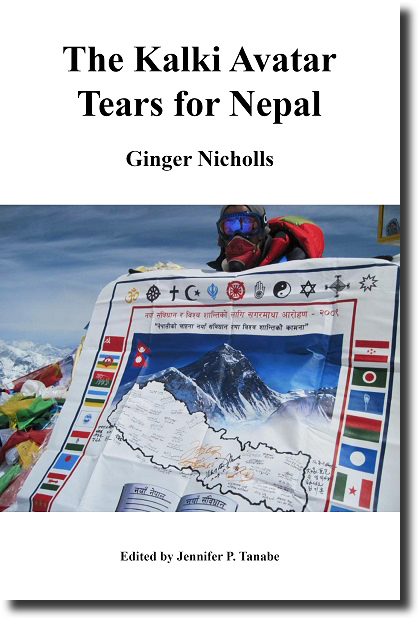
The Kalki Avatar and the Second Coming of Christ, the True Parents of Humankind

By Jennifer Tanabe

“Christ at the Second Advent, who is to come as the center of Christianity, is the person of the Maitreya Buddha who is to return according to the teachings of Buddhism, the True Man who is awaited in the Chinese religious tradition, and the Chongdoryong for whom many Koreans yearn. He is the central figure whose advent is expected in other religions as well.” (Exposition of Divine Principle, Part I, Chapter 5: Resurrection, Section 3: The Unification of Religions)

This passage is familiar to all Unificationists, and it is our understanding Sun Myung Moon is the fulfillment not only of the Second Coming of Christ but, together with his wife, Mrs. Hak Ja Han Moon, fulfills the ultimate role of the True Parents of humankind. Thus, we easily recognize the Mahdi in this role of the awaited returning central figure in Islam whom we can see fulfilled in the True Parents.

But what about Hinduism? If there is no corresponding central figure in Hinduism, with a billion adherents, how will all religions come together under one God, one True Parents?

I knew little of Hinduism until recently, finding the many gods, some with the heads of animals or many arms, rather unattractive. On the other hand, the greeting “namaste,” which a colleague at an interfaith gathering explained means “I bow to the divine in you,” has a deep spirituality that impressed me and evoked my respect.

When I reflected on it, I knew there must be common ground with the other religions, and this must include the expectation of a messianic figure to come, soon.

Continue Reading—>

The Future Belongs to Those Who Build It

By John Redmond

Here is the good news:  The Heavenly Kingdom is coming whether or not the Unification Movement has anything to do with it.

I’ve been reading a series of future-oriented books: Al Gore’s The Future: Six Drivers of Global Change, Thomas Friedman’s Thank You for Being Late: An Optimist’s Guide to Thriving in the Age of Accelerations, and the most interesting, Who Owns the Future? by computer scientist and father of virtual reality Jaron Lanier.

All three books tackle the same theme: how the convergence of multiple areas of science and technology, each developing at exponential rates, will transform the world in an unrecognizable way in the next 20 years. It takes about two decades for an idea to move from the lab to mass acceptance.

The iPhone debuted in 2007 and in 10 years both it and its competitors have made humans omniscient all over the planet, each with a library and powerful computer in the palm of their hand. “Google it” has become the ultimate argument settler.

In this sense, we are not predicting the future; we are timing the growth of ideas from concepts to products to mass acceptance.

The computer revolution by itself has been shocking and globally transformational and now add the imminence of robotics and the ability to end world hunger with genetically engineered protein.  Whether you like “Franken food” or not, starving people will love it.

Both artificial intelligence and robotics are on the cusp of creating either mass unemployment or a world where 80% of the people can live like the European elites did in the last century: vast houses, helpers everywhere, lots of leisure time to improve yourself, and cheap or free transportation everywhere.

Artificial Intelligence is demonstrating that it can not just calculate your bank balance in a microsecond, but predict health issues better than doctors, write better news stories than reporters, and beat anyone at Jeopardy.

Continue Reading—>

How American Christians from North Korea Could Have Altered Korea’s Future in 1945

By Mark P. Barry

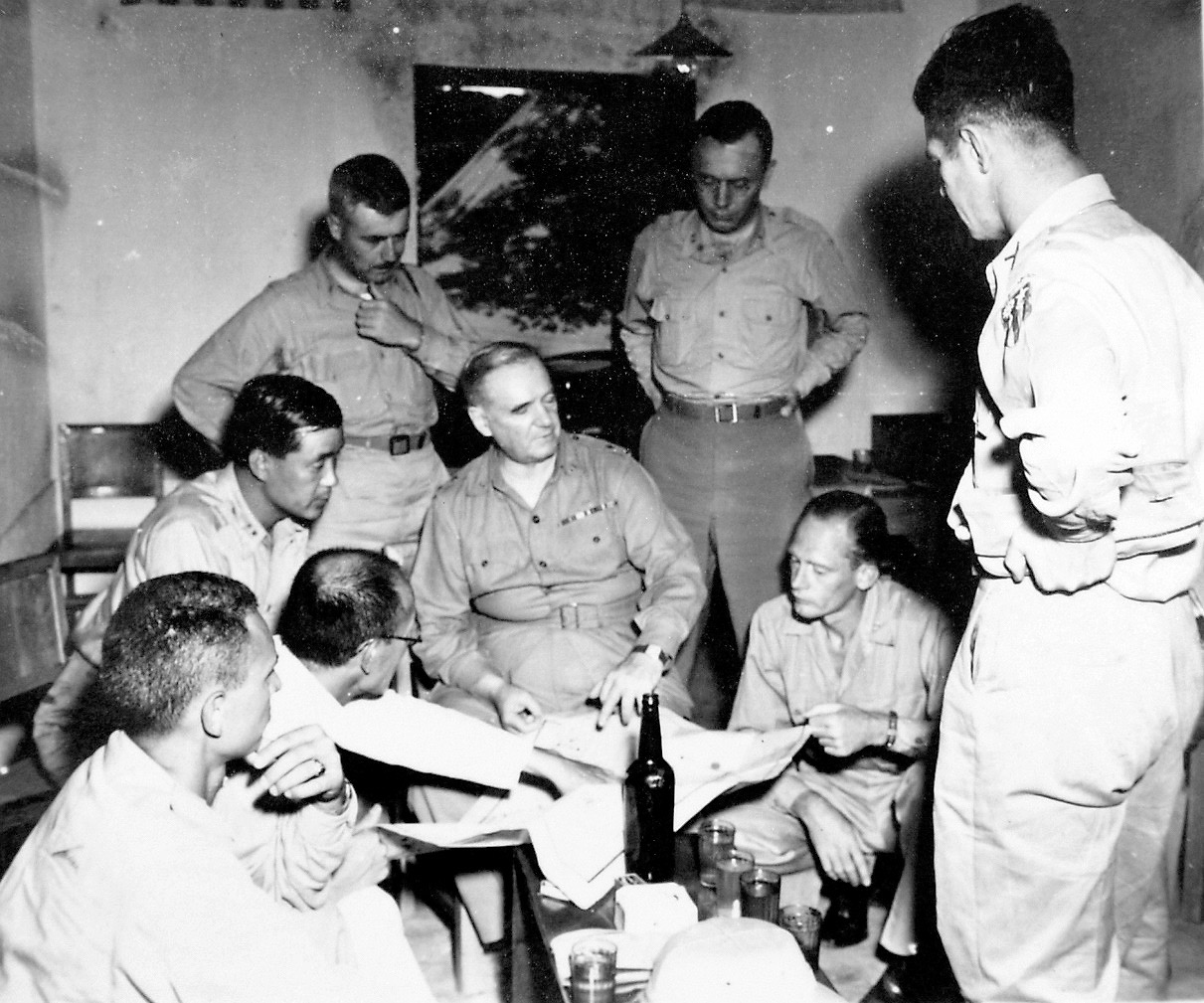
Few Americans realize that the hasty 1945 division of Korea and ensuing communist eradication of Christianity in the north occurred despite the efforts of a handful of uniquely qualified American officials. These men were born in the pre-World War II American Christian community in northern Korea, and were concerned, while serving in the U.S. government, about the fate of a land no less their home than America.

Historians generally maintain the U.S. government was largely uninformed about Korea during the Second World War and paid it scant attention. But these American Christians, serving in significant roles in the wartime U.S. government, sought to direct U.S. focus and efforts toward Korea. Despite their best efforts, they were unsuccessful and there is an almost complete absence from the historical record of their efforts.

Dr. George M. McCune was the best-known of these second-generation born and raised in Korea of American Christian missionaries. He became the main expert on Korea for the Office of Strategic Services (OSS), the forerunner of the CIA. His father, Rev. George S. McCune, a Presbyterian missionary, headed Union Christian College (also known as Sungsil School, both a high school and college) in Pyongyang, where, interestingly, Kim Il Sung’s father (who later married the daughter of a Presbyterian minister) attended (the late Ruth Graham, wife of Rev. Billy Graham, also attended high school there for three years).

The younger McCune was born and raised in Pyongyang, the “Jerusalem of the East,” and earned the first doctorate in the study of Korea from an American university in 1941. He served in the OSS from 1942 and the next year became Korea desk officer for the Department of State, the leading official in the U.S. government on Korean affairs. His brother, Dr. Shannon McCune, was an expert on the geography of Korea and East Asia.

Continue Reading—>

A Needed Reset for Liberal Culture

By Gordon Anderson

The rise of Donald Trump, Brexit, Geert Wilders, and Marine Le Pen can be seen as a reaction to the failure of Western liberal establishment culture to successfully lead the transition to global society. These popular figures do not represent a higher stage of development, but a return to the last successful level of social development—nationalism.

We could say it is a reset. A “headwing,” or integral, worldview should supply the necessary elements that liberalism has so far ignored in its zeal to create a more just and inclusive world.

A Fall at the Top of the Growth Stage

Unificationists can view this nationalist retrenchment as a fall at the top of the growth stage in Christian culture. Reverend Moon observed  in 1960 that Christianity in the West had reached a peak and needed guidance to move the world to the next level. The cultural revolution of the 1960s sought equal rights, freedom from oppression, environmental sustainability, global harmony, and true love.

These were reactions against limitations in traditional societies that needed to be transcended. However, those who led the social revolution did not have solutions but reacted like children who had matured enough to sense injustice, but not enough to develop a parental heart or a responsible approach.

While a few extraordinary figures like Martin Luther King, Jr., and Mohandas Gandhi sought to move to the next stage of development on spiritual foundations, the masses engaged in social movements that sought political solutions—solutions based on the force of law. The result was, in Unificationist terms, “a reversal of dominion.”

Continue Reading→—>

Hollywood, Sexuality and Cultural Marxism

Satan_before_the_Lord

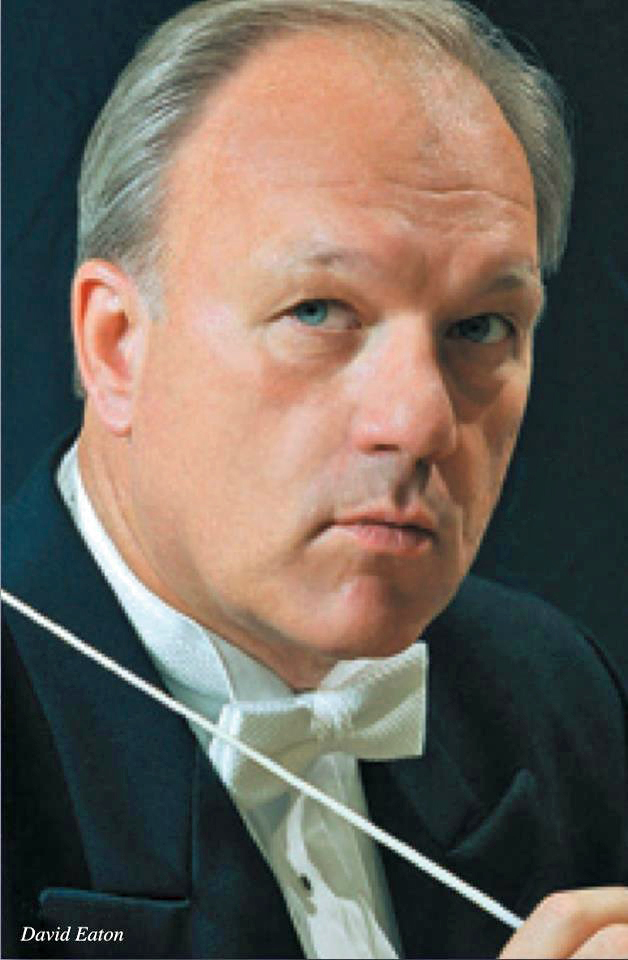
By David Eaton

david_eatonConfucius once averred:

“If one should desire to know whether a kingdom is well governed, if its morals are good or bad, the quality of its music will furnish the answer.”

I contemplated his observation as I watched the telecast of last month’s 88th Academy Awards. If we were to substitute the word “music” with “cinema” or “culture,” the Chinese sage might be more than a bit angst-ridden given the tone and tenor of the Oscars.

Predictably, the show’s host, Chris Rock, pummeled the Hollywood establishment for its lack of racial diversity among the nominees — a major issue in the run-up to the Oscars. But not far from the surface was Hollywood’s seemingly incessant need to sexualize the proceedings. Comedienne Sarah Silverman’s riff on sexual intercourse viz. James Bond, and Rock’s quips, about helping the show’s music director “get l__d at the Governor’s Ball” and the panties of a female pop star in the audience, were reminders of Hollywood’s duplicity in matters of sexual probity.

I wondered how Chris Rock’s Girl Scout daughters reacted to Silverman and their dad’s overt sexual suggestiveness. Surely they were watching (as I was with my 21-year old daughter), and I cringed at the vulgar and completely unnecessary sexual repartee. But here again was an example of the in-your-face sexuality Hollywood both glorifies and aggressively markets while attempting to be viewed as virtuous on other social matters.

To be fair, the serious issue of sexual abuse was front-and-center at the Oscars with “Spotlight” spotlighting the problems within the Catholic Church (and winning Best Picture). “The Hunting Ground,” dealing with the problem of campus rape, was not nominated for Best Documentary Film, but the film’s song, “Til It Happens To You,” was a nominee for Best Original Song.

Continue Reading→

The Prescience of C. S. Lewis

c-s-lewis-3

by David Eaton

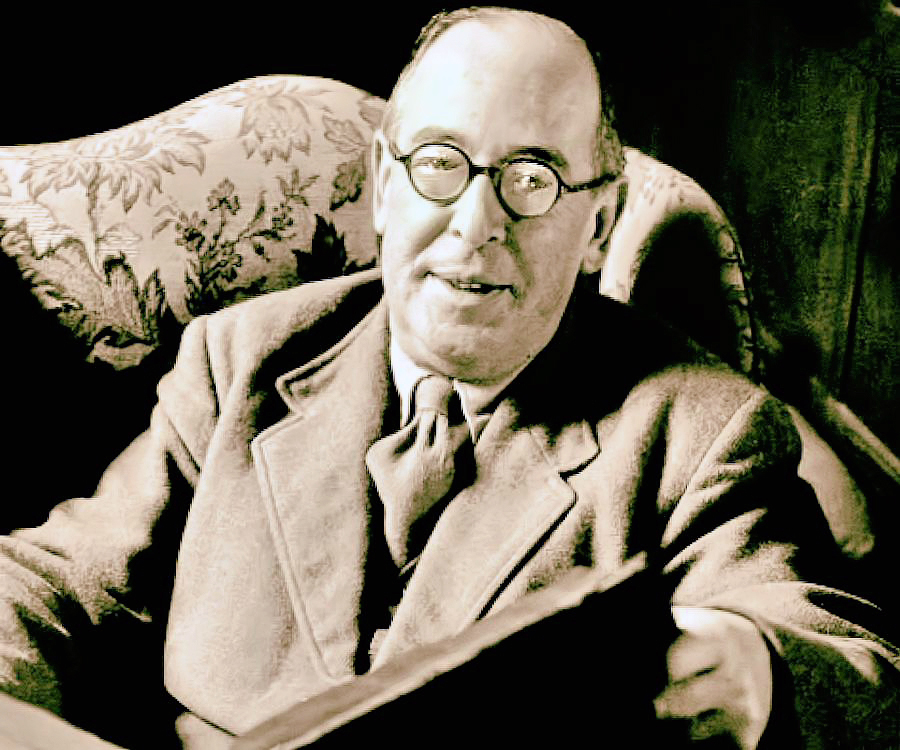
david_eatonI’m a latecomer to the writings of C. S. Lewis, but through the prompting of my eldest daughter, I finally took the plunge. Putting the finishing touches on my own book, I was looking for several religious-based literary references regarding the perils of postmodernism that might support some of my contentions regarding music, aesthetics, radical egalitarianism, multiculturalism, and the pervasive influence of the celebrity-industrial-complex.

Lewis’ work, especially, The Screwtape Letters (1942) and its sequel, Screwtape Proposes a Toast (1959), provide a trove of insight in the examination of the whys and wherefores of our “fallen” condition in the context of “right and wrong as a clue to the meaning of the universe.”

Lewis admitted that writing The Screwtape Letters was simultaneously the easiest, but least enjoyable work of his career. He apparently went into deep depression after writing it. Given the brilliant exegesis of how the “Lowerarchy” of Satan effectively infects the human soul, it’s no wonder why. The Cold War was the backdrop of the sequel and the narrative of how leftist, neo-Marxist thought subverted academia and the intellectual class in the West underscores Lewis’ work here. The sequel is more ideologically-charged than the original and the perspicacious insights are like a punch in the gut that leaves you breathless — and somewhat forlorn.

The Screwtape Letters are a series of 31 letters written by a senior demon, Screwtape, to his nephew, Wormwood. The nephew is a younger and less experienced demon, tasked with guiding a man (called “the patient”) toward “Our Father Below” (Satan) and away from “the Enemy” (God.) As Wormwood’s mentor, Screwtape explains many tricks-of-the-trade to his young charge in the process of inculcating him with methods of “the Lowerarchy” (Hell).

In the preface to The Screwtape Letters, Lewis states there are “two equal and opposite errors into which our race can fall” when we contemplate Satan. One is to deny Satan’s existence, the other is “to feel an excessive and unhealthy interest” in him. The first error is Satan’s greatest ploy — if he doesn’t really exist, why fret about him? The second error is that we too easily create common bases with the dark side by our “unhealthy interest” in him.

Continue Reading→

Website Built with WordPress.com.

Up ↑