Moral Autonomy of the Blessed Couple/Family

Family

By Keisuke Noda

Keisuke_NodaThe radical nature of an idea is often exhibited by its power to transform our framework of thinking. As the word “radical” indicates (radix means “root” in Latin), a radical idea requires us to reexamine fundamental presuppositions we take for granted.

One radical concept in Rev. Moon’s philosophy is the Blessed Couple/Family. Marriage is generally understood as a social, religious, and legal union of a husband and a wife, which generates moral and legal obligations between them and their immediate family members. Marriage in the ordinary sense does not imply a change in the relationship between married individuals and God. Even within most religious traditions, which recognize marriage as sacred, a marriage blessed by God (or gods) does not alter in any way the relationship between human beings and God. Marriage is nothing more than another happy life event.

Continue Reading→

Time for a New American Unification Renaissance

visits-a-ration-board-1944_edited-1

By John Redmond, Chief Financial Officer, UTS

IMG_9544I remember when we got the direction to return to our “hometowns” and make a tribal messiah foundation.  Looking around the room, one sister spoke for many when she said, “I grew up in five or six towns and my parents were divorced – where do I go?”

America has been the home of the seekers of new opportunity and new adventures since its founding.  Early settlers came for either God or gold, and sometimes both.  The waves of immigration that have filled America with every language and color have been good to America. The bravest and brightest often end up here as opposed to staying in a confined homeland of limited possibilities.

Continue Reading→

Living in the Kingdom of Heaven on Earth

nature-landscapes_hdwallpaper_in-heaven_4252

“But seek ye first the kingdom of God, and His righteousness; and all these things shall be added unto you.”   Matt. 6:33

“Now is an amazing time, when human beings in their everyday life can experience the absolute realm of God… People will increasingly be able to perceive God. They will perceive the spirit world and the works of spirits… [P]eople will undergo definite changes to their character and become true individuals. They will no longer be self-centered in relating to greater wholes in the universal order of being. They will learn to be altruistic, living for the sake of others.”  

 World Scripture and the Teachings of Sun Myung Moon, Feb. 6, 2004, p. 25

by Henry Christopher, UTS Class of 1980

Henry ChristopherI joined the Unification Church three times before I decided to stay: in Boston in June 1973; in New York City just before Father’s speech at Carnegie Hall that September; and lastly, at Dr. Edwin Ang’s center in Worcester, Massachusetts in spring 1974.

I left the Church even though I believed the Divine Principle and that Rev. Sun Myung Moon was the returning Christ. What drove me away was the chaotic way in which the Church functioned, which often resulted in sacrificing a loving and spiritual atmosphere inside the movement that was proclaiming True Love.

Over the fall and winter of 1973-74, while I worked in Florida, I began an intense study of the Bible and the lives of Jesus and Saint Francis. I wanted to become like them—to feel that same love from God that they felt, and to love others as they could. I was inspired by Jesus’ teaching that “the Kingdom of Heaven is at hand.”

By spring 1974, I had a showdown prayer with God on the beach, and made a commitment to dedicate my life to Him, and to start by returning to the Unification Church and to give it my wholehearted effort for three months, and see where God would lead me.

I worked very hard at fundraising, struggling to get my totals up each day, often with tears in my eyes at the end of the day. Dr. Ang then sent me to 100-Day Training at Belvedere, and almost before we could unpack, we went to Barrytown to prepare for the Three Day Prayer and Fast that was to take place on the steps of the Capitol Building on July 22. It was almost three months to the day that I came back to the Church.

The next morning at Barrytown, I suddenly saw the sun rising over the trees — a huge brilliant orange ball. My first thought was, “God, you have made such a beautiful world for us to live in which we love, but it is sad that we don’t feel thankful to you for it.”

In a flash, God poured pure love down my entire body from the top of my head right to the bottom of my toes. It literally washed away my sin, fears, and sadness—everything. In an instant, I was transformed. I felt so free and joyful I couldn’t believe what happened to me. I felt love for everyone and so happy to talk to anyone. No bad feelings or thoughts came to me the whole day on the trip to Washington and I went to sleep that night feeling wonderful. I thought this must be what it feels like to be a perfected individual of love.

Continue Reading→

Is Russia More Aligned with God’s Will than the United States?

aa_picture_20130917_631451_high-jpg20130920150203

By Michael Mickler, Professor of Church History, UTS

Michael_MicklerAnyone reading the news over past months cannot fail to notice that Russia has asserted itself in significant ways on the world stage. Some of its actions, such as sheltering former NSA computer analyst Edward Snowden, ran counter to American interests and prompted angry protests against America’s surveillance programs. Other actions, such as its intervention in Syria, helped the United States avoid a possible war, at least for the present. This article attempts to sort out these actions and others in light of what Unificationists would interpret as God’s will.

Rev. Sun Myung Moon declared the United States is the “elder son” nation in 1998. Most Unificationists understand this to mean that America is to be a model for the rest of the world, manifesting righteousness, upholding civil and religious liberties, and sacrificing itself or at least serving humanity. These ideals resonate with longstanding views of the United States as a “redeemer nation.”  America was great, Alexis de Tocqueville wrote, “because America is good.”  American democracy was, in Lincoln’s phrase, “the last best hope of earth.” In the 20th century, the U.S. saved the world from the twin evils of fascism and communism. In the process, it became the world’s lone superpower.

The idea of the U.S. as the world’s sole superpower seems almost quaint today, barely more than a decade into the 21st century. China has risen as a formidable competitor, militant Islam is on the march, North Korea regularly threatens the U.S. with nuclear weapons, Syria already unleashed chemical weapons, and America is not yet disengaged from wars of attrition in Iraq and Afghanistan much less from a global war on terror.  Internally, America is divided, mired in a government shut-down and debate over paying its debts. There is little question that Americans feel less secure today than at the turn of the century.

Many factors, both foreign and domestic, have hindered the United States in exercising its “elder son” role. However, two stand out.  First, U.S. leadership, especially since 9/11, has incorrectly interpreted the doctrine of American exceptionalism. Going back to the Puritans, the likening of America to “a city on a hill … a light to the nations” implied that it was the world’s great exemplar, the fullest embodiment of freedom, self-government and the rule of law. However, during the first decade of the 21st century, American exceptionalism has been reinterpreted to mean the United States was “above” or an “exception” to the law, specifically public international law, and privileged to act unilaterally.

Second, Americans have incorrectly interpreted freedom.  Again dating back to the Puritans, U.S. civil liberties have been securely anchored within a compass of moral values and the public good. America was great because she was good. However, in contemporary American society, freedom has come to mean the freedom to do most anything one wants so long as it doesn’t interfere with anyone else’s freedom to do most anything they want. As a consequence, the United States has become identified with moral decadence and individualism.

Continue Reading→

Can We Create a World of Perfect People?

1363501688_abstract-design-flower-vector-art

Part II

By Jennifer P. Tanabe

JenniferTanabeIn my previous article I asked, “What would a world of perfect people be like? Is it desirable? Would you want to live in it? And is it even possible?” I discussed several possible reactions, and presented the Unification Thought (UT) viewpoint. However, I did not address the big issue of whether it is even possible. Yes, UT presents a positive picture of perfect human beings, but we all know the real world we live in is very far from that ideal.

Why do we have difficulty believing such a world is possible? I think one of the reasons is because of our misunderstanding of what it means to be “perfect,” an issue that was addressed in my first article. Are any of the characteristics of original human nature described in that article impossible to achieve? They are difficult, but not inherently impossible.

Then it comes down to our effort, and overcoming what can be termed our fallen nature, or our tendency to take the easier way instead of challenging ourselves to greater heights in relating to others and in doing good toward others. For example, “I can’t imagine it really” can be translated into “I won’t ever be perfect because I have this and that imperfection which I don’t think I am going to overcome in the foreseeable future, and everyone else I know is like that too.”

Perhaps one way to make perfection seem more attainable is to remember that we don’t have to achieve it in one step. Even in the ideal, with no fallen nature to get in our way, human beings develop through three stages of growth, over a period of say 21 years, to reach maturity. So, it certainly makes sense that as fallen people who face not only the original growing up, in an environment that is far from supportive of the ideal, but also the restoration of all our mistakes and that nourished our fallen nature, we might expect it to take time and to go through a number of steps.

Slide3

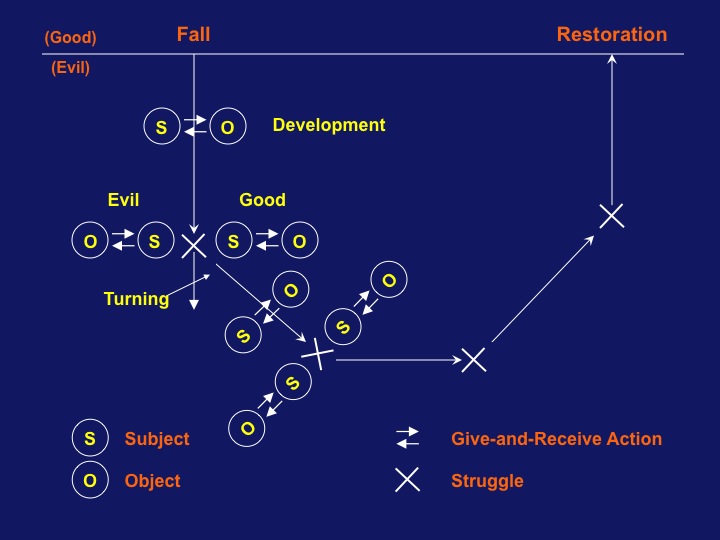
Figure 1

Here I am reminded of the diagram used to describe the “Law of Turning” in the Unification Thought theory of history (see Figure 1). This diagram illustrates how a united subject and object make progress in a particular direction that begins far from, even opposite to, the direction of goodness, but through a series of encounters with other subjects whose purpose and direction is closer to that of God’s, adjustments to the direction are made. Thus the direction of progress turns closer and closer toward being in alignment with goodness.

Continue Reading→

A Unification View on Universal Healthcare

Hands

“Am I my brother’s keeper?” (Gen. 4:9)

by Franco Famularo, UTS Class of 1994

ro.vis1b_3343.famularo.f51Obamacare. Universal healthcare. Private Insurance. Long lines in the U.K. Even longer lines in Canada.  Forty million people without health insurance in the U.S.  Mega-insurance companies fleecing people. Big pharma. Small business owners getting wiped out by medical mishaps.

If you live within earshot of American talk radio or TV news as I do, you will have heard some or all of the above. Discussing universal healthcare in the United States can be most contentious.

European, Canadian, Japanese, Korean, Russian, African, Asian, and American Unificationists will all approach this topic differently. Is there a Unification position on universal healthcare? Do the current systems available to residents of various countries reflect the ideal in any way?

Living a mere 45-minute drive from the Canada-U.S. border has caused me to ponder this topic and I’ll submit my conclusion first.

Neither government-run healthcare nor a system that is privately operated can be trusted to do a good job in providing adequate healthcare within the current circumstances. Human beings still lack the Godly virtues to keep the best interest of the public in mind and fall short, since none has mastered “living for the sake of others.”

The issue is not whether publicly funded or privately run healthcare is better. The problem is the moral and ethical quality of human beings and the solution lies in a moral reformation. When those involved in providing healthcare (government, medical practitioners, administrators, etc.) are comprised of individuals with the highest Godly qualities of the human spirit, an “ideal” health system will emerge.

My interest in the universal healthcare issue was strongly stimulated back in 1993 when UTS classmates Eric Holt, Jerry Chestnut and I took on the challenge at the annual UTS debate of defending Bill Clinton’s proposal to the U.S. Congress.  This helped us to see both sides of the American arguments at the time.

I was born in Canada and have lived here most of my life. For ten years, I spent extensive periods in Germany, the U.K. and the U.S. and was able to observe the various healthcare systems to some degree. They are not all alike.

Last year, some of us listened to presentations under the banner of the “Freedom Society” that addressed the issue to some extent. Proposals were made for a return to the days where churches, charities and families took care of healthcare needs.  I can remember the time before universal healthcare was established in Canada when doctors did house calls and Catholic nuns cared for the sick. I have strong doubts that returning to such a system is plausible. We also heard severe criticism of the U.K. and Canadian healthcare systems. I simply had to laugh as I listened to the ill-informed comments which reflected more the well-known American talk radio show hosts than reality in Canada or the U.K.

Continue Reading→

Religion Is Not the Problem – Worldview Is

worldview11

By Kim Barry

Kim BarryWith Middle East problems again dominating the news, the issue of religion’s role in conflict is hotly debated. The decades-old Israeli-Palestinian conflict is deeply-rooted. We see Shiite and Sunni Muslims fighting and killing one another, and recently, Muslims attacking churches in Egypt, Syria, Libya, and Pakistan, blaming Christians for their countries’ problems.

Atheists use these examples to condemn all religions and belief systems, citing their conviction there is no God to fight over.  The arguments have long ago crossed the borders into the realm of the ridiculous.

Since we have already celebrated Foundation Day, perhaps it is time we re-examine our own worldviews so we can be sure we are creating the best framework for the future.

Mahatma Gandhi had a worldview that was clear and powerful enough to bring the British Empire to its knees. Yet when asked whether or not he was a Hindu, he replied, “Yes, I am. I am also a Muslim, a Christian, a Buddhist, and a Jew.”  His worldview was one of peace and nonviolence, but not appeasement.

Thomas Jefferson made a clear distinction between a person’s religion and worldview, saying:  “It does me no injury for my neighbor to say there are twenty gods or no God,” and yet he also said, “Enlighten the people generally, and tyranny and oppression of body and mind will vanish like evil spirits at the dawn of day.”  The Founding Fathers were extremely diverse in their religious views, but they all united around shared ideals.

One thing I learned long ago is that it’s not a person’s religion that makes them who they are.  It’s something that goes much deeper: worldview, by which I mean how we each see the world and our place in it.

There are the kindest and meanest people within the same religions. The richest and poorest, the most generous and most selfish, the wisest and most ignorant, are all grouped together within the same religion.   If a person’s religion were the same as their worldview, then it would hold that all people within the same religion would behave in a similar manner, making their results similar. But the diverse distinctions mentioned above appear within all religions.  It would be rude or politically incorrect to say that all or most people within a certain religion have any similar traits.

Wikipedia defines worldview as “the fundamental cognitive orientation of an individual or society encompassing the entirety of the individual or society’s knowledge and point-of-view, including natural philosophy; fundamental, existential, and normative postulates; or themes, values, emotions, and ethics.”

Some might argue that worldview is the same as beliefs, therefore, the same as religion. But although one can certainly affect the other, they still remain distinct in the lifestyle and behavior of most people in the world.

Continue Reading→

Using Art and Culture to Effect Change

only_through_beauty_david_eaton_01

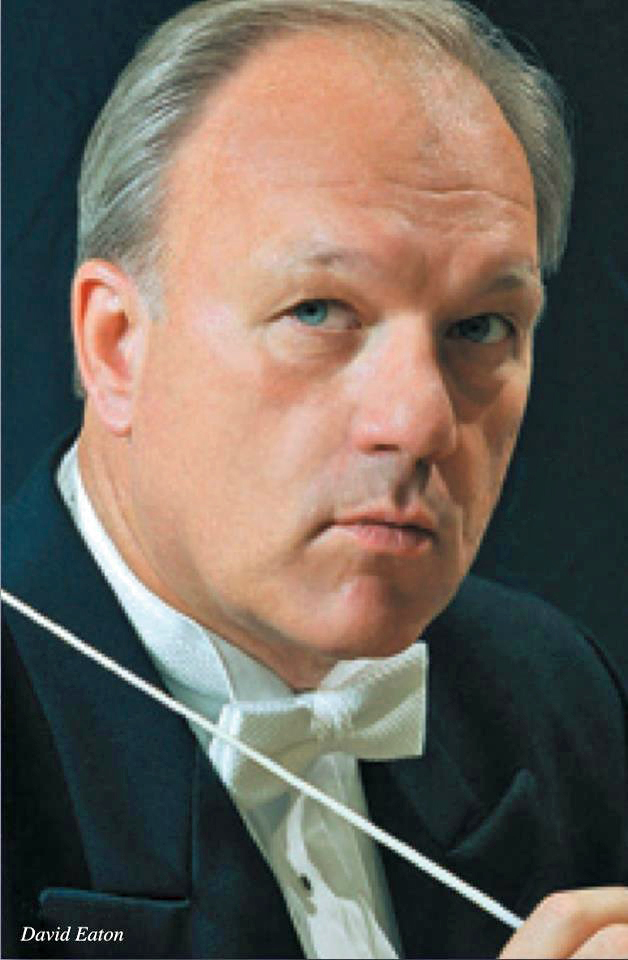
David D’Or and David Eaton share a bow with the Evergreen Symphony Orchestra at the National Concert Hall in Taipei, Taiwan.

By David Eaton, Lecturer in Music and Culture, Barrytown College of UTS

“Only through Beauty’s morning-gate, dost thou penetrate the land of knowledge.”

 – Friedrich Schiller

david_eatonAs an advocate of art and culture, it has always been my view that the beauty aspect of the truth-beauty-goodness paradigm needs to be more fully understood and supported in any attempt to realize a better world. I’ve had many opportunities to use my talent for providential purposes, both within our community and with artists who are not members of our church, and at the heart of my creative endeavors has been my motivation to use my God-given abilities as a musician to promote the ideal of godliness and to cultivate a culture of peace.

Friedrich Schiller (1759-1805), who as a young man possessed a passionate desire to study theology and become a minister, believed that one’s soul state (Seelenzustand) was edified through experiencing beauty. For Schiller, “aesthetic education” could be the basis for a moral society and help establish the freedom that political revolution conspicuously failed to achieve.

I recently returned from conducting two concerts with Israeli vocalist, David D’Or and the Evergreen Symphony Orchestra at the National Concert Hall in Taipei, Taiwan. The concert was produced by the Tzu Chi Foundation, a Buddhist organization founded in 1966 that boasts three million members and scores of chapters throughout the world. Tzu Chi (which means “relief and compassion”) is based in Taipei and has done an amazing amount of humanitarian work, including providing assistance in the aftermath of hurricanes Katrina and Sandy, the Japan tsunami and relief efforts in North Korea. The American chapter of the Tzu Chi Foundation received a national award for being the most outstanding volunteer organization in the U.S. in 2012, due primarily to their relief efforts after Hurricane Sandy.

In addition to running several schools, hospitals and free clinics in Taiwan, Tzu Chi has its own cable television network that broadcasts the news of their global relief efforts as well as programming original content that promotes 24/7 the ideals and vision of their organization. They clearly understand the importance of using mass media and art to get their message to a larger segment of the public

While in Taiwan, I was able to meet the Tzu Chi founder, Master Cheng Yen (a Buddhist nun, now 76) and several of the organization’s key leaders. They explained that music and art are important aspects of their outreach. Their belief in the spiritual power of music plays heavily into their philosophy — and their funding efforts. For the two concerts presented last month I arranged one of the Tzu Chi songs, Family, especially for this occasion.

Continue Reading→

A Unificationist View of Ayn Rand

ayn_rand_1_fs

By Wayne Hankins

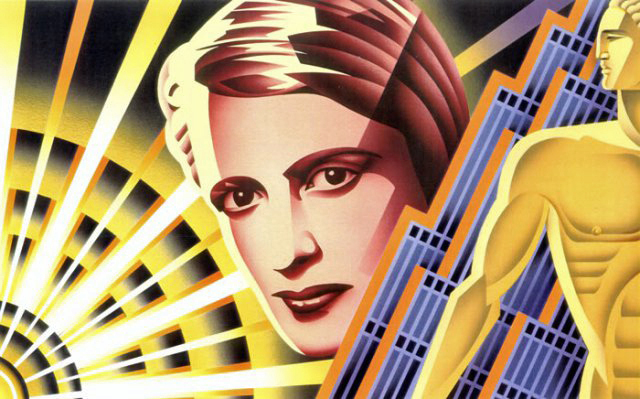
HankinsAyn Rand is a writer and philosopher who understood that “something” is terribly wrong with humankind and had the courage to seek the answers to it. Like others before her who tackled this subject, her writings are controversial. For years, I enjoyed her beautiful use of language in expressing her beliefs and telling her stories. She was a powerful and appealing writer. Yet, I now find some of her beliefs very troubling and need to be seriously reevaluated. As a Unificationist, I’ve had to fairly examine her writings, then ask: was her understanding of humankind’s nature correct and is her solution going to solve our dilemma of constant conflict and create a world of goodness and peace?

Ayn Rand, born Alisa Rosenbaum in Russia, was a writer of great passion, whose ideas were born out of the chaos of the Bolshevik Revolution. As a 12-year-old, she saw her nation crumble before her eyes and be recreated under Lenin’s view of how life should be lived. That was Communism. Her father’s business was seized because private property was declared illegal. The state acquired power over the rights of the individual in determining what talents would best serve society. Expressing individualism and self-determination became dangerous, if not illegal, ways to live. Cooperation and collectivism became Russia’s national goals and it was expected everyone would work for the public good, putting the state before self.

To understand Rand’s views of life, one must comprehend the extreme times she lived in. Her philosophy came to be best expressed in The Fountainhead and Atlas Shrugged, her two major works. They are controversial, well read, and now making a comeback, particularly in conservative political ideology.

Her philosophy was expressed by the two main character’s speeches at the climatic moments in each novel. In The Fountainhead, Howard Roark is an architect who, at his trial, defends blowing up the building he designed after his design was altered by a less talented colleague. In Atlas Shrugged, John Galt speaks to a crumbling America from his rundown apartment along the New York waterfront, explaining why the country is in the condition it is, as well as why he persuaded the greatest minds and talents in the nation to abandon a corrupt and dying country in order to save it.

Rand’s stated beliefs are: There is no God. There is only the mind of man and that is supreme. The mind is not a collective or function of the state but an individual attribute. It is our highest value and greatest asset. The most important viewpoint is the individual viewpoint. Only our mind and its proper use can insure our survival. This is the unique creative power of man that no other life form on earth has. A man must think and work alone; the creative process is guided by an individual thought, not a collective brain.

Continue Reading→

Website Built with WordPress.com.

Up ↑