Going Over the Number 70 in Divided Korea

6245-Snap Art

By Mark P. Barry

Mark Barry Photo 2This year marks 70 years since the division of Korea. From August 1945, the Korean Peninsula has been split between a communist North and democratic South. Unificationists know Reverend Moon foretold, exemplified by a 1985 conference, that the Soviet Union would collapse after going over the number 70, figured from 1917. While it took four more years, highlighted by the Soviet experiment with perestroika and glasnost, President Gorbachev resigned and dissolved the USSR on Christmas Day 1991.

With the Unification movement focused on Vision 2020, it begs the question: “Can the Korean Peninsula be reunified by the end of this decade?” or, at least, “Will the two Koreas develop a peaceful and constructive relationship, ending their decades of hostility and division?”

East Asia knows the special significance of 2015. For Korea, China, and Southeast Asia, it is a year to commemorate their liberation from Japanese military occupation. For Korea, 1945 also marked the end of 40 years of Japanese colonial domination and annexation. For Japan, as it has already experienced in recent months, this year has been a painful reminder of its wartime legacy in Asia, and the expectations of its victims of 70 years ago for Japan to sincerely apologize and take responsibility for the profound harm it caused. It’s also a time when East Asia is reacting to China’s bid for regional hegemony, given it recently became the world’s largest economy.

For Koreans north and south, this year also marks the 15th anniversary of the historic summit meeting between the North’s Kim Jong Il and the South’s Kim Dae Jung. Both leaders are no longer alive, but Kim Dae Jung’s widow is expected to make a goodwill visit to Pyongyang later this month to commemorate the June 2000 summit. Sadly, little progress was made between the two Koreas after that first summit, and in particular since 2010, their relations have gone steadily downhill.

The first commemoration of the 70th anniversary of the end of World War II took place May 9 in Moscow, where Russian President Vladimir Putin hosted UN Secretary General Ban Ki-moon, China’s President Xi Jinping, and other world leaders to mark the Allied victory in Europe. Up until the last moment, it was expected that current North Korean leader, Kim Jong Un, would attend; but he canceled his trip.*

Continue Reading→

Saints Behaving Badly: Nothing New

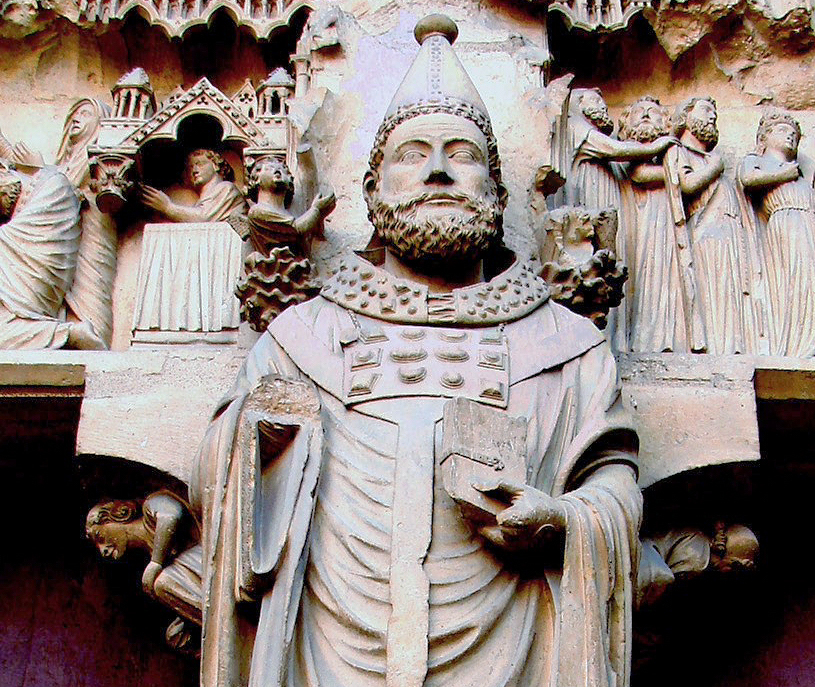
reims-portail_nord-st_calixte_1

by Jim Dougherty

Jim DoughertyIn the midst of struggles, early Puritan minister, Massachusetts Bay Colony political figure and Harvard president Increase Mather famously paraphrased I Cor. 10-13 as “Nothing has befallen you, but what is common to men, yea, and to the best of men.”

As Unificationists face the somewhat ironic spectacle of a movement dedicated to unity struggling to unify, amidst faction, division and strife, it’s important to remember we are not the first to stride, stumble, trip, and crawl down this path, and ask ourselves: “What has befallen us, that is not common to people?” — Nothing.

Most, if not all, of the problems we face are the same as others have faced before us. Those problems should not be dismissed or treated lightly, even if we’ve seen them many times before. Indeed, they should be taken all the more seriously as they have proven to be difficult, in many cases almost impossible, to solve. But neither should we be dismayed by those problems, or draw the false conclusion of discouragement because we still face them. Looking at history and what others have gone through can give us perspective, help us manage our expectations, and encourage us to work steadily on the problems we face with the many solutions at our disposal.

Great examples of historical church figures not always living up to our high expectations are found in Saints Behaving Badly: The Cutthroats, Crooks, Trollops, Con Men, and Devil-Worshippers Who Became Saints (2006) by Thomas J. Craughwell, a respected Catholic newspaper columnist.

Pope Callixtus I, for example, martyred in 223 CE and canonized, was originally a Christian slave of another Christian, Carpophorus, who had Callixtus set up a bank of sorts for fellow Christians, to protect and invest the savings of widows and orphans, and to collect donations for them. Carpophorus had come to believe that Callixtus was a man of some financial acumen who could handle the job, but it turned out that trust was misplaced. Callixtus succeeded in losing all the money invested, and embezzled some of it in the process. With Roman Christians stripped of their savings and enraged, Callixtus fled to the nearest harbor and booked passage on the first ship he could find.

Continue Reading→

Applied Unificationism’s Second “Blog-iversary”

Celebrate Our 2nd Birthday-edit

The Applied Unificationism (AU) Blog launched two years ago on May 1, 2013. Its host, Unification Theological Seminary, aimed to create a site where worthy ideas applying Unificationism to all aspects of society could be regularly discussed among members and friends of the FFWPU and related organizations. In a time of transition since the passing of our Founder, we have also sought to make it a place where the future of the Family Federation and its work may be thoughtfully discussed. We consistently post new articles at least once a week.

To date, the AU Blog has received over 100,000 hits from 173 countries, with almost 450 email followers, published 140 articles, and posted over 900 comments. Our material is regularly linked to from Facebook, Google Search, email discussion groups, and the UTS Alumni site, among others. Our Twitter feed is @UTS_AU_Blog and our Facebook page has links to every article we’ve posted.

The AU Blog has provided a responsible forum where Unificationists worldwide can discuss social, political, economic, and cultural issues from a Unification perspective. Recently, we have seen a strong interest in theology as a response to articles we have posted on Rev. Moon’s influences on Christian theology; God as the Heavenly Parent; continuing revelation; and, “The Only-Begotten Daughter” (re-posted on the FFWPU International HQ site).

Several articles have generated a large number of site hits, in one case almost 1,000 in one day. Article contributors have expanded from UTS faculty to a broad and international range of writers, which continues to grow. Last year, we began a popular new feature, film and book reviews, and also published several collections of poetry. We especially encourage submissions from second generation Unificationists. As always, we welcome new op-ed/commentary submissions of 1,000-1,500 words (see our guidelines for details).

If you haven’t already, please “Follow” the AU Blog by signing up on our home page to receive an email each time we post something new. If you’ve since changed your email address, please sign up again using the new address.

And if you enjoy reading the AU Blog and find it useful, please send a donation to UTS to support this blog. Use our Donation Page and select the “Applied Unificationism Blog” at the bottom of the “Designation” pull-down menu.

We look forward to your continuing engagement with the AU Blog in its third year of operation. 🙂

Dr. Mark P. Barry
Managing Editor, Applied Unificationism

The Internet as Intentional Communities

website-hosting-1024x780

By Andrew Stewart

I.

AndrewStewartAn anecdote often shared among Unificationists about the spirit world is that it is composed of places where like-minded people congregate together. The same largely applies to the Internet, for the most part composed of entirely intentional communities. Every decision to go to a website is mostly intentional, so where you go is very much an expression of personality.

Consider the news websites people go to, the videos they share, the comments we leave. These are all expressions of our unique online personalities. Overall, they generally reflect what we may really think, but doubly so if it’s possible to have a mask on to let no one know who we are.

This is not an assault on anonymity, but consider how anonymity removes the fear of backlash. It usually lets people find out exactly what they think when the pressures of society to conform or behave are removed. What is left is raw personality, which can be very scary, and yet very comforting. A person who behaves exactly the same way knows that they own their own behavior, and for others it lets them know what others have pushed on them. Your spirit is also likely on the same wavelengths as your online behavior, because in the spirit world there is no gap between what you think and what is created around you.

II.

Think of something which makes people very mad, and go to the comment section of any regular news story that deals specifically with that very thing. There’s no guarantee that comments will be intelligent, but people will be posting what they think or feel. Even without anonymous posting, people are probably very quick to judge that specific issue harshly, and the section escalates into an argument. Although it may be a very toxic environment, it means they are being exposed to different ways of thinking, and it is easy to disassociate that the words belong to a living breathing person with hopes and dreams.

On the other hand, it’s very easy to tell when you are in an echo chamber. Everyone agrees with what has been posted, with the things you say. There are no voices of dissent. Echo chambers are much more dangerous to be a part of, because there is no dialogue.

Continue Reading→

Reconsidering Divine Principle’s Call to Create a Socialist Ideal

Capitalism-Socialism

By Jack LaValley

Jack LaValleyDivine Principle claims the ideals and values embedded in capitalist democratic free markets will give way to a socialist ideal:

“Because human beings are created to live in an ideal society, they will inevitably pursue a socialistic ideal as they strive for freedom and democracy and further search into their original nature (Exposition of the Divine Principle, p. 342).”

Regarding the economic system organized in a socialist society, Divine Principle:

“God’s plan is to develop a socialistic economy, although with a form and content utterly different from the state socialism that communism actually established (p. 341).”

Let’s examine Divine Principle’s call for the creation of a socialist ideal.

In the last 150 years, the Western capitalist system has proved better than any other method devised to produce politically and legally free individuals, distribute products via the free market mechanism and create material prosperity for the individual. In America — still the most prosperous country in the world — people enjoy the freedom to pursue material comfort, a stable democracy, limited government, and peace.

Yet great numbers of individuals in our midst suffer from various forms of mental illness. Available data in the United States on destructive acts such as suicide, homicide, alcoholism, illicit drug use, and a multitude of other psychologically-based disorders, can give us cause to ask if there might be something wrong with our way of life and the aims we are striving for.

Mental health professionals identify three causal factors to mental illness: biological; psychological, and environmental. Outside of genetic factors, brain trauma injuries and neurological disorders, mental illness is often viewed as a deviation from expected social norms and behaviors. Those individuals who break with established social norms and behaviors are viewed as abnormal or mentally ill.

One extreme example of this can be found in the 1970s anti-cult deprogramming phenomenon.

Continue Reading→

The Only-Begotten Daughter

20150303-main-8

By Andrew Wilson

WilsonSometimes we need theology. In Christian church history, the time theology becomes important is when there are differences of opinion between various leaders or groups of the church, or sects — what in church history came to be known as “heresy.” But “heresy” simply means opinion. To identify truth and distinguish truth from heresy shouldn’t mean to condemn the heretic to the stake — although that often happened in church history. Rather, to distinguish truth from heresy is to properly understand what God is doing and correct misunderstandings. It is the job of the theologian to clarify truth, but not to condemn; it is to clarify what is the core of our salvation.

These days some question, “How can True Mother call herself God’s only begotten Daughter? Was she born sinless? How could she be, when only the Messiah is born sinless?” Nevertheless, True Mother confidently stated at the second anniversary of True Father’s Holy Ascension (Seong Hwa), “I am God’s only-begotten Daughter.”

In fact, this idea can be found in Father’s words. It is in the Cheon Seong Gyeong (both old and revised versions) from a June 1972 speech in which he said, “Where there is an only-begotten Son, there is also an only-begotten Daughter.”

It’s important to understand the meaning of this term to properly honor True Mother as the True Parent, now that True Father has ascended to the heavenly realms.

We are well aware of the common view that True Father, coming on the foundation of Jesus Christ, is sinless. He then takes a woman from the fallen world and raises her up to be the Bride, at which point they become True Parents. From that point of view, Mother up to that time was just an innocent girl living a protected life. All her merit, and everything she had, came from Father.

God’s Equal Love to Man and Woman in the Original Creation

But think about Adam and Eve when God created them. They were brother and sister, each created out of a portion of God’s divine essence. As God is the Heavenly Parent having dual characteristics, God must have poured all of His masculinity into Adam and all of Her femininity into Eve. God then would have raised them individually as His son and Her daughter.

Continue Reading→

The Puritan Model of Success

hp_mayflower_arrival_1

By Michael Mickler

Mickler full-sizeReverend Sun Myung Moon was a great admirer of the Puritan movement, especially the pilgrims who migrated to Plymouth, Massachusetts in 1620.

In “God’s Hope for America” he stated, “The story of the Pilgrims is a classic in God’s history. It fits into the pattern of the righteous people of history.”

What is that pattern?

Rev. Moon highlighted three elements. First, he said, the pilgrims “longed for … [a] new world … [a] new heaven and new earth where they could find freedom to worship God.” Second, they gave up “their families, their relatives, their surroundings, and their country.” Third, they exemplified “total reliance on God.” As Rev. Moon put it, “Their only hope was in God. Every step they took they depended upon God … When they were sick and dying … they turned to God … their life from morning to night, from dusk to dawn, was centered upon the will of God. God was their only comfort, their only hope and their only security.”

These attributes comprised the “internal” aspect of the Puritan pattern or, in Unification terms, their “foundation of faith.”

Rev. Moon also spoke about the “external” aspect of the Puritan pattern. He stated, “the first thing they built was a church … I am sure that after their church they built a school. They wanted outstanding schools for their children, better than any schools existing in the Old World. And their homes came last.”

Mrs. Moon made the same point in a recent address. Referring to the “Pilgrim fathers,” she said, “Before they built homes for themselves, first they built a church; then, for the sake of the future generations, they built a school, and then finally they built their own homes. That’s the … course that humankind should follow.”

Church, school and family (represented by homes) comprised the “external” aspect of the Puritan pattern, their “foundation of substance.”

Taken together, the internal (attitudinal) and external (institutional) patterns constituted the Puritan model of success.

How does this relate to Unificationism?

Continue Reading→

The Greatest of These Is Love

713px-Saint_Paul,_Rembrandt_van_Rijn_(and_Workshop?),_c._1658

The Apostle Paul,” by Rembrandt van Rijn

By Dan Fefferman

Dan FeffermanMany times I heard it said that in the early days of the Christian church, it was of one accord, sharing all things in common, united by the Holy Spirit. Certainly this is the view of the church we get from the Book of Acts, which emphasizes the theme of unity through the Holy Spirit:

And they, continuing daily with one accord in the temple, and breaking bread from house to house, did eat their meat with gladness and singleness of heart, Praising God, and having favour with all the people.  (Acts 2:46-47; KJV)

But from Paul’s letters we get a different viewpoint, in which factions and sometimes angry discord can be seen.

In Paul’s letter to the Galatians he speaks of a public argument between himself and Peter over the question of whether Jewish Christians were allowed to eat at the same table with Gentile Christians. And in the letter to the Corinthians, he speaks of factions centered on different leaders.

Now I appeal to you, brothers and sisters, by the name of our Lord Jesus Christ, that all of you be in agreement and that there be no divisions among you, but that you be united in the same mind and the same purpose. For it has been reported to me by Chloe’s people that there are quarrels among you. (I Cor. 1:10-11)

“What I mean,” Paul explains, “is that each of you says, ‘I belong to Paul,’ or ‘I belong to Apollos,’ or ‘I belong to Cephas,’ or ‘I belong to Christ.’”  We don’t know a lot about these factions, but we can deduce some things that may interesting.

Peter

Peter, of course, is traditionally known as the chief disciple of Jesus, the one whom Jesus appointed to be the head of the church. But as already mentioned, Peter and Paul fought about whether Jews and Gentiles could eat together.

Continue Reading→

“Still Alice”: Holding on to Who We Are

la_ca_1202_still_alice

by Kathy Winings

kathy-winings-2When we were younger and just beginning to study Principle concepts concerning the purpose of life and about the nature of our lives as children of God, many of us tended to think in simple, basic terms.

In terms of our life journey, we often taught that we were conceived and nurtured for nine months in our mother’s womb as our first stage of existence. Our life continued as we burst on the scene and embarked on a journey through this earthly existence for our second stage of life, hopefully looking forward to a long and healthy life. Ultimately, we would pass into our eternal home to live with God and rejoin our loved ones who had gone on before us. We learned in those early days that in the grand scheme of things, our physical life would be but a passing moment, as it were, when compared to our eternal life. Yet how we lived in this second stage of life, how well we loved and how well we lived according to God’s life-giving words were of prime importance. Most of the content though was fairly theological and did not deal with the practical dimension of our daily life.

I don’t know about you, but for me, I did not give much thought to the numerous physical challenges that might make our life on earth difficult. I was too busy going about the work of God to think too long or hard about such things other than to perhaps feel that somehow we might be shielded from some of these challenges because of the importance of the work we were doing.

However, I was reminded of this overly simple view of life while watching the sobering and powerful film “Still Alice.” Julianne Moore, in an Oscar-winning performance, masterfully portrays Alice Howland, a linguistics professor at Columbia University and sought after guest lecturer, who, just after celebrating her 50th birthday, is diagnosed with a rare form of Alzheimer’s disease that manifests at an early age. An intelligent and active woman, and mother of three adult children, this diagnosis cuts to the quick. Here is a woman whose life is defined by words, language and a life of the mind now rapidly being deprived of her thoughts and ideas as well as her memories.

Continue Reading

Website Built with WordPress.com.

Up ↑