God as Heavenly Parent in Rev. Moon’s Early Teachings

June 2006

By Andrew Wilson

WilsonOn January 7, 2013, weeks prior to Foundation Day, Mrs. Hak Ja Han Moon, who since her husband’s passing on September 3, 2012, has led the Unification movement in her capacity as True Mother, declared that henceforth Unificationists should refer to God not as Heavenly Father but as Heavenly Parent.

Many members regarded this as a controversial innovation. Some objected to what they saw as unwarranted tinkering with time-honored tradition while others welcomed it as a step away from a sexist view of God.

However, the term Heavenly Parent, along with its implication that God is the Heavenly Mother as well as the Heavenly Father, was already an established feature of Reverend Moon’s theology, especially in his earliest teaching, Wolli Wonbon (1951).

Although as a rule Rev. Moon referred to God as Heavenly Father, he occasionally gave voice to the term Heavenly Parent. In the Cheon Seong Gyeong (2008), a large anthology of selections from his sermons, the term occurs more than a dozen times. For example,

That is something of a revelation about the Korean people — living with the Heavenly Parents for thousands and tens of thousands of years. (152)

By attending the Heavenly Parent, the heavenly kingdom and the heavenly ancestors, a royal domain will emerge (912)

We have not known that we have such a Heavenly Parent. (1151)

Have you shown filial piety to me as you would to your Heavenly Parents? (2225)

The Cheon Seong Gyeong (2014) includes an excerpt of a 1977 speech in which Rev. Moon refers explicitly to the two genders of Heavenly Parent, Heavenly Father and Heavenly Mother:

Continue Reading→

The Arts and Popular Culture After 9/11

rock-concert

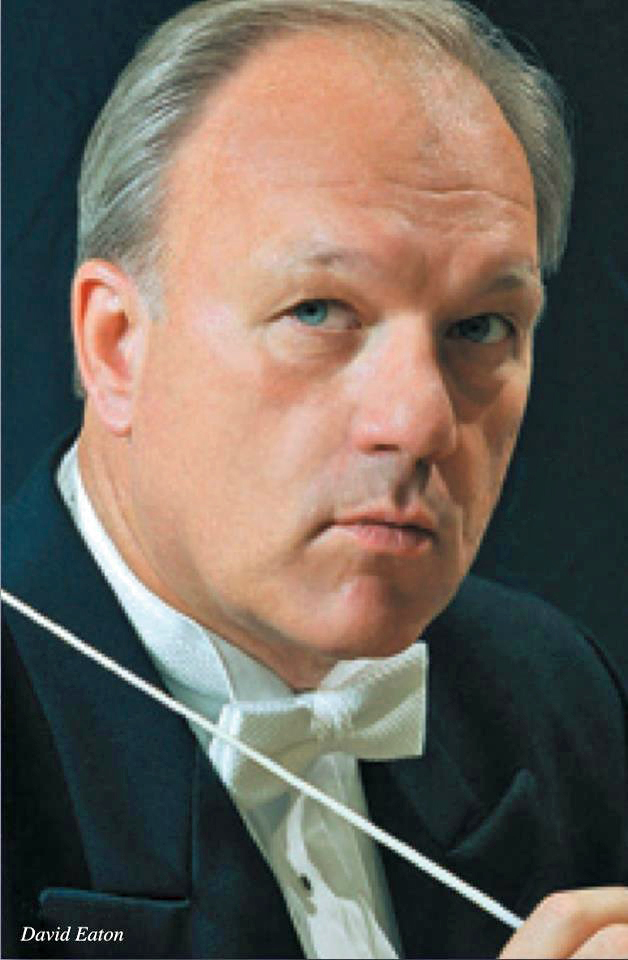
By David Eaton

david_eatonIt’s been nearly 15 years since the attacks of September 11, 2001. With the rise of Islamic terrorist groups like ISIS, and the tragedies late last year in Paris and San Bernardino, Americans continue to seek answers and insights to make sense of the heinous acts that have changed their lives in unthinkable ways.

As we learned more about Islam and the resentments many in the Arab world directed toward the West, it became apparent that a serious point of contention among Muslims — fundamentalists and moderates — was the pervasive influence of Western popular culture in the Muslim world. This has resulted in a spate of collective soul searching as the motivations of artists, producers and production entities were called into question in ways that heretofore had rarely been experienced.

Weighed against long-standing American support of Israel, or other Western economic or geopolitical influences, it is difficult to ascertain the degree to which Western cultural and artistic endeavors actually have had on breeding the resentments that motivated the planners of 9/11 and later attacks. Yet it cannot be denied that the influence of certain cultural expressions produced by our commercially-oriented and highly secularized entertainment industry have contributed significantly to the antagonisms Muslims feel toward the West in general and the United States in particular.

In his 1951 tome, Milestones, the Egyptian Muslim scholar, Sayyid Qutb, wrote extensively about what he viewed as the hypocrisies of Western Christian culture, especially racism and sexual immoderation. Qutb’s indictments regarding the secularization and immorality of the West and its “pagan ignorance and rebellion against God” became the seeds of radical Islamic resentment. In Milestones, he states:

Continue Reading→

The Best Policy Ideas of the 2016 Presidential Candidates

election-primary-vote-generic-default

By Gordon Anderson

GordonThe 2016 Presidential Election has raised a number of good policy ideas for the improvement of American society and government. Unfortunately, no single candidate endorses all of the best ideas, and, more unfortunately, every candidate who has good ideas seems to have more bad ones. Part of the reason is the development of a system that encourages candidates to be loyal to political parties and large campaign contributors rather than to middle-class citizens and the nation as a whole.

In my view, the best candidate would be one who supported all of these policies:

  • Bernie Sanders’ revival of the Glass-Stegall Act
  • Hillary Clinton’s call to overturn the Citizen’s United Supreme Court decision
  • Rand Paul’s foreign policy that is against U.S.-imposed regime change
  • Donald Trump’s middle-class tax policy
  • Carly Fiorina’s reforms of government bureaucracy

None of these policies are promoted by the establishment, which is why there is increased criticism of existing party platforms and why “outsiders” are polling so well with voters. Even most candidates that seek party endorsement are promising to reform the system.

The explanations for the value of my list of the best policies I describe below are adapted from a longer post on my blog, Life, Liberty, and the Pursuit of Happiness, Version 4.0, which includes further critique and commentary on the candidates and their policies. I have not discussed all candidates, only selected the most constructive policies being promoted.

Preparation to vote knowledgeably is an important role of the citizen in a democracy, and I encourage everyone to read through all the policy positions on candidates’ websites before their vote. A responsible voter will compare the strengths and weaknesses of a candidate in all areas of governance, and not just find agreement with a candidate’s rhetoric on a single issue.

Continue Reading→

The Responsibility of True Parents’ Successors

pass-the-torch

By Tyler Hendricks

14_12_CfE_Tyler 10.55.08 pmTrue Parents’ successors have the honor and responsibility to own and build Cheon Il Guk. As I studied some of True Father’s words on the subject, including statements going back to the early 1980s, three points emerged: One, that we all are successors; two, the notion of a central successor; and, three, the central successor’s qualifications and responsibilities.

First, God calls us all to be successors. True Parents come to lift us up into a relationship of parent-child with them. God and True Parents, like all parents, want their children to surpass them. Through the Holy Marriage Blessing, all blessed couples have the position of True Parents’ direct children.[1] The True Parents’ physical children, the True Children, and the blessed couples in general, are like Jacob and Esau, twins in True Mother’s womb, whether physically or sacramentally, in the “realm of the fourth Adam.”[2]  Thus, both True Children and all blessed families are entitled, by fulfilling certain responsibilities, to stand as owners of Cheon Il Guk, successors of True Parents.

I discern four such responsibilities that apply to all successors. Successors are to honor True Parents and True Children, who embody the ideal of God’s substantial Word, for it is through the reality of their oneness as a True Family of three generations that Satan’s accusations are overcome and all humankind may enter God’s direct dominion. On that foundation, all successors are to receive the Blessing, bless others, and work together to restore nations.

The Central Successor’s Responsibilities

Given Unification teachings regarding lineage, and human nature itself, most members have high expectations that the founders’ children will model God’s ideal. Father Moon supported this through statements such as, “The sons and daughters of Jesus’ direct lineage would have become the Popes.”[3] And Unification teachings lead us to expect the appointment of a central successor, as a couple, from among the 14 children.

Continue Reading→

The Divine Nexus of Music and Mathematics

1424268047

By David Eaton

david_eatonI have this fantasy.

I’d love to see a debate on a liberal arts college campus between members of the sociology department, those who bemoan the heritage of European culture at every turn, and members of the music faculty who revere the music of Bach, Chopin and Wagner.

It would be fascinating to witness the spectacle of the sociology contingent trying to convince the musicians that they have it all wrong regarding the music of their cherished composers.

But do musicians in the academy really have it all wrong regarding Western culture? Are those who argue there may be “immutable truths” that govern music — its creation and realization — completely obtuse to sociological or cultural prejudices as postmodernists would have us believe?

Though we might debate the cosmological and metaphysical aspects of music, a cursory examination of music (regardless of cultural sphere) reveals that the laws and principles that govern music production are rooted in mathematics and physics.

This understanding dates back to Pythagoras in Greece and the Sumerians of Mesopotamia. Nevertheless, we have come to a point in our postmodern culture where any allusion to “certainty,” “universals” or “immutable truths” is, more often than not, met with skepticism, even abject derision.

This mindset originated with Nietzsche, Marx, Stirner, Hegel, and others whose abnegation of religion and “absolutes” infected Western culture at the beginning of the 20th century.

That pernicious legacy persists today.

Paradoxically, those who disparage religion love the music that is the progeny of a decidedly religious culture. Nietzsche, a cultural revolutionary and an earlier admirer of Richard Wagner’s operas, said, “Life without music would be a mistake.”

Continue Reading→

A Second Chance: Love with Forgiveness

2948794340_5c8c3c64e9-e1322684605312

By Jacob David

Jacob DavidLast year there was no Black Friday in Chicago.  A policeman had fired 16 shots to kill a 17-year-old African American man a year ago, but the video surfaced only after 400 days. In November as well, three people were killed at a Planned Parenthood facility in Colorado Springs. In Mali, two men held 170 people hostage and killed 20 of them; the siege ended when commandos stormed the hotel, freed the hostages, and killed the attackers.  And, in Paris, 130 died because of a terrorist attack.

We live our lives in a time such as this.  Planes are being shot down.  And we hear from the presidential candidates messages of doom and gloom.  The safety of the world, and particularly the United States, is in jeopardy.  In the political arena, especially from the presidential candidates, we hear no encouraging words. Building a wall around our country won’t cut it.  The increased police presence at New York’s Port Authority bus terminal and Times Square confirms we live in fear.  A republic of dreams is gradually turning to a republic of fear. 

People ask whether there is any hope at all. There are very many of us who are busy trying to forget the grim situation around us making ourselves busy traveling back 2,000 years to that manger in Bethlehem – singing Christmas carols, giving each other gifts, preparing delicious dinners, and decorating our homes and Christmas trees.

In the midst of hopelessness, we are here to understand what hope means.

Our Scripture readings do not point us to Bethlehem or a manger.   They point us to the future.  They are helping us to a time when love will prevail and love alone will give us hope in our hopeless situation. The Apostle Paul speaks of love abounding and he thinks it is urgent because Christ is coming.  The psychologist, Eric Fromm, would say that “Love is the only sane and satisfactory answer to the problem of human existence.”  Then we can better sing the song “Love Makes the World Go ‘Round.”

The actor, Peter Ustinov, did a great job describing what true love is, hinting at the character of God’s love:  “Love is an endless act of forgiveness, a tender look, which becomes a habit.”  Real love, God’s love is endless forgiveness.

Continue Reading→

The Mission Butterfly of Early Christianity and the Nature of Unificationism

CrossShadow

By Rohan Stefan Nandkisore

EditorLooking at history, we see that the rise of democratic societies — some of which even base their constitutions on the ideology of Jesus Christ — has brought about freedom on a scale never before experienced. Yet, we also witness an erosion of those highly treasured values.

Countless people, mainly Christians, died to attain these values that we take for granted today; this includes underground missionaries of the Unification Church in the former Soviet Union and East European countries, whose sacrificial missions sometimes led to imprisonment and even death, and was referred to as “mission butterfly.”

We need to revitalize these virtues as expressed in Reverend Moon’s peace messages in order to not lose them. As a journalist, I discovered interesting aspects of early Christianity that offer valuable lessons from the past.

There is a basilica in Fulda, Germany, which contains the relics of Boniface, given the honorable title “Bishop of the Germans.” I was wondering for a long time how come a missionary from Wessex (England) Christianized the German lands in the 7th century? Geographically, Britain is much further from Rome and the Mediterranean than Germany.

The answer to this riddle dates back to the times of Emperor Augustus, 9 A.D., during the childhood of Jesus. Augustus mourning “Varus, Varus, give back my legions” is still remembered today. Arminius, a Cherusk, caused the annihilation of three Roman legions in the Teutoburger forest. Subsequently, the Romans withdrew from large areas of German lands and never returned. As a result, it did not become Christianized, but Britain did after it came under the control of the Roman Empire at least until the Hadrian fortress fell.

Continue Reading→

Lessons of Illness and Death

man-sitting-with-older-woman-in-hospital-bed-holding-her-hand

by William Selig

WS CU cropIn my capacity as chaplain in an inner-city hospital, I deal with end-of-life situations as frequently as two or three times a day. My faith as a Unificationist accepts death as normal and part of God’s plan. I know that if God is in our life, then He must also be in our death, and this gives me a sense of comfort and the strength to offer spiritual support to the patient, family and staff.

When I enter the room and see the patient lying on the bed, the family is generally gathered around or standing outside in the hallway or hurriedly on their way to the hospital. The air is thick with emotion. My heart never fails to be moved by the sincerity and tears. I am deeply touched by the weeping and what I call “quiet tears” where I know the family’s feelings are building up inside and ready to overflow.

I try to provide a compassionate presence even if the patient is unresponsive. I always assume their spirit self or inner being is awake and appreciative of companionship.

When a person knows that death is imminent, what happens next really depends on their values and beliefs. Faith and spirituality often become very important even if he or she hasn’t set foot in a house of worship for years. Many appreciate hearing sacred words and prayer. Most often people request Psalm 23. It is known to everyone and provides a comfortable assurance that Heavenly Parent is in the room.

Besides the patient, I offer spiritual support to the family and loved ones through companionship, prayers, and a listening heart. Essentially the chaplain is a reminder that life has a spiritual dimension. I try to help them deal with the situation and find some sense of spiritual peace.

I’m always been inspired by how God opens the hearts of the families. Although I am a total stranger, I am immediately welcomed into the center of an emotionally intimate situation, certainly not as an individual, but rather as what the chaplain represents. The family wants to feel the presence of God. They want the assurance that God is in charge and that he’s there, even when things aren’t going according to their own wishes or expected plan.

Continue Reading→

The Sanctuary Church Schismatics

Front View of SC

By Michael Mickler

Mickler full-sizeThe Sanctuary Church (SC), with branches in the U.S. and overseas, is best understood as a schismatic movement. Followers of schismatic movements are known as schismatics. A schismatic is a person who creates or incites schism in an organization or who is a member of a splinter group.

SC, formally the “World Peace and Unification Sanctuary,” claims that the wider Unification movement has deviated from the teachings and practice of the Reverend Sun Myung Moon and that its purpose is to preserve and propagate his teaching.

The SC schism was several years in the making.

In 2013, SC Pastor Hyung Jin Moon, then International President of the Family Federation for World Peace and Unification (FFWPU, a.k.a. the Unification Church), refused the request of his mother, Hak Ja Han Moon, to take up duties under her in Korea. Instead, he relocated to the “wilderness” of Newfoundland, Pennsylvania, where he began an independent ministry. He was supported by his elder brother, Kook Jin Moon, who relocated Kahr Arms, which he heads, to nearby Pike County. Together, they purchased a church facility in 2014 and began the SC ministry.

Initially, SC uplifted gifts of grace and the Holy Spirit. Later, a “wilderness” mentality took hold and sermons turned apocalyptic. Hyung Jin Moon castigated “predatory elites” and “postmodern” thinking, gave credence to “truther” claims about the Twin Tower attacks, and emphasized prophetic speculation about Shmita year cycles and Blood Moon Tetrads. Then, in a series of sermons, beginning January 18, 2015, he broke decisively with FFWPU.

His epiphany was that the “predatory system of control… in the world at large” also was occurring in FFWPU. Based on this understanding, he directed Unification Church members to resign from FFWPU organizations. In a subsequent “Declaration of Heaven,” he announced the removal of all current leaders of the Unification Movement, declaring they had “no authority.” He called on members to take over church boards and elect replacements.

Continue Reading→

Website Built with WordPress.com.

Up ↑