Why I Applied for the Liberation of Bobby Fischer

By Rohan Nandkisore

Robert James Fischer has always been a fascinating and mysterious figure in my life, especially during my early years. It was around the time I discovered chess and eventually became a club player. My own chess career was modest—after joining the church as a teenager, I never pursued it competitively. My best (and only notable) result was ranking sixth at the Hamburg Open. 

Due to my work as a journalist, I once requested an interview with Fischer—unaware at the time that such a request stood no real chance of being granted. Many others also tried in vain to interview him or even to have a photo taken with him, but without success. Had I known about his religious interests, I might have taken the opportunity to discreetly pass him a Divine Principle book at the library where he spent hours each day—just 100 meters from my home in Reykjavik. In the end, I never met him in person, and perhaps that was for the better, given the role this distance may have played in his eventual path to liberation.

What makes Fischer truly great is his ability to teach himself the game at the highest level, while his major opponents from the Soviet Union were part of well-organized chess schools and often collaborated during tournaments. Despite this, he managed to rise above them.

When he famously defeated one of the Soviet greats with a staggering score of 6–0, the player reportedly consoled himself by saying, At least I still have my music.” Back home in Russia, however, punishment awaited him for such a loss.

During Spring Great Works 2025, he received liberation in Cheongpyeong.

A New Perspective on the Chess Legend Who Made History in Iceland
An Exploration of the Man Behind the Name: Robert James (Bobby) Fischer

From March 2005 until his death on January 17, 2008, one of the greatest chess prodigies of all time lived in Iceland. With his legendary match against reigning World Champion Boris Spassky in 1972, Fischer not only broke the Soviet stranglehold on the chess world but also challenged the presumed intellectual superiority of the Marxist-Leninist worldview. That iconic showdown may even have foreshadowed the East-West summit of 1986 between Ronald Reagan and Mikhail Gorbachev—an event now widely viewed as a pivotal moment in the end of the Cold War.

Bobby Fischer and his Father Paul Nemeny

This article sheds light on Fischer’s life through the lens of personal memories and accounts shared by his close friend, Garðar Sverrisson, who stood by his side during his final years. It was Garðar who played a critical role in bringing Fischer to Iceland from Japan—just in time to avoid the execution of an American extradition order.

Robert Fischer, the late chess prodigy, is remembered by many for his rants against Judaism (prosecutable in Germany) and his fierce criticism of his home country. His legacy might have remained permanently tainted—were it not for Garðar Sverrisson, who offered a different narrative. Fischer shunned the public and avoided journalists, but when pushed, he could lose his composure.

The close friendship between Garðar and Fischer forms the heart of this article. The two spent extensive time together—so much so that Fischer bought an apartment in Garðar’s building to live nearby. This exceptional closeness made Garðar one of the few credible eyewitnesses to Fischer’s thoughts and expressions during his final years.

A Deep Bond Between Mother and Son

Fischer’s mother, Regina Wender, was a Swiss-born woman of Jewish descent. His likely biological father was Paul Nemenyi, a Hungarian-Jewish civil engineer. Although his parents were never married, Fischer was given the last name “Fischer” from Hans Gerhardt Fischer (of Berlin), whom Regina had separated from before Robert’s birth. To avoid social stigma, she listed H.G. Fischer as the official father. Frank Brady, author of Endgame, leaves little doubt that Nemenyi was in fact Fischer’s biological father. Garðar considers the book’s content—at least up to the 1972 match—largely accurate.

Regina endured a difficult childhood. After her mother was hospitalized, she never saw her again. She was raised in a Jewish orphanage known for its strict discipline. Later, after an extended stay in the Soviet Union, she made her way to the United States through a harrowing journey. There, she raised Robert as a single mother alongside his older sister, Joan.

Politically active and critical of the system, Regina caught the attention of the FBI, which placed her under long-term surveillance—an emotional burden that inevitably affected her son. In Bobby Fischer – The Final Years, Garðar takes a closer look at the relationship between Robert and his mother. Though not religiously observant, Regina raised her children in a liberal, open-minded household. Despite their often-precarious circumstances, mother and son shared a close emotional bond—something Garðar observed in Fischer’s body language whenever he spoke of her.

Bobby Fischers Mother Regina Wender

Brady’s book is filled with testimonies and anecdotes highlighting the strength of their relationship. Initially, Regina was concerned about her son’s obsession with chess and tried to introduce him to other activities. But after a psychologist assured her that there were far worse things a boy Fischer’s age could be interested in, she relented. Living close to poverty, Regina had to work multiple jobs to support the family, which meant that Robert spent a lot of time alone. She eventually gifted him a subscription to a Yugoslavian chess magazine, which not only improved his game but sparked his interest in the Serbian language. Years later, while walking through Reykjavík with Garðar, Fischer struck up a conversation with a Serbian man—in fluent Serbian—an impressive testament to his autodidactic nature.

Regina was a committed communist living in the United States during the McCarthy era, when anti-communist sentiment dominated the political landscape. It’s widely believed that her political views and subsequent FBI surveillance significantly limited her career prospects.

Conflict with Homeland and Religion

Fischer grew up in an environment of mistrust—from within the Jewish community and from American authorities alike. Brady recounts an incident in which FBI agents waited outside Regina’s home. She warned Robert never to speak in a similar situation. These formative experiences may have contributed to his later, increasingly radical rejection of Judaism and his battle against the U.S. government.

Fischer once stated that it gave him particular satisfaction to defeat a promising young Jewish-American chess player. At the time, the Jewish community was searching for a successor to Samuel Reshevsky, one of the top American players of his era. That this successor should be Fischer—with his German-sounding name, nonconformist personality, modest background, and a rebellious mother—was met with skepticism in some Jewish circles.

Fischer often felt his opponents were given preferential treatment. Only once it became clear that there was no one who could rival him did he begin to receive the recognition he deserved.

His troubles with U.S. authorities began in 1992, when he violated American sanctions by playing a rematch against Spassky in Yugoslavia. Garðar still finds it puzzling that while journalists were allowed to travel and report on the match, Fischer faced legal consequences.

Fischer’s conflict with the U.S. deepened after the 1992 match. In The Final Years, he speculates whether his persecution was linked to his outspoken views on Judaism.

The Man Behind the Myth

To many who never looked deeper, Fischer seemed like a paranoid eccentric. Garðar, however, paints a different picture. Though Fischer’s stubbornness could be exhausting at times—who hasn’t had issues with close friends or family?—he was also passionate, well-read, and intensely curious. He loved books, bought them in bulk, and often gave them away. He enjoyed discussing a wide range of topics, relished nature, and frequently went on outings with Garðar.

On one occasion, the two were settling into a country cabin when a mouse ran across the floor. Garðar, horrified, insisted on moving out. Amused, Fischer compared it to the rats in New York and urged Garðar to calm down. In the end, Garðar won that round, and Fischer followed his lead.

Fischer’s Japanese wife, Miyoko Watai, lived in Tokyo but visited him regularly. He had a special fondness for interacting with young people and children—an aspect that contradicts the image of a reclusive misanthrope.

While he often held fast to his beliefs—sometimes to his own detriment—Fischer was not closed off to new ideas. Though chess remained his lifelong passion, his interests extended far beyond the 64 squares. Even at the height of his career, he traveled not only for tournaments but also out of a desire to learn and explore.

Burial Controversy and Another Religious Conflict

As Robert sensed his end approaching, he expressed a deep wish to be buried near Garðar’s family graves in Selfoss—a peaceful, off-the-beaten-path location filled with familiarity and quiet.

Garðar quickly learned just how renowned Fischer truly was when he passed away on January 17, 2008. The phone never stopped ringing—but that was the least of it. Various individuals and organizations began asserting claims over where Fischer should be laid to rest. Reykjavík was floated as a possible site—his grave there could have become a tourist attraction. The U.S. Chess Federation, which had once revoked his membership, advocated for burial in New York.

But the most surprising interference came from Fischer’s former brother-in-law. According to Brady, he and Fischer’s sister had once evicted Bobby over his antisemitic remarks. Now, the brother-in-law tried to enlist the President of Iceland in a plan that was as much about ideological symbolism as it was about burial rights. There was concern that a Christian cross on Fischer’s grave might imply he had not been Jewish. As a compromise, the brother-in-law proposed a statue of a king, topped with a crown bearing a small cross.

Iceland’s then-president Ólafur Ragnar Grímsson—an old acquaintance of Garðar—stepped in. His involvement brought a swift end to the dispute, delivering a kind of checkmate to a conflict that traced its origins back to the Jewish community Fischer encountered as a young man.

Fischer’s Christian identity had roots early in life. As a young man, he embraced Christianity and made significant financial contributions to his church (Brady). A key influence was William Lombardy—not only one of America’s top chess players and Fischer’s closest friend, but also a former priest, who introduced him to Catholicism. The irony of this spiritual journey was clear in his later years in Iceland, when the Catholic Garðar would sit and listen to Fischer’s theological insights—a testament to Fischer’s religious depth.

A Final Word on Legacy

Unlike Garðar’s nuanced portrayal, Brady’s account of Fischer’s final days in Iceland tends to emphasize only the negative. Thorough journalism might have unearthed a more balanced truth. Brady’s last-minute meeting with Garðar, shortly before publishing, left little room for corrections. The depiction was also shaped by individuals with financial interests in Fischer, whose disappointment over his refusal to cooperate colored their narratives more than facts did. It’s important to note that post-1972, Brady relied heavily on secondhand sources, often without the means to verify their accuracy.

In conclusion, I wholeheartedly recommend Bobby Fischer – The Final Years by Garðar Sverrisson to anyone seeking a deep, nuanced, and human portrait of Bobby Fischer.

Furthermore it opened the desire to liberate this great man who in spite of his shortcomings participated in the downfall of Sowjet communism in a peaceful way, serving as a stage for an event later that would mark the end of the cold war.

Moreover, the book awakened a desire to liberate this complex man—who, despite his flaws, played a role in the peaceful unraveling of Soviet communism—recognized for his part in an event that would later become a symbolic turning point in the Cold War.⬥

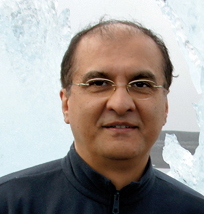
Rohan Stefan Nandkisore was born in 1960 in Frankfurt, Germany, to an Indian father from Guyana and a German mother, and joined the Unification Church in 1978 in his hometown. Rohan served in CARP under Tiger Park and pioneered in East Berlin before and after German reunification (1990–93), and is currently leading UPF activities in Iceland. Since 1999, he has operated his own publishing house http://www.nordland.online

The Unification Cheon Won Gung: The Function of Contemporary Religious Architecture 

Editor’s note:  This article is a “view from the outside” from an historian of religion who attempts to place construction of the Cheon Won Gung in contemporary context rather than from an insider perspective. We apologize for technical issues that prevent us from enabling this article to jump to its own full page and other formatting issues.

YouTube player

By Ronald Brown

The Cheon Won Gung Temple

The complex features the Sanctum, a seven-story stone building in a “reinterpreted Renaissance architectural style,” a palace with a grand ballroom, a Genealogy Center, administration offices, living areas, educational centers, an outdoor plaza resembling that in front of St. Peter’s in Rome, a hall celebrating or the life and work of True Parents, a lake with daily cruises and an assortment of other structures.

The temple is a new chapter in faith for Unificationists. For many pioneering Unificationists, the temple is an unnecessary extravagance since they see themselves as part of an organic movement and not ‘just another religion’. For others, the Temple feels like a watershed, a natural step in the development of the kingdom, and, in fact, represents the end of a providential era and the beginning of a dynamic new phase.

The traditional functions of Religious Architecture

From the time of Stonehenge, Göbekli Tepe and other Neolithic stone places of worship, monumental religious architecture has played a central function in world religions. The complex of Angkor Wat, the Temple of Solomon, the Pyramids of Teotihuacán, St. Peter’s in Rome, Notre Dame Cathedral in Paris, Saint Basil’s Cathedral in Moscow, the Masjid al-Haram in Mecca, the Pashupatinath Hindu Temple in Nepal, and St. Patrick’s Cathedral on Fifth Avenue, have all served different and often changing functions in their respective religious communities and broader societies. 

Solomon’s Temple for example, proclaimed the military conquest of the Land of Canaan and the political unification of the 12 tribes under one king, one nation and one God. The Berliner Dom the Masjid al-Haram and the prominent synagogues and churches in the Americas and Europe served a similar function.

St. Patrick’s Cathedral defiantly proclaimed the arrival, success, and power of the despised Irish immigrant Catholic masses. In a similar fashion the Islamic Culture Center, Temple Emanuel and the Ganesha Hindu temple in Flushing, Queens, proclaimed the success of their respective immigrant groups.  

The ever more elegant Vatican, in turn, served as a vehicle to announce the spiritual primacy of the Catholic church over the various Protestant heretics. Temple Emanuel and the Islamic Culture Center confirmed the primacy of German Reform Judaism and Sunni Islam.  

Social success is also a very central function for religious groups climbing the social and economic ladder. The original Low Church Calvinist rejection of statues, organs, paintings, figurative stain glass windows, ornate altar tables, and pulpits was gradually eroded as the members of the Dutch, Scottish, Reformed, and Huguenot Churches achieved social and economic success 

Of course, a prominent Fifth Avenue St. Partick’s Cathedral, centrally located Notre Dame in Paris, opulent Berlin Synagogue or mosque in India, and even modest houses of worship of all religions often become targets during periods of social, political or economic upheavals. The Jewish Bible instructed the Israelites to “tear down their altars, and dash in pieces their pillars, and burn their Ashe′rim with fire”. The Protestant Reformation and French Revolution were marked by the destruction or repurposing of Catholic churches. During the Russian and Chinese Marxist revolutions, houses of worship were destroyed as incompatible with the atheistic ideology. The desecration and destruction of the Ayodhya and other mosques in India by militant Hindus were integral to the quest to “Make India Hindu Again.” Defacing mosques and synagogues in the United States was commonplace during the various Jewish-Muslim wars. 

Without a doubt, houses of worship will remain a central feature of world religions. Even Hollywood sci fi films such as Jedi, universally that the future will be profoundly religious and places of worship will figure prominently. 

Oficina Steam::Coruscant Jedi Temple - Star Wars

Coruscant Jedi Temple – Star Wars

The Functions of Monumental Religious Architecture in the 21st Century

Architectural Awe

Both the Cheonwon Temple, the Coruscant Jedi Temple, and most of the religious centers of contemporary new religious movements serve similar functions in religious architecture in the 21st Century and maybe even the Third Millennium. They all feature Striking architecture. HJ Global News featured a broadcast on 12/17/2022 that stated that after visiting the Cheonwon Temple, the visitor would declare, “I must also join in with this providential effort, I also want to become a Cheon IL Guk citizen.  Julien Grey added that they will want to “Sign memberships as they depart.”

The 1977 Buddhist Dharmakaya Cetiya complex in Thailand leaves the visitor with the same conviction. Its futuristically designed hemispherical dome is 108 meters (354.331 feet) in diameter and surrounded by concentric sloping terraces. The visitor is overwhelmed by the 300,000 Buddha images enshrined on the exterior dome and an additional 700,000 Buddha images inside. 

Equally striking is the headquarters of the Mexican movement, La Luz del Mundo, founded in Eusebio Joaquín González. Literature writes about their central church in Guadalajara as “The building is the message.” The monumental avenue leading to the sanctuary enhances the towering multi-leveled pyramid that soars over the neighborhood.

Dhamakaya Cetiya

La Luz del Mundo in Guadalajara

Weaponization of Architecture

The monumental houses of worship of many NRMs employ architecture to celebrate their victory over vicious persecution. As the word “Unification” indicates, the Movement set itself against the multitude of traditional Christian denominations and groups. The arrest and imprisonment of their founder, persecution in many countries, arrest of missionaries and the recent crackdown in Japan could have well relegated the movement to a footnote in a history of world religions text book. But they survived the epoch of persecution and proudly constructed their monumental headquarters as a sign of this victory. 

The South Asian Islamic, Tablighi Jamaat movement claims 80 million members. Central to their mission is reclaiming non-practicing for Sunni Islam and proselytizing non-Muslims. Members are required to devote lengthy periods of their lives to spreading Islam, and has effectively weaponized mosque architecture. The recent rise of “political” Islam challenged Western domination of the Middle East, the cultural supremacy of the West, the Israeli genocide of the Palestinians, President Trump’s “Muslim Ban,” and a host of other oppressive measures. The planned London mega-mosque has likewise encountered massive opposition since 1996, when plans for the mosque were first revealed. The famed Iraqi-British architect Zaha Hadid designed a mosque that would trumpet the victory of Tablighi Jamaat in the heart of the Western World, London. It would be three times the capacity of St. Paul’s Cathedral and include a visitor and conference center, a residential school for 500 pupils, and a reception center for visiting VIPs with 20 guest suites. Groups such as the London Christian Peoples Alliance, the Waterman Environmental Council, and others opposed the mosque. Ken Livingston, the Mayor of London, lamented “the particularly vicious nature of the campaign against a possible Muslim place of worship in East London”. The mosque remains a work in progress.

Another NRM that celebrated its survival against great odds was the Vortrekker Center outside Pretoria, South Africa. Every year, Afrikaners gather at the monument on December 16th to remember the Day of the Vow. Forced out of the Cape by the English “Pharaohs,” persecuted in concentration camps during the bloody Boer Wars, and resisted by native Africans, the Afrikaners proclaimed themselves to be a new Chosen People of God, carved out their independent “Zion” in the north of South Africa. On those sacred grounds, they recite the Afrikaner vow, which reads:  “We stand here before the Holy God of heaven and earth, to make a vow to Him that, if He will protect us and give our enemy into our hand, we shall keep this day and date every year as a day of thanksgiving like a sabbath, and that we shall build a house to His honor wherever it should please Him, and that we will also tell our children that they should share in that with us in memory for future generations. For the honor of His name will be glorified by giving Him the fame and honor for the victory.”

Only through suffering and persecution will a people realize its spiritual and national identity and mission.

Proposed London Tablighi Jamaat mega-mosque

Afrikaner Vorotrekker Monument

The Elevation of the Founders

The Cheonwon Temple places the founder of the Unification Movement, Father Sun Myung Moon, and his wife, who succeeded him as leader, center stage in the Unification Complex. Documentation refers to the temple as the “Central temple of Heavenly Parent”. A “Holy of Holies centered on the True Parents.” The Exhibition Hall depicts True Parents’ life course, “a space where the True Parents’ love for Heaven and humanity is embodied.” Few references are made to God or Jesus, although many followers refer to Mother Moon as “the only-begotten daughter of God”. The Schedule for Great Works includes commemorating True Parent’s Birthday, the Foundation Day of the Movement, the Holy Ascension of Sun Myung Moon, Blessings for Unmarried 1st Generations Spirits, and Ancestor Liberation events. The tradition of deifying founders of religious movements has gone into overdrive in these first decades of the 21st century. 

The Brooklyn-based Jewish Lubavitch Movement, also known as Chabad, has gone so far as to declare their leader, Rabbi Menachem Mendel Schneerson, The Rebbe” to be the Messiah. His tomb in Brooklyn has become a pilgrimage site for the estimated 100,000 devout followers and thousands of other devotees. They are convinced that the Rebbe was the promised Jewish Messiah and he would return to life in the near future. Considered by many Jews to be a Jewish cult or even heretical movement, the figure of The Rebbe continues to inspire and give hope to many Jews. 

Eusebio Joaquín González, the founder of the Luz del Mundo Movement has all but been deified. Many followers declare that The apostle is a living God. His survival despite vicious persecution only strengthened the loyalty, donations, and love of their Apostle. According to the faithful, the charges against González were inspired by the devil and hostile Christian denominations. When church leader Naasón Joaquín García was arrested on charges of child sexual abuse in 2019, 600,000 followers gathered in front of church headquarters to declare his innocence and their continued loyalty to him. A giant picture of him dominated the grand avenue leading to the sanctuary.

50,000 flock to Lubavitcher Rebbe's grave in NYC to mark 25 years since  death | The Times of Israel

Tomb of Rebbe, Menachem Schneerson

Messiah is Here #1 Poster by Robert ...

Rebbe Schneerson as the Messiah

Apostle Naasón Joaquín, leader of La Luz del Mundo in front of his throne

Apocalyptic Beliefs

Medieval churches of Europe employed the languages of statues, paintings, representative stained-glass windows, mosaics, and frescoes to communicate the message to the illiterate masses. So too, the houses of worship of the 21st century mobilize architecture to break through the inundation of images and information from Hollywood movies, Broadway shows, HBO, and the internet to reach the saturated masses. Many such NRM have expressed their apocalyptic beliefs in the structures themselves. Mother Moon of the Unification Movement stated, “The completion of this building is the completion of the providence of heaven. It is the completion of human history” (July 4, 2019). 

Unlike the traditional houses of worship that sought to isolate themselves from the profane outside world, Reverend Robert Schuller instructed architects Philip Johnson and John Burgee to design a glass enclosure that would be open to the “sky and the surrounding world. The view from the main entrance was of the thousands of cars in the parking lot. Ten thousand glass panels were affixed to a slender framework of steel trusses surrounded by a 34-acre campus. Inspired by the charismatic Rev. Norman Vincent Peale, who featured football stars and titans of industry as saints for the modern world, Schuller wanted his cathedral to be part of the modern world. 

Crystal Cathedral

Temple of Solomon, São Paulo, Brazil

Conclusion

The traditional method of studying world religions has been vertically where every element of a religion is placed within the overall structure of the particular religion. The method I have employed in this blog is a horizontal method where a particular element of a religion, in this case sacred headquarters, is compared to the same element in other world religions or NRMs. While most followers and scholars of religions tend to stress the uniqueness of their respective faiths, a horizontal study reveals that they are all responding to a contemporary crisis but in a diversity of ways.

This horizontal method highlights the constant dialogue and conflict between the many world religions as they struggle to achieve primacy in the 21st Century. Viewed horizontally, one sees the competing religions engaging in a creative process of dialogue, conflict, and exchange of ideas and structures. Converts freely pass from one movement to another, taking their experiences. These first decades of the 21st Century and the first century of the Third Millennium are awash in solutions to current problems, such as globalization, climate change, global warming, religious wars, crime and drugs, social upheavals, racism, and discrimination, the decline of the traditional family, pandemics, among others and challenging visions of the future. 

How will the Unification Movement incorporate this new element of their faith?  The 3rd millennium is off to an amazing and sometimes overwhelming start; the speed at which the current global culture creates and discards ideas is daunting.

The response of NRM’s to these challenges will be very revealing.⬥ 

Dr. Ronald J. Brown is a professor of history, political science and ethnic studies at Touro College, and teaches courses in world religions at HJ International Graduate School. A docent at the New York Historical Society with degrees from Harvard Divinity School, Hebrew University of Jerusalem, and the University of Geneva, he is author of A Religious History of Flushing, QueensInto the Soul of African-American Harlemand How New York Became the Empire City.

My Daughter Asks: Cult or Community?

By Eileen Williams

My daughter asked me recently, “Mom do you still think you were not part of a cult?” She had just finished watching a show about a dubious, if not dangerous, social media cult, and she caught me off guard. We’ve had these conversations before but now that she is in her thirties and I, recently turned 70, wisdom has hopefully given us a little perspective. 

Cults hold an unending fascination with the American public since the infamous Jim Jones and the diabolical Charles Manson came on the scene during the searching 70s. When I joined the Unification church in 1973 the ‘cult’ word was not a part of the daily lexicon. The language I was  drawn to in that flowered-power era were terms like kibbutz and commune, which in my youthful longings would include: sewing, farming, baking bread, and doing yoga (and eating yogurt which was only sold in ‘health nut’ stores as my mother called them).

As a teen living in a lazy American suburb where neighbors were strangers the idea of greater connectedness appealed to me. But so did a deeper understanding of Christianity. I was enamored with the rock opera Jesus Christ Superstar and C.S. Lewis and disillusioned with my Catholic upbringing, although I appreciate aspects of that now especially when the next world crisis nearly brings to my knees in prayer.

Today, cult-like groups offer people a sense of belonging in a world where despite our ability to connect like never before through social media, ironically, we feel more alienated than ever.

 “Were you able to visit home?” she continued to query me. This question has been lobbed at me before as if it were a litmus test for being held captive in a cult.

“Yes, I was.” Our church was based in New York, and since I was from Delaware, I could pop home on occasion. Not sure I wanted to more than any other self-involved eighteen-year-old. But there was, in the church milieu, the unspoken: you’re all in, or you’re not. The Unified Family, as we called ourselves, circled the wagons against deprogrammers and focused exclusively on the ‘mission’ to save America. Although members were repeatedly instilled with the importance of family values, we often sacrificed those values in service to a higher purpose.

There existed an underlying tension, a twixt and between inside the church/outside the church. There were A members and B members. Home members weren’t really considered members by those in the mainstream movement. And children born outside the faith were in a separate category altogether. Ouch. 

Through the Unification Church’s evolution and outreach work, primarily in the form of interdisciplinary conferences, this cognitive dissonance between inside the community and outside grew less jarring over time but never completely dissipated. Traces of identity crisis as a movement still reverberate from Korea to Las Vegas. It’s challenging for an international organization whose pride is in diversity to create one defining cultural experience where everyone—in or out—can feel welcomed.

Continue reading “My Daughter Asks: Cult or Community?”

Finding Our Own White Bird

Movie Review of “White Bird”

By Kathy Winings

If you are a parent, a grandparent, or have taught school, you may have heard of or witnessed instances of bullying.

Society has experienced its fair share of bullies for decades. Recent statistics show that one out of four students, ages 9-17, or 20-22%, have experienced some form of bullying. Generally, more boys than girls have been bullied. One out of five “tweens” (ages 9-12) have experienced cyberbullying and 46% of bullied students have reported the bullying to adults in the school.

Bullying can be verbal, physical, emotional or a combination of these forms. The reasons for bullying are equally widespread from physical disabilities to racial/ethnic, religious or economic differences. Such statistics have challenged school boards to look for effective ways of dealing with this significant problem. This has led to programs emphasizing conflict resolution and kindness initiatives.

While there have been books and films on the topic, a new film, “White Bird”, released this autumn, takes a unique vantage point of bullying. The film takes up where the 2017 film “Wonder” ended. What makes it unique is that instead of looking at bullying from the victim’s viewpoint, it looks at the bully.

“Wonder” presented the story of 10-year-old August “Auggie” Pullman, a young boy with a facial deformity that marked him as a target for the class bully. The twist is that instead of following Auggie, it follows the bully after his expulsion from the one school and now beginning life in a new school where he does not know a soul. No longer the center of attention, Julian Albans (Bryce Gheisar) is anxious to put the expulsion behind him and quietly fit in with his new surroundings.

On his first day at school, he finds himself sitting alone during lunch, hoping to become invisible, wanting just to fit in with the right people when a young girl befriends him, welcoming him to the school and inviting him to a club meeting later in the week. Another student walks by, stops to greet Julian and promptly lets him know that he can introduce Julian to the “right” sort of people who can help him fit in. He further lets Julien know that it is a kiss of death socially to sit at this table and to be seen talking to a certain group of students. Julian immediately feels trapped. On the one hand, he wants to desperately fit in. But on the other, he doesn’t want to commit the same mistake twice.

When he got home after his first day in the new school, it was evident to his grandmother, Sara Blum (Helen Mirren), that it was a tough day for her grandson. When Julian tells Sara about the challenges of transferring to a new school, she promptly reminds him that it wasn’t a simple transfer, but he had been expelled for bullying a fellow student and that he needed to come to terms with that essential point. She then decides that the best way to help her grandson understand how horrible bullying can be and how kindness is the better path is to share her story about living in occupied France as a young Jewish girl. The film then goes back in time as she recounts her story.

Continue reading “Finding Our Own White Bird”

The Conjugation of Love

Couple-Walking-03_sm

By Laurent Ladouce

“Marriage is a long conversation,” Friedrich Nietzsche said.

But how long, exactly? Can the conversation be eternal? Can lovers conjugate the verbs of their conjugal feelings beyond the veil? 

Nietzsche didn’t say, but Elisabeth Seidel provides insights. Her new book, Letters Beyond the Veil, is not just another volume about life after death or communicating with the dead. It’s about the languages of conjugal love on earth and in heaven. 

“Love is strong as death” said King Solomon in Song of Songs 8:6. In her Unificationist song of songs, Seidel suggests that love can be stronger than death. We learn how Dietrich and Elisabeth declared their nascent love when they were young, how they conversed while on earth, not always with romantic words, and how the quintessence of eternal love is expressed after Dietrich’s ascension in 2016. He is absent in the chores of daily life but remains a spiritual presence with whom the conversation continues on another level.

Before passing, Dietrich told Elisabeth that death is natural, as natural as life is. Those who were truly one in heart on earth continue to communicate with their beloved. Here, “truly one” means naturally one. Special powers, spiritual gifts, or techniques may help establish communication. However, a genuine and blissful communion can only come through natural feelings that connect hearts. The love after is only a prolongation of the love existing before.

Any person with a genuine heart may keep talking to the beloved, provided the couple has a record of saying love on earth and not just making love. Nietzsche said, “When marrying, you should ask yourself this question: do you believe you will enjoy talking with this woman into your old age? Everything else in a marriage is transitory, but most of the time that you’re together will be devoted to conversation.”

Why could Dietrich and Elisabeth keep a lasting love in their marriage, with the promise of living eternally together? The book provides some insights, especially this letter of Elisabeth to Dietrich: 

I miss the places where we were together: my Alpine mountains, your Austrian Alps. When we saw mountains, we felt at home. We saw God in our mountains (…). We were sharing our dreams together with our Heavenly Parent. We wanted to be victorious for the sake of our Heavenly Parent.

Here, the couple is depicted in relationship to the Creator and His creation, which is like the shrine of love. Dietrich was a typical Austrian, whereas Elisabeth was born in France, near Mont-Blanc. Nature is omnipresent in their love story. Anyone familiar with European culture remembers how the Alps have constantly inspired modern lovers since the romantic age.

Continue reading “The Conjugation of Love”

God Has Been Homeless

By Tyler Hendricks

A homeless shelter. Eww, who wants to go to a homeless shelter? Who wants to be with beggars, vagrants and derelicts?

That was my attitude toward the homeless my entire life if I so much as ventured to think on the subject. So, here I am, living in the upscale town of Milford, CT, a beach town on Long Island Sound, full of pricey Airbnb’s, a village green, quaint neighborhoods, and picturesque churches.

Oh-oh, I see a homeless person. He’s got a shopping cart full of plastic bags stuffed with who knows what. He is on a corner with a sign asking for help, for prayer. Oh, wow, glad it’s a green light.

This spring, I returned from Korea, moving from a lovely mission assigned by True Mother, with her permission. She agreed that, at this point, I have work to do in the United States. My lovely mission now is under a new central figure, our local pastor, Simone Doroski.

Milford is a place to make the Principle real and the theory into reality. So, I get involved in the community. I ended up meeting the director of the local homeless shelter, the Beth-El Center, and participating in one of their weekly meetings for spiritual guidance.

Grace at the Beth-El Center

A woman named Tess led the spiritual guidance meeting, and seven women with three little children participated. It was noisy, unorganized, informal. We set up chairs as needed, no refreshments, no music, just sitting in a circle in the shelter’s kitchen.

In that one hour, I heard twenty sermons from them. Some of them knew the Bible quite well, although one did mix up Corinthians with Chronicles. They all shared their real heart, the grit and grime of life, and drew lessons from a poem by Pierre Teilhard de Chardin, read by the hostess. The poem was about patience, that God works slowly. I realize that these homeless people are just like all of us. And their hearts are eloquent.

Based on that experience, I had a realization: God is homeless. I recently heard someone say that God did not kick Adam and Eve out of the Garden; they kicked God out. I agree. God is our Heavenly Parent, and parents do not kick out their children. I used to think that God lived in a palace, and once in a while, I had a glimpse and experience of it. No. God is in the darkness just as I am. God experiences the light and love together with me. Love and light come through give and take. God is my light, and I am God’s light. True Father expressed this well:

“God’s joy remains dormant until He can have full give and take with us. So far in Christianity, many churches placed God so high up in heaven and pushed humanity so low in hell that there has been an uncrossable gap between us and God.” (God’s Warning to the World, pp. 7, 12)

We left God homeless, and True Father was no stranger to homelessness. Of his life as a refugee in Pusan, he said:

Continue reading “God Has Been Homeless”

Drawing Parallels Between Reagan and Trump

By Serge Brosseau
I recently watched the movie “Reagan” with some friends at a local theater. It is based on the book, The Crusader: Ronald Reagan and the Fall of Communism.

We follow former KGB agent Viktor Petrovich, played by Jon Voight, recounting and commenting on the life of the 40th president to a young Russian agent. Dennis Quaid plays Reagan in a convincing way. I find that actors do well when they have affection for the characters they play, and clearly, this is the case here. The love story between Ronald and Nancy brings also a romantic touch to the narrative.

This independent production illuminates Reagan’s life of faith. It is part of a new trend in Hollywood of Christian-based productions, like the 2022 movie “Sound of Freedom” about sex trafficking, that were successful at the box office. The critics gave it mostly negative reviews, but it draws public interest as the election season is heating up.

One of the happy memories I have of my early years in the movement was the night that Reagan was elected. I joined in Berkeley, CA, in June 1977, and by November 1980, I was fundraising with a team in Little Rock, AR. We stayed at the church center where Rev. Richard Buessing was the state leader. We celebrated the election result with a few members, which we felt was very hopeful for the country. Watching the movie brought some of this back. It inspired me to draw several parallels between the presidency and the personalities of Reagan and Trump in connection with this current election season, namely Ronald and Donald.

First of all, the movie opens up with the scene of Reagan delivering a speech at the Washington Hilton on March 30, 1981. He is shot and wounded as he departs. Three people are injured, including his press secretary, James Brady. When Reagan arrived at the hospital, he was considered ‘’right at the margin of death,’’ but he recovered quickly. It is said that Reagan came to believe that God had spared his life ‘’for a chosen mission.’’ We know that True Father, Rev. Sun Myung Moon, went deep into prayer, considering how important Reagan’s life was to be spared as the nation’s political leader.

Some 43 years later, Trump is holding an open-air rally in Butler, Pennsylvania. He is shot and wounded in his upper right ear. He is one inch away from being assassinated. One man in the audience is killed, and two others are critically wounded. On the day of the rally, on July 13, True Mother, Dr. Hak Ja Han Moon, is in Las Vegas. Upon hearing of the shooting, she sends a message delivered to Trump expressing the fact that it is ‘’providential’’ that his life was spared. He has frequently stated that it was God who saved his life.

Continue reading “Drawing Parallels Between Reagan and Trump”

Unificationist Perspectives on the LGBTQ Phenomenon

By Mark Lincoln

About ten years ago, I was working for a large corporation in my hometown of Omaha, Nebraska. The company, like many large corporations, was eager to develop a reputation for diversity, equity and inclusion (DEI) by supporting groups within the company. Groups already existed for veterans, African-American employees, and those with disabilities. A new employee resource group for gays and lesbians had just been created.

While the campaign for gay rights had been framed as a civil rights issue, I had always seen it as a moral issue. I let my views be made known in our online company chat room. At one point, my manager called me to his office to explain that if I continued airing my views in the company chat room, I could be in danger of losing my job.

Preferring not to interrupt my breadwinner status for my family, I ended my participation in the online discussion. So ended my first public experience with the LGBTQ phenomenon. The issue was highly emotional and politicized; a hot topic with little middle ground.

About five years later, I approached a middle-aged lady in the Family Dollar parking lot asking if she would help us with our One Million Family Blessing campaign. She immediately asked me what I thought about gay people. I told her I felt sorry for them because they could not have children. That offended her. She became upset and complained to the manager. He came out to talk to me because he could see how upset the lady was, but he had received the Blessing a few days before.

So ended my second experience with the LBGTQ phenomenon leaving me dissatisfied regarding my ability to relate with the people of that community.

A few years later, after I retired, I was doing American Clergy Leadership Conference (ACLC) ministerial outreach at an Episcopal Church. I was aware that this denomination had a very liberal policy on gay ordination and marriage. Father John, the pastor, was kind enough to sit down with me for a chat. I brought up the topic of the need for the body of Christ (i.e., all Christian churches) to unite as one and use their combined strength to fight evil in the world. Seemingly out-of-the-blue, Father John asked me what I thought about homosexuals. 

This time, I was not in a parking lot talking to a local shopper. We were two ministers with a background in Biblical scriptures; a strong common base, I thought. When I answered that the Bible is very clear about homosexuality calling it wrong (Lev. 18:22), he disagreed with me, arguing that “God is a God of love, not judgment.” 

I chose the word “phenomenon” in my title because a “phenomenon” is defined as a fact or situation that is observed to exist or happen, especially one whose cause or explanation is in question. If I have learned anything about the LGBTQ phenomenon, it is that the phenomenon is very complex with a constellation of issues. 

Continue reading “Unificationist Perspectives on the LGBTQ Phenomenon”

‘Twisters’: Taming Nature’s Fury

By Kathy Winings

Tornados were a constant for me as a child in Indiana.

Each summer, when a violent storm took place, we listened attentively to the radio for alerts warning us about a possible tornado. Our family rehearsed what to do in case one actually touched down in our neighborhood.

Fortunately, I never personally experienced a tornado or its destructive force. The closest I got to them was providing disaster relief and mitigation to the families and businesses who did experience one.

Throughout my extensive career directing the work of IRFF, a sustainable development and disaster response agency, I have witnessed the devastation that even a relatively weak tornado can do to someone’s home or business. Having witnessed first-hand the pain and devastation that results, I could relate to the disaster-based movie, Twisters, currently in theaters.

This film, directed by Lee Isaac Chung, who helmed 2020’s multiple Academy Award-nominated Minari, picks up where the 1996 movie, Twister, left off. Whereas the storm chasers in that film were trying to get special sensors into the heart of a tornado to collect vital data on its inner workings to create a more effective early warning system, now the study of tornadoes has developed beyond data collection.

In this new film, the focus is on developing a chemical compound that, once launched into the tornadoes center, will stop a formed tornado. Kate Cooper (Daisy Edgar Jones), a young, bright-eyed doctoral student who has a sixth sense about storms and tornadoes, is committed to finding a way to stop tornadoes in their tracks to prevent the loss of more homes and towns. The chemical compound is the brainchild of Kate and her fellow researchers.

However, when Kate and her research team encounter an EF-5 level tornado, the strongest kind, she loses all but one of her teammates when they are trapped by the tornado and sucked up into the storm. Her grief and sense of guilt over the loss drives her to drop her studies and leave the Oklahoma tornado alley for the safe confines of a meteorological research center in New York. 

As with many disaster-themed movies, Cooper is drawn back into the fray when the other surviving team member from her past, Javi (Anthony Ramos), contacts her and invites her to return to Oklahoma to provide much-needed wisdom and advice to his new team of storm chasers. She reluctantly agrees to give the team one week, which becomes one filled with old ghosts, nightmare images of that earlier storm, and new possibilities. 

She quickly learns how much the field of storm chasers has changed during her five-year absence. Not only did the technology become more sophisticated and powerful, but those engaged in the chase now represent a broad spectrum of individuals and groups who are not all concerned with the science of tornadoes.

Continue reading “‘Twisters’: Taming Nature’s Fury”

Website Built with WordPress.com.

Up ↑