Blogging about 101 Proofs for God

Eye Nebula

By Jim Stephens

Jim Stephens_edited-1Three years ago I was sitting in bed praying. I had been thinking a lot about what I was going to do with the rest of my life. I was 62 and thinking 30 more years was about all there was left at the most.

The thought occurred to me to pray something like this: “Heavenly Father, I know your situation is pretty tough up there because things are so messed up down here. I’ve only got about 20 good years left that I might be able to help You. What can I personally do for you with the time I’ve got left?”

The answer came in a pretty clear understanding: “My children don’t know me. Even the ones who believe in me don’t really know Me. They have no defense against the attacks of the atheists, scientists, and evolutionists who claim science and truth are on their side. It is an all-out war for the minds and hearts of my children.”

I could feel there was vast loneliness, sadness and frustration in God’s heart with this situation.

“Proofs for God” were needed. Most believers, when confronted by atheists, had very shallow proofs for God and typically could only think of a few.

I felt like God wanted me to help with this situation. So I decided to write “101 Proofs For God for the Common Man.”

Each proof would be short so anyone could read it in two or three minutes. I would cover all kinds of topics from logical proofs to serious scientific explanations and the latest research. I would avoid heavy theological and philosophical proofs. I’d write proofs that even middle-schoolers could understand. I would do the research on the latest discoveries and summarize it for their easy understanding.

I chose to post each proof as I wrote it on Blogspot. Later, I created a website that contains the full list of them. My goal is to finish #75 by the end of the year and get to #101 by the end of 2015. Then I want to turn it into a book.
Continue Reading→

Book Review: “The Psychology of Prayer”

9781462506958

By Josephine Hauer

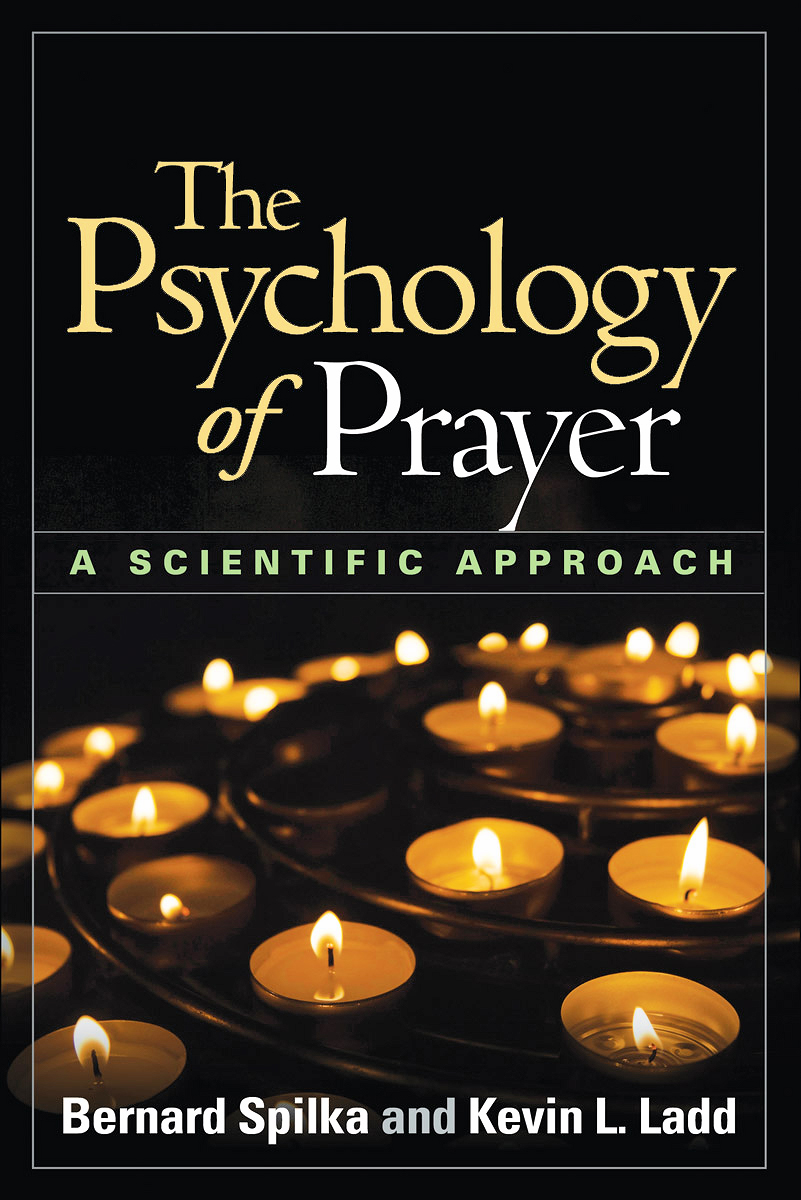
HauerThe Psychology of Prayer: A Scientific Approach, by Bernard Spilka and Kevin L. Ladd, New York: The Guilford Press, 2012. Excerpted from the Journal of Unification Studies, Vol. XIV, 2013. Dr. Hauer (UTS Class of 1990) is a family specialist with the Administration for Children and Families, U.S. Department of Health and Human Services.

The Psychology of Prayer: A Scientific Approach offers a dense yet remarkably useful tour de force through the last 30 years of social scientific research on prayer. It is a major contribution that highlights the expanding role of prayer in the psychology of religion. While authors Bernard Spilka and Kevin Ladd view prayer as a critically important personal religious activity, their discussion is uncompromisingly scientific and offers substantive insights and recommendations for an empirical study of this rich human experience. Locating prayer as a psychological phenomenon, the authors offer a straightforward conceptualization: “Prayer is the psychology of religion in action and literally reflects virtually every facet of behavioral scientific psychology, from its neural roots to complex social responsivity.”

This book is a useful introduction to the various ways researchers have approached prayer psychologically. My own experience of prayer seems to be more expansive than the categories covered, but this is understandable since empirical approaches necessarily slice up experience into quantifiable pieces. People have been praying for thousands of years, and it is heartening to see that social scientists are beginning to chart this vast territory replete with religious and psychological meanings.

Spilka and Ladd accomplish a remarkable undertaking, given the range of studies critically scrutinized. As respected leaders in this field, these authors stake out prayer’s central place in the psychology of religion….

⇒ Click to read the full book review from the 2013 Journal of Unification Studies.

Continue Reading→

Divine Principle, Quantum Physics and Interstellar Migration

1280px-Andromeda_Galaxy_(with_h-alpha)_1

by Richard L. Lewis

rlluti0289The Divine Principle is unequivocal in its view that the vastness of space, with its quintillions of stars, was carefully designed to be the home for humankind to mature, multiply and have dominion of love. This is implicit in the Divine Principle, since an unfallen human race would quickly outgrow a single planet.

In modern cosmology, the Earth is at the center of the visible universe, a sphere with a radius of 13.5 billion light years. The boundary is 80 quintillion miles away in every direction and is visible in the light of cosmic microwave background radiation. The modern concentric spheres are crystalline but it is the Earth that rotates so that our view of them repeats every 24 hours. These spheres are not simply spatial but spatiotemporal; as we observe farther away in space, we also observe farther back in time. The Sun, for example, is eight light-minutes distant in space and eight minutes in the past as we see it.

The only galaxy visible to the naked eye (other than the home galaxy we are embedded in, the Milky Way) is Andromeda, which is 2.5 million light years distant and we see it as it was 2.5 million years ago.

With a modern telescope, however, we can see billions of galaxies out as far as 12 billion light years and as they were 12 billion years ago. There are about 100 billion stars in the Milky Way and about the same number of galaxies in the visible universe. It is only recently that technology has developed to the point that it is apparent that most of these stars have planets revolving about them, the exoplanets.

In a True Love culture, we can reasonably expect the human population to double every 50 years or so. So Y years after Adam and Eve, the population P of the Earth would have grown to P(Y) = 2Y/50 and the exponential growth would reach, according to the logarithmic graph below, current population levels in only 1,500 years.

Continue Reading→

The Meaning of Humankind

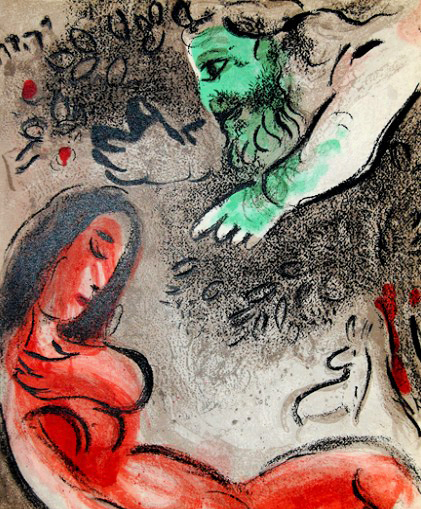
God and Eve Detail

By Dave Tranberg

Dave TranbergWe exist in a world in the throes of great conflict, wherever we turn, internally and externally. There seem to be nothing but conflicting worldviews, animosity and strife. How human beings view ourselves is at the core of this conflict, and also the basis of progress we make towards becoming a true and peaceful society.

At the root of these different points of view is the conceptualization of exactly what humanity is. Are we just a lump of animated carbon? Or an animal? Are we God’s child? Or a “god” in our own right? It seems every culture, ethnicity and race has a different view of this important question.

The ramifications of this point of view cannot be overstated. Every action we take, as individuals, families, societies, and even as a world, depends on the answer we adopt.

The materialist-humanist side of this argument relies on old theories of reality based on Newtonian physics of the last century. The religious side of the controversy tends to rely on scripture, itself millennia old.

Today, we have clear scientific evidence for the ancient origins of man, yet the religious side of the controversy does not have a way to digest that evidence. On the other hand, the materialist side has no answer for the endlessly malleable, creative and faithful nature of mankind, other than “chance.” This is a very unsatisfactory answer for most people.

What is needed is an understanding of humanity that takes both views into consideration: humankind’s connection to the natural animal world, as well as the origins and ramifications of our eternal, spiritual nature. We must clearly explain “man the animal” and “man the eternal spirit.”

Continue Reading→

Towards a Culture of Peace: The Energy of “We”

PIA17999

By Kwon Jin Moon

Kwon Jin MoonI really enjoy listening to theoretical physicists. They are the rock stars of the physics world. They’re not people who simply conceive of a world, but actually the ones who create the world. We all whip out our smartphones and enjoy the World Wide Web. But they’re the ones that created the Web.

One of my favorite theoretical physicists is Japanese-American bestselling author, Professor Michio Kaku. He divides the world and universe and the billions and billions of stars into three types of civilizations.

The first is a planetary-type civilization. This is one which harnesses planetary powers. It controls earthquakes, volcanoes, and taps the power of the sun. And although utilizing tremendous resources, it lives harmoniously with the planet — the mark of a Type I planetary civilization.

The second is stellar-type civilizations. The United Federation of Planets in Star Trek is an example. This type controls stars. It harnesses the power of stars and as a civilization, is immortal. They can survive comets or asteroids, even supernovas.

Type III civilizations are galactic. They truly wield the power of the universe. Examples would be the Borg in Star Trek or the Galactic Empire in Star Wars.

But there’s a different type of planetary civilization. That civilization is Type Zero. That’s what we are.

Continue Reading→

The Evolution of God: When Evolution is Outlawed, Only Outlaws Will Evolve

Evolution_vs__Creation_by_geekblz

By Larry Moffitt

Larry_Moffitt_edited-1I don’t approve of the way the argument over evolution has evolved. Darwin thoroughly yanked the chain of collective Christianity regarding natural selection.

And suddenly, by the standards of Christianity at that time, it became mandatory that an evolutionist also be an atheist.

However, Darwin was also a gnarly racist, claiming superiority of white over black. And he was a sexist, writing in his autobiography, “the average mental power in man must be above that of women.” Oddly, these two notions didn’t bother the Christian establishment one bit in 1859. That’s the part of Darwin they liked. Robber barons like J. D. Rockefeller and Andrew Carnegie, along with Karl Marx and Hitler, liked those parts as well, in addition to natural selection. Bummer.

Today, most religious people accept that a faster wolf will catch more bunnies and give birth to better bunny hunters, and that Leonardo Da Vinci’s kid was probably a good artist too. The original burr under the saddle of Christianity is a non-issue these days

Continue Reading→

God’s Original Design for Human Sexuality

golden_rings-1280x1121

By Jim Stephens

Jim Stephens_edited-1I’m almost 65, but many tell me I look very young for my age. Probably the major reason for this is I have been blessed with a wonderful wife. She understood from the beginning that one of the basic emotional, mental, and physical needs of a man, husband, and father is regular sexual relations about three times a week. And we are still doing it.

I studied engineering in college and I like things that are practical and down to earth. I encountered the revelations of Rev. Sun Myung Moon when I was 24. Over the last 40 years, I’ve had profound spiritual insights and experiences with God. For five years, I co-led with my wife the Blessed Family Department and studied all about marriage enrichment and research. More recently, I became a certified practitioner of an energy healing technique.

Recently, three men revealed to me in brief conversations that they wanted more sex with their wives. Then the pieces began falling into place and a strong impression came over me to write on this topic. Brothers and sisters could be so much happier, joyful, and fulfilled in their marriages than they are. The understanding that God “downloaded” to me I’m calling “God’s Original Design for Sex: Three Times a Week.”

Continue Reading→

My Neurons Made Me Do It: Neuroeducation at the Intersection of Religion and Science

brain

By Kathy Winings

(This is an excerpt from the full 2011 article published in the Journal of Unification Studies)

kathy-winings-2The cornerstone of the Divine Principle is its emphasis on the original ideal of God and the subsequent ontological understanding of men and women. The first chapter outlines the basic principle that guided the creation and interrelatedness of all life forms with God and provides a clear description of our ultimate purpose of life as God originally intended. An important component of that principle concerns the description of human beings as having a spiritual body and a physical body. Divine Principle further explains the process of growth and development for human beings as envisioned by God and describes how and in what way these two “bodies” interconnect.

Continue Reading→

The Blind Leading the Blind (or, Life without True Parents)

Detail from “The Blind Leading the Blind” by Sebastian Vrancx.

By Gordon Anderson

Gordon“The blind leading the blind” can be used to describe Western politics and education today. There are, of course, very smart and shrewd politicians or scientists. But, when it comes to knowledge of where we want to go and how to get there, our present culture can be described by this ancient metaphor taught in the Bible, the Upanishads, and Roman classics. As Sextus Empiricus wrote in Outlines of Scepticism: “Nor does the non-expert teach the non-expert — any more than the blind can lead the blind.”

A civilization contains the accumulated experiences of those who have come before, and civilizations continue to adopt new discoveries. However, in the 20th century, the West largely put aside civilizational wisdom, taught by families and religions, and attempted to substitute it with a new-found faith in modern science and the state. The Encyclopedia Britannica exemplified this shift.

Continue Reading→

Website Built with WordPress.com.

Up ↑