The Prescience of C. S. Lewis

c-s-lewis-3

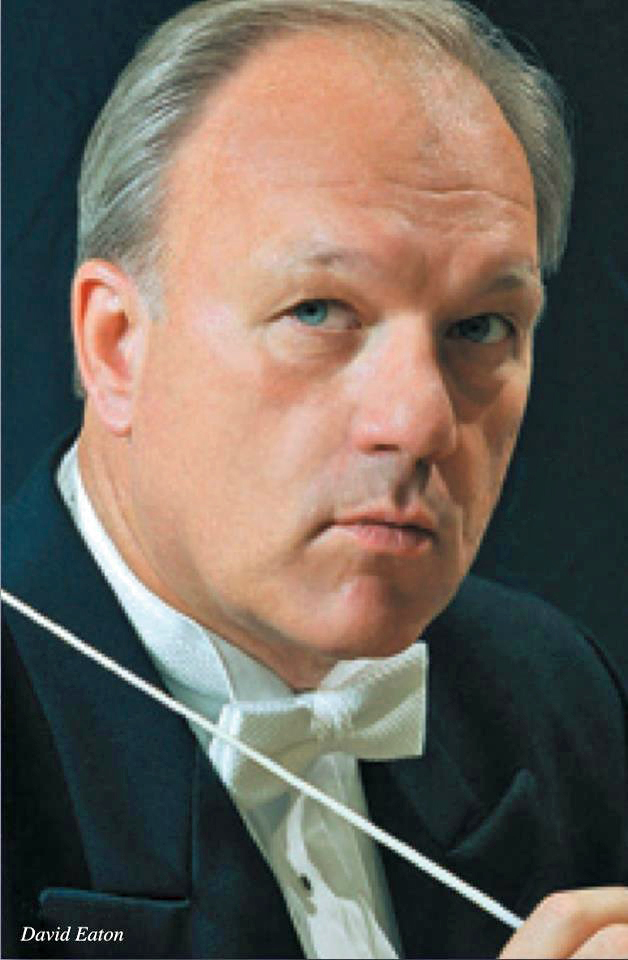
by David Eaton

david_eatonI’m a latecomer to the writings of C. S. Lewis, but through the prompting of my eldest daughter, I finally took the plunge. Putting the finishing touches on my own book, I was looking for several religious-based literary references regarding the perils of postmodernism that might support some of my contentions regarding music, aesthetics, radical egalitarianism, multiculturalism, and the pervasive influence of the celebrity-industrial-complex.

Lewis’ work, especially, The Screwtape Letters (1942) and its sequel, Screwtape Proposes a Toast (1959), provide a trove of insight in the examination of the whys and wherefores of our “fallen” condition in the context of “right and wrong as a clue to the meaning of the universe.”

Lewis admitted that writing The Screwtape Letters was simultaneously the easiest, but least enjoyable work of his career. He apparently went into deep depression after writing it. Given the brilliant exegesis of how the “Lowerarchy” of Satan effectively infects the human soul, it’s no wonder why. The Cold War was the backdrop of the sequel and the narrative of how leftist, neo-Marxist thought subverted academia and the intellectual class in the West underscores Lewis’ work here. The sequel is more ideologically-charged than the original and the perspicacious insights are like a punch in the gut that leaves you breathless — and somewhat forlorn.

The Screwtape Letters are a series of 31 letters written by a senior demon, Screwtape, to his nephew, Wormwood. The nephew is a younger and less experienced demon, tasked with guiding a man (called “the patient”) toward “Our Father Below” (Satan) and away from “the Enemy” (God.) As Wormwood’s mentor, Screwtape explains many tricks-of-the-trade to his young charge in the process of inculcating him with methods of “the Lowerarchy” (Hell).

In the preface to The Screwtape Letters, Lewis states there are “two equal and opposite errors into which our race can fall” when we contemplate Satan. One is to deny Satan’s existence, the other is “to feel an excessive and unhealthy interest” in him. The first error is Satan’s greatest ploy — if he doesn’t really exist, why fret about him? The second error is that we too easily create common bases with the dark side by our “unhealthy interest” in him.

Continue Reading→

Thoughts on Sanctuary Church, Revisited

moon_web_2285_s878x1117

By Tyler Hendricks

14_12_CfE_Tyler 10.55.08 pmMy recent video, “Thoughts on Sanctuary Church,” elicited affirmative responses as well as detailed criticism and ad hominem comments. I’m grateful for it all and want to summarize “Thoughts” and the main criticisms, and respond to the latter.

I began with the logic of Sanctuary’s story, which Dr. Richard Panzer, Sanctuary’s president, affirmed as accurate: True Parents are doing fine; True Parents appoint Hyung Jin Nim’s couple to be their heir; True Father dies and True Mother goes off track; centering on True Father, Hyung Jin Nim’s couple restores True Parents.

I pointed out the error in this logic: If True Mother went off track, then True Parents weren’t really doing fine; if True Parents weren’t really doing fine, the appointment of Hyung Jin Nim’s couple is not valid, which means he’s not the heir of anything.

I understand why some don’t agree with the first point. By “doing fine” I meant the perfection of their marital love as True Parents, from which the Divine Principle says we cannot fall, because to believe otherwise would deny the omnipotence of God, the perfectibility of goodness itself, and the perfection of God (Exposition of the Divine Principle, p. 42). Simply put, true love is eternal, so if True Mother has gone off track, then her love was temporary, and she and True Father did not have true love. This means they weren’t True Parents. True Parents is not people as much as it is a relationship.

I then worked backward from the Sanctuary premise that the appointment is valid. If so, then True Parents were fine; if True Parents were fine, then True Mother was fine; if True Mother was fine, then she would not go off track; if True Mother is not off track, then she is True Parents; if True Mother is True Parents, then Hyung Jin Nim has to attend her; if Hyung Jin Nim is not attending her, then he is off track.

Continue Reading→

Book Review: “The Koreans: Who They Are, What They Want, Where Their Future Lies”

9780312326098

by Mark P. Barry

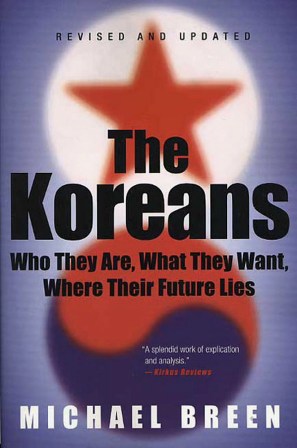
Mark Barry Photo 2The Koreans: Who They Are, What They Want, Where Their Future Lies, rev. ed., by Michael Breen, New York: Thomas Dunne Books/St. Martin’s Griffin, 2004. Adapted from the Journal of Unification Studies, vol. VI, 2004-2005, pp. 165-68.

Although originally targeted for foreign business readers, Michael Breen’s The Koreans has emerged as a modern-day classic on the Korean character and culture. It is often recommended by Korean studies scholars, alongside such earlier general works as the late Donald S. Macdonald’s Koreans: Contemporary Politics and Society (now in its third edition, revised by Donald Clark). In its 1999 Korean translation from the original 1998 UK edition, The Koreans rocketed to the top ten list of Korea’s bestsellers, revealing Koreans’ own enthusiasm to understand themselves from an outsider’s perspective. The U.S. hardcover edition also appeared in 1999, and the 2004 paperback edition reviewed here is slightly revised with a new chapter on events since 2000.

Breen, a British journalist, originally went to South Korea as The Washington Times’ Seoul correspondent. He ended up living there, during which time he also served for three years as president of the Seoul Foreign Correspondents Club, and wrote for The Guardian and The Times of London. He later became managing director of the Seoul office of public relations firm Merit/Burson-Marsteller, and now runs his own company, Insight Communications Consultants.

Unificationists will remember him authoring in 1997 the meticulously researched Sun Myung Moon: The Early Years, 1920-53, based on in-depth interviews with early followers of Reverend Moon. No book has appeared in English since to rival it.

Continue Reading→

Founder’s Address: UTS Inaugural Convocation

vlcsnap-2015-10-01-14h44m15s558

The following address was given by Reverend Moon at the Inaugural Convocation of Unification Theological Seminary in Barrytown, NY, 40 years ago on September 20, 1975. Click here to watch the highlight video of the event.

by Rev. Dr. Sun Myung Moon

Honorable Mayor, distinguished guests, respected seminary faculty and students, ladies and gentleman:

It is my utmost pleasure to extend my warmest welcome to all of you present this morning at the Inaugural Convocation of our Unification Theological Seminary.

I deeply appreciate your coming here. I feel honored, especially because to my knowledge the attendeess here are, without exception, those who have been greatly concerned about the Unification Church. We have recently had the close attention of American society drawn to us, and the unreserved encouragement and support from many of you justified and strengthened our work.

As the founder of the Seminary, I want to assure you that we will do our very best to repay your friendship and good will toward us. May our mutual friendship be a lasting one in the divine will of God!

In history, there have been philosophies and religious doctrines working in the backgrounds of politics, economics, the arts and religion. Nevertheless, the reality is that they are all stalemated, resulting in confusion and chaos, without having brought about the realization of their promised ideal worlds.

Faced with this stalemate, people are turning in every direction in search of someone to take up the gauntlet for all people and pioneer a new way for humanity, straightening and guiding their direction towards a clear and achievable goal.

The people cry in unison, “Something is desperately wrong!” We have tried every possible way to diagnose and cure the sickness in society. We have finally concluded that the cause of the sickness is an internal disease and not external. By having emphasized the external elements, we have lost the intrinsic and central element of our existence. We are left without hope.

What is the intrinsic and central element which man lost? If we go back to the very beginning, we can readily understand that the greatest cause of the sickness is that man lost God, who is the very source of his life. With the loss of God, man lost sight of the absolute value and focal point of life.

Continue Reading→

The Long Trek Home: Resolving the European Refugee Crisis

Refugees in Hungary2

by Kathy Winings

kathy-winings-2Thirty thousand, 12,000, 21,000, 3,000, 150,000, 442,000. . . These are just some of the refugee numbers connected with the current humanitarian crisis facing Europe. 30,000 – the number of refugees who have entered Croatia. 12,000 – the number of migrants who have entered Slovenia. 21,000 – the number who have been accepted by Sweden.  3,000 – the number who have drowned at sea while attempting to cross into Europe. 150,000 – the number who made it to Greece. The last number, 442,000 – the number of refugees who have arrived in Europe by boat.

Thousands are continuing to cross borders into Europe on a daily basis. Germany expects 800,000 migrants to reach its borders by year’s end. Each number represents a hope,  dream and vision for a better life, one safe from physical and emotional violence.  Even the United States is considering raising its annual ceiling of 70,000, the total number of refugees it accepts on an annual basis, to 85,000 in 2016 and 100,000 in 2017.  But that is a drop in the bucket compared with the vast numbers of men, women and children fleeing to Europe from Syria, Iraq, Libya, Sudan, Eritrea, Nigeria, Afghanistan, Pakistan and elsewhere for a better life.

This is being hailed as a “humanitarian crisis of epic proportions.” What does it represent? What are the issues involved? Can it be effectively resolved? We have seen mass migrations before; what makes this one different?

First, this migration is occurring in the 21st century. It means more communication is taking place among the migrants by cellphones. As families and groups of migrants move, they are in constant contact with those who have gone before them, learning where to go, what to avoid and what to expect on the road ahead of them. Digital technology also gives them access to GPS, web maps and news.

Second, the reasons why people are migrating are diverse. Previous migrations were often defined by major or cataclysmic events such as war, devastating natural disasters or religious/cultural upheavals. This resulted in mass migrations defined by singular issues.

Continue Reading→

Rationality and Unification

Unification copy

By Keisuke Noda

Keisuke_NodaThe idea of “Unification” is central to the Unification Movement. The current reality of the movement is that there is no clear path toward this ideal. This lack of a path, be it conceptual or real, is critical to a movement that carries the banner of “unification” both in doctrine and title.

This issue can be approached from various angles. I examine two types of “rationality,” instrumental and dialogical, and how they are tied to two different understandings of and approaches to “unification.” By highlighting the benefits of dialogical rationality and the type of unification associated with it, I call for further discussion of the idea of unification. This article makes a reference to Hans-Georg Gadamer’s “Philosophical Hermeneutics.”

Why Rationality?

“Rationality” is a key issue in philosophy. Why do we need to care about “rationality” in philosophy and otherwise? Reasoning supports the presentation of a case, justification of a claim, or the establishment of an argument. The question then is what type of reasoning is used, consciously or unconsciously. Whatever type of rationality is used guides the discourse at a most fundamental level, and is critical to understand what kind of reasoning dominates one’s process of thinking. When one solves math problems, for example, he or she may use calculative rationality; in making moral judgments, one may use “prudence,” which requires experience and a sense of balance.

Instrumental Rationality

What is the primary or even dominant rationality today? Martin Heidegger, Jürgen Habermas, and other thinkers identified it as “instrumental rationality.” They argue that instrumental rationality has been dominating discourse since modernity without our even being aware of it; that is, we use reason as an instrument to realize pre-set goals and purposes in the most efficient manner.

The instrumental use of reason is common in the technological era, which seeks efficiency and control. Its exclusive focus is gaining what you want in the most efficient and cost-effective way. This type of reasoning is efficient and effective in handling material. Modern technological developments and production were so successful, they argue, that we consciously or unconsciously adopted this type of reasoning in all spheres of life.

Continue Reading→

Let’s Start Selling the First Blessing Again

1302885286

By Graham Simon

gs-1308Running a successful business is not easy. Statistics show that 50% of new businesses fail within the first five years. Companies wishing to survive in a competitive marketplace have to ask themselves such basic questions as:

  • Are the management, organization and financing of the company fit for purpose?
  • How can we best market our product or service?
  • Has the sales force sampled the product or service and are they sufficiently motivated to go out and sell it?
  • How great is the demand for the product or service we are offering?

While a spiritual organization may be very different from a firm, there are many parallels too. Any spiritual organization that seeks to grow through proselytizing can usefully look at itself and ask these same four questions. This approach is particularly pertinent when attempting to discover why the Unification Movement has failed to grow in the West over the past quarter century.

Let us address each question in turn.

Are the management, organization and financing of the movement fit for purpose?

In the U.S. and UK of late, a lot of change has occurred in the management, organization and financing of the FFWPU. In the UK, the FFWPU is constituted as a charity. The trustees of the charity have successfully turned around the finances of the movement over the last five years. Last month, the membership was presented with a detailed proposal, which had been more than nine months in the making, for the restructuring of the UK movement. The proposal sets out a plan for improving both the operational management of the charity and fulfilment of its providential aspirations. However, while all of this is important, it is not essential to the expansion of the Providence, because if any one of us is truly motivated, we are quite at liberty to franchise the “product” that the FFWPU is offering and sell it ourselves. We call the franchise tribal messiahship.

Continue Reading→

Reimagining: Getting Back on the Bus

Bus at ASU

by Jeff Kingsley

KIngsley copyThe red carpet had been unraveled, and the enthusiastic crowd greeted the bus as it rolled onto the Belvedere holy ground last summer.  As it came closer, I could read the words clearly emblazoned across the front, “God’s Hope for America: Remember · Revive · Reimagine.”

Reading those words made my mind wander back to a time when I was 24 years old and was listening intently to a lecturer, not much older than I, speak about how God had intended the world to be a much better place — a place in which God’s love and heart would be at the center of all societal interactions (i.e., political, economic, artistic, medical, etc.) rather than a never-ending quest for more money or greater power and prestige.  I was so inspired by those words because several months earlier I had taken a leave of absence from my graduate program in search of such a group, and I knew then that I wanted to become part of this noble crusade.

Now, seeing this bus, 34 years later, I wondered if, through all the difficulties and disappointments, both on a personal and institutional (church) level, this vision were still possible to achieve.  And if we should keep striving to achieve it, how can we “reimagine” in order to accomplish that?

As part of a “reimagining” process, I think we need to begin by asking certain questions. How can we present a consistent message to the public which reflects our unique Unificationist perspective?  What could someone who walks into one of our churches for the first time see, feel and experience which could not be found anywhere else?  How can we express our message in a way which will inspire more people inside and outside (even those who have left) our Church to want to take an active role in our Movement?

The distinctive message which I believe we should clearly and consistently present to the public is that God’s desire, from the very beginning, has been to realize the kingdom on earth in a substantial way.  Reverend Moon emphasized that message in many of the early holy songs that he wrote, such as “Garden of Restoration.”

Continue Reading→

Into the Future: Why We Need to Create an Alternative Service

Harvest

By Jack LaValley

Jack LaValleyIs it possible our current Sunday service is lacking some core elements of persuasion and conviction that speak to the heart of our need for rebirth and salvation?  Are few new people joining our movement through our Sunday service because we don’t offer them what they really need, when they do show up?  If so, what can we do about it?  A specific kind of alternative service can help us attract and hold more “first-timers” and bring spiritual renewal and revival to our ranks.

Robin Debacker conducted a survey that gathered information from Unificationists about their Sunday service experiences. Contacting individuals via private Facebook messages, she collected 350 responses over a four-month period — two-thirds from the 50+ age group, and 103 from second gen.  Responses came from 195 cities around the world — 38 states in the U.S. and 32 countries.  In summer 2014, the survey results were discussed on this Blog and presented on her website dedicated to that project. Key facts gleaned from her survey were:

  • Nearly 25% of those surveyed do not attend a Unification service, and have distanced themselves or dropped out entirely.
  • 70% of those who indicated they attend a service on a regular basis said they are not inspired, and do so out of a sense of duty, or for social reasons only.
  • The majority of second gen respondents said that most of their second gen friends are not interested and do not attend a Unificationist service. Of those who do attend, many said they are searching for more open and honest discussion, more practical application, and more second gen leadership.

The Sunday service program model still remains the primary weekly gathering in the Unificationist faith community. Yet that model has failed to be the gateway program to persuade and convict the “unchurched” and “spiritual” seekers to become intimately involved with our faith community. Some  have “joined” through Sunday service, but not that many.  In some areas, efforts have been made to use home church, tribal messiahship or small group models to address how to “bring non-Unificationists into the fold,” but such efforts have yet to gain the prestige or influence of Sunday service.

Continue Reading→

Website Built with WordPress.com.

Up ↑