Scripture, Authority and Lineage in Unificationism

collage1

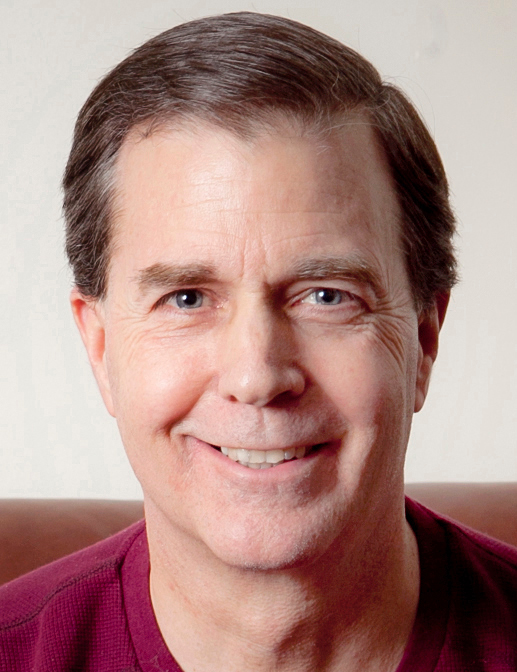
By Jack LaValley

Jack LaValleyRecent events in our movement provide us the opportunity to review mainstream Unification teachings. Not to do so is tantamount to reneging on our responsibility to “usher in the Kingdom of Heaven on earth.”

In this article, I examine the role of sacred texts and spiritual authority, then tackle change of blood lineage theology. Addressing these two areas will enable us to more quickly reach our desired destination. Our destiny is to be in a living relationship with the living God, as explained to us by Rev. Sun Myung Moon in his historic speech, “God’s Hope for Man.”

Sacred scriptures and spiritual authority

According to Rev. Moon, “The Bible is…not the truth itself, but rather is a textbook teaching the truth (Divine Principle, p. 105; cf. DP, pp. 7, 104).”  He did not accept the doctrine of verbal inerrancy of the Bible as taught by fundamentalists and some evangelical churches. He approached the Bible as an authoritative text not to be taken literally in all matters, and open to interpretation. We ought to adopt the same approach regarding any sacred texts sanctioned by our religious authorities.

Prior to his death on Sept. 2, 2012 (Sept. 3, Seoul time), Rev. Moon compiled his “last words I will give to humankind” into eight textbooks which he believed reveal the essence of his teachings, and he admonished his followers that by studying these texts the will of God will be realized on the earth.  Since Moon’s passing, his surviving widow, Mrs. Hak Ja Han Moon — known by devoted followers as Mother Moon — guided in 2013 the publication of a new three-volume set of holy scriptures, and church officials now encourage followers to study those texts to gain a correct view of God’s will.

Continue Reading→

Can the Humanities Still Humanize?

139270154717183

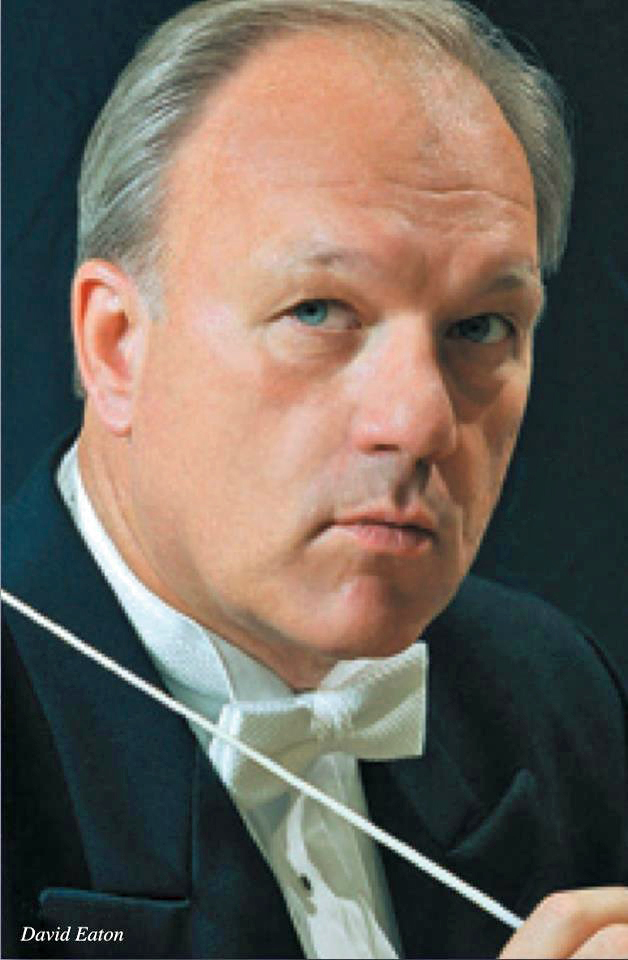
By David Eaton

david_eaton“The humanities are ruined, and the universities full of crooks. Art in America is neglected, coddled, and buried under chatter. The right looks down on artists; the left looks down on everyone.”

This caustic bit of pessimism is from a 2005 interview by Robert Birnbaum with Camille Paglia in the online magazine The Morning News. Paglia is one of the great straight-shooters in contemporary academic circles and a provocative read.

Though I share some of the pessimistic derision Paglia expresses regarding the perfidy of the “effete literati” (her term) that is now ensconced as the arbiters of cultural discernments and values, I remain hopeful that we can find our way out of the malaise of misguided misreadings regarding art, culture and the human condition. It is without question the humanities as understood and appreciated by those of a generation or two ago have undergone a radical transformation due to the pervasive and deleterious effects of postmodernism and political correctness. But this is not a new phenomenon.

In 1977, the American sociologist Peter L. Berger despaired over the condition of American universities as they evolved into “vast identity workshops,” where “for four years…students sit under trees with their shoes off and engaged in the not so arduous task of finding out who they really are.” For Berger, this kind of speculative navel-gazing had the effect of turning students into creatures of comfort rather than inquisitive seekers of higher knowledge.

In his book, The Victim’s Revolution: The Rise of Identity Studies and the Closing of the Liberal Mind, literary and film critic Bruce Bawer alludes to the stark contrast between John Stuart Mill and his advocacy of free speech as an essential characteristic of university culture, and neo-Marxist Herbert Marcuse, who called for “the withdrawal of toleration of speech and assembly” from groups and movements that didn’t advocate the leftist, progressive agenda.

Continue Reading→

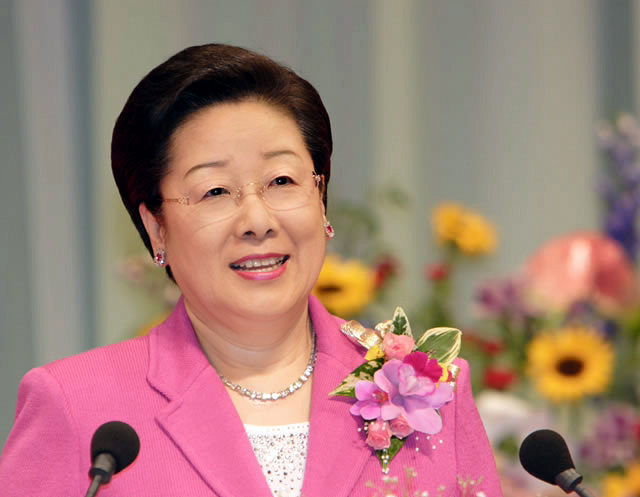
Challenges to True Mother’s Leadership

truemother

Part II of a two-part article. Part I can be read here.

By Thomas Selover

2014-04-23 15.01.09 croppedMany factors can be identified as contributing causes to the direct challenges that True Mother’s leadership has faced. Here I will focus on two elements of East Asian culture, the concept of filial piety and the Korean royal tradition.

The Problem of Filial Piety

One of the issues concerns the strength as well as the limitations of the traditional concept of filial piety (효孝). The centrality of filial piety in East Asian culture is widely recognized. Moreover, there are many passages in True Father’s teachings that emphasize the father-son relationship, particularly toward God as Heavenly Father.

A specific Confucian requirement of filial duty relevant to understanding the present controversies in the Unification movement is that a filial son should not make changes to his father’s ways for three years after the father has passed on. According to Confucius, “If for three years he makes no change from the ways of his father, he may be called filial.” Therefore, according to this tradition, it is a son’s duty not to make changes for at least three years. Thus, from a son’s point of view, objections to changes that were made during the three-year mourning period for True Father would have the backing of centuries of Confucian moral sensibility.

Filial piety is indeed a strong cultural virtue in East Asia, especially in Korea, and is good as far as it goes. But, in contrast, the classical Confucian tradition offers very little content on the husband-wife relationship. At best, the ontology of East Asian philosophy supports a concept of reciprocity between husband and wife, based on the yin-yang model, but reciprocity by itself can be emotionally cold. The Buddhist tradition also, with its emphasis on celibacy as a path of spiritual discipline, is lacking in persuasive accounts of relational love and virtue between husband and wife. The way that True Parents teach about the relationship between husband and wife, emphasizing true conjugal love as the core, is a missing ingredient in East Asian tradition.

Continue Reading→

The Providential Significance of True Mother’s Leadership

TrueMother1

This is Part I of a two-part article. Part II will appear next week.

By Thomas Selover

2014-04-23 15.01.09 croppedOn September 3, 2012, the Unification Church and movement entered a new and critical phase in its development. Long foretold by sociologists of religion and new religion watchers, the seonghwa (ascension) of Reverend Sun Myung Moon, the founder of the Unification movement, was accompanied and followed by anguish, confusion and realignment on various levels.

Even a brief review of the history of major religious movements shows that, in each case, the passing of the founder occasioned a fundamental transformation of the religious movement. Those movements that successfully transformed were able to survive and develop; those that did not have disappeared. The crisis of succession, or what sociologist Max Weber termed the problem of “the routinization of charisma,” would seem to be an inevitable turning point in the history of religious movements. The Unification movement is not an exception; this crisis and transformation were unavoidable.

The Unification movement is now in a very new stage of the providence, beyond what has been charted in previous understandings of the Principle and of Rev. Moon’s teachings. Even if events after his passing had unfolded in a different way, the novelty of the situation and its challenges would have been present nonetheless. Unification sources — especially the Divine Principle books, but also True Father’s speech volumes from earlier days — do not give us a comprehensive account of this time, although they do contain insights that we need. So there is a necessity for members to pray, study, and discuss together, seriously and respectfully.

Continue Reading→

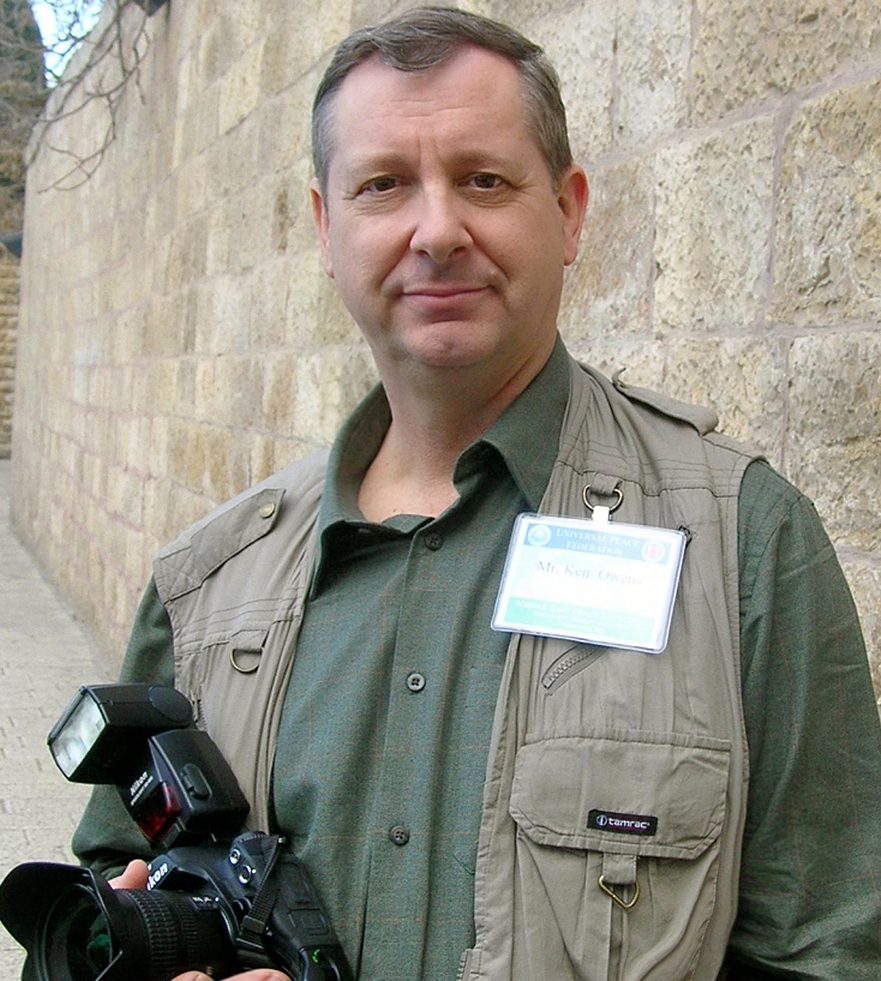
Memoirs of a Unification Church Photographer

Owens Front Cover

By Ken Owens

Ken OwensI had been asked by many friends, and my wife in particular, to write a book about my years in the Unification Church, founded by Reverend Sun Myung Moon, and my 33 years of experiences photographing True Parents. Somehow, the day I celebrated my 65th birthday, something suddenly urged me to get it done. I had written a few short testimonies, but the book was to be more in-depth, incorporating experiences, articles I’d written, dreams, a revelation, and a vision I received from God.

There are many hundreds of elders, and brothers and sisters, who had been with True Parents far longer than I, are far more deserving than I, and who have had many more cherished, intimate moments with them. That I was able to have some moments with True Parents was a great blessing.

Here are just a few of the experiences I had with True Parents.

The first time I ever saw True Parents was in Hawaii in 1974

I had just returned from my second tour of duty in Vietnam and participated in trying to keep the 1973 Yom Kippur War from becoming World War III. When I arrived back in Honolulu, everything changed from a quiet center in an apartment building to a house behind Waikiki Beach, where everything was centered upon True Parents’ arrival for a major speech. To top it off, Rev. Ken Sudo was about to arrive with his International One World Crusade team of French and German members to witness to people to come to the banquet.

Continue Reading→

On the Internal Meaning of Lineage

By Andrew Lausberg

75995_459821110372_999357_nIn the teachings of Reverend Sun Myung Moon, lineage comes up time and time again. Lineage is cited as a significant element in a number of ways: the need to restore humanity, originally of God’s lineage, from Satan’s lineage back to God’s lineage; the significance of lineage in terms of a person being chosen by God for providential work; the significance of lineage in terms of what kind of sin needs to be resolved on earth; etc.

Despite the prominence of lineage as a concept in Rev. Moon’s teaching, there is surprisingly little extrapolation on the topic. He frequently used all sorts of real world and theoretical examples to illustrate his understanding of how God’s creation works. Concepts such as internal and external, vertical and horizontal are pivotal to illustrating the ideas he is dealing with. The Principle itself goes into the idea of “spherical movement” of living beings. How then does lineage fit into this conceptual framework?

In many cases, Father Moon discusses different dimensions. Consider the eight-stages of restoration. He describes eight horizontal stages: individual → family → clan → ethnic group → nation → world → cosmos → God; and eight vertical stages: servant of servants → servant → adopted child → stepchild (or illegitimate child) → true child → mother → father → God. We can understand that these two dimensions as interacting or interfacing like an x and y axis. At any given point in time, a person may be at one of the horizontal levels, such as at the level of nation. By this, we mean that the person is dealing with issues that impact on a national level of existence.

Likewise, at any given point, a person may be at a vertical stage of restoration or growth, such as the stage of adopted son. We mean that the person is dealing with issues that impact or are related to a quality of relationship typified as that of an adopted child and his or her adopted parent. One axis deals with dimensions of human existence embodied in larger or smaller social groupings, the other deals with dimensions of relationships of heart — equated with “internal dimensions.”

Continue Reading→

King Sejong and Unificationism

KingSejongPainting

By Amanda Hokanson

AmandaHKing Sejong[1] is one of the greatest leaders in all Korean history. He is often referred to as one of the most outstanding exemplars for those in the Korean business world. I am descended from him on my Korean side with the surname Yi (李) of Jeonju (全州). King Sejong became a recognized figure because his leadership style aligned with universal principles, which also happen to coincide with our beliefs. I argue that his character and values were also similar to Reverend Moon’s.

King Sejong was born on the tenth day of the fourth month in 1397, by the lunar calendar.[2] He was the grandchild of King Taejo of Joseon[3] who established the Joseon Dynasty (1392–1897), which arose after the fall of Goryeo (918–1392). King Sejong ascended the throne at the age of 21 as the fourth king of Joseon (r. 1418–1450) after his father, King Taejong of Joseon. At the time of his ascension, Joseon was still unstable. It was a new dynasty in dire need of a leader with a strong heart and mind in addition to skill. As history has shown, King Sejong more than lived up to what had been expected of him. He played a major role in stabilizing Joseon and is recognized for his exceptional leadership.

His leadership inspired some of the greatest scientific and cultural advancements of his time, including applying advanced arithmetic to farming and calendar development; producing astronomical charts and 347 books of musical scores; as well as developing the Korean alphabet.[4] All this was achieved during the 32 years of his reign.

If we parallel parts of King Sejong’s era with ours, we realize that we too are striving to establish a new nation: Cheon Il Guk. That is our ultimate goal. Thus, if we draw out some common basic principles, we may be able to discover that we can learn something from history.

Continue Reading→

Want To Be a Minister?

Silohuette of Preacher

By Tyler Hendricks

14_12_CfE_Tyler 10.55.08 pmThe path to professional ministry would seem to be simple, but it is very complex — for the aspirant and for the community they hope to serve.

In order to ordain their spiritual leaders, i.e., pastors, religious institutions have to: define their purposes, their beliefs, their standards of practice for members as well as leaders, put all this in writing, and set up methods to inculcate these things. Methods include general pastoral care and education as well as pastor preparation, measuring people’s performance in achieving them, and helping people overcome their failures in achieving them.

One indicator of the difficulties involved is that our Unification community, after over 60 years of formal existence and spreading throughout the world, has no ordination. What does one do to become a Unificationist pastor? What do pastors do? Do we even want pastors? Should pastors get paid? How do we assign a pastor to a congregation? By election or appointment? We have no formal or consistent answers to these questions.

Another indicator is the fact that it was not until now that we in the U.S. have set forth publically what it means to be a Unificationist, what is unique about us, what is our position on smoking and drinking, abortion, religious freedom, and many such matters (to get involved in this discussion, see the PDF “FAQ” on the FFWPU-USA site).

From the viewpoint of human history, this is not surprising. It takes religions a long time to decide these things. And there is a very compelling reason: in reality, for religions that last, the answers to these questions are not decided by theory, but by practice. We could call it “form follows function,” or use the traditional saying, “necessity is the mother of invention.”

What follows is a progress report on how this is working for our Unificationist community here in the U.S.

Continue Reading→

Justice, an Antiquated Notion

behindbars

By Alison Wakelin

Alison WakelinThe American justice system, “the best in the world” as we often hear on Sunday morning talk shows, has become a travesty of its former self. Even the most foundational of truths, the presumption of innocence until proven guilty, is under severe threat today. Like justice, it is becoming an antiquated notion.

Twenty-five percent of people in jail in this nation have not been convicted of any crime but are confined because they cannot come up with cash for bail. And for what are they waiting? Most of us assume they are awaiting trial, but it turns out only 3 percent of them will actually get a trial. 97% will plead guilty to something, even if they are totally innocent, rather than risk a longer sentence by appearing before a jury, on the advice of their defense attorney. This defense attorney may well have spent only five minutes reviewing the case before giving this advice, because it has nothing to do with the defendant. It has everything to do with the system.

In too many states, there is no requirement a prosecutor demonstrate criminal intent. Possibly for those who can afford an expensive defense attorney, this would be brought up as a defense, but generally, intent is irrelevant. Overwhelming numbers have now been criminalized by the system, as evidenced by the fact that with 5% of the world’s population America has 25% of the world’s prisoners. It seems highly unlikely that Americans are so much more inclined than the rest of the world to have criminal intentions, and so we must look elsewhere for an explanation.

The result of these overwhelming numbers has been a great increase in funding for prosecutors, with no corresponding increase for defense. It is a prosecutor’s dream. And to assure convictions, prosecutors simply have to add in a charge that carries with it a six-year mandatory minimum sentence. Few defendants are willing to risk this when they can plead guilty to a lesser charge that puts them in jail for a mere few months, or even lets them out with only probation.

Continue Reading→

Website Built with WordPress.com.

Up ↑