The Paradox of Religious / Denominational Unity

pc_slideshow_002_0

By Keisuke Noda

Keisuke_NodaUnificationism calls for the “unity” of religions. The Divine Principle (the Principle), the main text of Unificationist teachings and their systematic exposition, presents the Principle as the “new truth” to unify all religions/denominations and argues its superiority based on its capacity for unity.

Ongoing denominational divisions in the Unification Movement (UM) seem to be paradoxical, however, appearing as counter-evidence for this claim, raising questions regarding Unificationism’s capacity for unity and claim of religious superiority. Divisions run deep in relationships between families, friends, and communities, and the issue requires serious attention.

Denominational rifts raise the question of the concept of unification. What do we mean by the unification of religions and denominations? What forms does unity take? Is it a feasible goal or merely an aspirational vision? These questions require a serious exploration of the Principle.

Contrary to some opinions, the Principle’s key concepts and theses are ambiguous and there are diverse approaches to the Principle.

This article highlights the trans-conceptuality of God in Unification Thought (UT) as a possible interpretation of the Principle that may open the door to unity. I explain how this concept in UT implies the limitation of all conceptual, linguistic, and experiential understanding of God, including revelation. By imposing limits on the finality of knowledge, this perspective opens up a broader horizon in Unificationism to see the living God’s diverse works in others.

The unity of religions/denominations has socio-political-economic dimensions as well. I focus on the aspect of faith alone and propose a perspective as a step towards a complex, historical problem. I do not argue it is the definitive path for unity, but maintain such an approach can open up the possibility of unity and other interpretations of Unificationism.
Continue Reading→—>

“Jackie”: The Legacy of Camelot

landscape-1475687871-image-7f1b10b6-e02d-4df7-95e4-dd7b051bc9ff_lucid

By Kathy Winings

kathy_winings_3_profileThose of us of a certain age will never forget what we were doing on that fateful day — November 22, 1963 — when President John F. Kennedy was assassinated by Lee Harvey Oswald.

I certainly remember where I was on that rainy day. I was returning to my fifth grade classroom with my classmates after having attended our weekly religious education class. For the next week, my parents and I followed the television coverage chronicling the events leading up to President Kennedy’s burial at Arlington National Cemetery.

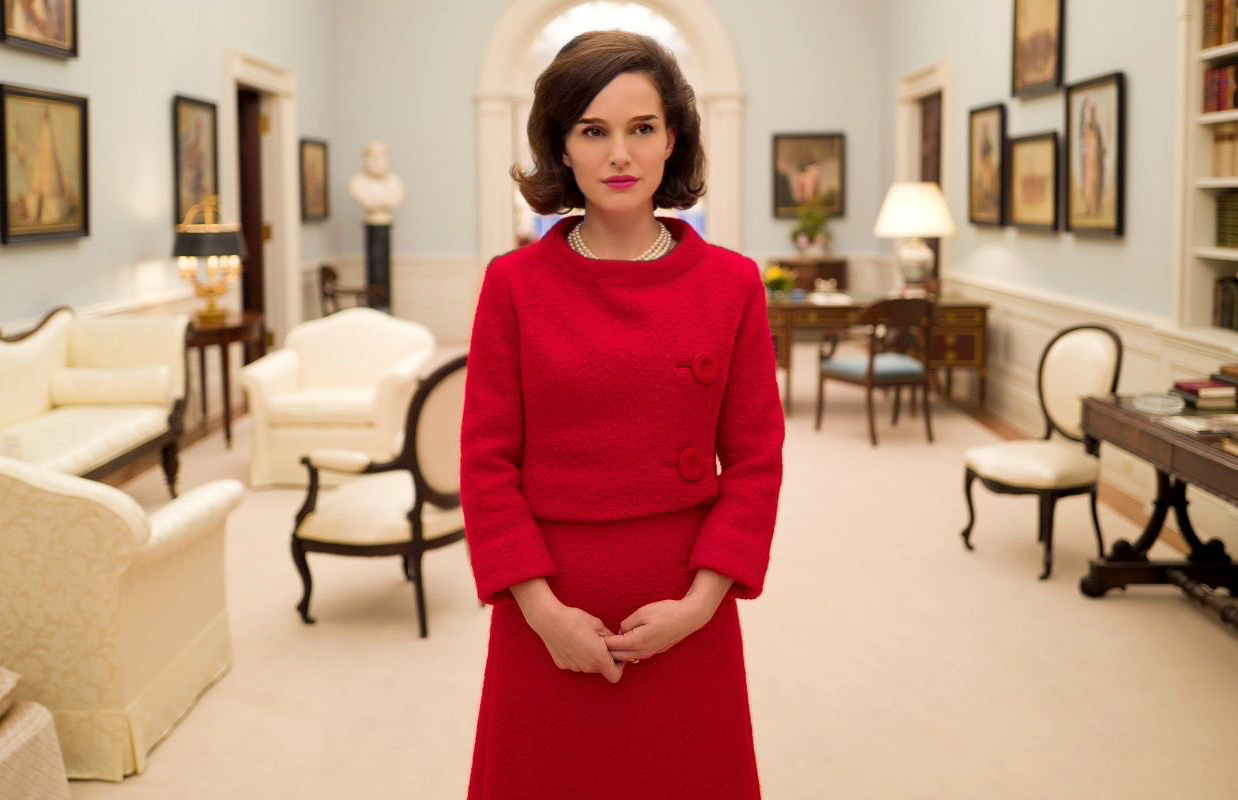
The assassination of JFK will remain one of those iconic moments in American history. All of these memories came back to me while watching “Jackie,” a new film starring Natalie Portman as Jacqueline Kennedy and directed by Pablo Larrain.

“Jackie” allows us to get a glimpse of what Jacqueline Kennedy may have been like those first few days after her husband’s death. She tells her story through the lens of journalist Theodore H. White’s interview in Life magazine conducted with the former First Lady shortly after she moved out of the White House.

White had been contacted by Mrs. Kennedy to write her story because of what she believed were unflattering and hurtful news stories written about her immediately after the assassination. The guarded and intensely private woman that the American public saw is juxtaposed with a picture of a very real, very human woman who had just experienced a brutal and violent end to her larger-than-life husband.

Throughout the film, Jackie struggles with finding meaning in what she witnessed while also needing to redefine not only her husband’s legacy but also who she is now that she is no longer First Lady. As she goes about arranging her husband’s funeral while also going through their living quarters at the White House in preparation for moving out, Portman shows a woman on an emotional roller coaster, unable to find her emotional rudder — chain smoking and drinking as a way to cope late at night when no one can see.

Continue Reading→—>

Living in the Post-Truth World

1nqsfpvc7nom2cn3d-lm8xq_lucid

By Graham Simon

gs-1308The Oxford Dictionaries Word of the Year 2016 is “post-truth – an adjective defined as “relating to or denoting circumstances in which objective facts are less influential in shaping public opinion than appeals to emotion and personal belief.”

In October, a British filmmaker, Adam Curtis, produced a 2 hour 46-minute documentary titled “HyperNormalisation.” The provocative trailer to the film starts with the words:

We live in a world where the powerful deceive us
We know they lie
They know we know they lie
They don’t care
We say we care but we do nothing
and nothing ever changes
It’s normal
Welcome to the post-truth world.

The fundamental thesis of Curtis’s documentary is that governments and politicians, themselves beholden to business interests, have deceived us so brazenly and for so long, that we no longer expect to be told the truth. Bereft of the hope that we can shape the world in which we live in a meaningful way through the political process, we channel an increasing amount of our energies into inconsequential pursuits that take place in cyberspace rather than the real world. When we do participate in the political process by casting our vote, our selections are frequently made not on the basis of truth, facts or likely outcomes, but out of frustration, confusion and disaffection. To Curtis, both Brexit and Donald Trump are evidence of this post-truth world.

This article addresses two questions: Whether the notion of a “post-truth world” actually describes a new reality, and, how we got to where we are today.

The “post-truth” world: a new reality or sour grapes?

The notion of post-truth suggests that people have historically had access to objective information and possessed the ability to assess the objectivity of facts presented to them when forming an opinion.

Continue Reading→—>

Does the Unification Movement Flourish More Under Republican Administrations?

1712044_1280x720_lucid-snap-art

By Michael L. Mickler

Mickler full-sizePundits and candidates continually debate which of the two major political parties is better for the United States, particularly on the economy and keeping the peace.

During the most recent election cycle, Hillary Clinton claimed, “The economy always does better when there’s a Democrat in the White House.” On the other hand, it has been pointed out that all of the major U.S. wars in the 20th century—World Wars I and II, Korea and Vietnam—were entered by Democratic administrations while Republicans began détente and ended the Cold War peaceably. Partisans on both sides argue their positions, mostly to the bewilderment of the public.

If the situation is murky with respect to the economy and war, Republicans and Democrats have settled into less ambiguous postures vis-à-vis religion. Gallup Poll research shows, “Very religious Americans are more likely to identify with or lean toward the Republican Party,” whereas “non-religious Americans” are significantly more supportive of the Democratic Party, the exception being Black Americans who are “very religious on average” and heavily Democratic.

Pew Foundation research indicates the same. A recent study showed, “About two-thirds (68%) of white evangelicals either identify as Republicans or lean Republican” while “61% of those who do not identify with any religion lean Democratic.” This has led to a “God Gap” between the two parties.

Still, the question is whether Republican administrations lead to the flourishing of religion in general or, for the purpose of this article, to the flourishing of the Unification movement.

Simply put, “very religious” American churches and organizations, which include the Unification movement, do better under Republican administrations but not because of Republican administrations. Rather, the social forces and conditions that sweep Republicans into power are the same ones that reinforce values and goals of “very religious” Americans.

Continue Reading→—>

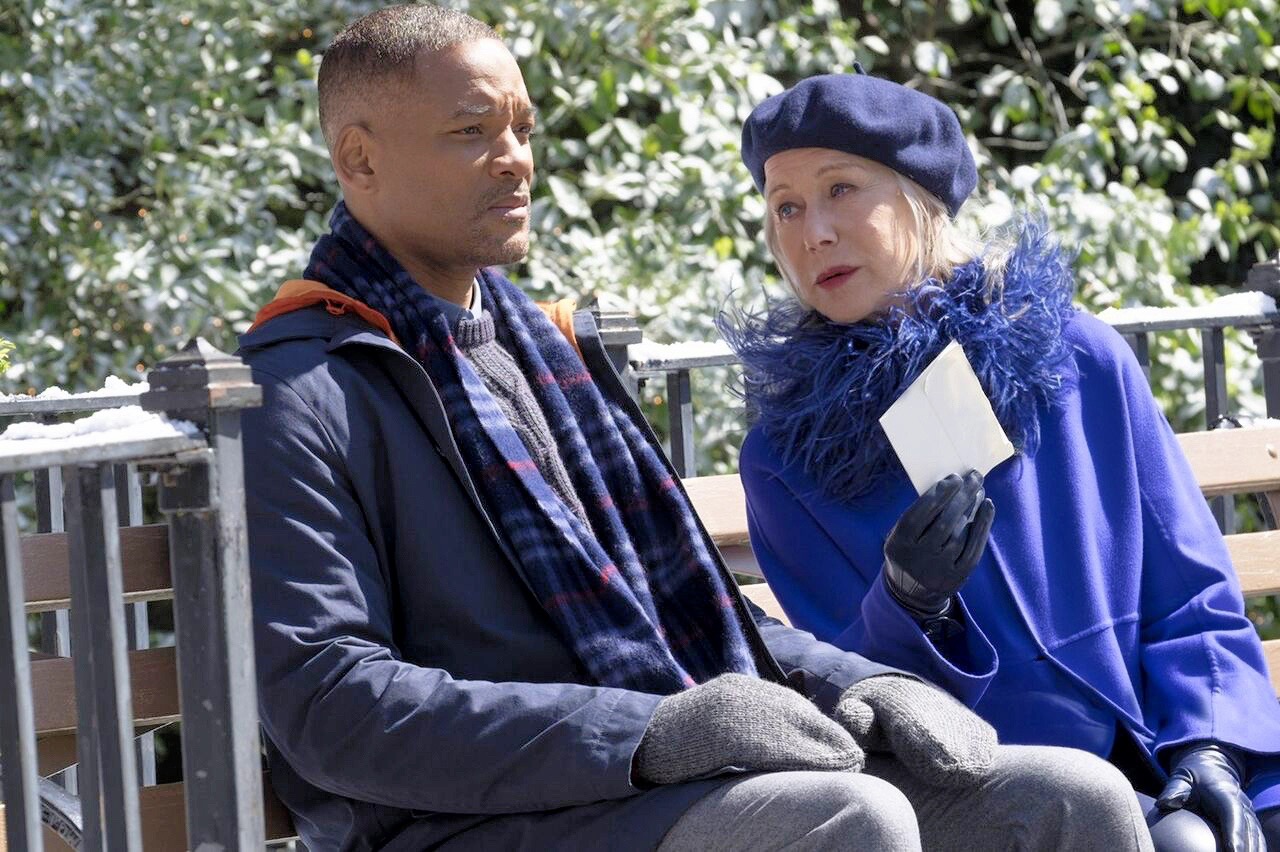
“Collateral Beauty”: A Conversation with Time, Death and Love

images1792920_anh3_lucid

By Kathy Winings

kathy_winings_3_profileThe death of a child is probably the most devastating experience a parent can go through. This is made all the more devastating when the child is very young and has just begun to spread his or her wings.

This is the experience of Howard Inlet (Will Smith) in the new film “Collateral Beauty.” Howard’s whole life has been turned upside down with the death of his six-year old daughter. Unable to deal with her death, Inlet, once the creative force behind a successful New York advertising agency, withdraws completely from life. Over the year following her death, he only comes to the office to create massive and intricate domino-like designs that he proceeds to topple once the masterpiece is complete. He retreats so far into his grief that he does not eat or sleep, does not communicate with his business partners and friends, sits alone in a dark apartment, and cycles recklessly through the city day in and day out.

During one of his daily cycling rides, Howard appears to stumble on a support group for parents who have lost a child. He finds himself periodically sitting in on their meetings only to leave if asked to share about his experience. Over time, he begins conversing with the group’s director (Naomie Harris) who also lost a child, a six-year old daughter, to cancer. It is during one of their conversations that she shares a concept that helped get her through her grief. This concept is the phrase “collateral beauty.” As she describes it, collateral beauty is recognizing the possibilities of meaning and beauty that are all around us even in the midst of death and pain. But Inlet cannot move past the pain of his loss and cannot or will not acknowledge what happened to his daughter.

Trying to salvage a now-suffering business and also wanting to reach out to their friend, Howard’s business partners Claire (Kate Winslet), Whit (Edward Norton) and Simon (Michael Peña) take the drastic step of hiring a private detective to follow Howard in the hope of obtaining evidence that can be used to force him to turn over his controlling stock in the agency.

Continue Reading→—>

What Does “Begotten” Really Mean? How Misunderstanding Words Can Lead to Unnecessary Division

niceea-arie-invins_lucid

By Franco Famularo

ro.vis1b_3343.famularo.f51The English word “begotten” is problematic for Unification teaching both within the Unification family and in efforts of Unificationists to reach out beyond Unification circles – especially, but not limited to, Christians. This article seeks a mediating position.

There are too many lessons from history that demonstrate how one letter, one word or one phrase led to divisive misunderstanding, and in some historical and exceptional cases, violent conflict.

For brevity, consider that the Christian church in the third and fourth century eventually split over the use of one letter.

Was Jesus “homoousios” (ομοούσιος) or “homoiousios” (ὁμοιούσιος)?

Without knowing Greek, it is easy to miss the nuances. However one of the main issues at the Council of Nicea in 325 A.D. was whether Jesus was of the same substance as God (homoousios) or of a similar substance (homoiousios). The letter “i” made all the difference.

This led to the split between Arius, who believed Jesus was of a similar substance but not God himself and Athanasius and those who eventually aligned themselves with Emperor Constantine at the Council of Nicea and concluded that Jesus was of the same substance — God himself.  In the view of Nicean Christianity, Jesus is God.

Continue Reading→—>

Medicine: Eastern or Western, Conventional or Complementary?

bedside_lucid

By Catriona Valenta

img_0437-jpg_lucid_1Let me declare a conflict of interest. My career as a provider of Western medicine has greatly influenced me, and I have never chosen complementary medicine myself, nor have I recommended it to my patients.  And 38 years of membership of a spiritual organization has not left me unaffected. I have long been fascinated by the sometimes fine line between science, spirituality and superstition.

It is undeniable that there has been an enormous surge of interest in “alternative medicine,” and with the ageing of our own UC baby boomers, many of us have friends who may be tackling serious illness with non-conventional treatments.

What did Reverend Moon mean when in his 1987 speech to health care professionals in our movement he said we need a careful blending of the Eastern concept of medicine (what is already being done in the Orient) with Western medicine?

I offer my answers to the following questions:

  • What is the “Eastern concept” of medicine? How can we define Eastern and Western medicine? Is it a purely geographical distinction? Where does alternative medicine fit in?
  • What can the different approaches contribute to make a system of health care that is holistic, principled and ethical?
  • How can we make informed and balanced decisions and as health care professionals help our patients to do the same? What sources of information are trustworthy?
  • Why do so many people shun Western medicine and chose alternative therapies?

Definitions

“Western medicine” is a system based on science, and is “evidence-based.” Many cringe at this term, but can one criticize the wisdom of “the judicious use of best evidence in making decisions about the care of individual patients?”

Continue Reading→—>

Meaning, Vacuum and Autonomy

andrea-marchetti-305_lucid

By Keisuke Noda

Keisuke_NodaExistential Vacuum” is a term coined by Viktor Frankl, a Holocaust survivor psychiatrist, best known for his book, Man’s Search for Meaning. It is the concept used to describe the meaninglessness or emptiness of life.

Critical issues in the Unification Movement (UM), such as denominational rifts and other matters previously unknown to the general membership, pose fundamental questions for Unificationism, both in theory and practice.  Even the most devoted members who sacrificed years or decades face complex, challenging questions, one of which is the meaning of their lives in the past, present and future.

A worldview (belief system) works as a framework of interpretation and serves as a framework to interpret one’s identity and life’s events. It is quite natural to encounter challenges when there is a shift in this framework since it affects how one sees the self and the world.

In this article, I explore how the meaning of life is always and necessarily individuated (no one can live another person’s life; death is uniquely yours) and the negligence of individual autonomy leads to feelings of emptiness and meaninglessness (Existential Vacuum). Although Unificationism in theory holds the development of the autonomous individual as one of its ideals, an uncritical (blind) faith stance can prevent it and lead one to fall into an “existential vacuum.” I illustrate how an existential vacuum can underlie even religious faith and how one can reconstruct the meaning of life by restoring one’s autonomy.

Why Meaning Matters?

The first question is why meaning matters. No matter what you do and how you do it, the question of why is unavoidable. Without an answer to the “why” of life, there is an emptiness that manifests itself in boredom, apathy, and even despair. Even if you try to avoid the question, the question flows from life itself.

Continue Reading→—>

Predestination of the Only-Begotten Daughter

tp-wedding_lucid

By Tyler Hendricks

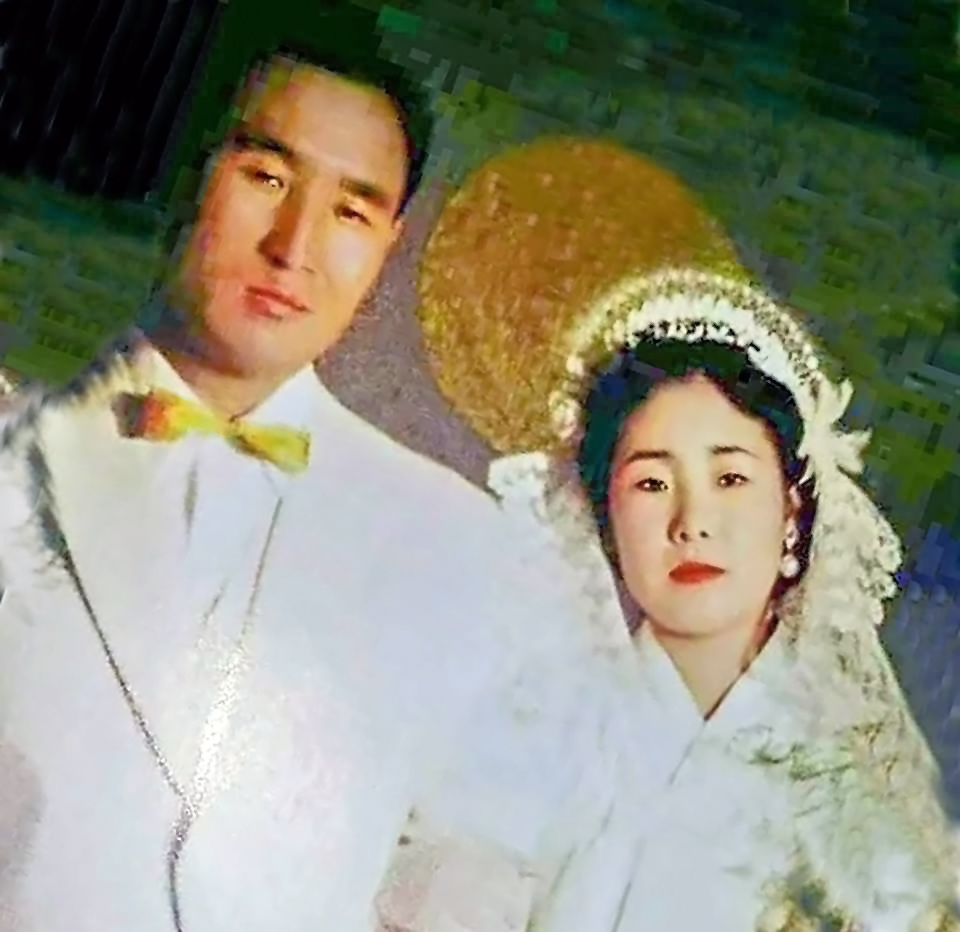
14_12_CfE_Tyler 10.55.08 pm“Who am I?” Dr. Hak Ja Han Moon opened her talk. She was at East Garden on December 4, speaking to some 300 teenagers and young adults. Not waiting to sort out their replies, she answered her own question: “I am the only-begotten daughter.”

She then explained that Adam and Eve had a growing period in which to fulfill their responsibility and, as a result, receive the marriage Blessing. But they became self-centered and never received that Blessing. She told her listeners: “It is the same with you. Your essence is True Parents. Your responsibility is to receive the Blessing.”

Mother Moon’s talks such as this have stimulated much discussion of the term “only-begotten daughter.” Some consider it a “heresy.” A well-known Korean lecturer is reported to have said, “The Only-begotten Daughter as Mother describes it does not exist.” The article citing him states that Mother Moon describes Only-begotten Daughter as “being born without Original Sin.”  I think this does not do justice to her self-presentation as only-begotten daughter. In this article I explain why.

Biblical and Historical Context

“Only-begotten” does not appear in contemporary Bible translations. And among older translations, by far the most influential that adopts it is the King James Version. There it appears exclusively in the writings of the Apostle John. (John 1:14; 1:18; 3:16; 3:18; cf. 1 John 4:9)

But John is not insistent; he also calls Jesus “the firstborn”:

“Jesus Christ …is the faithful witness, the firstborn from the dead, and the ruler of the kings of the earth.” (Rev. 1:4-5)

Continue Reading→—>

Website Built with WordPress.com.

Up ↑