America and Islam: “The Time of Humiliation” as a Determining Feature in Modern Politics

By Ronald Brown

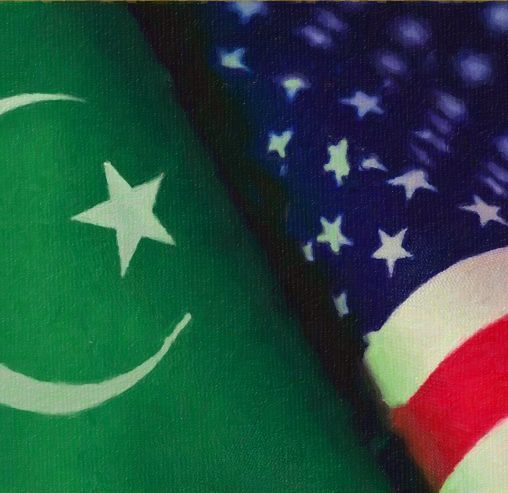
Most commentators call the current American involvement in the Muslim world the “War against Terrorism,” “War against Islamic Extremism,” “War against Radical Islam,” or one or the other pseudonyms that politicians, analysists, and journalists have dubbed it. In essence, it is simply the latest installment in the millennium-old confrontation between the Christian and Muslim civilizations.

The Rise of Islam

Since God first revealed to the Prophet Mohammed that he was the completion of a long line of divinely inspired prophets, Islam has considered itself the authentic religion of God. Each of the many prophets from Adam and Abraham through the prophet Dhul-Kifl to Jesus revealed elements of this primal religion, but sadly their followers failed to understand the content of these revelations.

Jews turned the revelations of Abraham into a tribal religion that shunned outsiders while Christians distorted Jesus’ teachings and declared him a deity equal to God, thus abandoning the core monotheistic goal of God’s revelation. But finally, God called up still another prophet to return humanity to his path and Islam was the result.

The Golden Age of Islam

Sweeping across the Arabian Peninsula and into the heartland of the Middle East, Islam was confident that Jews would emerge from their self-imposed ghettos and embrace the “fulfillment” of the religion founded by the prophets Abraham, Isaac, Jacob, and Moses, and Christians would abandon their deification of Jesus and return to monotheism.
Continue Reading—>

How American Christians from North Korea Could Have Altered Korea’s Future in 1945

By Mark P. Barry

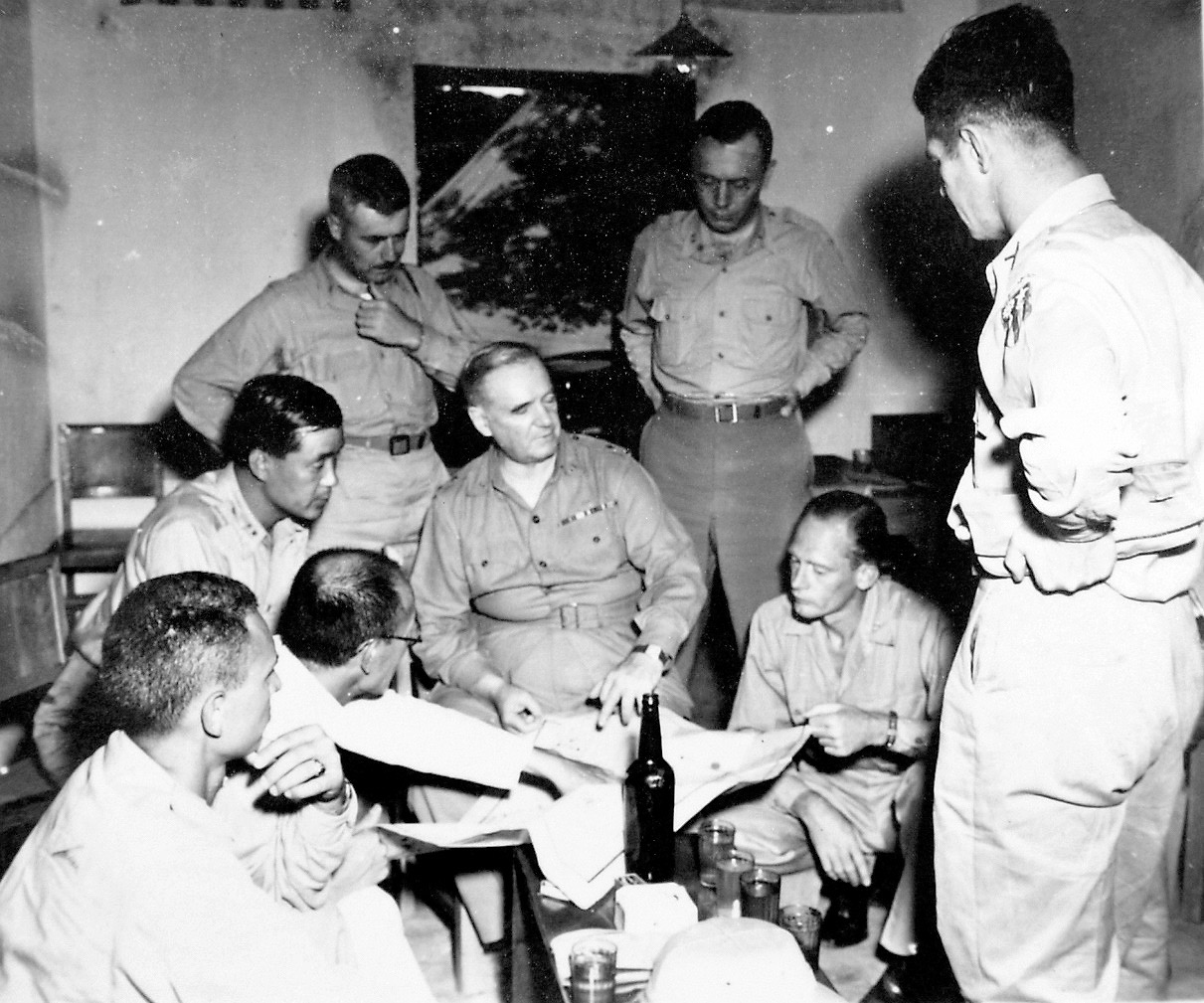
Few Americans realize that the hasty 1945 division of Korea and ensuing communist eradication of Christianity in the north occurred despite the efforts of a handful of uniquely qualified American officials. These men were born in the pre-World War II American Christian community in northern Korea, and were concerned, while serving in the U.S. government, about the fate of a land no less their home than America.

Historians generally maintain the U.S. government was largely uninformed about Korea during the Second World War and paid it scant attention. But these American Christians, serving in significant roles in the wartime U.S. government, sought to direct U.S. focus and efforts toward Korea. Despite their best efforts, they were unsuccessful and there is an almost complete absence from the historical record of their efforts.

Dr. George M. McCune was the best-known of these second-generation born and raised in Korea of American Christian missionaries. He became the main expert on Korea for the Office of Strategic Services (OSS), the forerunner of the CIA. His father, Rev. George S. McCune, a Presbyterian missionary, headed Union Christian College (also known as Sungsil School, both a high school and college) in Pyongyang, where, interestingly, Kim Il Sung’s father (who later married the daughter of a Presbyterian minister) attended (the late Ruth Graham, wife of Rev. Billy Graham, also attended high school there for three years).

The younger McCune was born and raised in Pyongyang, the “Jerusalem of the East,” and earned the first doctorate in the study of Korea from an American university in 1941. He served in the OSS from 1942 and the next year became Korea desk officer for the Department of State, the leading official in the U.S. government on Korean affairs. His brother, Dr. Shannon McCune, was an expert on the geography of Korea and East Asia.

Continue Reading—>

Beyond Partisanship: A Proposal to Bring Our Divided Family Together Again


By Jack LaValley

At a recent scholarly gathering, one participant concluded it is likely the current divisions in the Unification movement will continue indefinitely. In this article, I propose a four-pronged approach to end the polarization between the disparate groups and bring them together to fulfill the highest aspirations of Divine Principle.

I do not intend to criticize any individual, institution or leadership, but want to present a conceptual framework upon which we can overcome the historical challenge of denominational/religious division we face.

First, I discuss how reinterpreting “True Family theology” changes the rules for who can be involved in putting an end to the conflict.

I identify how the conflicting groups can shift from position-taking to problem-solving and move beyond sterile debate to engage in genuine dialogue.

I suggest a third, alternative narrative to move us beyond the limiting narratives we’ve been told thus far by the conflicting groups.

Finally, I recast the conflict in terms of a need to heal broken relationships and strengthen bonds of love between family members.

The three groups involved in the conflict (Family Federation for World Peace and Unification, Family Peace Association and Sanctuary Church) employ a variety of tactics to defend their positions, such as: assuming their group is always right; giving no possibility the other parties have parts of the answer to end the conflict; always trying to prove the other party wrong; listening to find flaws and refute arguments; defending “our own version of the truth;” seeing only one side of the argument; looking for weaknesses in the other’s position; creating a winner/loser mentality; and, seeking a conclusion that supports one’s own position.

Continue Reading—>

The Merit of the Age (Or, Why I Am an Optimist)

By David Balise

What is this time in which we are living?  The rapid changes taking place now are constantly in the news: globalization, the transforming effects of technology and communication advances, the looming possibilities of artificial intelligence, driverless cars, and the increasing ability of machines to do what used to be done by humans, to name a few.

But what about the internal side of this era?  Unificationists have a dramatic insight here.  Divine Principle explains that the great acceleration of external advances we are seeing has an internal cause, a “merit of the age.”

As Divine Principle says, “spiritual and intellectual levels have gradually been elevated due to the merit of the age,” “the merit of the age has increased in proportion to the foundation of heart,” and “with the flow of history, humankind’s spirituality has become enlightened due to the merit of the age in the providence of restoration.”

We are probably much too close to this historic transformation to understand it very well; in time the changes we are living through will become much clearer.  But it’s very helpful to have some kind of framework to understand, as best we can, the internal changes taking place, and our role in those changes.

When I reflect on the work of the Unification movement and of Reverend and Mrs. Sun Myung Moon (referred to by Unificationists as Father and Mother, or True Parents), I find it helpful to think of it in three broad areas.  Together, I believe these three areas represent substantial fruits of the merit of the age.  In some areas the changes are more visible, while in other areas they are still mostly hidden.  Time will show their true worth.

Continue Reading—>

Teaching World Religions in the Age of the Clash of Civilizations

by Ronald Brown

Unification Theological Seminary is not only in the middle of New York City, the Empire City, but is literally in the middle of the world because of its unique student body. The Reverend Sun Myung Moon founded the institution in 1975 as a seminary where students, scholars and clergy of all the world’s religions would meet, interact, and hopefully engage in creative dialogue. As an  adjunct UTS faculty in world religions for the last ten years, my students have been drawn from every continent, included all age groups, and claimed worshippers of all the world’s faith communities.

Since the Seminary’s founding, the planet has moved from “The American Century” to what Samuel P. Huntington characterized in his 1996 book, The Clash of Civilizations and the Remaking of World Order, as a world engaged in a cataclysmic “clash of civilizations.”  This clash of civilizations takes place daily in my UTS classroom as well as at Touro College, a largely Jewish school where I teach, and in lectures I deliver throughout the city.

This article summarizes three separate battlefields: 1) The struggle for my students to understand their own religion from a historical and academic perspective; 2) the struggle for students to keep an open mind while studying other religions; and, 3) the struggle to elaborate new strategies in  teaching world religions in a multi-religious environment.

Understanding one’s own religion

Studying the major religions of the world sounds like a good idea to most of my students, at least until it comes to a scholarly and historical study of one’s own religion. Students are inevitably fascinated by and curious about the other religions of the world and rarely if ever doze off. But as soon as I begin lecturing about their own religion the going gets tough.

Continue Reading—>

Our Alignment in the Era of True Mother

By Andrew Wilson

These days Unificationists may ask themselves, “Where are we in the providence? Where is God’s work headed?” When Reverend Moon was alive this was not a pressing issue, because he set the direction and we could simply follow.

But since he passed on in 2012 to take his place in heaven, things on earth have not been so simple. Furthermore, in 2013 Foundation Day arrived, proclaiming the victorious conclusion of the providence of restoration, but where did that leave us?

In my experience, every time Father made a providential announcement, it typically took three or four years to comprehend its meaning. It’s the same today; we needed some distance in time to understand what has happened since the dramatic events of 2012 and 2013.  Now in 2017 we can begin to see more clearly how the providence is changing and where it is heading.

Of course, the most obvious change is that Dr. Hak Ja Han Moon, True Mother, has begun putting her stamp on the movement. Also, we are coming to know God not just as Heavenly Father but as Heavenly Parent, and some of us are exploring what it means to relate to God not only as Father but also as Mother.

Change has always been a feature of God’s providence. Reading the Chambumo Gyeong, we can see the movement has passed through different eras, from the early days of pioneer missionary work, to the 1980s when we confronted communism, to the 1990s when we developed an interreligious and international family movement for peace, to the 2000s when we could witness the dawning of God’s royal sovereignty.

As the providence advanced from one stage to the next, we had to change our mindsets to adapt to new realities and challenges. So what is new about the reality of this era, and how should our mindset change to better align with the era of True Mother?

Continue Reading—>

Farewell Until We Meet Again, Mom

By Robert Brooks

Before my Mother passed into the Spirit World, I was given a perfect opportunity to offer her my final thoughts.

Ours was a tenuous relationship at times, often marked by long periods of silence. Her fears concerning my chosen faith course would often lead up to our intermittent silences. Before she ascended, my mother was diagnosed with vascular dementia, and that robbed her of her short-term memory. When I learned of her illness and its dire effects, it came to me clearly that my actions and words would be offered to insure her successful, unfettered ascension.

And so, my wife and I made plans to visit. She had moved far away, but there was still time. When we arrived at her home, my Mother looked both happy and relieved. Our last visit was a good time; sharing time, stories, laughter, and memories of long ago.

The day before my Mother passed, my sister, her caregiver, emailed to say Mom was fading fast and Hospice didn’t see her living much longer. If I wanted to, I could call and my sister would place the phone near her on speaker so Mom could hear and I could offer my farewell. My oldest son, viewing my distress with this sudden yet expected turn of events, suggested I sleep on my final words and compose my thoughts the next morning.

Following his advice, early the next day, somewhat surprisingly, the paper pulled the ink from my pen as fast as I could write. Forty some minutes after I got through on the phone and offered her these words, my Mother passed into the Spirit World where she now enjoys a successful ascension.

January 31, 2017

On the eve of your passing, Mom, I offer these final thoughts.

Continue Reading—>

The Birth of American Music

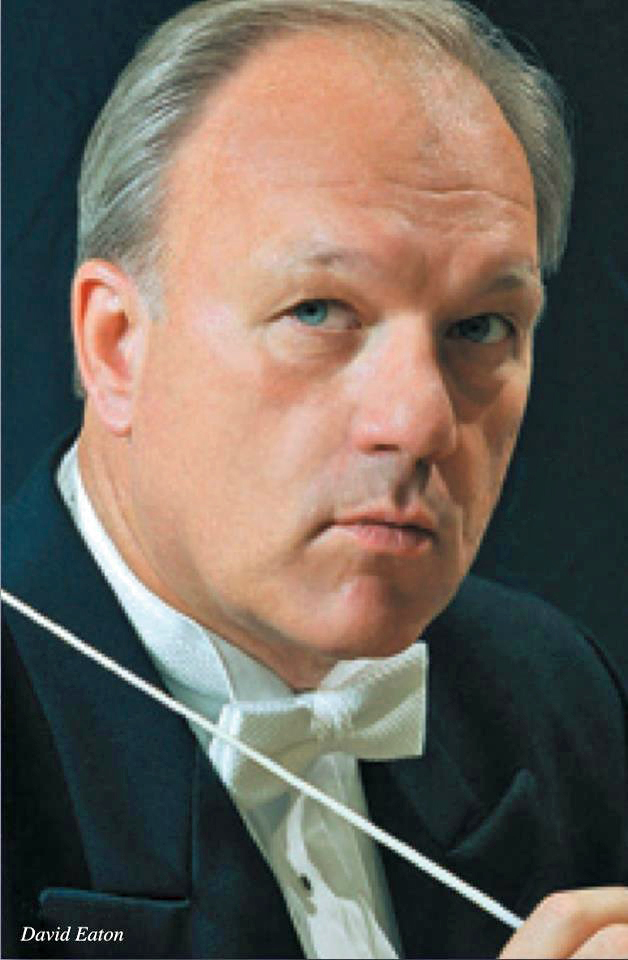
By David Eaton

While attending the 6th World Media Conference in 1983 in Cartagena, Colombia, I had the opportunity with several other musicians to meet with UTS founders, Reverend and Mrs. Sun Myung Moon. In the gathering, Rev. Moon expressed interest in the creative process pertaining to musical composition. He encouraged us to study and master the classical tradition, calling it “the foundation” upon which we could carry out our creative endeavors. He then suggested we combine the best elements of other genres — Rock, Jazz, Gospel, Folk — with the classical tradition in an attempt to create “New Age Music.”

In recollecting that meeting, I came to realize that in many ways American music was something akin to what Rev. Moon alluded to. Owing to America’s immigrant nation heritage, American music is a rich amalgam of highly varied styles and influences that arrived from many places. In a very real way American music is “World Music.”

When the Pilgrims landed in 1620 they not only brought their faith tradition, but also the music that accompanied it. Some of the earliest musical expressions of colonial America were Christian hymns sung in churches and schools utilizing the technique known as “shape-note” singing. Many of these were eventually published in 1835 in the hymnal known as Southern Harmony, including the “Garden Hymn,” a song known to Unificationists as “Song of the Garden.”

Eighteenth century Appalachian folk music was also indicative of the cross-fertilization highly evident in most American music. Immigrants from Scotland, Wales, England, and Ireland brought their ballads, jigs, reels — and their instruments — with them, and these musical influences found their way across the land.

Gospel Music also had religious roots. The “call-and-response” mode of music-making dates back to the early 1600s. As it evolved from 17th century Negro Spirituals and field hollers, it was the Christian revival movement and Holiness-Pentecostal movement of the late 19th century that spawned this new genre. Gospel historian Robert Darden noted the first published use of the term “Gospel” to describe this music style was in 1874 when Philip P. Bliss edited a revival songbook titled Gospel Songs for use in evangelical meetings and revivals.

Continue Reading→—>

The Battle for Dominion over Time: Thailand’s Many Calendars

By Ronald Brown

Of all the parts of creation that God gave us dominion over, time continues to remain the most elusive.

A calendar is one of the universal building blocks of all religions. For any new religion to succeed or ancient religion to endure it must prove its ability to have dominion over time. The prospect of an endless and meaningless succession of days, years, and centuries, is unsupportable for human beings, to say nothing of religious communities. Calendars are like maps placing an individual and a community firmly in a flow of time that began with the Creation and will end with the Millennium.

In late December and January, during my academic break, I traveled to Thailand. What could have been a pleasant month of travel, beach, wine, dancing, food, and fun turned into a research-filled period. My research was stimulated on the first day in Bangkok when the man at the front desk prepared the receipt for my $7 a night room.

The Confused Calendar of Thailand

He took out his book of receipts, filled in the sum in Thai Baht, misspelled my name, stamped it, and handed it to me. I stuffed it into my pocket and went to my room where I crashed on my hard bed and slept the entire day. It was only later that evening as I was writing my daily journal entry that I glanced at the receipt. I took out glue stick, covered the back of the receipt with glue and attached it to the page. Only then did I notice that he had miswritten the date: the month “12” and day “30” were correct, but in place of 2016 he had simply written “60.” I thought he had simply made a mistake and wrote “60” instead of “16” and thought no more of it. But this strange date stuck in my mind. I had to find out what “60” meant.

The Buddhist Calendar

My second encounter with the wild world of Thai calendars was by accident. Having checked into my hotel, I set off to explore the neighborhood. I strolled up a major road and stopped in the middle of an elegant bridge spanning one of the many canals that crisscrossed the city giving it the name “The Venice of the East.” I glanced at the elegant Thai script that announced I was on the Mahatthai Uthit Bridge and noticed the year of construction was 2457. Puzzled, I checked my handy travel guide and read it was constructed in 1914.

Continue Reading→—>

Website Built with WordPress.com.

Up ↑