Does the Unification Movement Flourish More Under Republican Administrations?

1712044_1280x720_lucid-snap-art

By Michael L. Mickler

Mickler full-sizePundits and candidates continually debate which of the two major political parties is better for the United States, particularly on the economy and keeping the peace.

During the most recent election cycle, Hillary Clinton claimed, “The economy always does better when there’s a Democrat in the White House.” On the other hand, it has been pointed out that all of the major U.S. wars in the 20th century—World Wars I and II, Korea and Vietnam—were entered by Democratic administrations while Republicans began détente and ended the Cold War peaceably. Partisans on both sides argue their positions, mostly to the bewilderment of the public.

If the situation is murky with respect to the economy and war, Republicans and Democrats have settled into less ambiguous postures vis-à-vis religion. Gallup Poll research shows, “Very religious Americans are more likely to identify with or lean toward the Republican Party,” whereas “non-religious Americans” are significantly more supportive of the Democratic Party, the exception being Black Americans who are “very religious on average” and heavily Democratic.

Pew Foundation research indicates the same. A recent study showed, “About two-thirds (68%) of white evangelicals either identify as Republicans or lean Republican” while “61% of those who do not identify with any religion lean Democratic.” This has led to a “God Gap” between the two parties.

Still, the question is whether Republican administrations lead to the flourishing of religion in general or, for the purpose of this article, to the flourishing of the Unification movement.

Simply put, “very religious” American churches and organizations, which include the Unification movement, do better under Republican administrations but not because of Republican administrations. Rather, the social forces and conditions that sweep Republicans into power are the same ones that reinforce values and goals of “very religious” Americans.

Continue Reading→—>

“Loving”: Outlawing Love and Marriage

1466021757_loving_hp3_joeledgerton_ruthnegga_jeffnichols_lucid

By Kathy Winings

kathy_winings_3_profileI am a romantic. Like many romantics, we like to believe that when two people share a deep and abiding love, there should be no problem why they cannot have a happy marriage. Unfortunately, we have come to see this is not always the case – especially when the two people are racially diverse. This is because we still live in a world that is racially charged and racially divided. Racism seems to be one of the most intractable problems to solve. Our inability to see “the other” as an equal, as our neighbor and as fully human, has plagued us since the beginning of the human race.

Nowhere is the challenge of racism more evident than in the movie “Loving,” written and directed by Jeff Nichols, and nominated for two Golden Globes in acting. Loving tells the story of an interracial couple living in pre-civil rights, 1950s Virginia, who ultimately became the center of a landmark U.S. Supreme Court decision that addressed the unconstitutionality of the anti-miscegenation law of Virginia and those of 24 other states (Loving v. Virginia).

Richard Loving (Joel Edgerton), a white construction worker, and his wife, Mildred (Ruth Negga) a black woman, begin their arduous legal journey with the simple act of getting married in 1956 and creating a home in rural Caroline County in northeastern Virginia. Though they are legally married in the District of Columbia, their home is in Virginia and such an act is illegal under Virginia’s anti-miscegenation law.

It does not take long before news of their interracial marriage spreads, resulting in the couple’s arrest in the middle of the night after local police raid their home. When their case comes before the judge, the Lovings are given two options if they want to avoid prison: divorce immediately or plead guilty and leave their home and family in Virginia and not return for a minimum of 25 years. Though expecting their first child, the Lovings plead guilty and move to Washington, DC – leaving behind everyone they love and hold dear.

Continue Reading→—>

Lessons from Rev. Moon’s Trip to Pyongyang 25 Years Ago

rev_sun_myung_moon_kim_il_sung_meeting

By Mark P. Barry

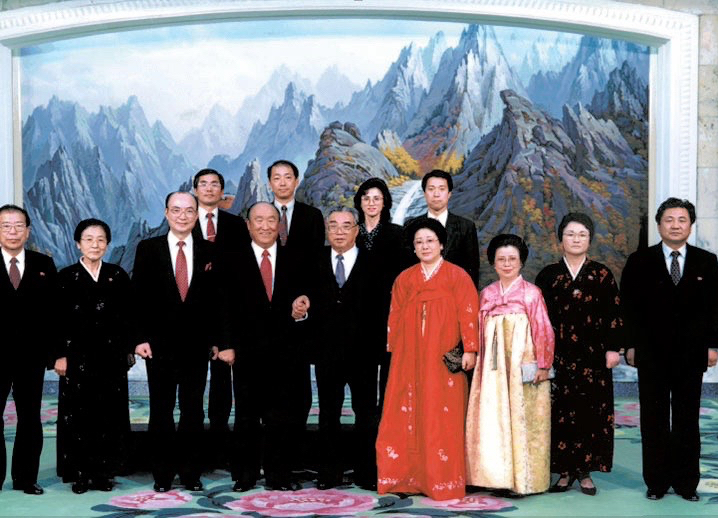
mark-barryThis week marks the 25th anniversary of Reverend and Mrs. Moon’s trip to North Korea from Nov. 30 to Dec. 6, 1991. The key principle and motivation he followed in his visit to Pyongyang and meeting with the late President Kim Il Sung is that war must never again erupt on the Korean peninsula. It would be wise for policymakers in the U.S., South Korea and Japan to be reminded of that lesson today.

For Koreans old enough to remember the devastation of the Korean War, the importance of avoiding a new Korean conflict is very understandable. In fact, at the height of the original North Korean nuclear crisis in June 1994, when President Clinton was ready to dispatch advanced fighters and bombers plus 10,000 American troop reinforcements to South Korea, the person who stopped him was ROK President Kim Young Sam. His memories of the enormous tragedies of the Korean War were quite vivid (including the loss of his mother). The South Korean leader reflected that no major power, even an irreplaceable ally, can be permitted to provoke another outbreak of war on the Korean peninsula.

Today, despite all the rhetoric about North Korea’s five nuclear tests, numerous missile tests and general bellicosity, the principle of finding a peaceful solution is as relevant as in 1991. To continue on the path of increasing UN and bilateral sanctions, and even entertain talk of preemptive strikes against DPRK nuclear facilities, is a formula that will fail to get the North to back down or cooperate. Rather it increases the chances of escalation in which even a small action might be misconstrued and inadvertently trigger full-blown hostilities.

Twenty-five years ago, Rev. Moon demonstrated an approach towards a resolution of the North Korean issue in which all other parties would avoid backing the North into a corner where there would be no other option for it but resort to violence.

Continue Reading→

God and Politics

By Scott Simonds

SSimonds_1The old adage that polite conversation should avoid politics and religion to maintain friendly relationships has never proven to be truer than during this election season.  Rather than civil discourse about the issues of the day and better approaches to addressing them, the election has become a mudslinging contest over which candidate has the most baggage and would be most disastrous in office.

Worse yet, anybody who speaks on behalf of, or against, one of the candidates is branded a bigot, a misogynist, a hog at the public trough, un-American, a fool, atheistic, even satanic by guilt through association.  Friends and relatives easily get caught up in the fray and even religious communities, Unificationism included, have become deeply divided.

As tempting as it is to base a decision on who has the better character in this election, no candidate rises to the level of a Washington, Lincoln, Franklin Roosevelt or Reagan.  At this crossroads in the American narrative, this crucial moment of decision, it behooves us to look at contemporary issues in a very broad historical context — that is, a providential context, past, present and future. The theme of the ever progressing nature of God’s providence is expressed in Ecclesiastes 3:1-8 (KJV):

To every thing there is a season, and a time to every purpose under the heaven…
A time to kill, and a time to heal; a time to break down, and a time to build up;…
A time to rend, and a time to sew; a time to keep silence, and a time to speak;
A time to love, and a time to hate; a time of war, and a time of peace.

The political pendulum swings back and forth.

Government grew, during the Great Depression and World War II, for example.  And it receded, during the 1990s under the Republican Congress.  Often, the economy grew together with government expansion.  Automobile and airplane manufacturers exploded in the aftermath of the military buildup of the Second World War.

Although government grew after the Depression and during the war, so did private industry.

Continue Reading→

Unificationists in the Voting Booth

election-2016

By Joshua Hardman

hardmanThe 2016 presidential election is just six weeks away, and American Unificationists appear evenly split between the nominees of the two major political parties, with many believing they must decide between two highly imperfect choices. In a survey of 208 Unificationists I conducted in March, only 17% of respondents said Hillary Clinton or Donald Trump was their first choice.

Respondents were asked to rank their number one and two choices for the presidency from the five remaining major party candidates: Hillary Clinton, Bernie Sanders, Ted Cruz, John Kasich, and Donald Trump. The survey also included questions presenting respondents with general election hypotheticals.

Survey respondents were first procured by posting a message on the Facebook group “UC House and Travel Network,” a platform used by thousands of people around the world. I then had the help of pastors in major communities who made announcements and/or put a link to the survey in their community emails. Most respondents were from the East Coast, California and the Midwest.

This survey is not a perfect sample of the voting Unificationist population, and it is important to keep in mind that much has happened since it was conducted. The survey, therefore, is best taken as a snapshot in time, while its predictive value for the general election is limited.

With this in mind, I will mainly focus on the questions about the primary elections. Every state has different rules about who can vote in a party primary, complicating any nationwide analysis. The purpose of the survey, however, was to gauge voters’ inclinations rather than how they would, or could, actually vote.

Fifty percent of respondents identified as Republicans, 25% as independents, 16% were Democrats, 8% had yet to register to vote, and less than 1% were registered with a third party.

Continue Reading→

True Mother and the Work of the Holy Spirit

14047356_1171204526274027_7979624518450349208_o

By Andrew Wilson

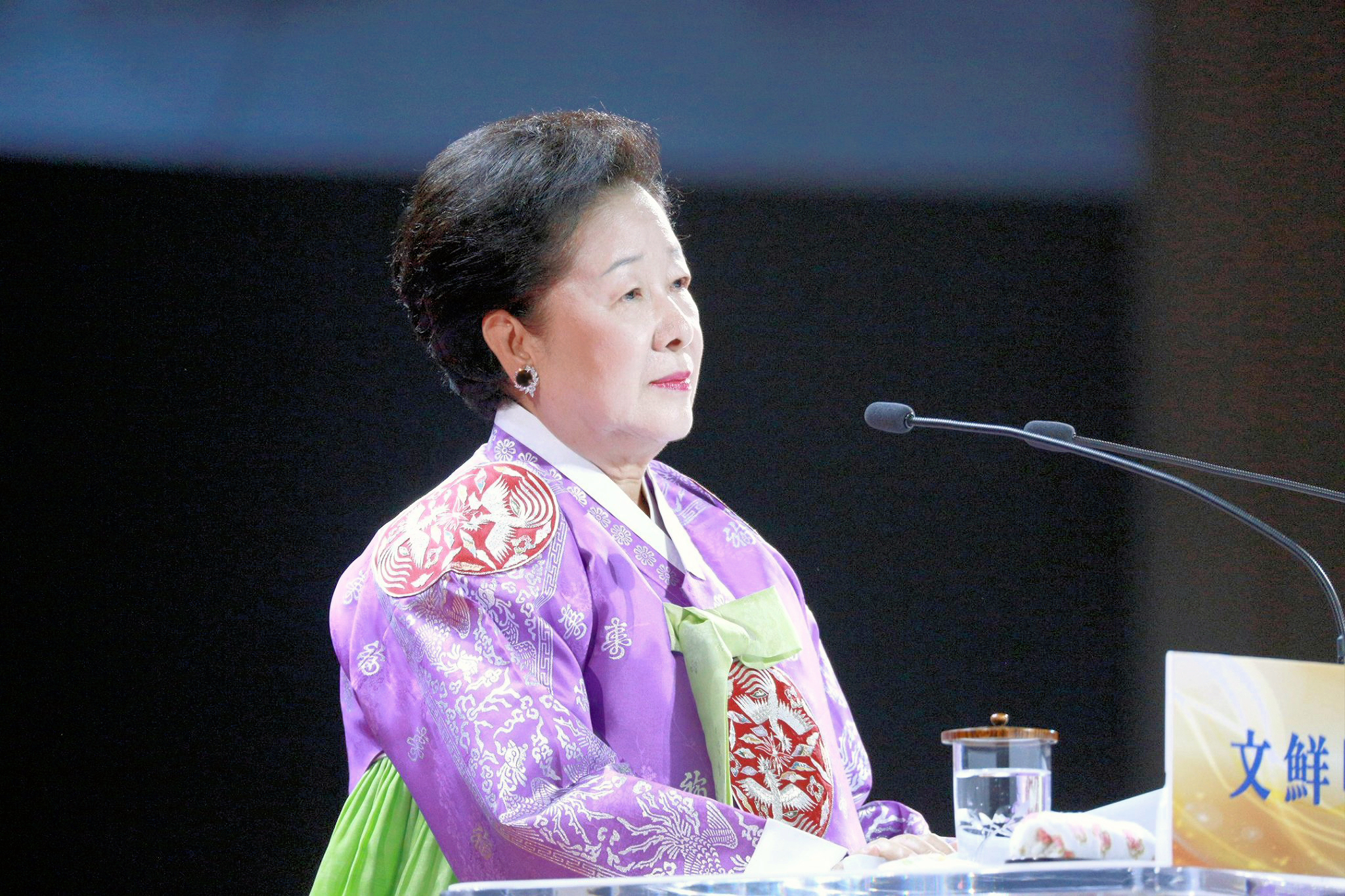
WilsonTrue Mother, according to the Divine Principle, is the substantial Holy Spirit. Now that True Father is in heaven, True Mother remains on earth, like the Holy Spirit was after Pentecost.

After Jesus Christ died, the primary subject partner that guided the early church was the Holy Spirit. In this parallel period after the death of Christ at the Second Advent, True Mother can be expected to lead the church and do works that are similar to those the Holy Spirit did after the death of Christ at the First Advent.

Accordingly, one way that we can appreciate True Mother and her works during these years following True Father’s Seonghwa is by understanding her mission in terms of the mission of the Holy Spirit. It is this role that I will address.

In the New Testament, the Holy Spirit fulfilled a number of missions in the years immediately following Jesus’ death, including: (1) bring the disciples to internal oneness with Christ; (2) promote evangelism to grow the church; (3) raise up new leaders; (4) establish new ordinances; and (5) clarify the meaning of Jesus’ words for the church. Let’s examine these five missions of the Holy Spirit and compare them with the work of True Mother over the last four years.

1.     Internal Oneness with Christ

Saint Paul describes the internal work of the Holy Spirit in the 8th chapter of Romans. The essence of this work is to bind Christians with Christ. Paul wrote, it is the Holy Spirit bearing witness with our spirit that we are children of God (Rom. 8:15-17). The Holy Spirit brings Christians into a parent-child relationship with God.

The Holy Spirit loves Jesus spiritually. True Mother loved True Father conjugally. Through the Holy Spirit, Christians are reborn as God’s adopted children. True Mother gave us rebirth as God’s direct children. True Mother spent three years to attend True Father on our behalf (in Korean Confucian tradition it is the children, especially the sons, who are supposed to mourn their deceased father for three years).

Continue Reading→

Mainstream Unificationism

TP

By Michael L. Mickler

Mickler full-sizeMainstream Unificationism upholds two core affirmations. First and foremost, it affirms Rev. Sun Myung Moon and Hak Ja Han Moon as the True Parents of Humankind. Second, it affirms the Holy Spirit Association for the Unification of World Christianity (HSA-UWC or Unification Church) and the Family Federation for World Peace and Unification (FFWPU) as the authoritative institutional expressions of Unification faith.

These dual affirmations are central to Unification identity and tradition. They are the sine qua non of mainstream Unificationism. Denial of one or both of them places one outside the Unification mainstream.

For most of its history, few within the movement questioned these affirmations. Members varied in their understanding of True Parents. They also behaved differently depending on their cultural background. But mainstream Unificationists did not challenge True Parent’s authority and did not seek to undermine Unification institutions.

That is no longer the case.

Mainstream Unificationism is now under attack. The most strenuous and ongoing attacks have come from Rev. Moon’s eldest and youngest living sons, both of whom at one time or another were considered likely successors. They have challenged True Parent’s authority, even their identity, and attempted to supplant Unification institutions.

Discord of this sort is far from uncommon in religious traditions. Sometimes, challenges to authority overwhelm communities of faith, especially new ones, driving them to extinction. Other times, religious traditions withstand attacks and root out opponents, stigmatizing them as heretics or schismatics. Occasionally, religious traditions channel dissent and opposition into sharpened or expanded versions of faith.

The intent of this article is to consider the structure, purposes and dynamics of mainstream religion as it pertains to religious traditions in general and Unificationism in particular.

Continue Reading→

You Say You Want a Revolution?

ConventionBalloons

By David Eaton

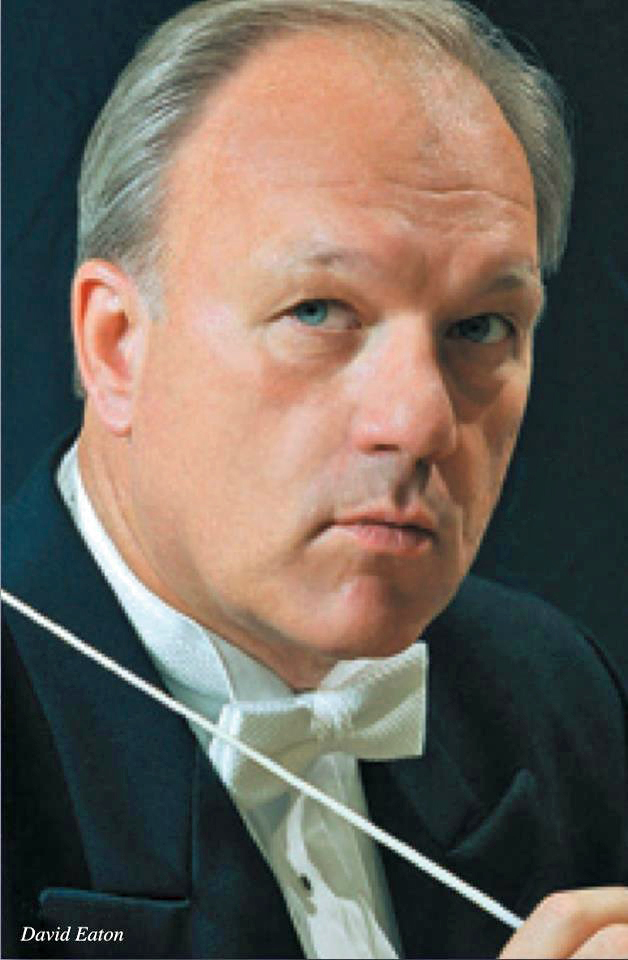
david_eatonIn our current election cycle, we hear the customary calls for “change,” “moving forward,” and getting away from the debilitating “status quo.” Speech after speech is laced with calls for social and political revolution as candidates of both major political parties, as well as a few political outliers, vie for the presidency. Yes, change is necessary, but as we observe, everyone believes in change but no one wants to change what they believe.

Regardless of political affiliation, those seeking the highest political office view government as inimical to effecting change in the manner they consider most beneficial to the common good. Limiting government overreach is a concern of traditional conservatism while expanding the role of government is the aim of the present iteration of liberalism. This is an important debate, however. Whatever side of the political spectrum one chooses to identify with, protecting our civil liberties remains a significant issue.

The advocacy to utilize government censure as a way to achieve social justice is fundamentally at odds with our Constitution, not to mention Divine Principle. Regardless of what one may think about women’s, voters’ and minority rights, etc., we intuit that when freedom is diminished or oppressed, regardless of intention, our portions of responsibility cannot be exercised in a principled fashion and love becomes a casualty. Yet the impulse to coerce via governmental authority has become part and parcel of liberal, progressive orthodoxy when it comes to social matters.

As Charles Krauthammer reminds us, John Stuart Mill — one of the first liberals of the 19th century — argued in his essays, On Liberty, that “truth emerges from an unfettered competition of ideas,” and we improve our individual character when we are allowed to develop our ideas in a free and open society without coercion. Free speech zones, prohibitions on religious belief, ruling by judicial fiat — Mill would consider these to be an affront to a truly liberal society and a shift toward a dystopian culture. Today’s postmodern iteration of liberalism is a far cry from that of Mill, or even that of senators Henry M. “Scoop” Jackson and Daniel Patrick Moynihan, or House Speaker Tip O’Neill.

Continue Reading→

The Third Great Awakening

By Hugh Spurgin

This article is adapted from a sermon delivered May 15, 2016, in the UTS Chapel to a FFWPU New York regional congregation.

UTS 43rd Street

We are living in a special time in history due to the role and mission of the co-founders of the Unification movement, the Reverend Sun Myung Moon and his wife, Dr. Hak Ja Han Moon.  The time of Jesus was a period of transition from an old world to a new one when a new religion was born.   It took nearly 400 years for that religion, Christianity, to gain acceptance by the Roman Empire.   It will not take centuries for the Unification movement to be accepted because events are happening much more quickly in our lifetime.  It will take decades, not centuries.

Jesus proclaimed good news based on a new revelation that established a new religion.  Externally at that time, the power of the Roman army created stability in the Mediterranean world, establishing the Pax Romana that allowed Christianity to spread widely.  At the same time, new mystery religions internally caused uncertainty and insecurity for people; even Christianity had many different sects.

Out of that confusion, an entirely new world, not just a new religion, emerged.

There is a parallel between the Roman Empire 2,000 years ago and America after World War II.  The power of the American military and economy provided for a time of relative peace and stability called the Pax Americana.  Yet in the 1970s, when Rev. and Mrs. Moon arrived in the U.S., America was in a chaotic state.  Many people were confused and could not understand what was happening.  From my perspective, America was in a state of decline.  There was a danger that the United States would fall in the same way that Rome did when Christianity emerged.

During that time, Father and Mother Moon played a major role in helping to revive America, even though most people still do not know their historical role. Nor did people know who Jesus was, since very few people heard about him.

Continue Reading→

Website Built with WordPress.com.

Up ↑