The Freedom Society: Headwing Thought or Tea Party Politics?

PPP

By Scott Simonds

SSimonds_1The Freedom Society philosophy as explained by Kook Jin Moon pits private ownership and free enterprise against big government. He argues that:

  • Government has undermined the role of the family and community by using tax money, expropriated by coercion, to provide welfare benefits to undeserving people promoting a cycle of dependency;
  • The free market system is self-governing and government oversight is unnecessary;
  • Government is in an “archangel position,” an instrument of the devil that usurped the positions of God, parents and individuals as free agents.
  • The role of government should be limited to lawmaking, a justice system and defense. Every other function should be managed by the private sector.

These positions, minus the theological jargon, are those of the far right on the political spectrum, advocated by Tea Party proponents like senators Rand Paul and Ted Cruz, and governor Sarah Palin, among others. However, these are not the views of our founder, Rev. Sun Myung Moon.

One way to understanding Rev. Moon’s perspective on global politics and economics is to examine his vision for a restored United Nations. He cultivated relationships with representatives of the world’s religions which led to the creation of the Interreligious Federation for World Peace (IRFWP). He fostered relationships with political and civic leaders, from both sides of the aisle, with the common values of faith, family and freedom, under the banner of the Federation for World Peace (FWP). In 1999, this process led to the creation of the combined Interreligious and International Federation for World Peace (IIFWP). In 2005, to further the effort to renew the United Nations, IIFWP became the Universal Peace Federation (UPF).
Continue Reading→

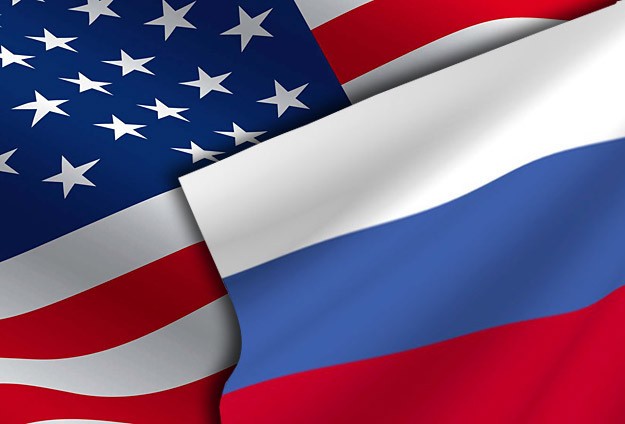
Is Russia More Aligned with God’s Will than the United States?

aa_picture_20130917_631451_high-jpg20130920150203

By Michael Mickler, Professor of Church History, UTS

Michael_MicklerAnyone reading the news over past months cannot fail to notice that Russia has asserted itself in significant ways on the world stage. Some of its actions, such as sheltering former NSA computer analyst Edward Snowden, ran counter to American interests and prompted angry protests against America’s surveillance programs. Other actions, such as its intervention in Syria, helped the United States avoid a possible war, at least for the present. This article attempts to sort out these actions and others in light of what Unificationists would interpret as God’s will.

Rev. Sun Myung Moon declared the United States is the “elder son” nation in 1998. Most Unificationists understand this to mean that America is to be a model for the rest of the world, manifesting righteousness, upholding civil and religious liberties, and sacrificing itself or at least serving humanity. These ideals resonate with longstanding views of the United States as a “redeemer nation.”  America was great, Alexis de Tocqueville wrote, “because America is good.”  American democracy was, in Lincoln’s phrase, “the last best hope of earth.” In the 20th century, the U.S. saved the world from the twin evils of fascism and communism. In the process, it became the world’s lone superpower.

The idea of the U.S. as the world’s sole superpower seems almost quaint today, barely more than a decade into the 21st century. China has risen as a formidable competitor, militant Islam is on the march, North Korea regularly threatens the U.S. with nuclear weapons, Syria already unleashed chemical weapons, and America is not yet disengaged from wars of attrition in Iraq and Afghanistan much less from a global war on terror.  Internally, America is divided, mired in a government shut-down and debate over paying its debts. There is little question that Americans feel less secure today than at the turn of the century.

Many factors, both foreign and domestic, have hindered the United States in exercising its “elder son” role. However, two stand out.  First, U.S. leadership, especially since 9/11, has incorrectly interpreted the doctrine of American exceptionalism. Going back to the Puritans, the likening of America to “a city on a hill … a light to the nations” implied that it was the world’s great exemplar, the fullest embodiment of freedom, self-government and the rule of law. However, during the first decade of the 21st century, American exceptionalism has been reinterpreted to mean the United States was “above” or an “exception” to the law, specifically public international law, and privileged to act unilaterally.

Second, Americans have incorrectly interpreted freedom.  Again dating back to the Puritans, U.S. civil liberties have been securely anchored within a compass of moral values and the public good. America was great because she was good. However, in contemporary American society, freedom has come to mean the freedom to do most anything one wants so long as it doesn’t interfere with anyone else’s freedom to do most anything they want. As a consequence, the United States has become identified with moral decadence and individualism.

Continue Reading→

A Challenge for the Divine Principle in the Postmodern Era

Facebook Connectivity 2010

A 2010 map displaying the connectivity of Facebook’s 1.1 billion global users (click to enlarge).

Keisuke Noda, Professor of Philosophy, Barrytown College of UTS

Keisuke_NodaCan the Divine Principle be attractive to others in the 21st century, or at least for the next 10 or 20 years as our Church’s 2020 goals envision? In Unificationist communities, that question has sparked the development of practical or technological methods of communication/presentation. People have created and re-crafted charts, slides, and PowerPoint presentations and will continue to do so.

The development of these materials is certainly a worthy endeavor, but another way to pose this question is to ask how the Principle answers the questions of the era or the “spirit of the time” (Zeitgeist). Although believers claim that religious teachings reflect truth that is eternal, ideas affirm their validity by responding to the questions of the era. Leading ideas must in fact “lead” the time by demonstrating their validity to people who are desperately trying to find their way. Thus, Unificationists must understand the intellectual climate that we live in if the Principle is to become a leading idea.

During the late 20th century, the United States and other developed countries underwent a major shift rooted in the comprehensive critique of modernity. It is imperative for any intellectual to understand this shift and the intellectual horizons that frame the climate today, known as postmodernism.

What Is Postmodernism?

Postmodernism is a concept that describes a general intellectual stance or tendency towards modernity. As the term post (“after”) modernism indicates, postmodernism is a departure from modernism based on a critical assessment of modernity. It is, in essence, skepticism towards basic assumptions of modernity. Postmodernism is a broad term which encompasses all social cultural spheres including architecture, art, literature, literary criticism, business, management, politics, economics, philosophy, religion, and others. It is a term that can be seen as describing the spirit of the age (Zeitgeist). Postmodernism is distinguished from being just a “trend” because of its lasting and penetrating effects on all spheres of life.

Modernity, as postmodernists see it, is a social, cultural, political wave that lasted for centuries, from the Enlightenment to the late 20th century. Despite the diverse views and ideas encompassed within modernity, modernity was based on certain assumptions that postmodernists later questioned.  Postmodern thinkers have taken a variety of approaches, but the following are a few basic criticisms of modernity by Jean-François Lyotard, a French philosopher.

Continue Reading

The Cherished Hope of Korean Unity

Two Korean Flags

Our cherished hopes are for unity
Even our dreams are for unity
We’d give our lives for unity
Come along unity.
Unity saving the people
Unity saving all nations
Come here quickly unity
Come along unity.

By Michael P. Downey

DowneyThe “Song of Unity” is a well-known and loved folk song that expresses the ardent desire of the Korean people to see their peninsula re-united into one nation. Or is that wishful thinking?

As an American living in South Korea continuously for over 13 years, it has been more than a passing interest to me what the Koreans really feel about unification. Over the years I have talked to neighbors, friends and students about this issue. More often than not, when talking to foreigners, Koreans try to figure out what you want to hear and give you some version of that. To get around this, I have developed a strategy of asking simple, direct questions.

Of course, the standard reply is that we are all brothers and at all cost we have to be united as one nation. When I probe deeper, many times quite different ideas come out. Recently I did an informal and unscientific survey using three direct questions. I asked 100 ESL students ranging from middle school students to middle-aged housewives, the following questions.

1.     Is the reunification of Korea important to you?

Almost everybody immediately said “yes.” A couple of middle school wise guys said “no, who cares.” 98% yes, 2% no.  As a follow up, I asked, “Which is more important to you, unification or getting into a top university (or, your son or daughter getting into a top university)?”  This time, 30% said unification and 62% said a top university; the rest couldn’t answer.

2.     Do you think you will see North and South Korea united in your lifetime?

 44% said “no,” 31% said “yes” and the rest said they didn’t know. For a follow up, I asked, “How do you think unification will happen?” Most replied by talking about a gradual process of easing of tensions, increasing culture and commercial exchanges and fielding joint sports teams at international events being the preferred way. Only a handful of people talked about regime change in the North.

Continue Reading

Fostering a Strategic Relationship with China: A Unification Perspective

thumb_psa5206

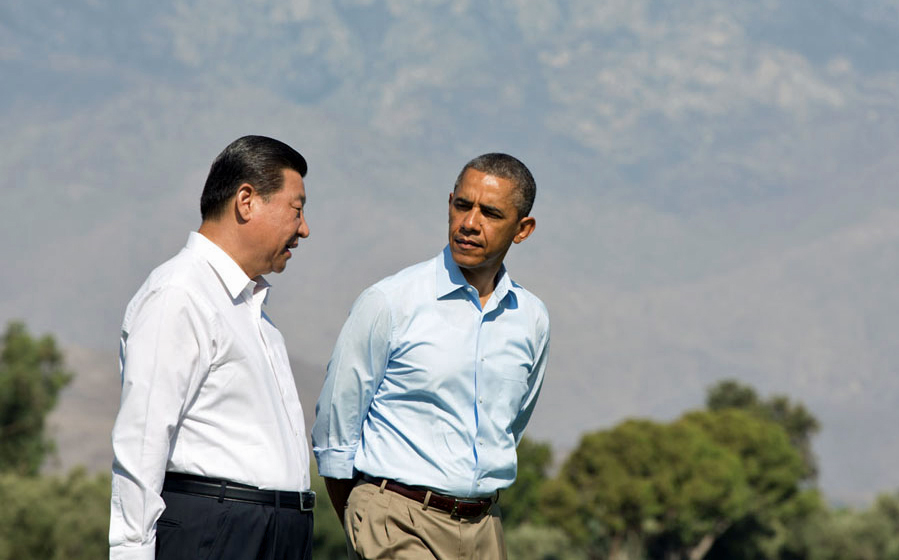
China’s President Xi Jinping met President Obama at Sunnylands, California in early June.

By Mark P. Barry, Lecturer in Management, UTS

Mark Barry Photo 2In April 2007, I attended a conference that gathered at the Cheon Jeong Gung “Peace Palace” in Cheongpyeong for True Parents’ Day. After Rev. Moon’s Founder’s Address, I walked out to the Palace terrace with a Chinese guest and friend who was a retired senior officer in the People’s Liberation Army and head of one of China’s major think tanks. In the heart of Cheongpyeong, we discussed the outlines of a joint conference on cross strait relations held later that year in Macau. Given the significance of where we stood, I couldn’t help but feel there was a spiritual imperative behind the discussion of future efforts at cooperation with a Chinese delegate.

In 1998, I often showed my students a PBS documentary on China’s efforts to modernize from abject poverty. By 2010, China overtook Japan as the world’s second-largest economy. To some, we now live in a bipolar world of two superpowers, the U.S. and China. More than ever, China has to be reckoned with by the United States, by the two Koreas — and by the Unification Movement itself.

On a global level, U.S. relations with China must be handled very judiciously. But for North and South Korea, China is their large neighbor, which has inescapable implications. For the international Unification Movement, based in South Korea, it would be wise to foster a strategic relationship with China; that is how one must deal with a nation that may otherwise misunderstand you and cause difficulty.

Recently, China has begun to speak about a “new type of great power relationship” with regard to the United States, the established hegemonic power. What China means is to distinguish the “new type” from the “old type” of great power relationship previously witnessed in history. The question is how these two continental powers can take a different course than previous great powers who were in competition. In history, conflict and war between two major powers sometimes occurred not simply by the increase in material power of the rising challenger but because of the fear it instilled in the established power.

What this implies is that trust-building between the two great powers is vital for the success of a new type of great power relationship. President Obama’s June meeting in California with Chinese President Xi Jinping was a start. The challenge is to find a way to share responsibilities and resolve current problems. China and the U.S. need to identify common ground in the realm of ideas and philosophy, as well as in the sustainability of existing markets and the economy.

Continue Reading

For Peace between Israel and Palestine, Headwing Politics

Netanyahu and Kerry

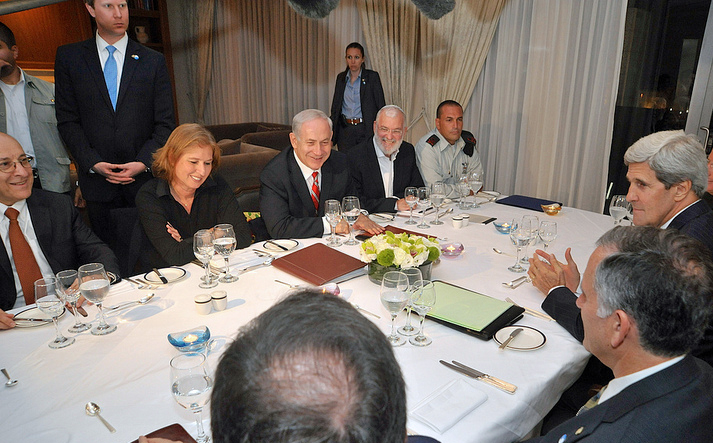
Secretary of State John Kerry (right) sits across from Israeli Prime Minister Benjamin Netanyahu (center), and, to his left, Justice Minister Tzipi Livni, in Jerusalem on June 29.

By Andrew Wilson, Professor of Scriptural Studies, UTS

WilsonThese days Israeli Prime Minister Benjamin Netanyahu is a man caught in the middle. He seems to have come around to the understanding that peace with the Palestinians is a necessity to preserve Israel’s future as a Jewish and democratic state. Yet he is beholden to members of his own Likud party, which includes rightists like Deputy Defense Minister Danny Danon. Danon recently stated on Israeli TV that there would never be a Palestinian state and the Palestinians would be governed by Jordan. Since Netanyahu apparently cannot find enough support for peace negotiations from his own base, if he truly wishes for peace, he has no choice but to reach across the aisle.

Netanyahu governs in a coalition with centrists like Justice Minister Tzipi Livni, an advocate of negotiations, and Finance Minister Yair Lapid, whose party’s surge in the polls early this year came at Likud’s expense. Lapid sees peace with the Palestinians as a desideratum for Israel’s economic future. Yet his coalition also includes Economics Minister Naftali Bennett, whose settler movement seeks permanent Israeli sovereignty over the entire West Bank. In June, he told a settlers group that the idea of a Palestinian state had reached a “dead end.”

And then there is the feisty right wing of Likud led by Danon. At a party nominating convention in May 2012, he organized a group of pro-settler Likud stalwarts to challenge Netanyahu and nearly deprived him of leadership of his own party. Netanyahu was forced to scramble back, which led to his short-lived alliance with Kadima Party leader Shaul Mofaz. Early this month, hardliners gained control of the Likud party. Netanyahu now has to govern with this fragile coalition, making domestic politics an ever-present problem. It goes a long way to explaining his recalcitrance, despite U.S. Secretary of State John Kerry’s five visits to the region since taking office to jumpstart peace talks.

Netanyahu needs to reach across the aisle, to politicians like Shelly Yacimovich, leader of the Labor Party which won 15 seats in January’s election. She is a strong advocate of peace talks, and two months ago met Palestinian President Mahmoud Abbas in Ramallah and told him it is necessary to start peace talks immediately.

This is the nub of the argument I presented in a blog post last month on the website of the World Policy Institute. It is a strictly political argument; what, then, does it have to do with applied Unificationism?

Continue Reading

God’s Providence in the Middle East

8574408119_a39a45bb0e_c

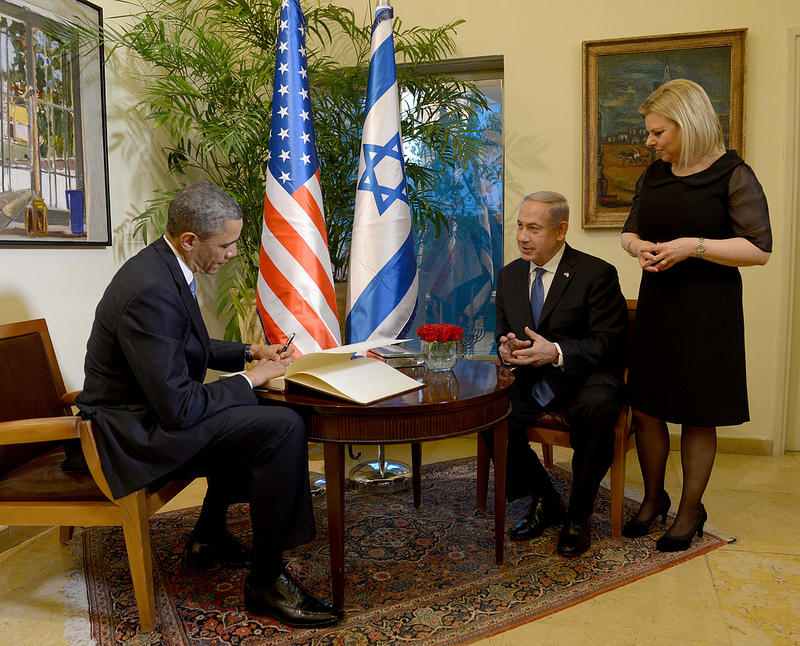
President Obama visits the residence of Israeli Prime Minister Benjamin Netanyahu and his wife, Sara, March 20, 2013.

by Andrew Wilson, Professor of Scriptural Studies, UTS


WilsonWhat is the work of God as the molder and shaper of the events of history in 2013, and in the Middle East in particular?

The Judeo-Christian Bible speaks to a God active in history. The Hebrew prophets were tasked with discerning God’s hand in the events of their day and thereby to give guidance to kings. Christians in the American colonies recognized the hand of God’s providence in the founding of this nation. President Lincoln recognized the hand of God’s providence when, in his Second Inaugural Address, he described the Civil War as God’s judgment for the sin of slavery, paid for in blood. America’s sense of exceptionalism stems from numerous events in its history understood by faith to be divinely guided, from the American Revolution even to the rise of American power in the 20th century to lead the fight against fascism and communism.

The modern State of Israel is another nation where many Christians and Jews have seen the hand of Divine Providence. The remarkable story of its founding in 1948 and its survival through the trials of the Six Day War and Yom Kippur War against larger Arab forces have been widely celebrated as indications that Israel exists by the hand of God.

Continue Reading

Website Built with WordPress.com.

Up ↑