Cognitive Dissonance and the Human Fall

67072032.m7FEN4ki.Mainz69

By Gordon L. Anderson

GordonI find it increasingly difficult to talk about the human fall in a secular culture by using scriptural justifications. The Divine Principle is a book written in the language and culture of Judeo-Christian thought, but the language of our current culture is more shaped by universities than by churches. I have found audiences show greater understanding of concepts like the Fall when using terms from social psychology.

Reaction and integrity

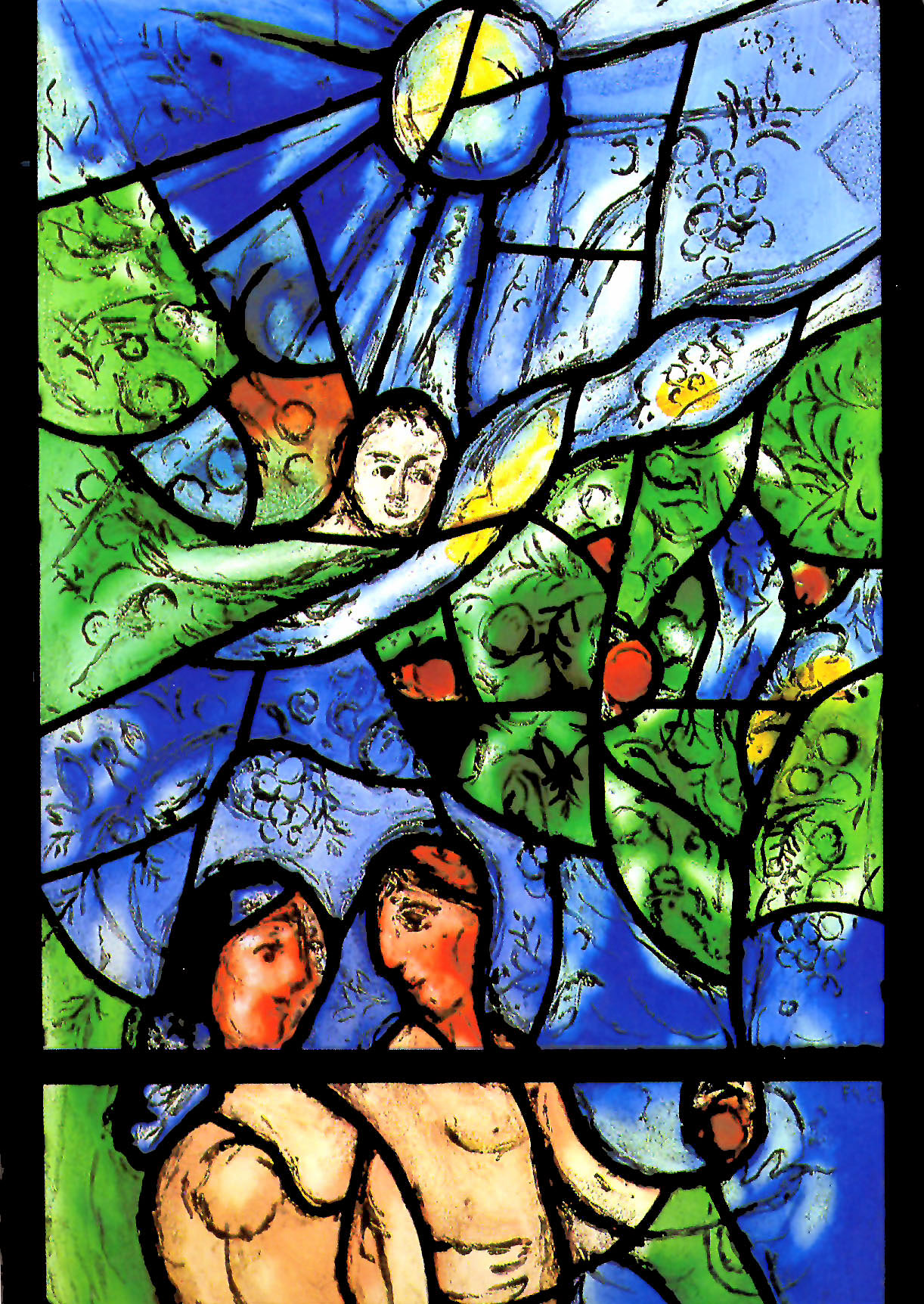
My basic position is that reaction is a characteristic of the growth stage and integrity is characteristic of the perfection stage or maturity. Adam and Eve were given a commandment “not to eat of the fruit” when they were children because they did not live in a state of integrity, and were subject to impulsive reactions. Adam and Eve fell at the top of the growth stage through such a reaction and disobeyed the commandment. If they had reached integrity they would understand the consequence of their actions and would not have acted blindly. Obeying the commandment would have kept them on course so they could each grow to maturity and be in a position to raise children from integrity before consummating their marriage.

Cognitive dissonance

The concept of “cognitive dissonance” can help us understand the motivation for the human Fall. Cognitive dissonance is when we expect one thing based on our beliefs and understandings, but experience something else. Cognitive dissonance causes frustration and is uncomfortable.

Continue Reading→

Want To Be a Minister?

Silohuette of Preacher

By Tyler Hendricks

14_12_CfE_Tyler 10.55.08 pmThe path to professional ministry would seem to be simple, but it is very complex — for the aspirant and for the community they hope to serve.

In order to ordain their spiritual leaders, i.e., pastors, religious institutions have to: define their purposes, their beliefs, their standards of practice for members as well as leaders, put all this in writing, and set up methods to inculcate these things. Methods include general pastoral care and education as well as pastor preparation, measuring people’s performance in achieving them, and helping people overcome their failures in achieving them.

One indicator of the difficulties involved is that our Unification community, after over 60 years of formal existence and spreading throughout the world, has no ordination. What does one do to become a Unificationist pastor? What do pastors do? Do we even want pastors? Should pastors get paid? How do we assign a pastor to a congregation? By election or appointment? We have no formal or consistent answers to these questions.

Another indicator is the fact that it was not until now that we in the U.S. have set forth publically what it means to be a Unificationist, what is unique about us, what is our position on smoking and drinking, abortion, religious freedom, and many such matters (to get involved in this discussion, see the PDF “FAQ” on the FFWPU-USA site).

From the viewpoint of human history, this is not surprising. It takes religions a long time to decide these things. And there is a very compelling reason: in reality, for religions that last, the answers to these questions are not decided by theory, but by practice. We could call it “form follows function,” or use the traditional saying, “necessity is the mother of invention.”

What follows is a progress report on how this is working for our Unificationist community here in the U.S.

Continue Reading→

An Inquiry into “Parallels of History”

Libro_historia

By Michael Mickler

Michael_MicklerUnificationists are, if anything, a people who take their history seriously. Reverend Moon continually spoke of divine providence in his speeches and sermons. Wolli Kangron (1966), translated into English as Divine Principle (1973) and Exposition of the Divine Principle (1996), also focuses to a large extent upon historical matters, devoting more than half its content to a comprehensive survey of salvation history.

Unificationists, likewise, are encouraged to view themselves as being responsible for “all the unaccomplished missions of past prophets and saints who were called in their time to carry the cross of restoration.”

A striking feature of Unification theology is its exposition of “parallels” in history. The basic premise is when a “central figure” fails to fulfill his or her portion of responsibility, God will set up another person in place of the former.

This applies not only to individuals but also to collectives. The Principle focuses special attention on “parallels of history” between Judaism and Christianity. It highlights six specific parallels:

  1. Israelite slavery in Egypt and Christian persecution under the Roman Empire;
  2. Israelite conquest of Canaan under the Judges and Christian conquest of Rome under the patriarchs;
  3. The United Kingdom under King David and the Holy Roman Empire under Emperor Charlemagne;
  4. The Divided Kingdoms of North and South (Israel and Judah) after Solomon and the Divided Kingdoms of East and West (Germany and France) after Charlemagne’s successors;
  5. Jewish Captivity and Return (from Babylon) and Papal Exile and Return (from Avignon, France);
  6. Jewish Preparation for the Advent of the Messiah (from Malachi) and Christian Preparation for the Second Advent of the Messiah (from Luther).

Continue Reading→

Transcending Cain and Abel: Revolutionary and Reactionary Consciousness

cain-slaying-abel-jacopo-palma-1590

By Gordon L. Anderson

GordonIn the Divine Principle, the biblical story of Cain and Abel is seen as two brothers in a fallen family. Abel’s offering was accepted by God and Cain’s was not; Cain got angry and killed Abel and then fled his parents to start a new life. Abel is described as “closer to God,” but his consciousness is still that of an immature son and not a mature parent.

I often think of Cain and Abel as representing reactionary and revolutionary consciousness in the wider political spheres we see around us today. By “revolutionary” I mean the idea of “revolt” like Cain’s, and not peaceful revolution. These two different approaches to politics each claim to be right and when they compete with one another for political power, often end up repeating the “Fall” on a national scale.

Human society is always evolving as changes in science, technology and population lead to changes in human life. The reactionary refuses to adapt and looks for refuge in the past. The revolutionary recognizes the need for change but wants to violently jettison the past. The French Revolution and Communist Revolution in Russia are examples of “Cain-type” revolutions that led to violence and murder on a massive scale. By wiping out the traditional “reactionary” rulers, the Ancien Regime in France or the Czarist feudal system in Russia, and starting over, creating a new society, they ended up re-inventing many wheels and causing much evil, death and human suffering.

In developmental psychology, Cain and Abel attitudes represent typical responses of children who begin to compare and question at age 12 or 13. Children are born like sponges and soak up the environment of their parents and nurturers; they initially know no other way of life than the traditions they are given. However, as they begin to individuate, particularly in middle school, they begin to compare their lives to those of other schoolmates who came from different homes, with differences in wealth, discipline, religion, family integrity, etc.

Continue Reading→

My Journey to Become a Hospital Chaplain

Chaplain Journey Final - press quality JPG

By William P. Selig

WS CU cropIt was early morning at the hospital when I was called to an elderly patient’s room. The son and his family had driven all night to be there. As I entered the room, it was as if a curtain was being drawn open, a spotlight appeared, the audience hushed, and the performance was about to begin. There were no introductions, not a single word was spoken. Somehow everyone “knew” me. Frankly, they knew me even better than I did – the chaplain is here.

In that spirit-filled atmosphere, my heart “heard” and understood that we were in the midst of a sacred moment. We stood around the bed and held hands. As a prayer came from my lips, in the background I could hear the weeping of the family and relatives. When I stopped speaking and opened my eyes, I felt like a spent rain cloud. Everyone was looking at me. After a moment, the patient whispered, “Thank you, pastor. Your words filled my soul.”

So many times I have seen how the power of prayer brings a sense of connection to God’s love and healing power. When a patient is lying in bed feeling distressed and anxious, prayer has the potential to provide spiritual healing and bring a sense of harmony and wholeness. Make no mistake. Spiritual pain and fear are just as real as physical pain.

My journey to become a chaplain truly has been a blessing. As much as God has used me to touch the lives of so many patients, family and staff, I have to testify that I too have been touched and my own spiritual growth has benefitted. More than once, I’ve wondered who gains more from the encounters: the patient or myself?

Continue Reading→

Race, Student Motivation, and the Achievement Gap

elementary-classroom

By Gordon Anderson

GordonIn many policy discussions about the “achievement gap” between whites and minorities in public schools, racism and insufficient public funding of schools are frequently given as the primary reason for the gap. But is blaming race or schools getting to the heart of the achievement gaps that exist today? Or, are social factors related to the motivation and preparation of students more important than either of these policy-driven reasons?

Most public schools are not consciously racist

While some individuals employed by public schools may be racist, and some subconscious racial practices may still exist, racist laws related to segregation and civil rights are largely a thing of the past. Further, the increased diversity and intermarriage in urban American melting pots has tempered old racial stereotypes. Especially, government laws and inner-city school policies have consciously strived to eliminate racism from schools over the last 50 years, and often extra programs are funded to help failing students catch up to others.

Yet, newspapers continue to report that inner-city public schools experience greater delinquency and lower performance among racial minorities. And, for at least the last 30 years, legislators have tried to address the achievement gap by earmarking extra funding for public schools in inner cities. However, performance disparities have not improved; if anything, the “achievement gap” is widening. Are minorities failing because of their race, or are other reasons like socialization of children more important?

Government statistical practices promote racial stereotypes

Social scientists can study whether race, or racism, is the strongest correlate to student failure or whether there are other factors. Because of the tragic history of slavery in the United States, statistics are often promoted racially. When schools report to governments on student achievement, they are asked to do so by race. So charts based on statistics from departments of education get generated like this:

Continue Reading→

“Scaffolding” the Principle

Statue_of_Liberty_restoration_project copy copy

by John Redmond

JohnRedmond2Instructional scaffolding” is an educational term that borrowed its imagery from bricklayers and construction workers.  Scaffolding is a temporary structure for workers to stand and climb on so they can build, repair or restore a more permanent structure.

In educational terms, scaffolding is temporary support given to students to help them approach a complex subject by building on things they already know.  A five-year-old student learns about animals starting with cats and dogs.  They can then associate these understandings with lions and wolves.

Abstract concepts can be explained by similar substantial relationships.  For instance: “The relationship between humans and God should be like the relationship between mind (heart) and body.”

All teachers use these tools both intentionally and subconsciously.  Jesus used parables and Reverend Moon used many examples and analogies, often acting them out.

Where to place the scaffold

An important concept is that the “scaffold” be constructed in the “zone of proximal development.”

This means the teacher has to be familiar with the cultural, intellectual and emotional level of the student and use appropriate models to reach him or her. Instruction for elementary students that depends on them knowing advanced math will fail.

The Divine Principle text uses many examples and analogies appropriate to college-educated Korean Christian audiences and has been re-edited many times to strengthen the bridge to different cultures and audiences.

Continue Reading→

The Need for a Critical Edition of Reverend Moon’s Words

rsmm

By Andrew Wilson

WilsonIn the history of religion, the work of collecting and preserving the founder’s words normally becomes a priority in the years immediately after his passing. Thus the Gospels were collected and written some 40 years after Jesus’ passing, and the leaves of Muhammad’s revelation were collected as the Qur’an within 20 years of his death. This same priority is emerging in the Unification movement.

Although the UM enjoys all the advantages of modern technology for preserving and publishing the words of the founder, technology also makes it easy to edit those words before they reach the printed page. The question of possible distortions introduced by editors, or allegations of such, becomes even more acute in light of the current controversies over Reverend Moon’s words pursuant to claims over succession.

The FFWPU has been consciously setting up a corpus of official writings, all based upon selections from Moon Sun Myung Seonsaeng Malseum Seonjip (Sermons of the Reverend Sun Myung Moon), but the large corpus of his sermons given over more than 60 years, even some of the texts in Malseum Seonjip, may suffer from distortions. There is need for scholars to establish a critical edition of the Rev. Moon’s sermons that preserves what he spoke in exact detail.

Having been involved in editing Rev. Moon’s translated speeches for over 20 years, I learned some of the challenges the task of translation requires. For example, for World Scripture and the Teachings of Sun Myung Moon (2007), the translation work occupied the editors and their staff for two full years. Korean and English are so dissimilar that translation between them is extremely difficult. Furthermore, Rev. Moon had a unique vocabulary and often gave his Korean words shades of meaning distinct from secular Korean. However, while it is well known that many existing English translations fall short, I came to recognize that there are problems in the underlying Korean as well.

Continue Reading→

Founder’s Address: UTS Inaugural Convocation

vlcsnap-2015-10-01-14h44m15s558

The following address was given by Reverend Moon at the Inaugural Convocation of Unification Theological Seminary in Barrytown, NY, 40 years ago on September 20, 1975. Click here to watch the highlight video of the event.

by Rev. Dr. Sun Myung Moon

Honorable Mayor, distinguished guests, respected seminary faculty and students, ladies and gentleman:

It is my utmost pleasure to extend my warmest welcome to all of you present this morning at the Inaugural Convocation of our Unification Theological Seminary.

I deeply appreciate your coming here. I feel honored, especially because to my knowledge the attendeess here are, without exception, those who have been greatly concerned about the Unification Church. We have recently had the close attention of American society drawn to us, and the unreserved encouragement and support from many of you justified and strengthened our work.

As the founder of the Seminary, I want to assure you that we will do our very best to repay your friendship and good will toward us. May our mutual friendship be a lasting one in the divine will of God!

In history, there have been philosophies and religious doctrines working in the backgrounds of politics, economics, the arts and religion. Nevertheless, the reality is that they are all stalemated, resulting in confusion and chaos, without having brought about the realization of their promised ideal worlds.

Faced with this stalemate, people are turning in every direction in search of someone to take up the gauntlet for all people and pioneer a new way for humanity, straightening and guiding their direction towards a clear and achievable goal.

The people cry in unison, “Something is desperately wrong!” We have tried every possible way to diagnose and cure the sickness in society. We have finally concluded that the cause of the sickness is an internal disease and not external. By having emphasized the external elements, we have lost the intrinsic and central element of our existence. We are left without hope.

What is the intrinsic and central element which man lost? If we go back to the very beginning, we can readily understand that the greatest cause of the sickness is that man lost God, who is the very source of his life. With the loss of God, man lost sight of the absolute value and focal point of life.

Continue Reading→

Website Built with WordPress.com.

Up ↑