“You’re Not Really an Adult Until Your Father Dies”: Reaching the Highest Stage of Filial Piety

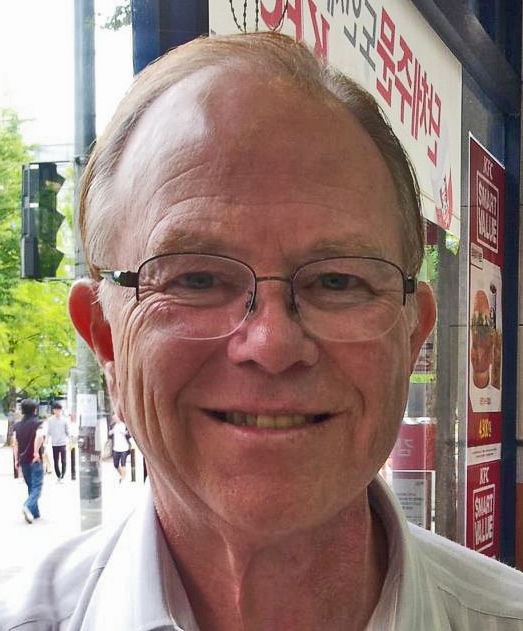
By John Redmond

IMG_9544In the current era of the development of our Unification movement, and the primacy of central blessed families, filial piety is an important measure of our behavior and an undeveloped aspect of the Divine Principle.  So what is it and how does it work?

According to Taoism.net:

“Filial piety consists of several factors; the main ideas include loving one’s parents, being respectful, polite, considerate, loyal, helpful, dutiful, and obedient.”

In our American experience, this narrow definition seems like an old-fashioned way of thinking about one’s responsibilities. The Sixth Commandment is “Honor thy father and mother,” but most Christians read that as respect, not worship.  They reserve worship and absolute obedience for the invisible God.

Confucianism does not have the common Judeo-Christian understanding of an invisible personal God. Rather, Confucius emphasized the ethical framework that automatically led to goodness, perhaps the way a good diet automatically leads to a healthy body.  His idea of the “Mandate of Heaven” was meant to occur naturally as people recognized goodness and naturally surrendered to it.

Continue Reading→

The Blind Leading the Blind (or, Life without True Parents)

Detail from “The Blind Leading the Blind” by Sebastian Vrancx.

By Gordon Anderson

Gordon“The blind leading the blind” can be used to describe Western politics and education today. There are, of course, very smart and shrewd politicians or scientists. But, when it comes to knowledge of where we want to go and how to get there, our present culture can be described by this ancient metaphor taught in the Bible, the Upanishads, and Roman classics. As Sextus Empiricus wrote in Outlines of Scepticism: “Nor does the non-expert teach the non-expert — any more than the blind can lead the blind.”

A civilization contains the accumulated experiences of those who have come before, and civilizations continue to adopt new discoveries. However, in the 20th century, the West largely put aside civilizational wisdom, taught by families and religions, and attempted to substitute it with a new-found faith in modern science and the state. The Encyclopedia Britannica exemplified this shift.

Continue Reading→

Time for a New American Unification Renaissance

visits-a-ration-board-1944_edited-1

By John Redmond, Chief Financial Officer, UTS

IMG_9544I remember when we got the direction to return to our “hometowns” and make a tribal messiah foundation.  Looking around the room, one sister spoke for many when she said, “I grew up in five or six towns and my parents were divorced – where do I go?”

America has been the home of the seekers of new opportunity and new adventures since its founding.  Early settlers came for either God or gold, and sometimes both.  The waves of immigration that have filled America with every language and color have been good to America. The bravest and brightest often end up here as opposed to staying in a confined homeland of limited possibilities.

Continue Reading→

Using Art and Culture to Effect Change

only_through_beauty_david_eaton_01

David D’Or and David Eaton share a bow with the Evergreen Symphony Orchestra at the National Concert Hall in Taipei, Taiwan.

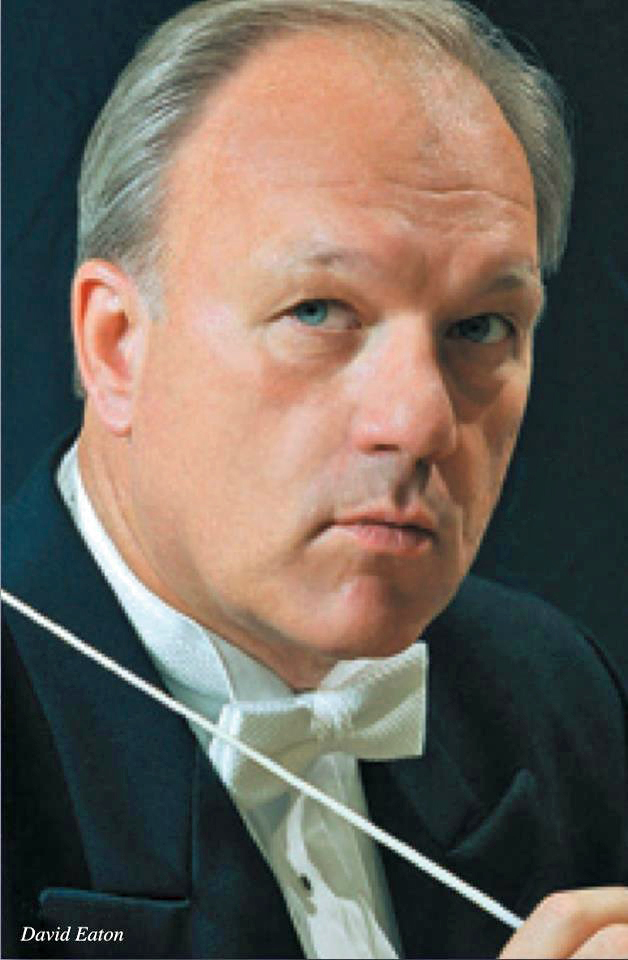
By David Eaton, Lecturer in Music and Culture, Barrytown College of UTS

“Only through Beauty’s morning-gate, dost thou penetrate the land of knowledge.”

 – Friedrich Schiller

david_eatonAs an advocate of art and culture, it has always been my view that the beauty aspect of the truth-beauty-goodness paradigm needs to be more fully understood and supported in any attempt to realize a better world. I’ve had many opportunities to use my talent for providential purposes, both within our community and with artists who are not members of our church, and at the heart of my creative endeavors has been my motivation to use my God-given abilities as a musician to promote the ideal of godliness and to cultivate a culture of peace.

Friedrich Schiller (1759-1805), who as a young man possessed a passionate desire to study theology and become a minister, believed that one’s soul state (Seelenzustand) was edified through experiencing beauty. For Schiller, “aesthetic education” could be the basis for a moral society and help establish the freedom that political revolution conspicuously failed to achieve.

I recently returned from conducting two concerts with Israeli vocalist, David D’Or and the Evergreen Symphony Orchestra at the National Concert Hall in Taipei, Taiwan. The concert was produced by the Tzu Chi Foundation, a Buddhist organization founded in 1966 that boasts three million members and scores of chapters throughout the world. Tzu Chi (which means “relief and compassion”) is based in Taipei and has done an amazing amount of humanitarian work, including providing assistance in the aftermath of hurricanes Katrina and Sandy, the Japan tsunami and relief efforts in North Korea. The American chapter of the Tzu Chi Foundation received a national award for being the most outstanding volunteer organization in the U.S. in 2012, due primarily to their relief efforts after Hurricane Sandy.

In addition to running several schools, hospitals and free clinics in Taiwan, Tzu Chi has its own cable television network that broadcasts the news of their global relief efforts as well as programming original content that promotes 24/7 the ideals and vision of their organization. They clearly understand the importance of using mass media and art to get their message to a larger segment of the public

While in Taiwan, I was able to meet the Tzu Chi founder, Master Cheng Yen (a Buddhist nun, now 76) and several of the organization’s key leaders. They explained that music and art are important aspects of their outreach. Their belief in the spiritual power of music plays heavily into their philosophy — and their funding efforts. For the two concerts presented last month I arranged one of the Tzu Chi songs, Family, especially for this occasion.

Continue Reading→

A Challenge for the Divine Principle in the Postmodern Era

Facebook Connectivity 2010

A 2010 map displaying the connectivity of Facebook’s 1.1 billion global users (click to enlarge).

Keisuke Noda, Professor of Philosophy, Barrytown College of UTS

Keisuke_NodaCan the Divine Principle be attractive to others in the 21st century, or at least for the next 10 or 20 years as our Church’s 2020 goals envision? In Unificationist communities, that question has sparked the development of practical or technological methods of communication/presentation. People have created and re-crafted charts, slides, and PowerPoint presentations and will continue to do so.

The development of these materials is certainly a worthy endeavor, but another way to pose this question is to ask how the Principle answers the questions of the era or the “spirit of the time” (Zeitgeist). Although believers claim that religious teachings reflect truth that is eternal, ideas affirm their validity by responding to the questions of the era. Leading ideas must in fact “lead” the time by demonstrating their validity to people who are desperately trying to find their way. Thus, Unificationists must understand the intellectual climate that we live in if the Principle is to become a leading idea.

During the late 20th century, the United States and other developed countries underwent a major shift rooted in the comprehensive critique of modernity. It is imperative for any intellectual to understand this shift and the intellectual horizons that frame the climate today, known as postmodernism.

What Is Postmodernism?

Postmodernism is a concept that describes a general intellectual stance or tendency towards modernity. As the term post (“after”) modernism indicates, postmodernism is a departure from modernism based on a critical assessment of modernity. It is, in essence, skepticism towards basic assumptions of modernity. Postmodernism is a broad term which encompasses all social cultural spheres including architecture, art, literature, literary criticism, business, management, politics, economics, philosophy, religion, and others. It is a term that can be seen as describing the spirit of the age (Zeitgeist). Postmodernism is distinguished from being just a “trend” because of its lasting and penetrating effects on all spheres of life.

Modernity, as postmodernists see it, is a social, cultural, political wave that lasted for centuries, from the Enlightenment to the late 20th century. Despite the diverse views and ideas encompassed within modernity, modernity was based on certain assumptions that postmodernists later questioned.  Postmodern thinkers have taken a variety of approaches, but the following are a few basic criticisms of modernity by Jean-François Lyotard, a French philosopher.

Continue Reading

Designing and Managing Ethical Organizations

code-of-ethics

By Denis Collins, Professor of Management, Edgewood College

denis127So, you want to create heaven on earth! Unificationists are well aware that people should be at their spiritual best all the time — which means at work too. We spend a great deal of our time on earth working. Some Unificationists have created businesses, some work in church businesses, and others work hard for non-member businesses and organizations.

Unfortunately, work is often organized in a way that is spiritually stifling and degrading. Everyone is morally flawed and, as such, we do things at work that damage, rather than heal and grow, our spirits. For instance, employees are sometimes tempted, or instructed, to mislead customers about product quality, or to treat each other disrespectfully.

Yet business owners and managers possess a unique position to significantly impact the spiritual development of others and, in the process, heal themselves by designing ethical organizations and reinforcing ethical behaviors at work. Unificationists, grounded in church providential theory, should be at the forefront of designing and managing ethical organizations.

How can organizations be designed to maximize ethical behaviors that help people spiritually flourish? This question was one of the reasons why I quit my corporate job in 1978 and joined the Unification Church. It remained on my mind while studying at Unification Theological Seminary from 1980-83, and it has dominated my teaching, writing and research for more than 20 years as a professor of business ethics at the University of Wisconsin-Madison, University of Bridgeport, and now Edgewood College.

I have developed a systematic Optimal Ethics Systems Model based on the 90 best practices in business ethics, sorted into eleven integrated elements. The model begins with determining the ethics of job candidates and then orienting them to the organization’s code of ethics and ethical decision-making process. It recommends conducting ethics and diversity training on at least an annual basis and implementing an ethics reporting system. Managers must model ethical leadership, and work with employees in developing ethical work goals and performance appraisals.

The last three elements of the model include adopting the best practices for environmental management and community outreach, and assessing the performance of each element. By systematically implementing all the Optimal Ethics Systems Model elements, an organization will not only attract employees desiring to experience spiritual transformation through work on a daily basis, but also have in place structures, policies, and processes that will aid employees with their daily spiritual development and engage them in a transcendent vision (An assessment checklist of the 90 best practices is available upon request by emailing the author).

Continue Reading

The Cherished Hope of Korean Unity

Two Korean Flags

Our cherished hopes are for unity
Even our dreams are for unity
We’d give our lives for unity
Come along unity.
Unity saving the people
Unity saving all nations
Come here quickly unity
Come along unity.

By Michael P. Downey

DowneyThe “Song of Unity” is a well-known and loved folk song that expresses the ardent desire of the Korean people to see their peninsula re-united into one nation. Or is that wishful thinking?

As an American living in South Korea continuously for over 13 years, it has been more than a passing interest to me what the Koreans really feel about unification. Over the years I have talked to neighbors, friends and students about this issue. More often than not, when talking to foreigners, Koreans try to figure out what you want to hear and give you some version of that. To get around this, I have developed a strategy of asking simple, direct questions.

Of course, the standard reply is that we are all brothers and at all cost we have to be united as one nation. When I probe deeper, many times quite different ideas come out. Recently I did an informal and unscientific survey using three direct questions. I asked 100 ESL students ranging from middle school students to middle-aged housewives, the following questions.

1.     Is the reunification of Korea important to you?

Almost everybody immediately said “yes.” A couple of middle school wise guys said “no, who cares.” 98% yes, 2% no.  As a follow up, I asked, “Which is more important to you, unification or getting into a top university (or, your son or daughter getting into a top university)?”  This time, 30% said unification and 62% said a top university; the rest couldn’t answer.

2.     Do you think you will see North and South Korea united in your lifetime?

 44% said “no,” 31% said “yes” and the rest said they didn’t know. For a follow up, I asked, “How do you think unification will happen?” Most replied by talking about a gradual process of easing of tensions, increasing culture and commercial exchanges and fielding joint sports teams at international events being the preferred way. Only a handful of people talked about regime change in the North.

Continue Reading

Educating the Whole Person: A Unification Improvement

Office training

By John Redmond, Chief Financial Officer, UTS

IMG_9544I spent ten years as a corporate training manager for community colleges.  My job was to go out to industry, large and small, and help design training for manufacturers.  Local manufacturing companies are highly prized as economic development engines.  Every job created by a medical products company for instance, whose customers are national and international, creates five to six other local jobs — teachers, tire salesman and restaurants owners to name a few.  Any improvement in the efficiency or effectiveness of a manufacturing company improves the community around it.

One thing I noticed is that modern companies hire very few people just because they have a strong back or only obey orders.  Karl Marx had a theory that people are just economic animals,  programmable entities that are interchangeable, like light bulbs.  He called it the Labor Theory of Value, and many companies built their success on this model in the 19th and early 20th centuries.  Since then, forklifts and robots have replaced a lot of the strong back, quick fingers work that used to characterize American labor.  Marxists adjusted their theory to include intellectual labor. They said the brain produces ideas like a gland secretes hormones.  This works for engineers, who work with “stuff” and can work alone, but it does not explain the modern creative wave that gave us, for instance, Apple, Inc., or GPS navigation systems.  Successful education in the real world includes creating the conditions that allow a continuous flow of “cool” ideas that can be marketed in “cool” ways and make lots of cash and stock options.

In modern companies, workers get promoted if they are responsible and creative and can play well with others. The creative ideas that a team can unleash often overshadow that of a lone genius toiling away in a lab.

Continue Reading

Website Built with WordPress.com.

Up ↑