Memoirs of a Unification Church Photographer

Owens Front Cover

By Ken Owens

Ken OwensI had been asked by many friends, and my wife in particular, to write a book about my years in the Unification Church, founded by Reverend Sun Myung Moon, and my 33 years of experiences photographing True Parents. Somehow, the day I celebrated my 65th birthday, something suddenly urged me to get it done. I had written a few short testimonies, but the book was to be more in-depth, incorporating experiences, articles I’d written, dreams, a revelation, and a vision I received from God.

There are many hundreds of elders, and brothers and sisters, who had been with True Parents far longer than I, are far more deserving than I, and who have had many more cherished, intimate moments with them. That I was able to have some moments with True Parents was a great blessing.

Here are just a few of the experiences I had with True Parents.

The first time I ever saw True Parents was in Hawaii in 1974

I had just returned from my second tour of duty in Vietnam and participated in trying to keep the 1973 Yom Kippur War from becoming World War III. When I arrived back in Honolulu, everything changed from a quiet center in an apartment building to a house behind Waikiki Beach, where everything was centered upon True Parents’ arrival for a major speech. To top it off, Rev. Ken Sudo was about to arrive with his International One World Crusade team of French and German members to witness to people to come to the banquet.

Continue Reading→

On the Internal Meaning of Lineage

By Andrew Lausberg

75995_459821110372_999357_nIn the teachings of Reverend Sun Myung Moon, lineage comes up time and time again. Lineage is cited as a significant element in a number of ways: the need to restore humanity, originally of God’s lineage, from Satan’s lineage back to God’s lineage; the significance of lineage in terms of a person being chosen by God for providential work; the significance of lineage in terms of what kind of sin needs to be resolved on earth; etc.

Despite the prominence of lineage as a concept in Rev. Moon’s teaching, there is surprisingly little extrapolation on the topic. He frequently used all sorts of real world and theoretical examples to illustrate his understanding of how God’s creation works. Concepts such as internal and external, vertical and horizontal are pivotal to illustrating the ideas he is dealing with. The Principle itself goes into the idea of “spherical movement” of living beings. How then does lineage fit into this conceptual framework?

In many cases, Father Moon discusses different dimensions. Consider the eight-stages of restoration. He describes eight horizontal stages: individual → family → clan → ethnic group → nation → world → cosmos → God; and eight vertical stages: servant of servants → servant → adopted child → stepchild (or illegitimate child) → true child → mother → father → God. We can understand that these two dimensions as interacting or interfacing like an x and y axis. At any given point in time, a person may be at one of the horizontal levels, such as at the level of nation. By this, we mean that the person is dealing with issues that impact on a national level of existence.

Likewise, at any given point, a person may be at a vertical stage of restoration or growth, such as the stage of adopted son. We mean that the person is dealing with issues that impact or are related to a quality of relationship typified as that of an adopted child and his or her adopted parent. One axis deals with dimensions of human existence embodied in larger or smaller social groupings, the other deals with dimensions of relationships of heart — equated with “internal dimensions.”

Continue Reading→

King Sejong and Unificationism

KingSejongPainting

By Amanda Hokanson

AmandaHKing Sejong[1] is one of the greatest leaders in all Korean history. He is often referred to as one of the most outstanding exemplars for those in the Korean business world. I am descended from him on my Korean side with the surname Yi (李) of Jeonju (全州). King Sejong became a recognized figure because his leadership style aligned with universal principles, which also happen to coincide with our beliefs. I argue that his character and values were also similar to Reverend Moon’s.

King Sejong was born on the tenth day of the fourth month in 1397, by the lunar calendar.[2] He was the grandchild of King Taejo of Joseon[3] who established the Joseon Dynasty (1392–1897), which arose after the fall of Goryeo (918–1392). King Sejong ascended the throne at the age of 21 as the fourth king of Joseon (r. 1418–1450) after his father, King Taejong of Joseon. At the time of his ascension, Joseon was still unstable. It was a new dynasty in dire need of a leader with a strong heart and mind in addition to skill. As history has shown, King Sejong more than lived up to what had been expected of him. He played a major role in stabilizing Joseon and is recognized for his exceptional leadership.

His leadership inspired some of the greatest scientific and cultural advancements of his time, including applying advanced arithmetic to farming and calendar development; producing astronomical charts and 347 books of musical scores; as well as developing the Korean alphabet.[4] All this was achieved during the 32 years of his reign.

If we parallel parts of King Sejong’s era with ours, we realize that we too are striving to establish a new nation: Cheon Il Guk. That is our ultimate goal. Thus, if we draw out some common basic principles, we may be able to discover that we can learn something from history.

Continue Reading→

Applied Unificationism’s Third “Blog-iversary”

3rd-birthday-cupcake

The Applied Unificationism (AU) Blog launched three years ago on May 1, 2013. Its host, Unification Theological Seminary, aimed to create a site where worthy ideas applying Unificationism to all aspects of society could be regularly discussed among members and friends of the FFWPU and related organizations. We have also sought to make it a place where the future of the Family Federation and its work may be thoughtfully discussed. We post new articles several times a month.

To date, the AU Blog has received over 155,000 page views from 191 countries and territories, with 575 email followers, published 180 articles and posted over 1,450 comments. Our posts are regularly referred from Facebook, Google Search, email discussion groups, and the UTS Alumni site, among others. Our active Twitter feed is @UTS_AU_Blog and our Facebook page links to every article posted.

The AU Blog provides a responsible forum where Unificationists worldwide can discuss social, political, economic, and cultural, as well as theological and governance issues, from a Unification perspective.

Some articles have generated a large number of site hits, in several cases over 1,700 in a day. Our top article in the past year was “The Only-Begotten Daughter” by Dr. Andrew Wilson. Article contributors include UTS faculty (current, former, full-time, and adjunct) and a growing broad range of writers from around the world. Some authors are UTS graduates but many are not.

We post occasional film and book reviews, and have also published several collections of poetry. We especially encourage submissions from second generation Unificationists. As always, we welcome new op-ed/commentary submissions of 1,200-1,800 words (see our guidelines). To submit an article or review for consideration by the AU Blog, email the Managing Editor, Dr. Mark Barry.

If you haven’t already done so, please “Follow” the AU Blog by signing up on our home page to receive an email each time we post something new. We look forward to your continuing engagement with the AU Blog in its fourth year of operation.

Dr. Mark P. Barry
Managing Editor, Applied Unificationism

Want To Be a Minister?

Silohuette of Preacher

By Tyler Hendricks

14_12_CfE_Tyler 10.55.08 pmThe path to professional ministry would seem to be simple, but it is very complex — for the aspirant and for the community they hope to serve.

In order to ordain their spiritual leaders, i.e., pastors, religious institutions have to: define their purposes, their beliefs, their standards of practice for members as well as leaders, put all this in writing, and set up methods to inculcate these things. Methods include general pastoral care and education as well as pastor preparation, measuring people’s performance in achieving them, and helping people overcome their failures in achieving them.

One indicator of the difficulties involved is that our Unification community, after over 60 years of formal existence and spreading throughout the world, has no ordination. What does one do to become a Unificationist pastor? What do pastors do? Do we even want pastors? Should pastors get paid? How do we assign a pastor to a congregation? By election or appointment? We have no formal or consistent answers to these questions.

Another indicator is the fact that it was not until now that we in the U.S. have set forth publically what it means to be a Unificationist, what is unique about us, what is our position on smoking and drinking, abortion, religious freedom, and many such matters (to get involved in this discussion, see the PDF “FAQ” on the FFWPU-USA site).

From the viewpoint of human history, this is not surprising. It takes religions a long time to decide these things. And there is a very compelling reason: in reality, for religions that last, the answers to these questions are not decided by theory, but by practice. We could call it “form follows function,” or use the traditional saying, “necessity is the mother of invention.”

What follows is a progress report on how this is working for our Unificationist community here in the U.S.

Continue Reading→

Justice, an Antiquated Notion

behindbars

By Alison Wakelin

Alison WakelinThe American justice system, “the best in the world” as we often hear on Sunday morning talk shows, has become a travesty of its former self. Even the most foundational of truths, the presumption of innocence until proven guilty, is under severe threat today. Like justice, it is becoming an antiquated notion.

Twenty-five percent of people in jail in this nation have not been convicted of any crime but are confined because they cannot come up with cash for bail. And for what are they waiting? Most of us assume they are awaiting trial, but it turns out only 3 percent of them will actually get a trial. 97% will plead guilty to something, even if they are totally innocent, rather than risk a longer sentence by appearing before a jury, on the advice of their defense attorney. This defense attorney may well have spent only five minutes reviewing the case before giving this advice, because it has nothing to do with the defendant. It has everything to do with the system.

In too many states, there is no requirement a prosecutor demonstrate criminal intent. Possibly for those who can afford an expensive defense attorney, this would be brought up as a defense, but generally, intent is irrelevant. Overwhelming numbers have now been criminalized by the system, as evidenced by the fact that with 5% of the world’s population America has 25% of the world’s prisoners. It seems highly unlikely that Americans are so much more inclined than the rest of the world to have criminal intentions, and so we must look elsewhere for an explanation.

The result of these overwhelming numbers has been a great increase in funding for prosecutors, with no corresponding increase for defense. It is a prosecutor’s dream. And to assure convictions, prosecutors simply have to add in a charge that carries with it a six-year mandatory minimum sentence. Few defendants are willing to risk this when they can plead guilty to a lesser charge that puts them in jail for a mere few months, or even lets them out with only probation.

Continue Reading→

Hollywood, Sexuality and Cultural Marxism

Satan_before_the_Lord

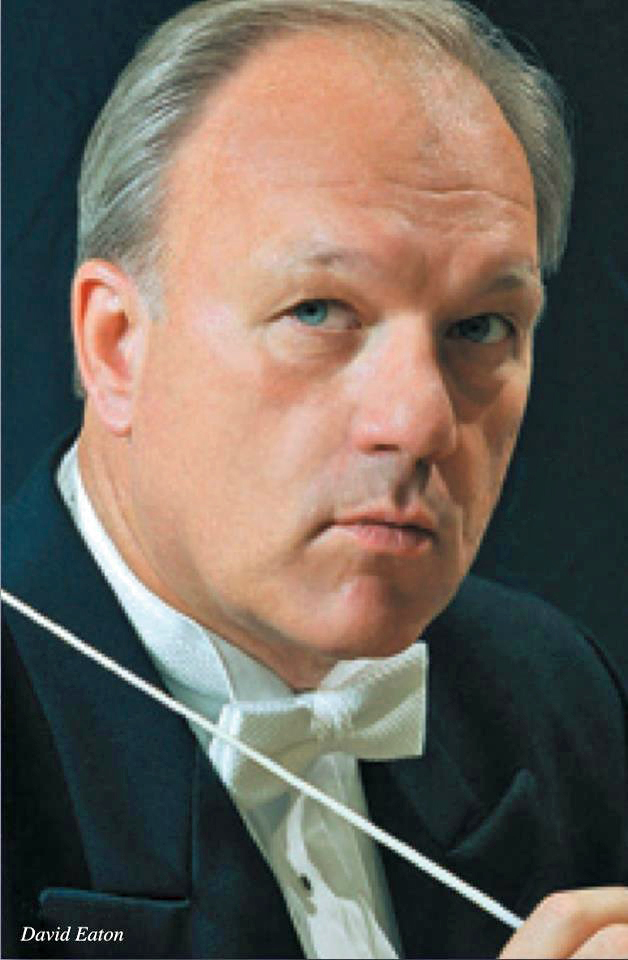
By David Eaton

david_eatonConfucius once averred:

“If one should desire to know whether a kingdom is well governed, if its morals are good or bad, the quality of its music will furnish the answer.”

I contemplated his observation as I watched the telecast of last month’s 88th Academy Awards. If we were to substitute the word “music” with “cinema” or “culture,” the Chinese sage might be more than a bit angst-ridden given the tone and tenor of the Oscars.

Predictably, the show’s host, Chris Rock, pummeled the Hollywood establishment for its lack of racial diversity among the nominees — a major issue in the run-up to the Oscars. But not far from the surface was Hollywood’s seemingly incessant need to sexualize the proceedings. Comedienne Sarah Silverman’s riff on sexual intercourse viz. James Bond, and Rock’s quips, about helping the show’s music director “get l__d at the Governor’s Ball” and the panties of a female pop star in the audience, were reminders of Hollywood’s duplicity in matters of sexual probity.

I wondered how Chris Rock’s Girl Scout daughters reacted to Silverman and their dad’s overt sexual suggestiveness. Surely they were watching (as I was with my 21-year old daughter), and I cringed at the vulgar and completely unnecessary sexual repartee. But here again was an example of the in-your-face sexuality Hollywood both glorifies and aggressively markets while attempting to be viewed as virtuous on other social matters.

To be fair, the serious issue of sexual abuse was front-and-center at the Oscars with “Spotlight” spotlighting the problems within the Catholic Church (and winning Best Picture). “The Hunting Ground,” dealing with the problem of campus rape, was not nominated for Best Documentary Film, but the film’s song, “Til It Happens To You,” was a nominee for Best Original Song.

Continue Reading→

An Inquiry into “Parallels of History”

Libro_historia

By Michael Mickler

Michael_MicklerUnificationists are, if anything, a people who take their history seriously. Reverend Moon continually spoke of divine providence in his speeches and sermons. Wolli Kangron (1966), translated into English as Divine Principle (1973) and Exposition of the Divine Principle (1996), also focuses to a large extent upon historical matters, devoting more than half its content to a comprehensive survey of salvation history.

Unificationists, likewise, are encouraged to view themselves as being responsible for “all the unaccomplished missions of past prophets and saints who were called in their time to carry the cross of restoration.”

A striking feature of Unification theology is its exposition of “parallels” in history. The basic premise is when a “central figure” fails to fulfill his or her portion of responsibility, God will set up another person in place of the former.

This applies not only to individuals but also to collectives. The Principle focuses special attention on “parallels of history” between Judaism and Christianity. It highlights six specific parallels:

  1. Israelite slavery in Egypt and Christian persecution under the Roman Empire;
  2. Israelite conquest of Canaan under the Judges and Christian conquest of Rome under the patriarchs;
  3. The United Kingdom under King David and the Holy Roman Empire under Emperor Charlemagne;
  4. The Divided Kingdoms of North and South (Israel and Judah) after Solomon and the Divided Kingdoms of East and West (Germany and France) after Charlemagne’s successors;
  5. Jewish Captivity and Return (from Babylon) and Papal Exile and Return (from Avignon, France);
  6. Jewish Preparation for the Advent of the Messiah (from Malachi) and Christian Preparation for the Second Advent of the Messiah (from Luther).

Continue Reading→

Transcending Cain and Abel: Revolutionary and Reactionary Consciousness

cain-slaying-abel-jacopo-palma-1590

By Gordon L. Anderson

GordonIn the Divine Principle, the biblical story of Cain and Abel is seen as two brothers in a fallen family. Abel’s offering was accepted by God and Cain’s was not; Cain got angry and killed Abel and then fled his parents to start a new life. Abel is described as “closer to God,” but his consciousness is still that of an immature son and not a mature parent.

I often think of Cain and Abel as representing reactionary and revolutionary consciousness in the wider political spheres we see around us today. By “revolutionary” I mean the idea of “revolt” like Cain’s, and not peaceful revolution. These two different approaches to politics each claim to be right and when they compete with one another for political power, often end up repeating the “Fall” on a national scale.

Human society is always evolving as changes in science, technology and population lead to changes in human life. The reactionary refuses to adapt and looks for refuge in the past. The revolutionary recognizes the need for change but wants to violently jettison the past. The French Revolution and Communist Revolution in Russia are examples of “Cain-type” revolutions that led to violence and murder on a massive scale. By wiping out the traditional “reactionary” rulers, the Ancien Regime in France or the Czarist feudal system in Russia, and starting over, creating a new society, they ended up re-inventing many wheels and causing much evil, death and human suffering.

In developmental psychology, Cain and Abel attitudes represent typical responses of children who begin to compare and question at age 12 or 13. Children are born like sponges and soak up the environment of their parents and nurturers; they initially know no other way of life than the traditions they are given. However, as they begin to individuate, particularly in middle school, they begin to compare their lives to those of other schoolmates who came from different homes, with differences in wealth, discipline, religion, family integrity, etc.

Continue Reading→

Website Built with WordPress.com.

Up ↑