Mental Health is a Spiritual Topic

By Esfand Zahedi

What comes to mind when we hear the term “mental health?” We often consider mental unwellness to mean the presence of undesirable qualities such as anger, depression, guilt, or other negative emotions. Being mentally ill might also mean being a threat to oneself or others.

If these tendencies are not present, suppressed, or visible, we may consider a person to be in a more or less healthy state. This is a narrow way of discussing mental health because we are defining it by a negative condition. To say that mental health consists of the presence of good characteristics is to define it in positive terms. We will understand mental health better if we have a positive and objective definition of mental well-being.

Jesus described this health in terms of a person either “having life” or being “dead,” terms used to refer to people alive from a physical point of view. A person who is truly alive and fruitful is exceptional, and these individuals are the light of the world. Spiritual vitality and not belief in a doctrine is what “having life” means. Many people who are about their worldly business in truth resemble a barren fig tree and are not truly aware and therefore not healthy. Mental health in this sense is not the norm but the exception. The goal of conventional psychology it seems, is not true mental health but adjustment to a minimum standard.

Let us expand our concept of mental wellness to that of well-being for the whole person. This considers the entirety of what it means for a person to be well, embracing the body and mind as well as the character and spiritual state of the individual. In light of this definition, we can understand mental health in relation to other things, including excellence, integrity, productivity, intelligence, and self-control. Moral and spiritual is mental health. A morally and mentally healthy person is one who expresses excellence. An excellent person does not merely pass a test of mental health, but flourishes and stands out as unique, capable, and successful. 

Mental illness in today’s world is increasing and is not improving by treatment with medications or by a true understanding of psychology. This means that many medical practices are based on error and must be discontinued and replaced with sound practices. Whether mental illness is produced by the negative influence of new technologies, the lack of a God-centered culture, or the overeating of processed food (who knows the real cause?), we will not solve it by watching the news, increasing funds, or putting more trust in the medical establishment. 

What is certain is that our human problems will not be helped by clinging to the latest form of technology or a new medication as the long-sought solution. We must change our ideas. A human problem needs a human solution, and the solution will involve a true understanding of what it means to be human and structuring everyday life after the pattern of the unchanging truth.


Continue reading “Mental Health is a Spiritual Topic”

Unrest in America: What is Going On?

By Sandra Lowen

There have “always” been enslaved peoples in the history of the world. The slavery of the Israelites and of Africans have been considered among the most heinous, however, because of their severity.

Unlike the Israelites, who were made slaves in their own or neighboring countries, Africans were carried far away across a great ocean, where nothing was familiar to them. Israelites and the Egyptians who enslaved them did not look that dissimilar, while the Africans, with their dark skin and other prominent racial features, stood out among the people around them.

Although they were ostracized from Egyptian society, there is no record of the Israelites being deprived of family, religion, language, or culture. However, African slave families were purposefully separated and placed with other Africans who did not speak their language. Learning to read or showing those skills was punishable, in a significant number of incidents, by death. Whippings and forcible rapes were a matter of course.

How were Christian White people able to do such contemptible things? They went to the Scriptures and dredged up the story of Ham, Noah’s second son, whose offspring Noah cursed to be slaves to their relatives. White religious people designated Ham to be a Black man, destined by God to be a slave to justify their treatment of the Africans.

But even this was not enough. Ultimately, they labeled the Black race as “beasts,” who, like other animals, could be beaten and maltreated. Some “studded” their slaves, forcing them to have sex even with close relatives or with the owners themselves. In the latter cases, the mixed-race offspring were not acknowledged as a part of the White family, but were banished to the slave quarters with the rest of the Blacks.

When changing political and social pressures made it no longer easy to bring slaves to America, the Whites coupled with Black women, willing or not, to make more slave offspring. At auction, these mulatto and quadroon children sold for a higher price than their black-skinned half-brothers.

Many people called for slaves to be treated better, but they were shouted down. Ultimately, in political circles, it was allowed for a Black man to count as having the value of three-fifths of a White man. Independence Day — July 4, 1776 — granted neither freedom nor citizenship to Africans in America. A slave might be freed for extraordinary service to his master or upon his owner’s death. However, there was no guarantee, even with legal papers attesting he was free, that an African might not be recaptured by “slavecatchers” and returned to servitude without recourse.

Continue reading “Unrest in America: What is Going On?”

Socialism and Capitalism from a Headwing Perspective

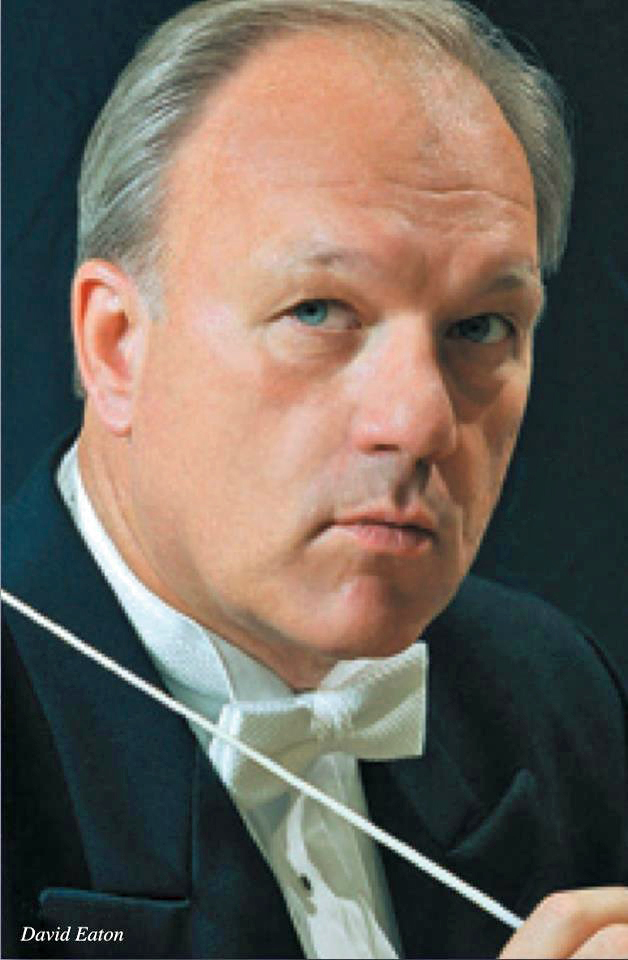
By David Eaton

In the current iteration of the so-called “culture wars,” a primary narrative deals with the debate between those advocating a socialist modality and those advocating free-market capitalism. Unificationists have been debating the pros and cons of these modalities as well.

The 1996 Exposition of the Divine Principle references (p. 342) the Welsh socialist pioneer Robert Owen (1771-1858) in the context of establishing a culture predicated on the ideals of interdependence, mutual prosperity and universally shared values. As Divine Principle notes, our original mind and our “inmost hearts,” aspire to “the world of God’s ideal where the purpose of creation is fulfilled.”

Though Divine Principle characterizes Owen’s brand of socialism as “humanistic,” his attempts at striving for fairness and equality tend to be in accord with what might be termed, “heavenly socialism” in the context of achieving mutual prosperity.

Regarding capitalism from a God-centered perspective, we read from our founder, Rev. Sun Myung Moon, in Book 10 of Cheon Seong Gyeong:

“If America is armed with Godism, rooted in Headwing thought, Godism and free-market capitalism will become like inner and outer halves. Then, through my guidance America can progress in a perpendicular line straight toward God.”

This statement may seem to be at odds with Divine Principle’s reference to a society predicated on heavenly socialism, however, our founder defines the “-ism” in Godism as “the way of living.” Thus Godism ought to apply to all human endeavors — politics, education, commerce, journalism, and the arts and sciences. Book 10 of Cheon Seong Gyeong also emphasizes the importance of the Three Blessings as described in Genesis as the basis for a culture predicated on Godism.

Robert Owen and the Early European Socialists

I confess I didn’t know much about Robert Owen until recent debates regarding the merits of socialism with other Unificationists prompted me to investigate. Owen and early European socialist advocates, Sylvain Maréchal (1750-1803) and François-Noël Babeuf (1760-1797), pre-dated Karl Marx by several decades. Like Marx, their primary focus was on the question of how societies should live in a fair and equitable manner as the old feudalist modalities were giving way to the new ideas of the Enlightenment vis-à-vis individual rights, free markets, laissez faire economics, and private ownership.

Continue reading “Socialism and Capitalism from a Headwing Perspective”

Extraordinary Contributions by Ordinary People: ‘Cabrini’ and ‘One Life’

By Kathy Winings

Movies were created to tell stories. These stories might be sad, funny, scary, or thought-provoking. Some, though, inspire and motivate us to be better human beings.

Two such inspiring films are powerful true stories that touch our souls. They are “Cabrini” and “One Life.” Both tell the story of individuals who left a profound mark on history through simple acts of love that saved lives and demonstrated the best in us.

“Cabrini” tells the story of Mother Francesca Xavier Cabrini, a woman who felt called to address the poverty and social inequities faced by millions of people around the world, beginning initially with the immigrant population in New York City at the end of the 19th century.

“One Life” presents the story of Sir Nicholas Winton and his dramatic efforts to rescue 669 Jewish Czech children in Prague just before the start of World War II and Hitler’s invasion of that country.

Mother Francesca Cabrini (Cristiana Dell’Anna), the founder of the Missionary Sisters of the Sacred Heart of Jesus (canonized by the Catholic Church as the first naturalized U.S. citizen-saint in 1946), was a diminutive Italian woman who was told she would not live much past age 30 due to “weak lungs.” She felt called to do missionary work in China and began petitioning the curia for permission to do so. After petitioning the Vatican for permission to do so and being told “no” repeatedly, she is finally called to Rome where she pushes for an audience with Pope Leo XIII (Giancarlo Giannini).

When he also initially denies her request, she challenges his decision until he relents. But instead of going to China, he asks her to go to New York City to address the urgent needs of the thousands of poor Italian immigrants. She is further given permission to utilize local church property in Five Points, the large neighborhood in Lower Manhattan that was home to the immigrant populations.

Cabrini and the sisters from her order leave for New York with almost no money but with the determination and courage to serve the needs of the poor. Between the dangerous nature of the area and unsupportive New York Archbishop Michael Corrigan (David Morse), the women are told to return to Italy, which they refuse to do. They are resolved to serve the community — regardless of the conditions — and waste no time in cleaning and preparing the first of many orphanages Cabrini would establish over time.

Continue reading “Extraordinary Contributions by Ordinary People: ‘Cabrini’ and ‘One Life’”

Changing the World: ‘Bob Marley: One Love’

By Colm ó Cionnaith

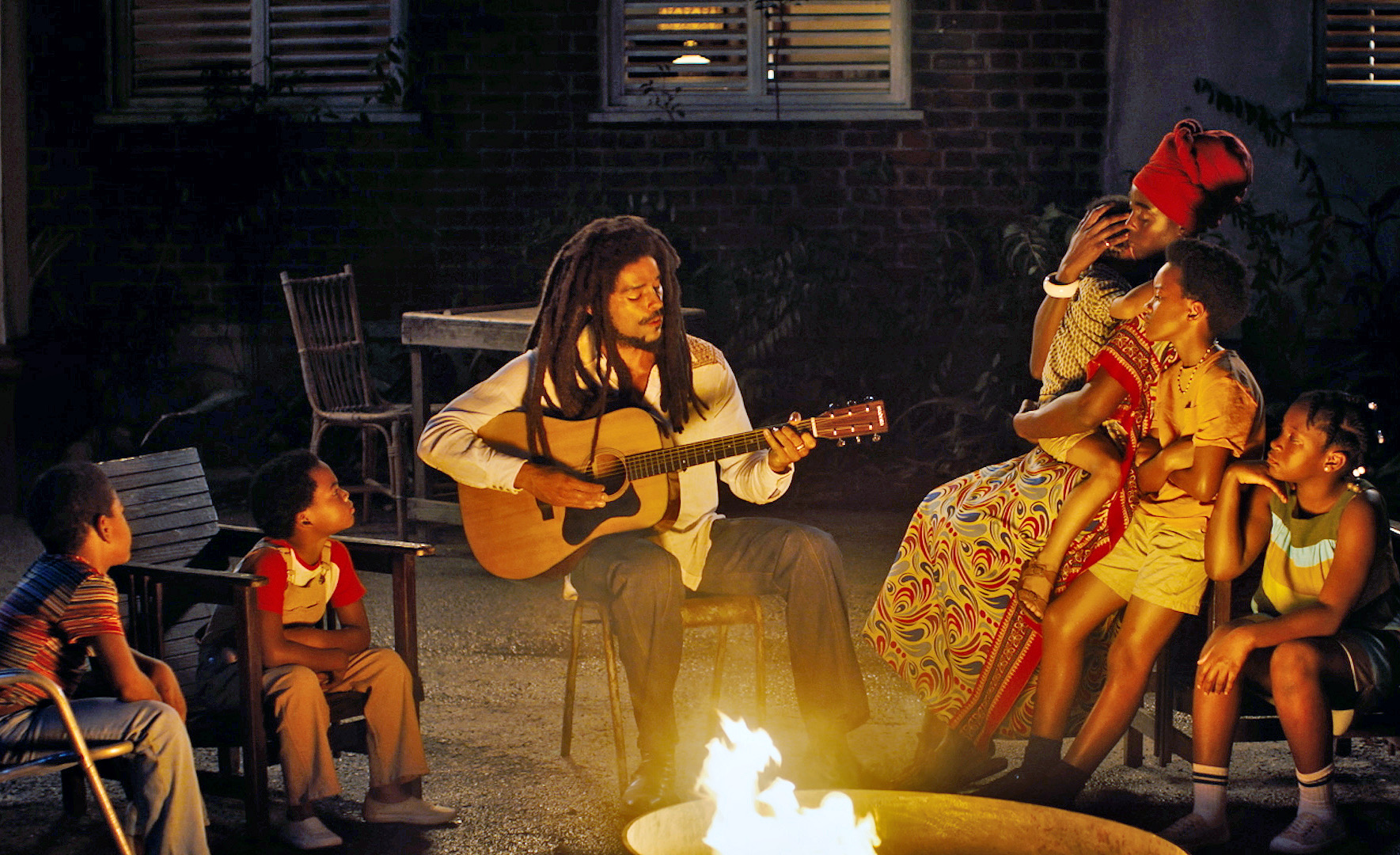
“Bob Marley: One Love” is a film I had greatly anticipated, but probably I’m the last person who should write a review, so besotted was I, no doubt along with much of my generation (“Xers”), by Marley, since coming into contact with his hypnotic reggae beat in the mid-1980s.

Since then, of course, and after playing the obligatory (since its release in the 1980s) “Legend” greatest hits album to death, I have not had that much interaction with Marley, apart from admiring his image in Dalymount Park, Dublin, where our local club, Bohemian FC, cherishes its connections to historical figures who played there, such as Bob.

However this movie is very much for the music fan, which might disappoint some who might have been eager to get deeper into the politics or even the spirituality of Bob Marley, the “Godfather of Reggae.”

The story focuses on a short period in Marley’s life, from just before his attempted assassination in Jamaica in 1976 to his premature death at 36 in 1981.The opening scenes teleport us into a Jamaica erupting in political turmoil as opposition parties are causing the nation to explode in violence and unrest.

Marley is portrayed throughout the film as a potential unifier and peacemaker, as he attempts to headline a “Smile Jamaica” concert in an effort to bring some healing and unity to the post-colonial tropical nation, still trying to forge an independent identity. His sweet, soulful, music and powerful gospel lyrics seem to point to him as a putative messianic figure of sorts, who might bring the island nation together, if only they can “Catch the Fire” of his inspired message rather than the one that threatens to burn everything down.

However, in the early scenes we learn that neither he nor Jamaica are ready for this message: divisions are still too raw and his levels of self-doubt don’t yet permit him to transcend his normal human needs for self-preservation and success.

Enter the legendary Chris Blackwell, pioneer owner of the small Island record label, who assembles a team of musicians and support staff around Marley who will launch him to worldwide acclaim, but only after he goes into an exile of sorts in an unsuspecting London, in the throes of Punk and no little racial tension, it seems.

Continue reading “Changing the World: ‘Bob Marley: One Love’”

Authenticity, Sincerity and 21st Century Witnessing

By John Redmond

Recently, we have been called to resume witnessing in the Unification Movement in order to recapture the spirit of the 1970s, a time when most of its American members joined.

I’m a veteran of those days and have come to the conclusion they are firmly behind us.  However, I am strangely optimistic about the future of our movement and of witnessing in general.

What do I mean by “witnessing?”

In the Christian ideal, it is a communication of a personal, deeply spiritual event which has affected one so positively that one feels compelled to offer that insight to others so they can achieve that experience as well.  Christianity testifies to individual salvation: your conversion and life of faith is between you, God and the Holy Spirit.

Saints in Christian tradition are individuals, both men and women, who have modeled in their lives evidence of a transcendent, loving God.

In Buddhism, one is encouraged to reach a higher consciousness, step out of the day-to-day grind, control the thoughts circling in your head, and try to feel and be aware of a higher, universal interconnectedness and add that reality to your daily life. The monks and nuns in Buddhism model that ideal.

In Unificationism, we witness to the Three Blessings and the three generation family.  Individual salvation is not enough, and creating an individual spiritual success is only the foundation for a multi-generational family and wealth.  Our salvation is not complete until we have accomplished all three goals. It stands to reason then, that our challenge is higher and deeper than individual witnessing and will require creativity and honest evaluation and persistence.

In my experience, all successful witnessing is done by example. Many of my generation joined our movement because of who they met, not because of what was said.

An English member recently told me of walking through Boston and meeting another Englishman who invited him to an event and he politely declined.  Later he met a Japanese woman who couldn’t speak English and had a confusing flyer but he went to the program anyway; he just trusted her. The Principle gets you to stay and commit, but the character of the people and their spiritual foundation allow you to listen.

Continue reading “Authenticity, Sincerity and 21st Century Witnessing”

‘Barbie’: More Than a Doll

By Kathy Winings

I grew up with Barbie. In fact, I not only had a Barbie doll, but also had Midge (Barbie’s friend), Skipper (Barbie’s little sister), Ken, and Alan (Ken’s friend). I ended up with Barbie’s sportscar and wardrobe cases. My mother helped fill the wardrobes with beautiful clothes that she designed and made for each of them.

As Barbie was an important part of me, when the “Barbie” movie premiered last summer, I expected a film filled with cliches, trite dialogue and a simple plot-line about two iconic dolls.  But after hearing some positive reviews and knowing the reputation of the director, Greta Gerwig, I decided it might be worth seeing. You can imagine my surprise when the movie was none of these things. In fact, it provides a creative context for insights on some of our current social challenges.

“Barbie” hit theaters running in July and is still going full speed with eight Oscar nominations, including Best Picture, Best Supporting Actor (Ryan Gosling) and Best Supporting Actress (America Ferrera), as well as several BAFTA nominations in the UK that include Leading Actress (Margot Robbie). Audiences will find the movie is about more than two iconic dolls as it motivates them to ask some hard questions about key social themes we face in today’s world.

The movie has two contexts — Barbieland and the Real World. Barbieland is home for three groups: Barbies, Kens and Weird Barbies. This world is idyllic and carefree with the Barbies living in well-kept houses and the Kens living on the beach. Barbieland is a matriarchal society where the Kens live to support and serve the Barbies. The streets are clean. There is an air that Barbieland is a perfect place to live with no crime or illness, no children, or any Barbie and Ken older than 30. The Weird Barbies live apart from the others because they are different. Their difference is primarily physically based, with some missing limbs or other body parts or missing hair.

As a matriarchal society, all of the jobs and leadership positions are held by the Barbies. What I found particularly refreshing was the racial and ethnic diversity of the Barbies. Of course, all of the Barbies are a perfect size 2, with perfectly styled hair, perfect skin and well-applied make-up. The Kens are also physically fit, with perfect hair and physical features. The Barbies and Kens do recognize, however, that there is such a place called the “Real World.” They don’t visit the Real World nor do those living in the Real World visit Barbieland.

Continue reading “‘Barbie’: More Than a Doll”

Anyone Can Have a Mystical Experience

By Ron Pappalardo

The mission statement of HJ International Graduate School (formerly Unification Theological Seminary) says one of its goals is to help its students “enhance their relationship with God.”

The founder, Rev. Sun Myung Moon, in his 1985 commencement address to UTS said, “I have also endeavored for this campus to be a place where the students can develop deep personal faith and authentic spiritual communication with the Spirit of God.”

Most religious people long for a deeper relationship with God, hoping to have their own personal mystical experience, but oftentimes become discouraged because of how difficult that can be.

After having a few experiences myself, years ago I began teaching others. In addition to writing, I have conducted classes, workshops and training seminars around the world demonstrating techniques shown to facilitate mystical experiences.

The three main techniques I use are the practice of hands-on healing, guided meditations, and a writing technique I call “Journaling with God.”

Three Techniques that Can Trigger a Mystical Experience

Hands-on healing: For this technique, I divide a group into pairs. One person sits in a chair, and the other person stands behind the chair and lays their hands on the sitter’s shoulders. Then I lead those standing to imagine that divine white light is flowing down their arms and through their hands into the sitter while repeating the following mantra: “God’s love is flowing through me, for the purpose of healing [sitter’s name] now.” After a few minutes, each couple reverses positions, and the mantra is repeated again.

Guided meditation: I employ several different guided meditations; here I describe the one I use most often during my workshops. After giving patient and detailed instructions to the participants, I invite them to close their eyes and imagine they are sitting alone on a beautiful beach. It’s a bright sunny day, and I call their attention to the warm sun on their skin, the feel of the sand on their toes, and the peaceful rhythm of the waves coming up to their feet and then retreating back down the shore. Next, they focus on the bright sun right in front of them, high above the ocean. The meditation culminates with each participant imagining they are sending a beam of light from the center of their heart out and up towards the bright sun in the sky. The moment their beam of light connects to the sun is often when the mystical experience is triggered.

Continue reading “Anyone Can Have a Mystical Experience”

The AU Blog Is Transitioning to a Member-Led Organization

Dear Applied Unificationism Blog readers, contributors and supporters,

As our Editorial Committee posted in its open letter, “We Had a Great Run. And We Thank Our Readers,” Unification Theological Seminary has become the HJ International Graduate School for Peace and Public Leadership and decided that the AU Blog it sponsored since 2013 no longer matches its new mission. Therefore, the Applied Unificationism Blog has a chance to evolve as well.

We have been having meetings among the Editorial Committee seeking to identify the next iteration of the Blog.  HJI President Dr. Thomas Walsh said he is happy to support transitioning the AU Blog to a new home provided we find a responsible steward.  While seeking sponsorship from church-affiliated organs is often the typical path, in this era it seems we should take more initiative.  As the Elder Son Nation and in the Age of Ownership, it seems it is time to try to make it on our own.

I have volunteered to take on the editorial duties for the AU Blog for one year to see if we can transition the AU Blog to a member-led organization that can operate in a collegial fashion while keeping the intellectual, social and academic standards that have made the AU Blog a success for the past 10 years.

Dr. Mark P. Barry, who served as managing editor for the past then years, has agreed to assist with the transition; and I have requested the current Editorial Committee to stay in place, at least for the time being.

I have several offers of donors willing to cover the cost of hosting the site and we will maintain the current standard of publishing for the immediate future to ensure continuity and quality.

However, I would like to see the AU Blog carefully evolve.  Here are some areas I think we could strengthen our appeal and effective outreach:

  1. Broaden our audience. We need to attract younger contributors and readers.  I think that there are many young people at work, especially in the social sciences, who can incorporate Unificationist values and models into their field.  Education, social work, psychology, and health care seem like disciplines that are accessible to Unification thought.
  2. Create a membership structure that includes voting and fundraising.  I like the model of the intellectual societies of Europe during the Enlightenment.  Regardless, it is in our collective interest to develop and model governance structures that are a place for mature Unificationists to thrive.
  3. Experiment with other formats.  Perhaps a short essay section, e.g., op-eds of 800 words, where single topics can be broached and developed.
  4. More dialogue. Give and take creates new ideas, so a moderated forum is envisioned that allows vigorous debate without descending into the rancor and polarization that characterizes much current online discussion elsewhere.

If you would like to be part of this new effort or if you have questions, please email me at AUBlogEditor@gmail.com; if you have overall thoughts of encouragement or suggestions, please post them in a comment below.  I will organize a Zoom call to launch this new effort in coming days.

Our About page has been updated, including revised Applied Unification Blog editorial guidelines.

I look forward to an interesting year and am excited to see what we can build together in that time.

Best Regards,

John Redmond
Executive Editor, Applied Unificationism Blog

Photo at top by Timothy Eberly (courtesy Unsplash)

Website Built with WordPress.com.

Up ↑