Is Evil Necessary?

4money_under_table_vignette

By Tyler Hendricks, Ecclesiastical Endorser, Unification Church of America

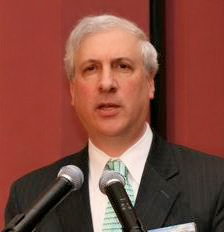
tyler_hendricks_edited-1Religion exists to bring about goodness, and yet most religions teach that evil is inevitable and some teach that it is a good thing. Christianity teaches that the human fall was good because it created the need for Jesus. Many follow the position of second century patriarch Irenaeus, who taught that for us to become good, evil has to exist so that we can reject it, or the fourth century patriarch Augustine, who taught that evil is the inevitable price of a greater good, freedom.

The problem is that this leads to the acceptance of evil, an ultimate resignation expressed in common phrases such as “it’s human nature,” “that’s just the way things are,” and “what can you do?” I have two reasons to refute this—and in this essay I will address Irenaeus’ view. One, I believe that a completely good world is possible. Two, I’d like to help Christians appreciate the Divine Principle.

Let’s begin by defining evil. The Divine Principle does not say that selfishness is necessarily evil. Rev. Moon even said that God has an element of selfishness: “All of our human traits originate in God. We recognize that there is some human tendency for selfishness. This is natural because at one time God Himself was self-centered. This fact may surprise you, but you must understand that before God created man and the universe, He was all alone, with no one to care for except Himself. However the very instant that God initiated creation, His full concept of life emerged. God now lives for His counterpart, not for Himself. …He exists to love, He exists to give. God is the totally unselfish existence. …When God poured all of His love, life, and ideal into His second self, He had to, in a sense, realize a profit. God knew that when He invested all He had—100 percent—His object would mature and return to Him many, many times over the fruits of love, life, and His ideal.”

The principled way to fulfill selfish desire, called in the Divine Principle “self-purpose,” is through unselfishness behavior, called “whole purpose.” The important point is that self-purpose gives way to the whole purpose. Goodness means to fulfill selfish desire through unselfish behavior—to put the whole purpose first. This is “principled behavior.” Evil means to fulfill selfish desire through selfish behavior—to put the self-purpose first. This is “unprincipled behavior.” Here, by “behavior” I include both intention and action.

So is evil, that is, unprincipled behavior, necessary so that we can reject it? The answer is, no. The principle is that the subject partner gives to the object partner, which responds to fulfill the purpose of creation. There is no necessity that either partner discontinues the proper behavior or withdraws from the relationship in order for it to succeed. Let’s look at some examples in our everyday experience.

Continue Reading

A Challenge for the Divine Principle in the Postmodern Era

Facebook Connectivity 2010

A 2010 map displaying the connectivity of Facebook’s 1.1 billion global users (click to enlarge).

Keisuke Noda, Professor of Philosophy, Barrytown College of UTS

Keisuke_NodaCan the Divine Principle be attractive to others in the 21st century, or at least for the next 10 or 20 years as our Church’s 2020 goals envision? In Unificationist communities, that question has sparked the development of practical or technological methods of communication/presentation. People have created and re-crafted charts, slides, and PowerPoint presentations and will continue to do so.

The development of these materials is certainly a worthy endeavor, but another way to pose this question is to ask how the Principle answers the questions of the era or the “spirit of the time” (Zeitgeist). Although believers claim that religious teachings reflect truth that is eternal, ideas affirm their validity by responding to the questions of the era. Leading ideas must in fact “lead” the time by demonstrating their validity to people who are desperately trying to find their way. Thus, Unificationists must understand the intellectual climate that we live in if the Principle is to become a leading idea.

During the late 20th century, the United States and other developed countries underwent a major shift rooted in the comprehensive critique of modernity. It is imperative for any intellectual to understand this shift and the intellectual horizons that frame the climate today, known as postmodernism.

What Is Postmodernism?

Postmodernism is a concept that describes a general intellectual stance or tendency towards modernity. As the term post (“after”) modernism indicates, postmodernism is a departure from modernism based on a critical assessment of modernity. It is, in essence, skepticism towards basic assumptions of modernity. Postmodernism is a broad term which encompasses all social cultural spheres including architecture, art, literature, literary criticism, business, management, politics, economics, philosophy, religion, and others. It is a term that can be seen as describing the spirit of the age (Zeitgeist). Postmodernism is distinguished from being just a “trend” because of its lasting and penetrating effects on all spheres of life.

Modernity, as postmodernists see it, is a social, cultural, political wave that lasted for centuries, from the Enlightenment to the late 20th century. Despite the diverse views and ideas encompassed within modernity, modernity was based on certain assumptions that postmodernists later questioned.  Postmodern thinkers have taken a variety of approaches, but the following are a few basic criticisms of modernity by Jean-François Lyotard, a French philosopher.

Continue Reading

What Would a World of Perfect People Be Like?

Bright-flowers-wallpaper-abstract-wallpapers

Part I

By Jennifer P. Tanabe

JenniferTanabeWhat would a world of perfect people be like? Would you want to live in it? And is it even possible? There are several possible reactions to these questions. Let’s consider some of them from the viewpoint of Unification Thought (UT), which answers them in a positive and encouraging way.

The first possible response to the question of what a world of perfect people would be like is: “How boring to have everyone be the same!” Another, “Impossible, only Jesus can be perfect, the rest of us are only human.” A variation from those who do not believe in God might be, “Impossible, only machines are perfect, human beings always make mistakes.” Yet another reaction, “I can’t imagine it really, but I believe that some time in the future that ideal will come.” Not really a resounding affirmation of the possibility of a world of perfect people and how much we would all want to live in it!

How does UT address the idea of human perfection? To start with, UT does assert that human beings can achieve perfection. So that negates the “only machines are perfect” type of response. Let’s look at the various aspects of human perfection from the UT perspective, where it is discussed under the “Theory of the Original Human Nature.” The essential point is that perfection means fulfilling one’s potential in every aspect.

The second reaction I mentioned, the “impossible, we are only human” one, is easily dealt with by explaining the UT perspective on human nature. A perfect human being is who has grown to maturity. Thus, an adult has become a being with all the attributes of original human nature, namely, a being with Divine Image, Divine Character, and Position (see Figure 1). Divine image and divine character: sounds like we will be like God! But, before you go back to the “impossible” reaction, didn’t Jesus say in Matthew 5:48 that we are to be perfect, like God? So if we take Jesus’ words as well as the pledge offered by all blessed families seriously, being truly human means to become divine, God’s true sons and daughters, and thus to be perfect.

Let’s look at the details of this original human nature. First, a being with Position: the point here is that there are always different positions in any relationship, and the ability to recognize one’s position and to relate to the other person from that position appropriately is essential to harmonious and successful human relationships.

Next, Divine Image. This has three aspects: united Sung Sang and Hyung Sang, harmonious Yang and Yin, and individuality. Briefly, united Sung Sang and Hyung Sang refers to a person whose internal character or values (Sung Sang) take priority over physical desires and material life (Hyung Sang).

Continue Reading

Designing and Managing Ethical Organizations

code-of-ethics

By Denis Collins, Professor of Management, Edgewood College

denis127So, you want to create heaven on earth! Unificationists are well aware that people should be at their spiritual best all the time — which means at work too. We spend a great deal of our time on earth working. Some Unificationists have created businesses, some work in church businesses, and others work hard for non-member businesses and organizations.

Unfortunately, work is often organized in a way that is spiritually stifling and degrading. Everyone is morally flawed and, as such, we do things at work that damage, rather than heal and grow, our spirits. For instance, employees are sometimes tempted, or instructed, to mislead customers about product quality, or to treat each other disrespectfully.

Yet business owners and managers possess a unique position to significantly impact the spiritual development of others and, in the process, heal themselves by designing ethical organizations and reinforcing ethical behaviors at work. Unificationists, grounded in church providential theory, should be at the forefront of designing and managing ethical organizations.

How can organizations be designed to maximize ethical behaviors that help people spiritually flourish? This question was one of the reasons why I quit my corporate job in 1978 and joined the Unification Church. It remained on my mind while studying at Unification Theological Seminary from 1980-83, and it has dominated my teaching, writing and research for more than 20 years as a professor of business ethics at the University of Wisconsin-Madison, University of Bridgeport, and now Edgewood College.

I have developed a systematic Optimal Ethics Systems Model based on the 90 best practices in business ethics, sorted into eleven integrated elements. The model begins with determining the ethics of job candidates and then orienting them to the organization’s code of ethics and ethical decision-making process. It recommends conducting ethics and diversity training on at least an annual basis and implementing an ethics reporting system. Managers must model ethical leadership, and work with employees in developing ethical work goals and performance appraisals.

The last three elements of the model include adopting the best practices for environmental management and community outreach, and assessing the performance of each element. By systematically implementing all the Optimal Ethics Systems Model elements, an organization will not only attract employees desiring to experience spiritual transformation through work on a daily basis, but also have in place structures, policies, and processes that will aid employees with their daily spiritual development and engage them in a transcendent vision (An assessment checklist of the 90 best practices is available upon request by emailing the author).

Continue Reading

The Cherished Hope of Korean Unity

Two Korean Flags

Our cherished hopes are for unity
Even our dreams are for unity
We’d give our lives for unity
Come along unity.
Unity saving the people
Unity saving all nations
Come here quickly unity
Come along unity.

By Michael P. Downey

DowneyThe “Song of Unity” is a well-known and loved folk song that expresses the ardent desire of the Korean people to see their peninsula re-united into one nation. Or is that wishful thinking?

As an American living in South Korea continuously for over 13 years, it has been more than a passing interest to me what the Koreans really feel about unification. Over the years I have talked to neighbors, friends and students about this issue. More often than not, when talking to foreigners, Koreans try to figure out what you want to hear and give you some version of that. To get around this, I have developed a strategy of asking simple, direct questions.

Of course, the standard reply is that we are all brothers and at all cost we have to be united as one nation. When I probe deeper, many times quite different ideas come out. Recently I did an informal and unscientific survey using three direct questions. I asked 100 ESL students ranging from middle school students to middle-aged housewives, the following questions.

1.     Is the reunification of Korea important to you?

Almost everybody immediately said “yes.” A couple of middle school wise guys said “no, who cares.” 98% yes, 2% no.  As a follow up, I asked, “Which is more important to you, unification or getting into a top university (or, your son or daughter getting into a top university)?”  This time, 30% said unification and 62% said a top university; the rest couldn’t answer.

2.     Do you think you will see North and South Korea united in your lifetime?

 44% said “no,” 31% said “yes” and the rest said they didn’t know. For a follow up, I asked, “How do you think unification will happen?” Most replied by talking about a gradual process of easing of tensions, increasing culture and commercial exchanges and fielding joint sports teams at international events being the preferred way. Only a handful of people talked about regime change in the North.

Continue Reading

Is ‘Living for the Sake of Others’ Really a Good Idea?

giveandtake-cover

by Richard A. Panzer, President, Unification Theological Seminary

Richard_PanzerIn a cynical and dangerous world, idealists are often seen as deluded people who don’t know how the real world actually works. Many religions teach the value of selfless giving or “living for the sake of others,” but is that a realistic way of life? Couldn’t that lead to being used or exploited by others? Is this just a Sunday School truism for the naïve and weak? Don’t nice guys finish — last?

Adam Grant, a professor at the Wharton School, one of the world’s leading business schools, has devoted the past two decades to studying people who practice high levels of giving in their lives. In his new book, Give and Take: A Revolutionary Approach to Success, Grant argues that a substantial body of research shows that people who generously give to others — those he calls “givers” — are happier and more successful than both those who merely seek to “match” what others give to them and “takers” whose every action is calculated by their own self-interest.

According to Grant, neuroscience evidence shows that giving activates the reward and meaning centers in our brains. These benefits are not limited to giving money: they also show up for giving time. One study of more than 2,800 Americans over age 24 showed that volunteering predicted increases in happiness, life satisfaction, and self-esteem—and decreases in depression—a year later. Other studies show that elderly adults who volunteer or give support to others actually live longer.

But do the benefits of giving work in the “dog eat dog” world of business? Grant cites examples of “givers” in the business world. One is Kevin Liles, who worked as an intern for free for Def Jam records and rose to become its president. As an intern, Liles was the first to arrive at work and last to leave. As a promotion director, Liles was responsible for one region, but went out of his way to promote other regions too. Grant says, “Everybody started to look at Kevin as a leader, because they all looked to him for direction. He gave until people couldn’t live without him.

What about people who work in sales? According to Grant, top sales people are not high-powered and pushy. He cites the example of Kildare Escoto, the top-selling optician at Eye Care Associates. Escoto says, “My job is to ask the patient questions, and see what the patient needs. My mind-set is not to sell. My job is to help. My main purpose is to educate and inform patients on what’s important. My true concern in the long run is that the patient can see.”

Continue Reading

Morals and Messages from Harry Potter: Lesson Learned

sketch__harry_potter_by_woshibbdou

by Sammi Vanderstok

Sammi VanderstokWhen I was in college, I took an English course titled “Harry Potter and Global Society” that opened my eyes to the power of literature. I had taken previous English courses and read great works of many authors such as Hemingway, Steinbeck, Dickens, Shakespeare, and Joyce.  But these famous pieces of literature were placed on an ivory pedestal.  Although I knew books could impact culture, I never figured that literature itself could shape my culture or the modern world I lived in.

The fact that we studied such a generationally relevant book that was not only a part of my world and everyday life but also of every other student in that class, made the overarching lessons of literature and its power hit home.

The Harry Potter books are the number one selling book series ever published. The Harry Potter movies are the highest grossing film series of all time. As of last November, total Harry Potter book and movie sales topped $24 billion. Harry Potter creator J.K. Rowling is the first author ever to become a billionaire.

I believe her use of myth and folklore is the underlying reason why her Harry Potter series is so wildly successful. Rowling touched a need within the audience for guidance and care and provided it by creating a fantastical world that intersected and interacted with our own.

Myths and folklore are figurative stories about how people within different cultures deal with universal life issues. Every culture possesses them, and they profoundly influence how societies see the world and understand themselves.

Joseph Campbell, a scholar of mythology and specifically of the “hero-quest,” argues that “myths are [the] clues to the spiritual potentialities of the human life. [They show] what we’re capable of knowing and experiencing within.” He says myths “have to do with the themes that have supported human life, built civilizations, and informed religions over a millennia, [they] have to do with deep inner problems, inner mysteries, inner thresholds of passage.”

Rowling uses the language of myth and folklore rather than history to communicate her message. In doing so, she is indicating that moral messages gained through folklore impact people at a deeper level and are more important than the actual history of a society.

Continue Reading

Applying the Divine Principle to Real Life

DP Book on Table

By Bruce Sutchar, UTS Class of 1985

bruce_sutcharRemember those kids who could tell you the 66 books of the Bible in chronological order? I always wondered if they knew how to apply those 66 books in their lives.

I became close friends with former Congressman Phil Crane’s sister, Judy.  She was like the only real fundamentalist that I have ever known.  She is married to a Hungarian Jew (an army buddy of Congressman Crane’s) and has a “Jews for Jesus” daughter.  She raised her children by always referring to the Bible (rather than Dr. Spock) for guidance.  When she needed to discipline one of her children she would always find the appropriate Bible verse.

I have often wondered the same thing about the application of the Divine Principle (which, incidentally, was the title of Dr. Young Oon Kim’s first book).  Many of our members have been excellent Divine Principle lecturers, but I wonder why we still have had so much in-fighting among our members, between leaders and members, and in our movement as a whole.

For me the most challenging part of the Principle comes from the chapter on returning resurrection where it says that sometimes God will allow an evil spirit to attack you through another person.  And if you can receive this persecution with a grateful heart, then both the spirit and yourself will advance.

I once gave a sermon on “loving your enemy” at an ACLC church and said that there are three words that everyone knows from the Bible, but almost no one lives.  In fact, other than Jesus and True Parents, I don’t know anyone that is even trying to live this credo.  The minister thought it was an excellent sermon, but as we drove home, my wife wanted to see how I would react in case another driver cut me off or some such maneuver.

Father often accused us of being a “pick and choose” movement—in other words, we personally decided which of his directions we would choose to obey and which we would ignore.  Ones like “learn Korean” or “don’t snack between meals” are two that come quickly to mind.

To apply the Principle to real life situations is to me, the real value of the Principle. It is really meant to be a principle for guiding your life, sent directly from God—rather than a mere theological treatise.  I remember the first time I ever gave a Divine Principle lecture, I was amazed at how much of the Principle I knew.  Likewise, it never ceases to amaze me when I read the Principle and discover a new part that I never realized was there.  I remember reading the section on “The Mission of the Messiah” where it says that Jesus would rather have one man who could lead a thousand than a thousand followers.

Continue Reading

Fostering a Strategic Relationship with China: A Unification Perspective

thumb_psa5206

China’s President Xi Jinping met President Obama at Sunnylands, California in early June.

By Mark P. Barry, Lecturer in Management, UTS

Mark Barry Photo 2In April 2007, I attended a conference that gathered at the Cheon Jeong Gung “Peace Palace” in Cheongpyeong for True Parents’ Day. After Rev. Moon’s Founder’s Address, I walked out to the Palace terrace with a Chinese guest and friend who was a retired senior officer in the People’s Liberation Army and head of one of China’s major think tanks. In the heart of Cheongpyeong, we discussed the outlines of a joint conference on cross strait relations held later that year in Macau. Given the significance of where we stood, I couldn’t help but feel there was a spiritual imperative behind the discussion of future efforts at cooperation with a Chinese delegate.

In 1998, I often showed my students a PBS documentary on China’s efforts to modernize from abject poverty. By 2010, China overtook Japan as the world’s second-largest economy. To some, we now live in a bipolar world of two superpowers, the U.S. and China. More than ever, China has to be reckoned with by the United States, by the two Koreas — and by the Unification Movement itself.

On a global level, U.S. relations with China must be handled very judiciously. But for North and South Korea, China is their large neighbor, which has inescapable implications. For the international Unification Movement, based in South Korea, it would be wise to foster a strategic relationship with China; that is how one must deal with a nation that may otherwise misunderstand you and cause difficulty.

Recently, China has begun to speak about a “new type of great power relationship” with regard to the United States, the established hegemonic power. What China means is to distinguish the “new type” from the “old type” of great power relationship previously witnessed in history. The question is how these two continental powers can take a different course than previous great powers who were in competition. In history, conflict and war between two major powers sometimes occurred not simply by the increase in material power of the rising challenger but because of the fear it instilled in the established power.

What this implies is that trust-building between the two great powers is vital for the success of a new type of great power relationship. President Obama’s June meeting in California with Chinese President Xi Jinping was a start. The challenge is to find a way to share responsibilities and resolve current problems. China and the U.S. need to identify common ground in the realm of ideas and philosophy, as well as in the sustainability of existing markets and the economy.

Continue Reading

Website Built with WordPress.com.

Up ↑