Leaving a Legacy of Heart

inheritance copy

By Kim Barry

Kim BarryIn the past few years, I have studied about and met some truly amazing people and looked at the legacies they left by their lives, impacting those around them and their descendants.  We don’t often see first-hand the influence one person has had on the lives of others, but recently some of us were fortunate enough to experience this.

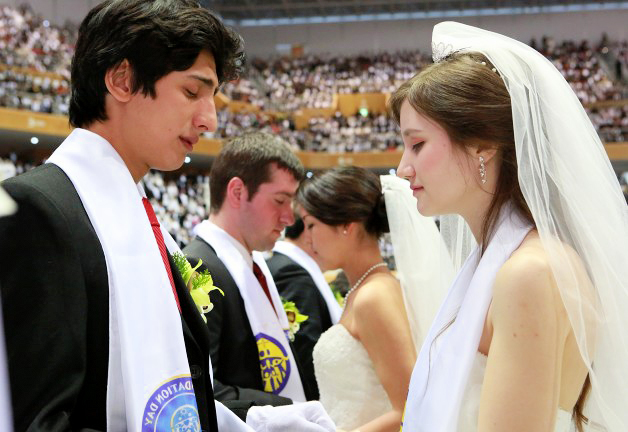
On March 1st, 400 people gathered at UTS for a seunghwa ceremony to celebrate the life and give our final farewell to Bruce Bonini.  He was not a major leader in our movement, and I’ve yet to see an announcement on an official church site about his passing. What drew so many to his final farewell?  It was his heart.

The large attendance of so many young people attested to the fact he had a big impact across generations.  Several young men gave tearful testimonies of how just a few wise, kind words from Bruce had life-altering impact on them.

Bruce was instrumental in the development of Shehaqua Family Camp in Pennsylvania, the Pocono Family Ministries, which has been such a great source of inspiration, education and community.  It would take a book to document the impact that Shehaqua has had on the lives of countless families. All of those who started and invested in that camp should be proud of its legacy. Bruce more recently had invested himself in developing a music ministry in Bridgeport, Connecticut.

Continue Reading→

Can an Organization Stay Great without Its Visionary Leader?

steve_jobs_by_subhraj1t-d4l06mu -2_edited-1

By Mark P. Barry

Mark Barry Photo 2Last June, in “Lessons from Apple under Steve Jobs,” I suggested what Unificationists could learn from the experience of Apple under its founder. Nine months later, and two and a half years since Jobs’ passing, Apple is facing more skeptics than at any point since its turnaround 16 years ago.

Now, many are asking whether Apple without Jobs can continue to make transformational products that will delight users. The reason is nothing Apple has introduced since fall 2011 — when Jobs died — has been innovative or disruptive, but simply modest improvements of existing products.

Has Apple lost the essence of what made it great? Is it struggling to find new vision and identity after Jobs? And what can we learn from its current experience as Unificationists?

In the business world, two and a half years is generally not sufficient time to make any judgments — except in the world of high technology, where new products are constantly introduced, superseded, disposed, and market share frequently shifts.

Continue Reading→

Giving, Freedom and the Future

ph_2046_1296296702

By Richard A. Panzer

Richard_PanzerIt could be fairly said the defining element of those who identify with the Unification Movement is that at one time or another in our lives, we have been touched by the teachings of Rev. and Mrs. Sun Myung Moon. Reflecting on Father’s legacy, I have asked myself what is the core message he strove to leave behind? If I had to choose one word to describe Rev. Moon, what would that be?

For me, that one word would be: giving. To pick just two of countless times: his 14 hours of non-stop speaking about God’s nature, will and ideal I experienced in the 1980s at Belvedere; and when he returned during temporary releases from Danbury prison and spent that time telling us not to worry, that God would use his incarceration to further bless America. The main lesson, in my mind, was: here is a man who is constantly striving to find ways to give more and more.

While he was battling his federal court case in 1982, he launched The Washington Times, and in 1984, purchased 250 trucks to be used to deliver food to the needy shortly before entering prison. How many foreigners in the U.S. decide, while on trial or in prison, to spend more than a billion dollars of precious resources to serve the nation that incarcerated them?

Continue Reading→

The Seven Principles of Creation

Blue metal compass

By Stephen Stacey

Stacey copy_edited-1What does it mean to apply the Principle to life? Does it mean that we just understand that the world has the potential to be much more ideal than it is, and then go off and read the ideas of others who are succeeding in life? Or does it mean that within the Principle itself, and in the many speeches of Rev. Moon, there lie the principles upon which human beings can succeed in building a more beautiful world into the future.

For the last 10 years, because of my teaching work, I have had to ask this question every day. Over time, I believe I have gained new insights into how both the Principle and principle-related concepts are helpful in understanding human well-being and success.

My first deep insight was a revelation I received at 2 a.m. on a bus to Russia where I was to teach a marriage enrichment seminar eight years ago. Let’s start with a simple scenario.

If you were the head of a project team at work, what questions might you ask to be sure the project was on track? Some of your most important questions might be:

Continue Reading→

Selfishness: The Greatest Challenge of the 21st Century

toot_c08b536e0c

by Bruce Sutchar

bruce_sutcharRev. Sun Myung Moon has always maintained that truly the greatest revolution in the world is the one from selfishness to unselfishness.  Likewise, nearly every spiritual teaching has always dealt with the idea of transcending the self and being one with the universe.  From Buddha, Lao Tse and Jesus, to Eckhart Tolle, Byron Katie, and many of today’s modern writers, all have focused on this critical point. In modern psychology, Sigmund Freud and Carl Jung also wrote of the importance of the self-centered ego in explaining our everyday actions.

Jesus taught it is better to give than to receive, but for most of us, this is little more than a nice phrase to quote—one that everyone agrees with, but few try to observe.  Some spiritual disciplines even equate our condition to having a raisin heart—one all scrunched up but with minimum capacity to give and receive love.  After we marry and start having children, it finally becomes opens up, when we actually experience more joy watching our children open their Christmas presents than our own.

Each of us has only one pair of physical eyes.  These eyes see the world from our own point of view.  The Divine Principle teaches that one of the four fallen natures is seeing only from our own point of view.

Continue Reading→

Challenges of Life: Why and How?

mountain-climbing-wallpaper-2

By Keisuke Noda

Keisuke_NodaHuman life is enigmatic. A variety of challenges falls unexpectedly on an individual and life can seem absurd. There are religious and scientific explanations, but we still wonder: Why? How do we make sense of the challenges we face in life?

This article attempts to shed light on this extremely complex problem by answering the questions of why we have challenges and how we can cope with them.

The most common approach to challenges in Unificationism is based on the concept of “indemnity.” The underlying thesis of this model is that challenges are “caused” by sins, evils, and problems from the past. Other religions also use this sin-redemption approach to challenge.  This model is one that looks backwards in time, but is this retrospective approach the only model that Unificationism offers?

I suggest that a model based on the Unificationist concept of the “original human nature” sets out a forward-looking model.  I argue that human life is “originally” designed as challenge-and-response.  In other words, some challenges (not all) are an intrinsic part of life.

Continue Reading→

God’s Original Design for Human Sexuality

golden_rings-1280x1121

By Jim Stephens

Jim Stephens_edited-1I’m almost 65, but many tell me I look very young for my age. Probably the major reason for this is I have been blessed with a wonderful wife. She understood from the beginning that one of the basic emotional, mental, and physical needs of a man, husband, and father is regular sexual relations about three times a week. And we are still doing it.

I studied engineering in college and I like things that are practical and down to earth. I encountered the revelations of Rev. Sun Myung Moon when I was 24. Over the last 40 years, I’ve had profound spiritual insights and experiences with God. For five years, I co-led with my wife the Blessed Family Department and studied all about marriage enrichment and research. More recently, I became a certified practitioner of an energy healing technique.

Recently, three men revealed to me in brief conversations that they wanted more sex with their wives. Then the pieces began falling into place and a strong impression came over me to write on this topic. Brothers and sisters could be so much happier, joyful, and fulfilled in their marriages than they are. The understanding that God “downloaded” to me I’m calling “God’s Original Design for Sex: Three Times a Week.”

Continue Reading→

The Providential Necessity of “Open” Blessings

intimacy-in-a-crowd-628x432

By Michael Mickler

Michael_MicklerUnificationists would do well to review accounts of Christianity’s rise, particularly the role of inter-marriage in its penetration of the Roman Empire.

One astute analysis is that of Rodney Stark, an eminent American sociologist of religion, who distinguishes between “primary” and “secondary” conversions in his Rise of Christianity: How the Obscure Marginal Jesus Movement Became the Dominant Religious Force in the Western World in a Few Centuries (1997) and The Triumph of Christianity: How the Jesus Movement Became the World’s Largest Religion (2011).

According to Stark, “In primary conversion, the convert takes an active role in his or her own conversion.” Secondary conversion, he says, “is more passive and involves a somewhat more reluctant acceptance of a faith on the basis of attachments to a primary convert.” Agreeing to “go along” with one’s spouse’s faith is an example of this.

Based upon this distinction, Stark argues that exogamous marriage (with pagans) and secondary conversions were “crucial to the rise of Christianity.”

Continue Reading→

God as the Heavenly Parent of Heavenly Father and Heavenly Mother

sun-rays-coming-out-of-the-clouds-in-a-blue-sky-wallpaper_edited-1

By Ye-Jin Moon

Note: This is an adaptation of a more detailed paper written for “The Unification Movement” course (LTR 5151) at UTS. Ye-Jin Moon consented to have an abridged version published on the AU Blog.

Ye-jin MoonOn January 7, 2013, True Mother made a truly momentous and historical announcement that from that date forward we in the Unification Movement (UM) should be addressing God not just as Heavenly Father, but as “Heavenly Parent,” which necessarily implies that God is equally Heavenly Father as well as Heavenly Mother.

In the UM, it had been customary to address God in the masculine as Heavenly Father, mainly because of the influence coming from the Old and New Testament Ages when God was regularly viewed in the masculine. However, if we are now living in Cheon Il Guk or “God’s Homeland,” the very first issue we need to address is who God is or why God is the Heavenly Parent of Heavenly Father and Heavenly Mother (HP of HF/HM).

Continue Reading→

Website Built with WordPress.com.

Up ↑