Applied Unificationism’s First “Blog-iversary”

blog_anniversary_online_2

The Applied Unificationism (AU) Blog launched a year ago on May 1, 2013. Its hosts, Unification Theological Seminary and Barrytown College, as schools for people seeking to understand how to bridge faith and reality, aimed to create a site where worthy ideas applying Unificationism to all aspects of society can be discussed among members and friends of the FFWPU and related organizations. In a time of transition since the passing of our Founder, we have also sought to make it a place where the future of the Family Federation and its work may be thoughtfully discussed.

Since then, the AU Blog has received 48,000 hits from over 150 countries with more than 200 email followers, published over 75 articles and posted 400 comments. Our material is regularly linked to from Facebook (where we get the majority of our referrals), email listservs, the UTS Alumni site, and occasionally the FFWPU-USA opinion page. We began a Twitter account last year (@UTS_AU_Blog) and will create a Facebook page soon.

At the end of last year, we unveiled a new site design that has been very well-received, and from January have published a number of articles that generated a large number of site hits, in one case almost 1,000 in a day. Article contributors have expanded from largely UTS faculty to a broad and international range of writers, which continues to grow each month. In April, we began a new feature: film and book reviews, and especially encourage reviews from second generation Unificationists. As always, we welcome new op-ed/commentary submissions of 1,000-1,500 words.

And if you haven’t already, please “Follow” the AU Blog by signing up on the home page to receive an email each time we post something new.

If you like what the AU Blog is trying to achieve, please consider sending a monthly (or even one-time) donation to UTS/Applied Unification Blog.

This will specify the use of your donation for this Blog. Use the Donation Page on the Barrytown College website and select the “Applied Unificationism Blog” on the pulldown menu.

Continue Reading→

Reflections on the Cheon Il Guk Constitution

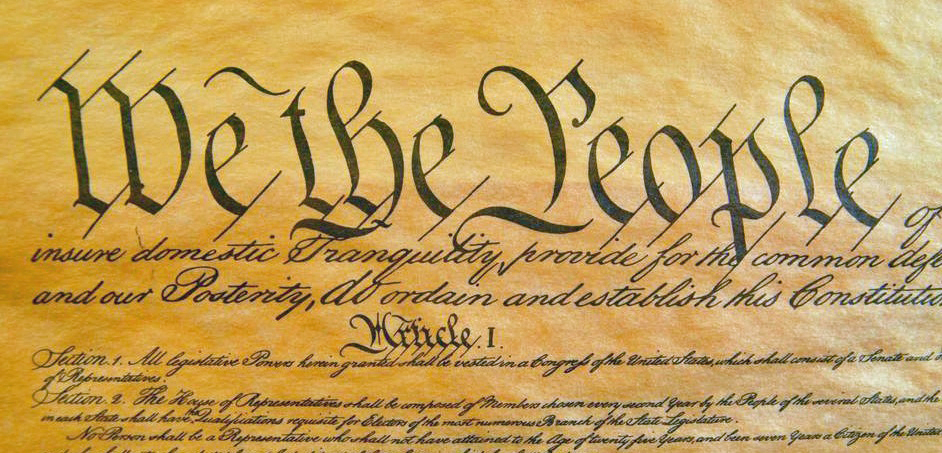
Declaration_of_Independence_draft

The Applied Unificationism blog welcomes the spirited discussion of the new Cheon Il Guk Constitution with two articles by Graham Simon and Gordon Anderson (UTS Class of 1978). Because of the importance of this topic, I feel motivated to frame this discussion a bit. While the Unification Movement aspires to restore a physical nation, at this time this “Constitution” is in reality governing a religious organization and a spiritual community. It might be more appropriate to call it a “CIG Charter” and to compare it with the laws of governance for other religious communities around the world. In any case, I invite readers to consider views with which they may or may not agree in the spirit of “true love.”

Sincerely, Richard Panzer, President, UTS/Barrytown College


By Graham Simon gs-1308

The Cheon Il Guk (CIG) Constitution was officially proclaimed on Foundation Day 2014 and was intended to “enter into force sixty days thereafter,” on April 11.

That day passed with little notice.

Might the CIG Constitution have an impact on our lives and the way the Unification family organizes itself in the immediate future? Looking further ahead, will it have an effect on the lives of our descendants or humankind as a whole?

Let us assume that the Principle and True Parents’ teachings become the fundamental bedrock of a future world order, that they resonate with humankind’s inner nature to the extent that their universal acceptance is no longer a question of “if,” but “when.”

Continue Reading→

Updated: Thoughts on a Cheon Il Guk Constitution

constitution.large-image_edited-1

Note: This post originally appeared on our blog on August 19, 2013. The author has written a Post-UK Symposium on the CIG Constitution Update after the article’s conclusion.


By Gordon L. Anderson

GordonThe passing last September of Rev. Sun Myung Moon marked the end of an era for the Unification Movement, not unlike the passing of Moses or Jesus. The followers left behind have to fashion a society that embodies the teaching and spirit of the founder. Under the charismatic leadership of Rev. Moon, governance was on the level of a community or tribal society. Now, a new center of new legitimate authority must be established for this community. In addition, the vision for Cheon Il Guk (CIG) also aspires to national and global aspects that transcend the community-level society members have known. The membership now has to define and routinize the authority of the movement after the founder’s passing.

The role of a constitution is to establish the purpose, nature of authority, and distribution of power in a society. Regardless of how the CIG Constitution is developed, it will be an important document related to the rise or decline of the Unification society, because people will voluntarily join or leave it. To expand and solidify a society that embodies the founder’s values, the benefits of membership, on the whole, should outweigh the costs; otherwise people will not join or remain members.

Levels of Governance

Societies contain several levels of social organization, with the main levels being: family, community, state, and world. A community consists of several families, a state of several communities, and a world of several states.

Continue Reading

“Noah”: Reinterpreting Essential Truths in a Modern Context

noah7565775

By Andrew Lausberg

AL headshot 8_edited-1Since its release, the film “Noah” has generated a wide variety of responses. Reviews range from declarations of triumph to the dismissal of abject failure. This is not so unusual, but it does bring into focus the contrast between perspectives that prevail over religious topics in the world today.

As Unificationists, we have a strong desire to see enlightenment in the world. We know there is a much deeper level to God’s message to the world as it has been presented in history over millennia. We also know God is alive, that God can speak, and that the spirit world is constantly active in its interactions with humanity.

What can we learn from the film “Noah”? The recent film review by Andrew Wilson points directly to some potential learnings, in his reflection on the limitations of patriarchal religion and how the film highlights these. From a slightly different perspective, “Noah” also points the way to how Unificationists might present the value of the Principle in ways the current generation can accept and benefit from.

As a film, “Noah” is powerfully appealing in presentation. The special effects are top-notch, the location work and settings are spectacular, and the acting capable. There are many elements that reflect unique, cutting-edge forms of creativity, which in and of themselves are highly attractive to today’s generation (Gen Y and Gen X).

Continue Reading→

Towards a Culture of Peace: The Energy of “We”

PIA17999

By Kwon Jin Moon

Kwon Jin MoonI really enjoy listening to theoretical physicists. They are the rock stars of the physics world. They’re not people who simply conceive of a world, but actually the ones who create the world. We all whip out our smartphones and enjoy the World Wide Web. But they’re the ones that created the Web.

One of my favorite theoretical physicists is Japanese-American bestselling author, Professor Michio Kaku. He divides the world and universe and the billions and billions of stars into three types of civilizations.

The first is a planetary-type civilization. This is one which harnesses planetary powers. It controls earthquakes, volcanoes, and taps the power of the sun. And although utilizing tremendous resources, it lives harmoniously with the planet — the mark of a Type I planetary civilization.

The second is stellar-type civilizations. The United Federation of Planets in Star Trek is an example. This type controls stars. It harnesses the power of stars and as a civilization, is immortal. They can survive comets or asteroids, even supernovas.

Type III civilizations are galactic. They truly wield the power of the universe. Examples would be the Borg in Star Trek or the Galactic Empire in Star Wars.

But there’s a different type of planetary civilization. That civilization is Type Zero. That’s what we are.

Continue Reading→

“Noah”: The Limits of Patriarchal Religion

28NOAH-blog427

By Andrew Wilson

WilsonThe new film “Noah,” starring Russell Crowe, has received mixed reviews. It partakes of the dark dystopian and apocalyptic spirit of so many contemporary Hollywood movies that is a turn-off to people seeking more wholesome and family-oriented fare. But if you sit through it, you will at least be rewarded with an encounter with some serious theology.

This is no simple-minded Bible movie. Director Darren Aronofsky said it is “the least biblical movie ever made.” He takes considerable liberties, including not giving Noah’s three sons each a wife to accompany them in the ark and portraying the Nephilim (Gen. 6:4) as Transformer-like rock monsters that defend Noah and help him build the ark. He makes the villain, Tubal-Cain, a stowaway in the ark and gives him some fine lines where he declares his resentment against God for abandoning humanity to destruction. Many Christian fundamentalists will take offense.

But adherents of the Divine Principle can find much to cheer about.

Continue Reading→

The Evolution of God: When Evolution is Outlawed, Only Outlaws Will Evolve

Evolution_vs__Creation_by_geekblz

By Larry Moffitt

Larry_Moffitt_edited-1I don’t approve of the way the argument over evolution has evolved. Darwin thoroughly yanked the chain of collective Christianity regarding natural selection.

And suddenly, by the standards of Christianity at that time, it became mandatory that an evolutionist also be an atheist.

However, Darwin was also a gnarly racist, claiming superiority of white over black. And he was a sexist, writing in his autobiography, “the average mental power in man must be above that of women.” Oddly, these two notions didn’t bother the Christian establishment one bit in 1859. That’s the part of Darwin they liked. Robber barons like J. D. Rockefeller and Andrew Carnegie, along with Karl Marx and Hitler, liked those parts as well, in addition to natural selection. Bummer.

Today, most religious people accept that a faster wolf will catch more bunnies and give birth to better bunny hunters, and that Leonardo Da Vinci’s kid was probably a good artist too. The original burr under the saddle of Christianity is a non-issue these days

Continue Reading→

Flesh and Bones: Experimental Outreach and Church Orthodoxy

Group of smiling friends standing against white background

By Scott Simonds

SSimonds_1The Unification Movement and our close cousins, evangelical Christianity, are struggling to engage young adults between the ages of 18 and 29.  David Kinnaman, a sociologist with the Barna Group research firm and author of unChristian: What a New Generation Really Thinks about Christianity…and Why It Matters, analyzed data on what people in this demographic think about evangelical Christianity, and why it matters for outreach ministries.

While researching how “Outsiders” — those outside the church — view Christianity, he also discovered common reasons why young believers are leaving the church, which he documented in his follow-up book, You Lost Me: Why Young Christians Are Leaving Church…and Rethinking Faith.

Kinnaman and the Barna Group have delineated and characterized four generations which form the backdrop for his book: Elders, Boomers, Busters, and Mosaics.

Elders are characterized as having grown up in homogenous communities, engaged in organized churches, they are patriotic, and had limited means of communication outside of their neighborhoods.  They lived through the Great Depression, World War II and the Korean War.

Continue Reading→

Lead, Follow, or Get Out of the Way

arrow-road

By John Redmond

JohnRedmond2On the first anniversary of Foundation Day, Sam Nagasaka, project manager of the Vision 2020 Project of FFWPU International, presented in Today’s World a strategic planning document. It describes a process that each nation and city can follow to align their efforts with the current highest providential priority. Mr. Nagasaka (UTS class of 2000) served as a vice president for PR and marketing with World CARP International HQ and was part of the strategic task force team of Japan FFWPU HQ.

His document represents a significant change in the way strategic activities are developed in the movement.  Reverend Moon closely controlled strategic and tactical planning, seeking to move quickly and decisively, planning battles like a general, with short timelines and sacrificing long-term goals for short-term wins.  Based on his successful foundation, the shift to building and maintaining the movement for long-term effectiveness requires a different approach.

Mrs. Hak Ja Han Moon has set large general goals, but expects the central blessed families to take the time and make the effort to plan and execute strategies and tactics for success in the areas of their local and national responsibilities.  Headquarters can’t effectively decide what your community does best and how to make a community that attracts young families; only those who know the local area and culture can be successful at that.

Continue Reading→

Website Built with WordPress.com.

Up ↑