Morals and Messages from Harry Potter: Lesson Learned

sketch__harry_potter_by_woshibbdou

by Sammi Vanderstok

Sammi VanderstokWhen I was in college, I took an English course titled “Harry Potter and Global Society” that opened my eyes to the power of literature. I had taken previous English courses and read great works of many authors such as Hemingway, Steinbeck, Dickens, Shakespeare, and Joyce.  But these famous pieces of literature were placed on an ivory pedestal.  Although I knew books could impact culture, I never figured that literature itself could shape my culture or the modern world I lived in.

The fact that we studied such a generationally relevant book that was not only a part of my world and everyday life but also of every other student in that class, made the overarching lessons of literature and its power hit home.

The Harry Potter books are the number one selling book series ever published. The Harry Potter movies are the highest grossing film series of all time. As of last November, total Harry Potter book and movie sales topped $24 billion. Harry Potter creator J.K. Rowling is the first author ever to become a billionaire.

I believe her use of myth and folklore is the underlying reason why her Harry Potter series is so wildly successful. Rowling touched a need within the audience for guidance and care and provided it by creating a fantastical world that intersected and interacted with our own.

Myths and folklore are figurative stories about how people within different cultures deal with universal life issues. Every culture possesses them, and they profoundly influence how societies see the world and understand themselves.

Joseph Campbell, a scholar of mythology and specifically of the “hero-quest,” argues that “myths are [the] clues to the spiritual potentialities of the human life. [They show] what we’re capable of knowing and experiencing within.” He says myths “have to do with the themes that have supported human life, built civilizations, and informed religions over a millennia, [they] have to do with deep inner problems, inner mysteries, inner thresholds of passage.”

Rowling uses the language of myth and folklore rather than history to communicate her message. In doing so, she is indicating that moral messages gained through folklore impact people at a deeper level and are more important than the actual history of a society.

Continue Reading

Applying the Divine Principle to Real Life

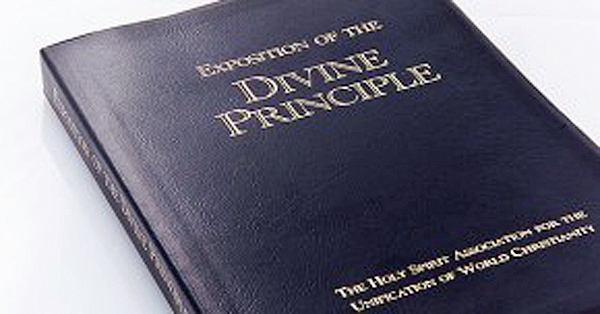
DP Book on Table

By Bruce Sutchar, UTS Class of 1985

bruce_sutcharRemember those kids who could tell you the 66 books of the Bible in chronological order? I always wondered if they knew how to apply those 66 books in their lives.

I became close friends with former Congressman Phil Crane’s sister, Judy.  She was like the only real fundamentalist that I have ever known.  She is married to a Hungarian Jew (an army buddy of Congressman Crane’s) and has a “Jews for Jesus” daughter.  She raised her children by always referring to the Bible (rather than Dr. Spock) for guidance.  When she needed to discipline one of her children she would always find the appropriate Bible verse.

I have often wondered the same thing about the application of the Divine Principle (which, incidentally, was the title of Dr. Young Oon Kim’s first book).  Many of our members have been excellent Divine Principle lecturers, but I wonder why we still have had so much in-fighting among our members, between leaders and members, and in our movement as a whole.

For me the most challenging part of the Principle comes from the chapter on returning resurrection where it says that sometimes God will allow an evil spirit to attack you through another person.  And if you can receive this persecution with a grateful heart, then both the spirit and yourself will advance.

I once gave a sermon on “loving your enemy” at an ACLC church and said that there are three words that everyone knows from the Bible, but almost no one lives.  In fact, other than Jesus and True Parents, I don’t know anyone that is even trying to live this credo.  The minister thought it was an excellent sermon, but as we drove home, my wife wanted to see how I would react in case another driver cut me off or some such maneuver.

Father often accused us of being a “pick and choose” movement—in other words, we personally decided which of his directions we would choose to obey and which we would ignore.  Ones like “learn Korean” or “don’t snack between meals” are two that come quickly to mind.

To apply the Principle to real life situations is to me, the real value of the Principle. It is really meant to be a principle for guiding your life, sent directly from God—rather than a mere theological treatise.  I remember the first time I ever gave a Divine Principle lecture, I was amazed at how much of the Principle I knew.  Likewise, it never ceases to amaze me when I read the Principle and discover a new part that I never realized was there.  I remember reading the section on “The Mission of the Messiah” where it says that Jesus would rather have one man who could lead a thousand than a thousand followers.

Continue Reading

Before the Sweet Chariot Swings Low, Create Happiness

Print

(This contribution appears courtesy of the Faith Fusion blog)

by Larry Moffitt

Larry_Moffitt_edited-1

Going to room temp

No matter who you are, how rich and good looking, how well you clean up after working in the garden and how much you like those danged long walks on the beach – someday you’re going to wake up dead.

You will no longer be a physical person, and will from this time forward, be a spiritual person. From the perspective of the family you left behind on earth, you will be kaput, you will have died, croaked, “shuffle[d] off this mortal coil” (in the words of Bill the Bard).

“Gone to room temp,” in the words of Larry Moffitt.

Religions differ on what happens next, but pretty much all of them insist that life on the earth is not all there is. Whatever we call it, the sweet chariot will swing low, grab you and take you… somewhere.

Furthermore, nearly all religions understand that your destination depends on how much effort you put into getting things right. Jesus said the greatest commandment is that you love other people, so that’s a clue. Jesus also seems to say at various times, that all you get is one shot at life. My Buddhist friends say you not only get unlimited “do-overs,” but that you actually have to repeat it until you get it right.

I’m not sure which one I like best for creating happiness. I’m looking for a religion that gives you refunds on broken hearts.

Think of it as a journey

Life is one long road trip buddy movie, starring us. We travel around and learn from each other. We have adventures. Everyone we meet is a test to see if we can love them. Especially those of other races and cultures – that’s where it gets real. They don’t make race erasers; you have to find it in your heart to make them family.

This would all be a lot easier if we could get a more clear connection to the other side. I’m not complaining (okay, I’m complaining), but surely the relationship between the physical and spiritual worlds was not originally meant to be this foggy. Personally, I blame the talking snake.

Continue Reading

An End to World Hunger?

123080hungry

By Michael Mickler, Professor of Church History, UTS

Michael_MicklerJesus said the poor will always be with us. He didn’t say they had to starve. Ending world hunger was one of Rev. Moon’s consuming passions. “Feeding others” was a deeply-rooted tradition in his family of origin and a persistent theme throughout his life and ministry.

In his autobiography, As a Peace-Loving Global Citizen (2010), Rev. Moon devotes several sections to the problem of hunger. In an early section, “The Joy of Giving Food to Others,”  he states:

By the time I was born and was growing up, much of the wealth that my great-grandfather had accumulated was gone, and our family had just enough to get by. The family tradition of feeding others was still alive, however, and we would feed others even if it meant there wouldn’t be enough to feed our family members. The first thing I learned after I learned to walk was how to serve food to others.

A later section titled, “A Grain of Rice is Greater Than the Earth,” describes his experience of hunger, in fact near-starvation, in a North Korean labor camp.

Rev. Moon’s upbringing and experiences led him to conclude, “True peace will not come as long as long as humanity does not solve the problem of hunger.”

He addressed the problem directly in two of his autobiography’s concluding sections. In the first, “Solution to Poverty and Hunger,” he took the position that “Simply distributing food supplies by itself will not resolve hunger.” He instead advocated a two-step approach: “The first is to provide ample supplies of food at low cost, and the second is to share technology that people can use to overcome hunger on their own.”

In the next section, “Going Beyond Charity to End Hunger,” Rev. Moon voiced a more internal perspective. He asserted, “The important point is concern for our neighbors. We first need to develop the heart that, when we are eating enough to fill our own stomachs, we think of others who are going hungry and consider how we can help them.”

In his view, “To solve the problem of hunger we must have a patient heart that is willing to plant seeds.”  As a Peace-Loving Global Citizen highlights a number of his initiatives. These included the purchase of trucks to be used for the distribution of food to the poor in the United States; projects to process and store large quantities of fish; research into high-protein fish powder; a model farm project in the outback of Brazil; and support for technical schools and light industrial factories.

Continue Reading

Should Unificationists Follow the Mormon and Jehovah’s Witnesses Model?

0517-maffly-kipp_mormon-missionaries-550x358

Mormon missionaries

By Tyler Hendricks, Ecclesiastical Endorser, Unification Church of America

dr_tyler_hendricksMost growing churches possess an evangelical mission and congregational polity (self-governance). Churches that are not growing tend to be those with hierarchical structures. For this and other reasons, our churches today should adopt an evangelical mission and congregational polity. But, it behooves me to note exceptions: churches that are growing with centralized structure, specifically the Latter Day Saints (Mormons) and Jehovah’s Witnesses. Why should our churches not adopt a vertical model like theirs?

Let me briefly describe their model. They strongly promote evangelism. They have an assimilation system and excellent evangelical and educational material provided by the central office. Their worship services are standardized. Almost all their leadership is unpaid. They are family-friendly and teach a high standard of morality. Advancement in the hierarchy is by appointment.

What’s good about this model is the culture of evangelism, clear membership standards, excellent evangelical material, lay ownership, ministry by volunteers, family friendliness and high moral expectations.

There are two obvious discontinuities with our Unification Church system: we have seminaries and paid clergy; they do not. But those points are not essential. What is essentially wrong with their model is that it is sectarian. They have embedded their message and sacrament into their organization, and admit of no salvation outside their organization. The Unification Church could easily follow this path, but that would be a betrayal of Rev. Moon’s vision. For that reason, I would reject their model.

The salvation of the Second Advent, the Holy Marriage Blessing, transcends our sect. That doesn’t mean we shouldn’t welcome people to join the Unification Church. May it grow and prosper! But one need not join the Unification Church in order to receive the salvation of the Second Advent, although you need to be part of some faith community. The salvation we offer is an in-breaking of God comparable to that of Jesus Christ, for which every faith tradition is a preparation and which every faith community can house.

Continue Reading

Succession: An Open Letter to My Dear Unificationist Friends

moon_web_2224_r640x400-sepia

by Warren Lewis, Professor of Church History (1975-81), UTS   

(This is an excerpt from the full article published in the Journal of Unification Studies, Vol. 14, 2013, pp. 51-70)

True Father, Live Forever in the Spirit World!

Warren LewisThe writing of these lines began on the day following the passing into the spirit world of a splendid human being whom I counted as a friend: Sun Myung Moon. It was a sad day (“Jesus wept.”) for all who loved and appreciated the man, but a day of victorious celebration for all who understand that his mission to, and importance for, the world can now transcend his individual mortal life (“Where, O Death, is thy victory? Where, O Grave, thy sting?”)

This message is an “open letter” to all my dear Unificationists, former students of “Church History Survey” at the Unification Theological Seminary, Barrytown, New York, from 1975 to 1981, and beyond them to a sub-set of special Unificationists whom I knew then, barely, as young children. The time has now come, my friends, for you to take up your responsibilities as Church leaders in ways that you have not previously known or imagined.

Up to this moment, we, your non-Unificationist teachers, offered you our intense efforts and our truest knowledge, hoping to help you become “the best Unificationists” you could be. Whatever of value came to you through following the True Parents, through the Divine Principle, through your spiritual experiences, through our Seminary education, through your further higher education, and through your existential commitment to “the House of Jacob for ten thousand years,” you must now gather up all your strength to respond with passion and joy to the best challenge I ever heard Rev. Moon issue to his followers: “What better world can you imagine?”

In these few paragraphs, my intention was to accomplish three purposes:

  1. Juxtaposition of aspects of the history of the early Christian Church with aspects of the Unification Church as it moves from its first generation to its second.
  2. Reflection on the difference between “the Original Sin” and original sin.
  3. A look ahead to desirable Unificationist possibilities in the post-Sun Myung Moon era.

Continue Reading

An Ideal World: Inevitable or Impossible?

galex-20060823-browse

By Henry Christopher, UTS Class of 1980

◊ Second in a series of his commentaries on an ideal world ◊

Henry ChristopherAlthough many religious people consider themselves the “children” of God, the gap between God and His children is so wide, one wonders if an ideal world can ever be achieved. However, if we consider the origin and nature of God and ourselves as his children, there is ample reason to believe humankind will one day cast off its selfish nature and establish a long cherished world of peace and harmony with God, the creation and ourselves—the long awaited “Kingdom of Heaven on Earth.”

To understand why we can have confidence humankind will establish an ideal world, let’s first consider some fundamental questions about God: Who is God? How did God originate? Why do we say that God is love? Is God and His creation really eternal?

Over my years as a Unificationist, I have explored these questions. Some ideas I present may have little support in most scientific circles where atheism dominates, but they stem from a belief, shared with some of the great Western philosophers, that God exists, is an eternal being, and is the Creator of our eternal universe.

Although today many scientists assert that there is no God and the universe came about randomly, Aristotle, considered one of the first Western scientists, argued for the existence of an eternal God in his observations of the universe. In his book, The Metaphysics, he calls God the “Unmoved Mover”— a being of everlasting life who is the cause of the universe. His argument, taken up later by one of the greatest Christian theologians, Thomas Aquinas, is that things exist because they are in motion. Things cannot set themselves in motion, so something caused one thing to move, which caused the next thing to move, and so on. But if we follow the causal chain back, we can never discover what actually causes the first thing to move, unless it was moved by a being that is eternal: “The Unmoved Mover,” the “Prime Mover,” whom both men said was God.

If God really is the Unmoved Mover, who is the First Cause of the universe as Aristotle and Aquinas postulated, where did He get the energy to move things?

Many scientists claim the universe just happened by chance, that the origin of all things is energy, and that there exists no God who created it or who can hold it together forever.

Continue Reading

A Step Toward a “Unity” of Science and Religion

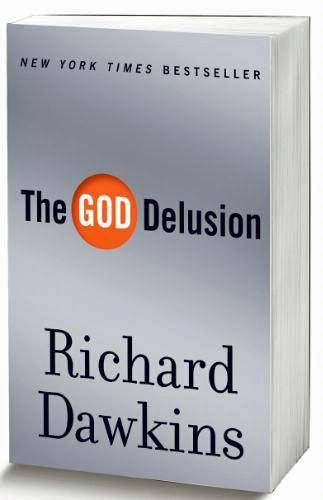
Dawkins Book

by Keisuke Noda, Professor of Philosophy, Barrytown College of UTS

Keisuke_NodaThe “unity” of science and religion is one of the central theses of Unificationism. In the Divine Principle, the “unity” of science and religion is discussed as one of the characteristics of “new truth” disclosed by the Principle. In practice, beginning in 1972, Rev. Moon held a series of International Conferences on the Unity of the Sciences (ICUS) in order to bridge science and religion. The sciences include natural, social, and human sciences, and religion includes Judeo-Christian and Islamic monotheism, non-Western religions, and various spiritual paths. Both in theory and practice, Unificationism seeks the integration of all knowledge within a theistic framework and the idea of a “unity” of science and religion  is part of this endeavor.

Recent atheist movements led by Richard Dawkins and Sam Harris have been undermining religion on the basis of “science.” Religious apologetics similarly attempt to justify their beliefs based upon “science.” Before we approach the question of the “unity” of science and religion, we need to clarify the nature of scientific knowledge as well as that of religious knowledge.

I challenge the popular belief that science is interpretation-free, a-historical, non-social knowledge, and argue that both science and religion have interpretive dimensions (whether there is any knowledge free from interpretation is a separate and open question). If science and religion are two types of interpretive theories, their frameworks of interpretation, including presuppositions and assumptions, require rigorous scrutiny. The hermeneutic structure of human understanding, the dynamic part-and-whole relationship between each element and the framework of interpretation, may be the most fundamental element in any human understanding.

What Does the “Unity’” of Science and Religion Mean?

There are two contrasting attitudes towards religion: one apologetic and another anti-religious. Others are somewhere in-between. Religious people often take an apologetic stance and try to find supportive evidence in the sciences. For them, “unity” means compatibility between or a justification of faith by science.

Continue Reading

How Will God and Humankind Build an Ideal World?

Fields-of-Flowers

By Henry Christopher, UTS Class of 1980

Henry ChristopherThe scholarly study of religion and theology helps us to understand concepts of God, as well as beliefs, traditions, institutions, and behaviors of the various world religions. Many of these religions have some concepts about the coming of an ideal world, a “Kingdom of Heaven on Earth.” However, it seems that religious scholars, for whatever reason, steer wide of describing what that world will be like, and how people will transition from this world of suffering to a world of peace and happiness.

Some day it might be interesting to find a graduate level course in a seminary offering an Introduction to an Ideal World. It would have great appeal for someone who has been wondering what life would be like—from a Judeo-Christian point of view—if Adam and Eve had obeyed God, and an ideal world had begun. Is that world still attainable?

The course would be based upon discovering what the nature and character of an ideal human being originally was meant by God to be like.

The ideal human being might be likened to a golden urn, discovered on the ocean floor, and encrusted with so many layers of seashells and sand, that when first found, would be nearly unidentifiable. It would be the work of this course to carefully remove, layer by layer all the debris encrusted over the hearts and minds of fallen humankind, until the original character of the true sons and daughters of God was revealed, and could shine in its natural beauty.

What would “a day in the life” be like, if humans were truly loving, honest, trustworthy, patient, humble, happy, secure, confident but not arrogant, good, moral, pure of heart, and decent? What would the world be like if we lived by the tenets: “Love the Lord your God with all your heart, all your soul, all your strength, and all your mind, and love your neighbor as you love yourself,” “It is better to give than to receive,” or “Live for the sake of others”?

Continue Reading

Website Built with WordPress.com.

Up ↑