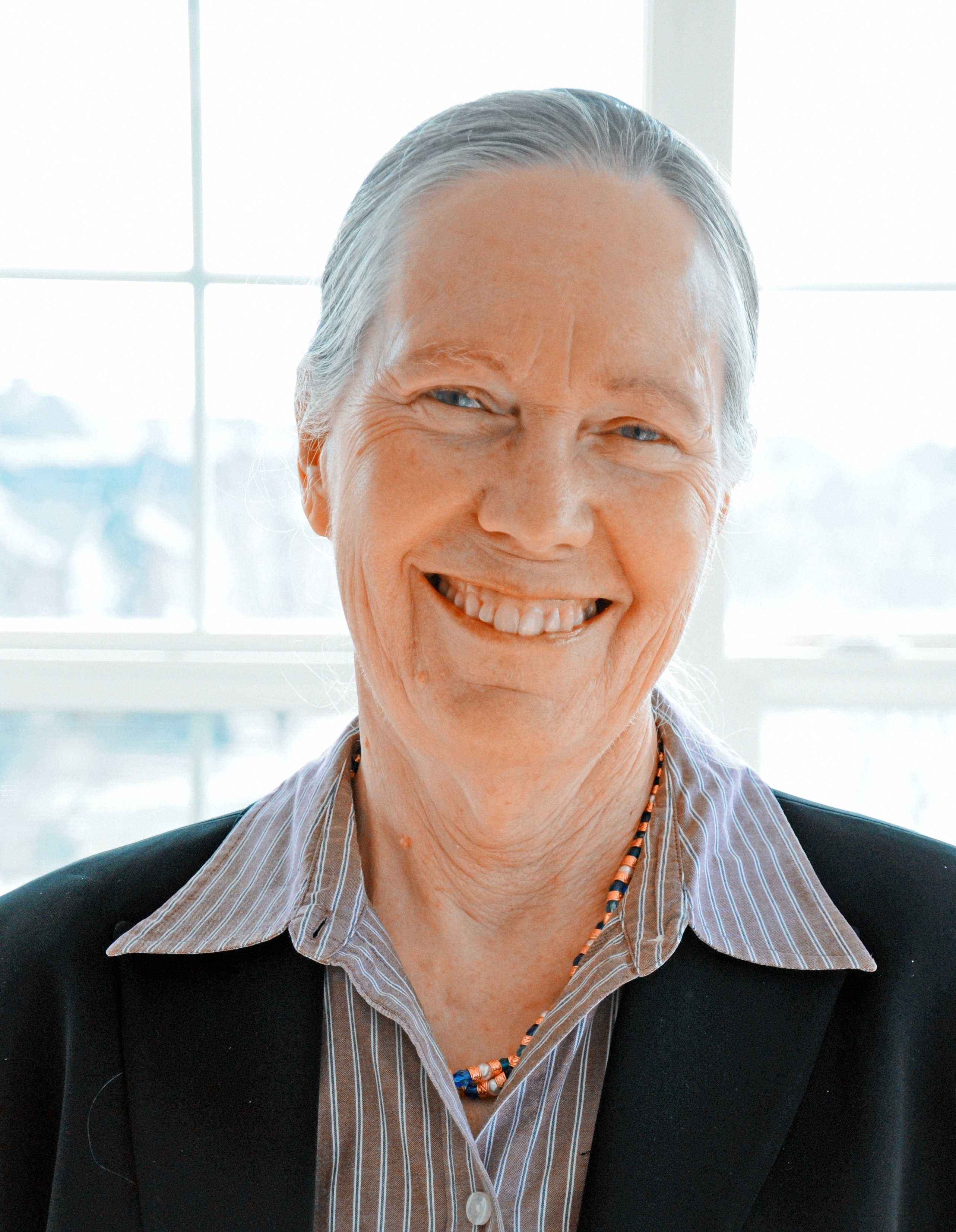
What Can Be Done About Violence in Society?

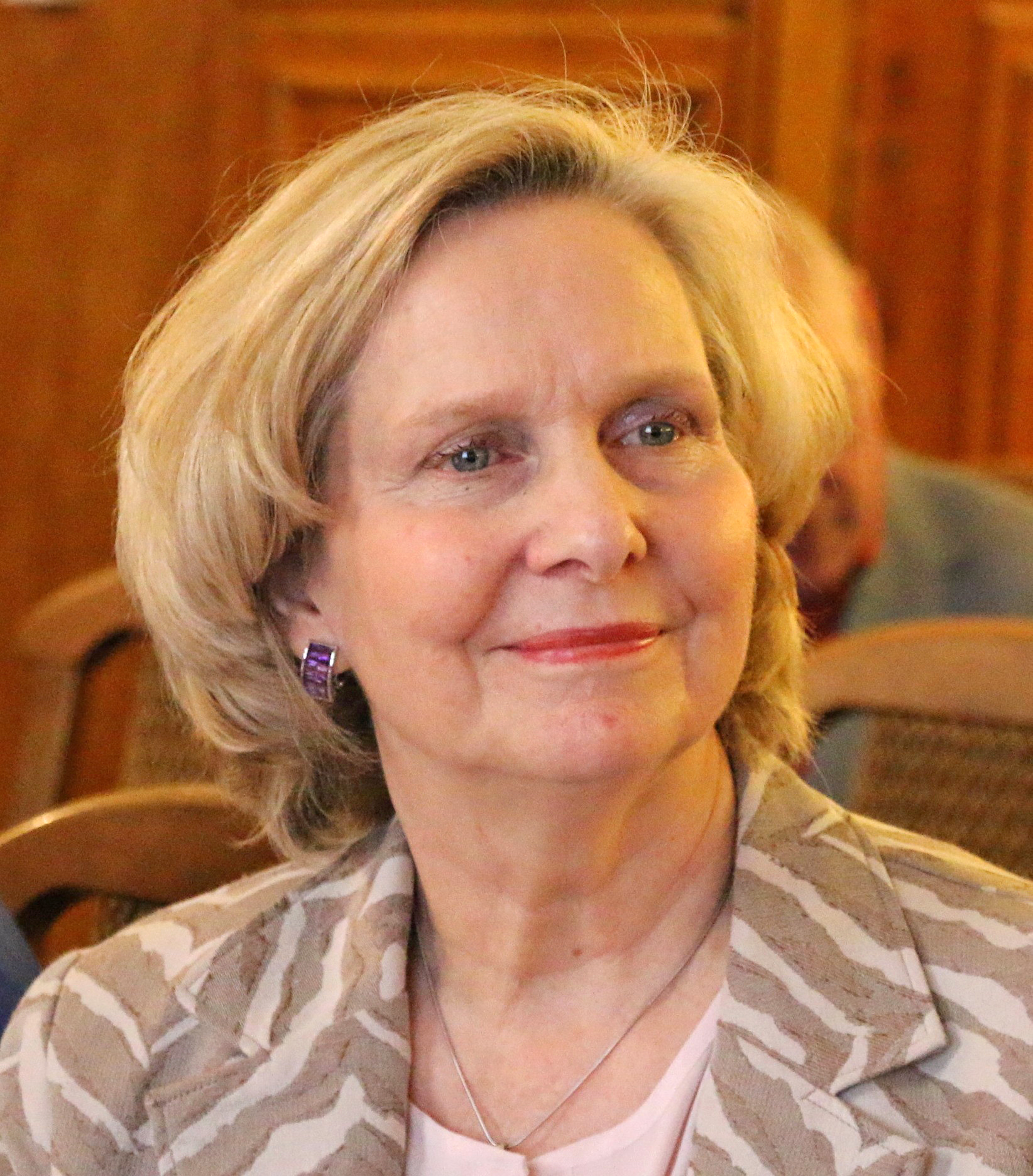
By Alice Fleisher

There have been 23 school shootings this year that resulted in injuries or deaths, according to a recent Education Week analysis. There have been 167 such shootings since 2018.

It’s very alarming that such incidents are becoming increasingly prevalent. How are we to understand violence in society and, more importantly, to correct this disturbing trend?

Certainly, an approach must be immediate and include responses by those tasked with public safety — law enforcement, legislators, nonprofit civic action groups, and those in the judicial branch.

But tackling social problems through those venues will not result in the longer term and more comprehensive solutions we need. Such a strategy could be likened to EMTs, paramedics, and emergency room staff treating superficial wounds while ignoring underlying organ or other bodily system damage.

Surely efforts must be made to identify underlying factors that contribute to this troubling social trend weakening our societies. Those factors include, but are not limited to, the perpetration of violence upon the innocent and vulnerable, the venting of frustration and anger through violence, and the inability of people to curb their destructive impulses. Even more deadly are the bullying and dominance of individuals, groups, and larger levels of society based on a perceived division between them and us that is rampant within society.

This article has been informed by the works of scholars I encountered as part of my current graduate degree pursuit at UTS. I present my own views at the conclusion.

One scholar, Wolfhart Pannenberg (1996), notes that currently the religious and spiritual dimension of human beings has been marginalized in the public sphere. He traces this to the thinking behind and actions of the French Revolution, which, among other revolutionary initiatives, included the beheading of those in the monarchy and aristocracy who could not flee the wrath poured upon them, pitted reason against faith, and scapegoated religious institutions (generally the Catholic Church) as sources of repression and injustice, enacting a strict separation of church and state.

In this scenario, the church and religion were seen as the source of problems, not solutions. The separation of church and state in the United States is not as contentious as in many European nations, since the U.S. doesn’t have the antagonistic backstory found in Europe. In the U.S., while religion and government are separated by the Constitution, religion is still considered a potential source of social help and beneficial public service.

While the U.S. is at its core a religious (essentially a Christian) nation (see Himmelfarb, 2004), religion’s presence in the public sphere is noticeably missing. Pannenberg claims that in societies where religion has been reduced in prominence, a profound and debilitating loss of meaning can be found, which he ties to the presence of personal and social violence.

In the last two or three decades, however, it has become evident that secularization (or, as some prefer, progressive modernization) faces severe problems. The thoroughly secularized social order gives rise to feelings of meaninglessness: there is a vacuum in the public square of political and cultural life, and this invites violent outbreaks of dissatisfaction.

Continue reading “What Can Be Done About Violence in Society?”

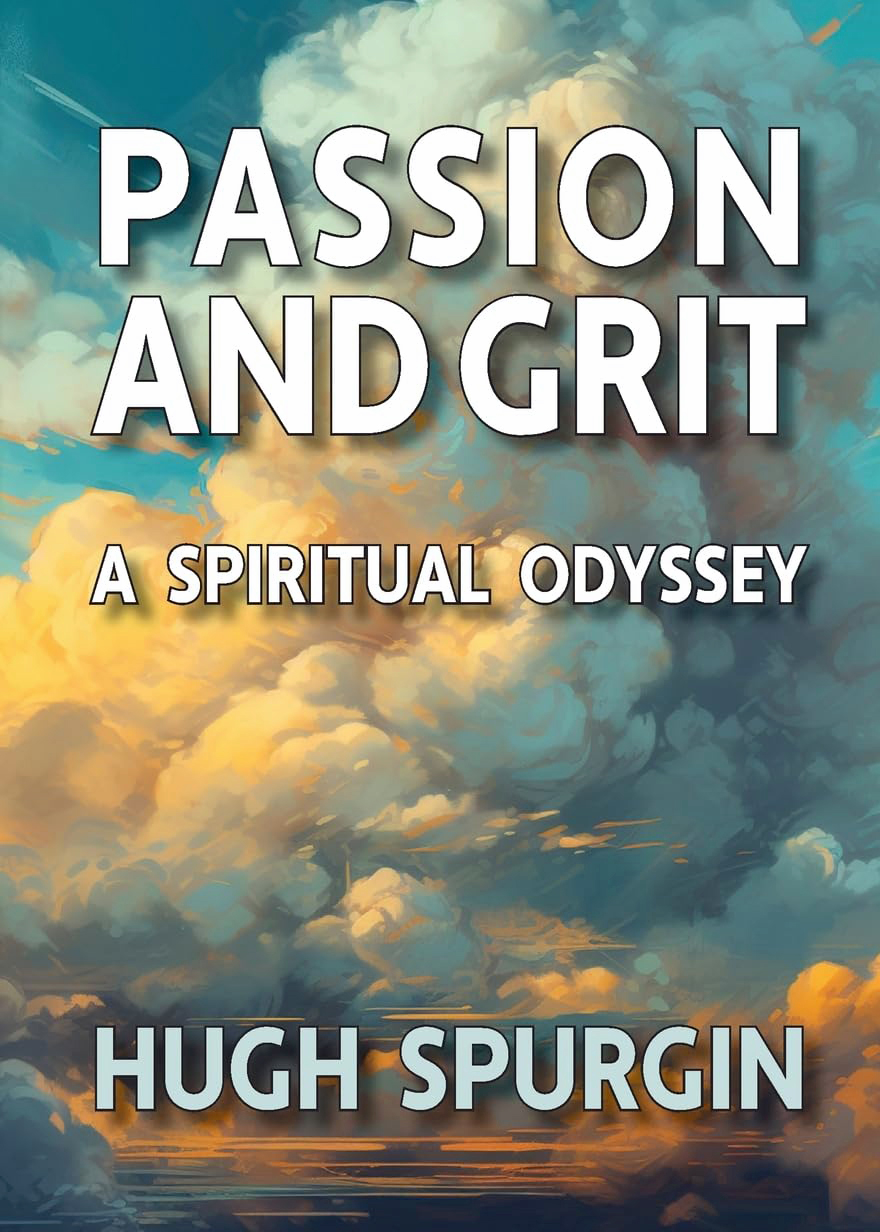
Passion and Grit: A Spiritual Odyssey

By Gordon L. Anderson

The autobiography of Hugh D. Spurgin, Passion and Grit: A Spiritual Odyssey, is the story of an early follower of the Rev. Sun Myung Moon in America. It reveals the impact of the power of a higher truth on a conscientious and idealistic person who seeks to live the most meaningful life possible.

In the 1960s and 1970s, material prosperity in the United States was high, but traditional religious doctrines had lost their power to explain the nature of reality and human happiness in a scientific world. The baby boomers were coming of age in a world of confused and conflicting values. Some accepted the establishment, others rebelled against it, but still others, like Hugh, sought constructive ways to move forward, discerning what was of value in our traditions, and what needed to change.

Rev. Moon’s teachings put Hugh on a life journey, not only a spiritual path, but as a member of a new community in which he raised his family and became a leader of a worldwide movement that has now reached millions of people. This book is both a chronicle of Hugh’s life and the development of the Unification Church, now the Family Federation for World Peace and Unification (FFWPU), and how Americans worked to bring Rev. Moon’s teachings of a higher culture and more peaceful world.

A Seeker of Truth

Hugh was born in Roswell, New Mexico, in 1945 and grew up in Terre Haute, Indiana. The family attended a Presbyterian Church and his dad was a chiropractor. Hugh liked sports and outdoor activities. After graduating from high school in 1963, he went to Indiana State University and excelled in social sciences, and went on for a master’s degree in public administration at the Maxwell Graduate School in Syracuse, New York. This landed Hugh an internship, and later a full-time administration job with the U.S. Navy in Washington, DC. He had a top-secret clearance and secure employment in the federal government.

Hugh was not content to simply pursue this career. He was always seeking answers to historical and religious problems and ways to make the world better. While studying the Baha’i faith, he was invited to hear several lectures based on Rev. Moon’s teachings at the Unified Family center in a Victorian mansion on Upshur Street. Hugh heard clear answers to some of his questions about evil, God, Jesus, and salvation. It was an eye-opening, comprehensive historical perspective on human history and civilization. It also presented principles about peacefully advancing human society. He decided to join this small group and help transform the world.

When Rev. and Mrs. Moon came to Washington, DC in 1969, they moved into Upshur House for 40 days, spending quality and personal time with Hugh and the other members who lived or gathered there. Hugh was amazed by Moon’s interracial and intercultural approach to marriage, breaking down traditional religious and ethnic boundaries with the goal of creating one world family under God.

Continue reading “Passion and Grit: A Spiritual Odyssey”

The Next Great Awakening Through the Convergence of Science and Religion

By John Redmond

Students of human history are very aware of patterns and cycles that define our intergenerational experiences. The hope is that by discovering the systemic causes of failures in the past we can prevent or reduce the consequences of failures in the current age.

Karl Marx hypothesized that the important cycles of history were the ones defined by the conflict dialectic and that the arc of history is bending toward worldwide socialism, where material wealth is uniformly distributed.

In the Divine Principle, history moves by the Principles of Restoration in cycles, but the length of the cycles is dependent on the providential response of the central figure and chosen people of an age.  The arc of providential history creates a society spiraling upward in increasing beauty, truth and goodness, in addition to the abundance of material prosperity.

The last 400 years of human history have been a golden age of prosperity by any historical measure.  There is widespread anxiety that the scientific forces unleashed by the Enlightenment will cause humanity to end in disaster as previous golden ages have. Elon Musk said he’s determined to create another populated planet in case humans render earth uninhabitable.  The Dark Ages, which followed the Roman Empire and birth of Jesus, led to 1,000 years of dystopia.

Recent political polarization, exacerbated by Internet information algorithms, have created toxic levels of political discourse in America.  This was predicted by Marx, who thought that escalating conflict created conditions for a revolution that would destroy an old structure so that it could be replaced.

The Divine Principle also predicts that conflict can clarify roles of a subject and object, but that in cases where the opponents can be reconciled to a higher truth, a system of higher complexity, unity and effectiveness can be created.

A good example of this success is the creation of the United States.  The mounting conflict of the American colonies with England from the 1770s could have resulted in some representation in England, lower taxes, or a humiliating loss.  However, the Founding Fathers and Mothers of America were moved to create something new and higher than a simple political win, and indeed, America has been the indispensable nation for the last 100 years.

It seems that human history may be at a turning point from both the materialist and spiritual points of view.  What are the forces that affect that turning point and how can we influence the course of history to create an upward spiral rather than a 1,000 year decline?

History has some precedents for how society has been shaped by spiritual and religious movements.

This response from ChatGPT, an artificial intelligence chatbot, was to the question: “What were the Great Awakenings and what were the consequences for America?”

“The First Great Awakening took place in the 1730s and 1740s. It was sparked by preachers such as Jonathan Edwards and George Whitefield, who emphasized the importance of personal conversion and a direct relationship with God. The movement had a profound impact on colonial society, as it challenged traditional religious authority and hierarchical structures. It led to the growth of new religious denominations, such as the Baptists and Methodists, and promoted ideas of equality and individualism.

Continue reading “The Next Great Awakening Through the Convergence of Science and Religion”

Enlarged Freedom for a Safer World: A Unificationist Approach toward Human Security

By Laurent Ladouce and Carolyn Handschin-Moser

After the end of the Cold War, many hoped the 21st century would be one of lasting peace. It actually started well with the International Decade for a Culture of Peace and Non-Violence for the Children of the World.

During this period, Rev. and Mrs. Sun Myung Moon launched the Universal Peace Federation (UPF). With its network of Ambassadors for Peace worldwide, it has an impressive record of peace initiatives. Hopefully, the emergence of a graduate school for peace and public leadership in the Unification movement will also bring innovative and creative ideas to the philosophy of peace studies.

Regrettably, peace studies often stop at conflict resolution or conflict transformation. We need more “positive peace studies.” We keep viewing peace as pacification, the return of tranquility after a period of conflict. According to Heraclitus, the founder of dialectics, “Polemos (war) is both the king and father of all.” We still live in a culture where there is only a truce between two wars. The term “irenology” (from the Greek irene, meaning peace) exists, but is rarely used.

The Genesis of Human Security

Peace is more than the absence of war, we say. But what should be present when war is absent? The revolution of Satyagraha, launched by Gandhi, went far beyond the Home Rule movement which had blossomed in India in 1916-18 and was to end the British colonial occupation. Satyagraha literally means that truth has an element of love and an element of energy within itself. Gandhi added:

“Truth (satya) implies love, and firmness (agraha) engenders and therefore serves as a synonym for force. I thus began to call the Indian movement Satyagraha, i.e., the Force which is born of Truth and Love, and gave up the use of the phrase “passive resistance” in connection with it.”

Gandhi wanted to make Indians the actors of their own destiny, free to build a peaceful and good society. He noted:

“I would like to see India free and strong so that she may offer herself as a willing, pure sacrifice for the betterment of the world. The self, being pure, sacrifices himself for the family, the latter for the village, the village for the district, the district for the province, the province for the nation, the nation for all.”

We often chant “study war no more” (see Isaiah Wall photo below), but study what, then? Indeed, we accumulate valuable knowledge to gradually change from a very violent to a less violent world, and ultimately to a world with zero violence. But what stands above the zero? Unificationism states that Cain and Abel should reconcile and settle their disputes, then live together. In practice, most Unificationists still seek a roadmap for a feasible universal concord. The Unificationist community, not unlike most religious organizations, believes in some form of utopian universal concord. A proper understanding of human security may be an eye-opener to arrive at something more concrete.

Continue reading “Enlarged Freedom for a Safer World: A Unificationist Approach toward Human Security”

From Korea with Love

By Michael L. Mickler

I have had the privilege of chairing an editorial team that has been assembling a chronology of the life and work of Sun Myung Moon (1920-2021) and Hak Ja Han Moon (1943-) in the United States from 1965-2022. Dr. Ki Hoon Kim, FFWPU Cheon Eui Won Chair of North America, initiated the project in June 2020, and the team began work in August. In October 2020, Dr. Kim conveyed oversight of the project to Dr. Chung Sik Yong, FFWPU Regional President of North America.

For two-and-a-half years, the team — Dr. Franco Famularo, Dr. Frank Kaufmann, Michael McDevitt, Larry Moffitt, and Tal Zorer — has met twice weekly and spent countless additional hours with the goal of documenting Father and Mother Moon’s daily activities in the U.S. The initial draft is nearing completion. This article covers various aspects of the chronology: its rationale, organization, scope and limitations, and findings. It also offers thoughts as to ongoing work.

The Family Federation for World Peace and Unification (FFWPU), also known as the Unification Church, has a distinctive terminology, reflecting its theology and traditions. The chronology (and the remainder of this article) follows Unification terminology. Most prominently, it uses True Father, True Mother, True Parents and True Family to refer to Sun Myung Moon, Hak Ja Han Moon, their couple and their family.

This chronology is not a full narrative of True Parents lives, which extended far beyond U.S. borders. However, chronologies of this type are foundational for broader narratives. Unificationists are confident that Father and Mother Moon’s nearly 60 years of ministry in the U.S. evidence unparalleled dedication and consistency. Whether they were tired, misunderstood or what time of day it was were secondary matters. The mission and people of the U.S. were primary. For Unificationists, they came from Korea with love. In this respect, compiling a chronology is a form of appreciation.

Organization

Early on, the editorial team agreed to organize True Parent’s activities in the United States and the chronology by decade, each of which has a distinctive character:

  • During the 1960s, True Father visited the U.S. for the first time in 1965, as part of his first world tour, establishing 55 Holy Grounds in 48 states in 43 days. In 1969, True Father returned to the U.S. with True Mother as part of the second world tour, during which they blessed 13 couples in marriage.
  • During the 1970s, True Parents shifted the focus of their ministry to the U.S. and became highly visible, conducting rallies in all 50 states, including at major venues such as Madison Square Garden, Yankee Stadium and Washington Monument.
  • During the 1980s, True Parents expanded their ability to exert influence in the U.S., establishing The Washington Times and educating American leaders as to the dangers of atheistic communism. At the same time, controversy which began in the 1970s led to True Father’s incarceration.
  • During the 1990s, True Parents publicly declared their messianic identity, established numerous federations for world peace, including the Family Federation for World Peace and Unification (FFWPU), and conducted massive International Marriage Blessings.

Continue reading “From Korea with Love”

The Veneration of Mary and Its Implications for Women in the Church

By Mika Deshotel

The veneration of Mary, the mother of Jesus, has been around for as long as the early Apostles. It emerged in conjunction with the understanding of the dual roles of Jesus Christ, as both fully human and fully divine. As the “Mother of God,” naturally Mary’s position was elevated. In order to be a sanctified vessel for the Son of God to be born, Mary needed to be recognized as having exceptional qualities, similar to Jesus.

The qualities of perpetual virginity, being immaculately conceived herself, and her bodily assumption into heaven were implemented within Roman Catholic Church doctrine from the 16th century. Mariology is the theological study of Mary through written accounts and the subsequent doctrines associated with her throughout the history of Christianity. It is distinct from, albeit related to, the practice of veneration and devotion to Mary.

Here, I explore the underlying circumstances for the prominence of devotion to Mary, especially in the Roman Catholic Church, how it became official dogma, and how official statements about Mary have been somewhat problematic for women of the Church in particular. I also explore how the Unification Movement addresses such issues attributed to Marian devotion, through the current leadership of co-founder, Dr. Hak Ja Han Moon, and how she is trailblazing a new view on feminine value which may ultimately help reform and encourage women leadership in the Church.

Historical background of the veneration of Mary

Given that so little is said about Mary in the Bible, it is amazing how the church as a whole, and Roman Catholic Church in particular, adores Mary. The rise of Mary came naturally as a consequence of the church developing its Christology, and the idea of Jesus being both fully human and fully divine. The term Theotokos, meaning “God-bearer,” was ascribed to Mary by the Third Ecumenical Council at Ephesus in 431 CE.

This was in contrast to the idea of Mary as Christotokos, or “Christ-bearer,” meaning Mary was the mother of Christ only in the sense of his body, but not his divine nature. Theotokos was not to make the assumption that from Mary’s body came the Word of God, but rather, as theologian Raymond Potgieter notes, Mary “was the vessel through which the eternal Word was incarnated in [the holy body of] Jesus Christ.” At the Council at Ephesus, Mary’s special role, not only as divine mother, but divine virgin mother, became clear.

Eventually the church credited her with titles like Mistress of the World, Queen of Heaven, and Mother of God. The early church historian and apologist, Irenaeus, called her the “New Eve,” as her son, Jesus, was the “New Adam.” Mary “obeyed” God, “whereas ‘the virgin’ Eve, did not.” Additional theological statements pertaining to Mary began from the 4th century, with church fathers such as Jerome and Origen promoting the idea of Mary’s perpetual virginity. The Council of Chalcedon, which reaffirmed Mary’s status as Theotokos, did not address the issue of her perpetual virginity, but by that time it was accepted within the larger ecclesial tradition. It was only a matter of time for the idea of the virgin Mary to be sinless.

Continue reading “The Veneration of Mary and Its Implications for Women in the Church”

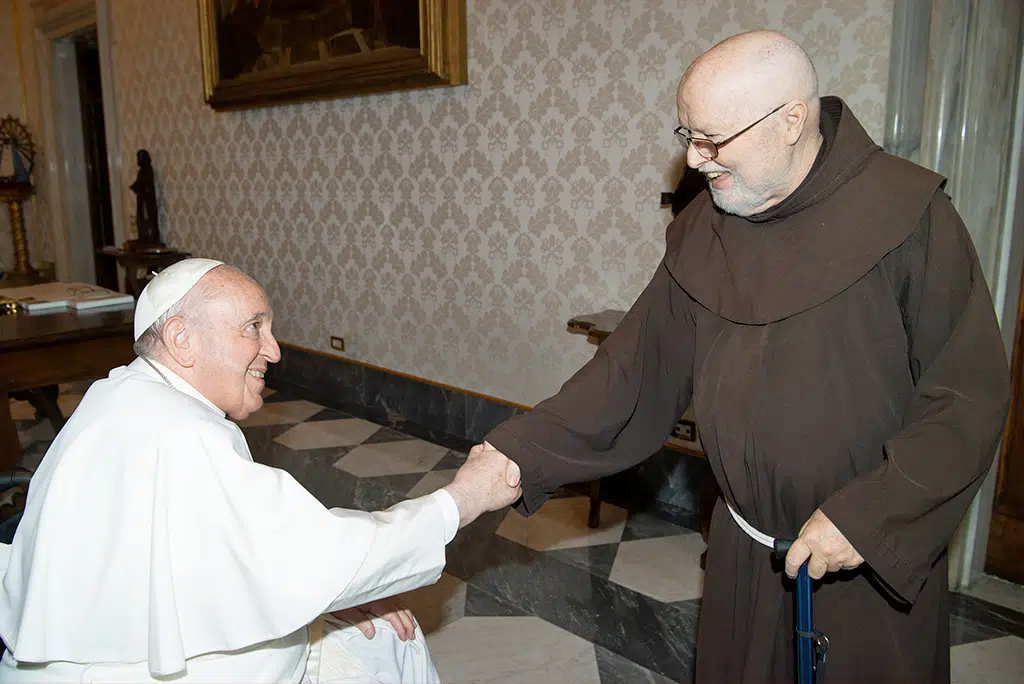
Traditional Roman Catholicism vs. Franciscan Mysticism: A Case Study for Unificationists

By Ron Pappalardo

Recently, a significant reconciliation took place between two opposing factions within Roman Catholicism.  In light of divisions plaguing the Unification faith community at present, it is instructive to look at how this reconciliation took place.

After watching a video on Franciscan Mysticism by Father Richard Rohr, it occurred to me that there is quite a contrast between traditional Roman Catholic theology, such as found in the Baltimore Catechism I studied as a child in parochial schools, and Franciscan Mysticism.

Here, I examine the possibility — perhaps even probability — that these two traditions contradict each other in various ways. I briefly describe the different theological positions of traditional Roman Catholicism versus Franciscan Mysticism. If these positions do contradict each other, then there might have been, and still may be, tension and conflict within Catholicism at large between these two traditions. I investigate this possibility and discuss any attempts that have been made to deal with and perhaps resolve these intrafaith tensions.

Traditional Roman Catholicism

Roman Catholicism teaches that all human beings since the fall of “our first parents,” Adam and Eve, have been born with original sin, making necessary the coming of Christ for the purpose of redeeming us from sin through his crucifixion.

These teachings are clearly stated in the Baltimore Catechism, an official text used to educate Catholics and prospective converts about the basic doctrine of the Catholic Church. Most Catholics, in the United States at least, studied this text as part of the curriculum of their parochial school education, or by attending Confraternity of Christian Doctrine (CCD) classes usually held on Saturdays. The catechism book is presented in a “question and answer” format, with each question identified by a unique number. It was originally written in 1885; the following questions have been selected from the 1941 revised edition:

47. Q. What is the sin called which we inherit from our first parents?

A. The sin which we inherit from our first parents is called original sin. Because of this sin, it was necessary for Jesus Christ to be born. His purpose was to redeem humankind by dying on the cross.

60. Q. Did God abandon man after he fell into sin?

A. God did not abandon man after he fell into sin, but promised him a Redeemer, who was to satisfy for man’s sin and reopen to him the gates of heaven.

83. Q. Why did Christ suffer and die?
A. Christ suffered and died for our sins

103. Q. What do we mean when we say that Christ sits at the right hand of God, the Father Almighty?

A. When we say that Christ sits at the right hand of God, the Father Almighty, we mean that Our Lord as God is equal to the Father, and that as man He shares above all the saints in the glory of His Father and exercises for all eternity the supreme authority of a king over all creatures.

Continue reading “Traditional Roman Catholicism vs. Franciscan Mysticism: A Case Study for Unificationists”

What Music Tells Me: Beauty, Truth and Goodness and Our Cultural Inheritance

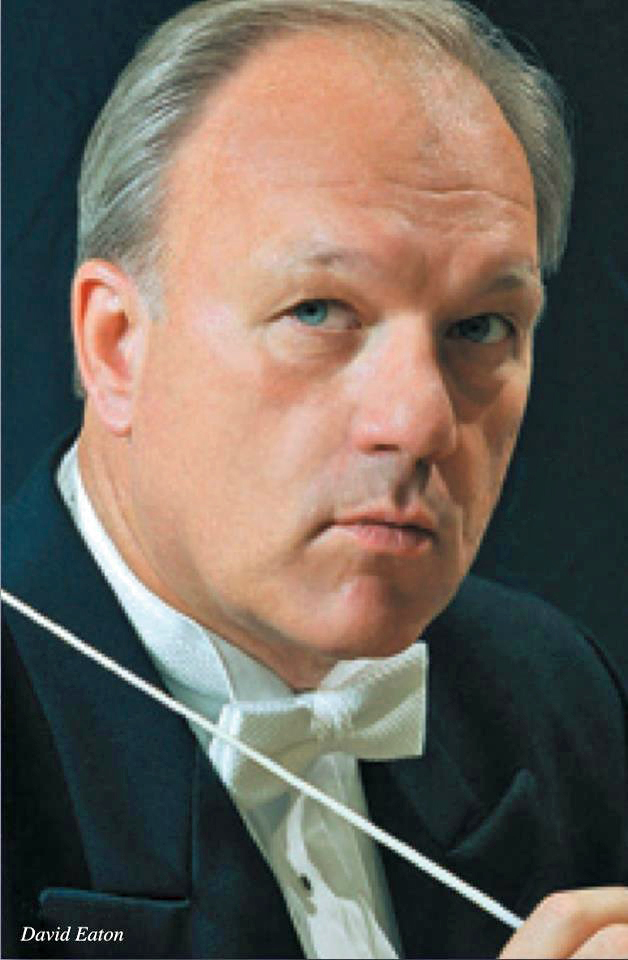
By David Eaton

The 19th century French novelist, Gustave Flaubert, asserted that “the art of writing is the art of discovering what you believe.”

In the process of writing my book, What Music Tells Me: Beauty, Truth and Goodness and Our Cultural Inheritance, I realized Flaubert’s assertion was quite apt.

The chapters in the book span several decades and were written for various publications, including The World & I magazine, the Journal of Unification Studies, the Peace Music Community blog, and the Applied Unificationism blog.

They draw upon many of my experiences as a musician, as well as my interest in music in relation to politics, philosophy, commerce, education, and religion. The influence of music on self and society is a central narrative of my book.

What Music Tells Us

One of my favorite composers is Gustav Mahler (1860-1911). Mahler is generally considered to be the last of the great symphonists of the European symphonic tradition. He composed nine symphonies and his third symphony, written between 1893 and 1896, has six movements. He ascribes the following titles to each movement:

1.  Pan Awakes, Summer Marches In
2.  What the Flowers in the Meadow Tell Me
3.  What the Animals in the Forest Tell Me
4.  What Man Tells Me
5.  What the Angels Tell Me
6.  What Love Tells Me

For Mahler, nature, angels, humankind, and love all had something to say to him — presumably something imbued with beauty, truth and goodness. He would say that it was through the art of music that he could find answers to many of his questions regarding life, love and the pursuit of happiness.

Mahler intuited, as did those in ancient cultures, that music wasn’t solely about pleasure or aesthetics. Like the philosophers of ancient China and Greece, Mahler believed music possessed moral and ethical implications and could be a gateway to higher truths and deeper understandings of the human condition.

Hebrew and Christian philosophers also shared this perspective and wrote treatises regarding the effects of music on self and society — psycho-acoustics in modern parlance. Any examination of our cultural patrimony reveals that the metaphysical, spiritual and axiological aspects of music, and its potential as a change agent in the spheres of politics and public ethics, has been a constant refrain from antiquity to Mahler, and remains so today.

The Unification movement’s founders, Rev. Sun Myung Moon and Mrs. Hak Ja Han Moon, often alluded to the importance of art and culture in establishing a culture of peace. In their respective memoirs, they each aver that it’s not politics that changes the world, but art and culture that can move people’s hearts and raise consciousness and thereby foster conditions for socio-cultural betterment.

Continue reading “What Music Tells Me: Beauty, Truth and Goodness and Our Cultural Inheritance”

A Manifesto for an Integral Society

By Gordon L. Anderson

Societies have become very complex since early nation-states formed in the 17th century.

Corporations, central banks, political parties, government bureaucracies, and many other social institutions have arisen to assert great control over individual citizens. These institutions can be of great service or harm to individuals, depending on their purpose and how well they are managed.

Will a way be found to keep them in the service of the people, or will they create a dystopian future in which people have little value except as serfs to those who control these institutions?

Much of the strife in our societies results from the loss of freedom and personal sovereignty as social institutions expand, taking control of governments, land, food, money, health, and energy.

Self-sufficient individuals, small businesses, and small towns are threatened by wealthy elites, global financial conglomerates, and the financial, ideological and political hijacking of institutions. Inflation, the fear of rigged elections, and energy shortages are causing populist uprisings as those who control governments, banks and resources threaten them with indignity.

We have reached a critical point in the evolution of human society. The array of highly developed social institutions in our complex post-modern world can either be put to the service of individual sovereignty and happiness or, left unchecked, put to the service of elites who use these institutions for their own power and wealth as sovereign citizens become a new type of feudal serf.

The Divine Principle refers to this time as the “Last Days,” when the Messiah will appear with a higher truth that can usher in the Completed Testament Era. Rev. Sun Myung Moon spoke about headwing thought that would transcend both the right and the left centered on Godism.

In a Journal of Unification Studies article, “Toward a Headwing Society: The Harmony of Three Social Spheres,” I explained how important elements in Unification Thought fit with a developing school of integral thought: stages of growth to perfection in both individuals and society, internal and external aspects of human life, and the preparation for the ideal world with developments in the last 400 years in which feudalism gives way to individual sovereignty.

An integral society can be viewed as Completed Testament society.

This book intends to show the way forward and stimulate discussion on how to achieve an integral society. In an integral society, social institutions exist for specific purposes that serve human beings. Integral society is created by an integral consciousness. That consciousness is rooted in a view of the whole that respects the value of each individual.

Integral consciousness is developing in our world as reflection on the nature and purpose of our post-modern life accelerates. The most popular pioneer in the field of integral studies is Ken Wilber, whose A Theory of Everything: An Integral Vision for Business, Politics, Science and Spirituality was a bestseller.

Continue reading “A Manifesto for an Integral Society”

Website Built with WordPress.com.

Up ↑