Hollywood, Sexuality and Cultural Marxism

Satan_before_the_Lord

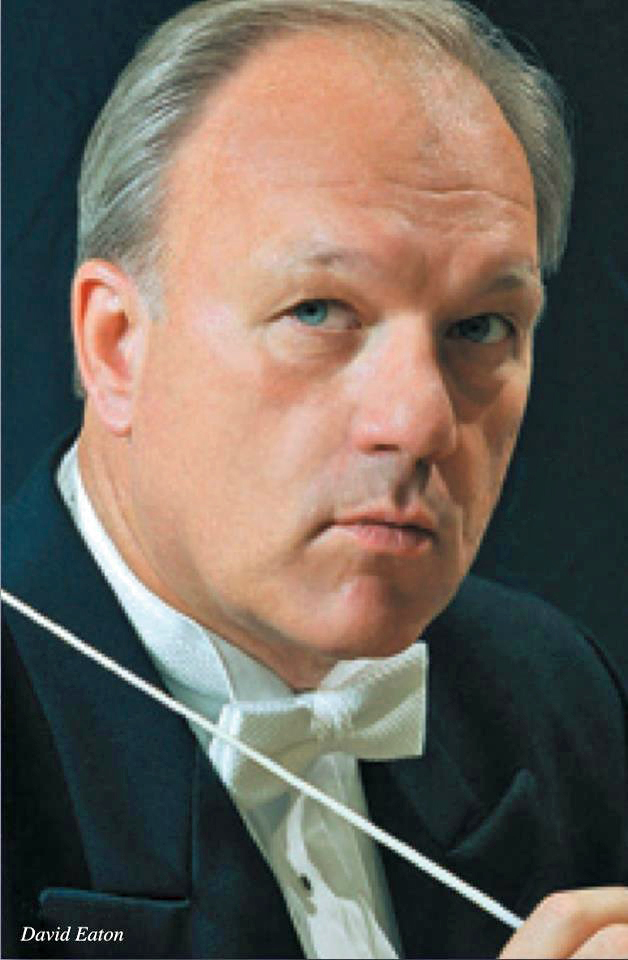
By David Eaton

david_eatonConfucius once averred:

“If one should desire to know whether a kingdom is well governed, if its morals are good or bad, the quality of its music will furnish the answer.”

I contemplated his observation as I watched the telecast of last month’s 88th Academy Awards. If we were to substitute the word “music” with “cinema” or “culture,” the Chinese sage might be more than a bit angst-ridden given the tone and tenor of the Oscars.

Predictably, the show’s host, Chris Rock, pummeled the Hollywood establishment for its lack of racial diversity among the nominees — a major issue in the run-up to the Oscars. But not far from the surface was Hollywood’s seemingly incessant need to sexualize the proceedings. Comedienne Sarah Silverman’s riff on sexual intercourse viz. James Bond, and Rock’s quips, about helping the show’s music director “get l__d at the Governor’s Ball” and the panties of a female pop star in the audience, were reminders of Hollywood’s duplicity in matters of sexual probity.

I wondered how Chris Rock’s Girl Scout daughters reacted to Silverman and their dad’s overt sexual suggestiveness. Surely they were watching (as I was with my 21-year old daughter), and I cringed at the vulgar and completely unnecessary sexual repartee. But here again was an example of the in-your-face sexuality Hollywood both glorifies and aggressively markets while attempting to be viewed as virtuous on other social matters.

To be fair, the serious issue of sexual abuse was front-and-center at the Oscars with “Spotlight” spotlighting the problems within the Catholic Church (and winning Best Picture). “The Hunting Ground,” dealing with the problem of campus rape, was not nominated for Best Documentary Film, but the film’s song, “Til It Happens To You,” was a nominee for Best Original Song.

Continue Reading→

An Inquiry into “Parallels of History”

Libro_historia

By Michael Mickler

Michael_MicklerUnificationists are, if anything, a people who take their history seriously. Reverend Moon continually spoke of divine providence in his speeches and sermons. Wolli Kangron (1966), translated into English as Divine Principle (1973) and Exposition of the Divine Principle (1996), also focuses to a large extent upon historical matters, devoting more than half its content to a comprehensive survey of salvation history.

Unificationists, likewise, are encouraged to view themselves as being responsible for “all the unaccomplished missions of past prophets and saints who were called in their time to carry the cross of restoration.”

A striking feature of Unification theology is its exposition of “parallels” in history. The basic premise is when a “central figure” fails to fulfill his or her portion of responsibility, God will set up another person in place of the former.

This applies not only to individuals but also to collectives. The Principle focuses special attention on “parallels of history” between Judaism and Christianity. It highlights six specific parallels:

  1. Israelite slavery in Egypt and Christian persecution under the Roman Empire;
  2. Israelite conquest of Canaan under the Judges and Christian conquest of Rome under the patriarchs;
  3. The United Kingdom under King David and the Holy Roman Empire under Emperor Charlemagne;
  4. The Divided Kingdoms of North and South (Israel and Judah) after Solomon and the Divided Kingdoms of East and West (Germany and France) after Charlemagne’s successors;
  5. Jewish Captivity and Return (from Babylon) and Papal Exile and Return (from Avignon, France);
  6. Jewish Preparation for the Advent of the Messiah (from Malachi) and Christian Preparation for the Second Advent of the Messiah (from Luther).

Continue Reading→

Transcending Cain and Abel: Revolutionary and Reactionary Consciousness

cain-slaying-abel-jacopo-palma-1590

By Gordon L. Anderson

GordonIn the Divine Principle, the biblical story of Cain and Abel is seen as two brothers in a fallen family. Abel’s offering was accepted by God and Cain’s was not; Cain got angry and killed Abel and then fled his parents to start a new life. Abel is described as “closer to God,” but his consciousness is still that of an immature son and not a mature parent.

I often think of Cain and Abel as representing reactionary and revolutionary consciousness in the wider political spheres we see around us today. By “revolutionary” I mean the idea of “revolt” like Cain’s, and not peaceful revolution. These two different approaches to politics each claim to be right and when they compete with one another for political power, often end up repeating the “Fall” on a national scale.

Human society is always evolving as changes in science, technology and population lead to changes in human life. The reactionary refuses to adapt and looks for refuge in the past. The revolutionary recognizes the need for change but wants to violently jettison the past. The French Revolution and Communist Revolution in Russia are examples of “Cain-type” revolutions that led to violence and murder on a massive scale. By wiping out the traditional “reactionary” rulers, the Ancien Regime in France or the Czarist feudal system in Russia, and starting over, creating a new society, they ended up re-inventing many wheels and causing much evil, death and human suffering.

In developmental psychology, Cain and Abel attitudes represent typical responses of children who begin to compare and question at age 12 or 13. Children are born like sponges and soak up the environment of their parents and nurturers; they initially know no other way of life than the traditions they are given. However, as they begin to individuate, particularly in middle school, they begin to compare their lives to those of other schoolmates who came from different homes, with differences in wealth, discipline, religion, family integrity, etc.

Continue Reading→

My Journey to Become a Hospital Chaplain

Chaplain Journey Final - press quality JPG

By William P. Selig

WS CU cropIt was early morning at the hospital when I was called to an elderly patient’s room. The son and his family had driven all night to be there. As I entered the room, it was as if a curtain was being drawn open, a spotlight appeared, the audience hushed, and the performance was about to begin. There were no introductions, not a single word was spoken. Somehow everyone “knew” me. Frankly, they knew me even better than I did – the chaplain is here.

In that spirit-filled atmosphere, my heart “heard” and understood that we were in the midst of a sacred moment. We stood around the bed and held hands. As a prayer came from my lips, in the background I could hear the weeping of the family and relatives. When I stopped speaking and opened my eyes, I felt like a spent rain cloud. Everyone was looking at me. After a moment, the patient whispered, “Thank you, pastor. Your words filled my soul.”

So many times I have seen how the power of prayer brings a sense of connection to God’s love and healing power. When a patient is lying in bed feeling distressed and anxious, prayer has the potential to provide spiritual healing and bring a sense of harmony and wholeness. Make no mistake. Spiritual pain and fear are just as real as physical pain.

My journey to become a chaplain truly has been a blessing. As much as God has used me to touch the lives of so many patients, family and staff, I have to testify that I too have been touched and my own spiritual growth has benefitted. More than once, I’ve wondered who gains more from the encounters: the patient or myself?

Continue Reading→

God as Heavenly Parent in Rev. Moon’s Early Teachings

June 2006

By Andrew Wilson

WilsonOn January 7, 2013, weeks prior to Foundation Day, Mrs. Hak Ja Han Moon, who since her husband’s passing on September 3, 2012, has led the Unification movement in her capacity as True Mother, declared that henceforth Unificationists should refer to God not as Heavenly Father but as Heavenly Parent.

Many members regarded this as a controversial innovation. Some objected to what they saw as unwarranted tinkering with time-honored tradition while others welcomed it as a step away from a sexist view of God.

However, the term Heavenly Parent, along with its implication that God is the Heavenly Mother as well as the Heavenly Father, was already an established feature of Reverend Moon’s theology, especially in his earliest teaching, Wolli Wonbon (1951).

Although as a rule Rev. Moon referred to God as Heavenly Father, he occasionally gave voice to the term Heavenly Parent. In the Cheon Seong Gyeong (2008), a large anthology of selections from his sermons, the term occurs more than a dozen times. For example,

That is something of a revelation about the Korean people — living with the Heavenly Parents for thousands and tens of thousands of years. (152)

By attending the Heavenly Parent, the heavenly kingdom and the heavenly ancestors, a royal domain will emerge (912)

We have not known that we have such a Heavenly Parent. (1151)

Have you shown filial piety to me as you would to your Heavenly Parents? (2225)

The Cheon Seong Gyeong (2014) includes an excerpt of a 1977 speech in which Rev. Moon refers explicitly to the two genders of Heavenly Parent, Heavenly Father and Heavenly Mother:

Continue Reading→

The Arts and Popular Culture After 9/11

rock-concert

By David Eaton

david_eatonIt’s been nearly 15 years since the attacks of September 11, 2001. With the rise of Islamic terrorist groups like ISIS, and the tragedies late last year in Paris and San Bernardino, Americans continue to seek answers and insights to make sense of the heinous acts that have changed their lives in unthinkable ways.

As we learned more about Islam and the resentments many in the Arab world directed toward the West, it became apparent that a serious point of contention among Muslims — fundamentalists and moderates — was the pervasive influence of Western popular culture in the Muslim world. This has resulted in a spate of collective soul searching as the motivations of artists, producers and production entities were called into question in ways that heretofore had rarely been experienced.

Weighed against long-standing American support of Israel, or other Western economic or geopolitical influences, it is difficult to ascertain the degree to which Western cultural and artistic endeavors actually have had on breeding the resentments that motivated the planners of 9/11 and later attacks. Yet it cannot be denied that the influence of certain cultural expressions produced by our commercially-oriented and highly secularized entertainment industry have contributed significantly to the antagonisms Muslims feel toward the West in general and the United States in particular.

In his 1951 tome, Milestones, the Egyptian Muslim scholar, Sayyid Qutb, wrote extensively about what he viewed as the hypocrisies of Western Christian culture, especially racism and sexual immoderation. Qutb’s indictments regarding the secularization and immorality of the West and its “pagan ignorance and rebellion against God” became the seeds of radical Islamic resentment. In Milestones, he states:

Continue Reading→

“Concussion”: David and Goliath

will_smith

by Kathy Winings

kathy-winings-2I am not a football enthusiast. It’s because I simply do not understand the sport.

This may sound strange since I grew up in Indiana and Hoosiers love football and basketball — especially on the collegiate level. As a young girl, I enjoyed watching basketball because I understood the game. But football was another matter altogether.

As a member of my high school marching band, I had to play at all football home games. Imagine sitting there in the stands cheering our football team to victory yet not having a clue as to what was happening on the field. Tight ends, quarterbacks, safeties, wide receivers, centers, first and down; and what about those numbers that a player is shouting out before everyone goes head to head in the scrimmage. It was all Greek to me. Football just did not make sense to me.

And of course, my brother and father camped out in the living room on weekends rooting for (yelling, more like it) their favorite collegiate or professional football team. Needless to say, I had no clue who was winning or how they could win. My freshman year at Indiana University was much the same. All I learned about football that year was that the late John Pont, the head coach for IU’s team, was one of the top college coaches in America and that the varsity football players received special meals every day and drove around in brand new sports cars.

Though I still don’t understand football, I do know it has captured the attention and loyalty of millions of fans. I also understand there are billions of dollars tied up in the game and thousands of people earn their living from the sport, one way or another, and that football means millions of dollars in revenue for the cities that host a professional team. This does not begin to scratch the surface of the popularity and economics of the Super Bowl, where television advertisers pay millions to promote their product.

I also understand the furor caused by a quiet, unassuming forensic neuropathologist from Nigeria when he discovered what came to be called “chronic traumatic encephalopathy,” or CTE, after conducting autopsies on several former NFL players beginning in 2002.

Continue Reading→

The Responsibility of True Parents’ Successors

pass-the-torch

By Tyler Hendricks

14_12_CfE_Tyler 10.55.08 pmTrue Parents’ successors have the honor and responsibility to own and build Cheon Il Guk. As I studied some of True Father’s words on the subject, including statements going back to the early 1980s, three points emerged: One, that we all are successors; two, the notion of a central successor; and, three, the central successor’s qualifications and responsibilities.

First, God calls us all to be successors. True Parents come to lift us up into a relationship of parent-child with them. God and True Parents, like all parents, want their children to surpass them. Through the Holy Marriage Blessing, all blessed couples have the position of True Parents’ direct children.[1] The True Parents’ physical children, the True Children, and the blessed couples in general, are like Jacob and Esau, twins in True Mother’s womb, whether physically or sacramentally, in the “realm of the fourth Adam.”[2]  Thus, both True Children and all blessed families are entitled, by fulfilling certain responsibilities, to stand as owners of Cheon Il Guk, successors of True Parents.

I discern four such responsibilities that apply to all successors. Successors are to honor True Parents and True Children, who embody the ideal of God’s substantial Word, for it is through the reality of their oneness as a True Family of three generations that Satan’s accusations are overcome and all humankind may enter God’s direct dominion. On that foundation, all successors are to receive the Blessing, bless others, and work together to restore nations.

The Central Successor’s Responsibilities

Given Unification teachings regarding lineage, and human nature itself, most members have high expectations that the founders’ children will model God’s ideal. Father Moon supported this through statements such as, “The sons and daughters of Jesus’ direct lineage would have become the Popes.”[3] And Unification teachings lead us to expect the appointment of a central successor, as a couple, from among the 14 children.

Continue Reading→

The Divine Nexus of Music and Mathematics

1424268047

By David Eaton

david_eatonI have this fantasy.

I’d love to see a debate on a liberal arts college campus between members of the sociology department, those who bemoan the heritage of European culture at every turn, and members of the music faculty who revere the music of Bach, Chopin and Wagner.

It would be fascinating to witness the spectacle of the sociology contingent trying to convince the musicians that they have it all wrong regarding the music of their cherished composers.

But do musicians in the academy really have it all wrong regarding Western culture? Are those who argue there may be “immutable truths” that govern music — its creation and realization — completely obtuse to sociological or cultural prejudices as postmodernists would have us believe?

Though we might debate the cosmological and metaphysical aspects of music, a cursory examination of music (regardless of cultural sphere) reveals that the laws and principles that govern music production are rooted in mathematics and physics.

This understanding dates back to Pythagoras in Greece and the Sumerians of Mesopotamia. Nevertheless, we have come to a point in our postmodern culture where any allusion to “certainty,” “universals” or “immutable truths” is, more often than not, met with skepticism, even abject derision.

This mindset originated with Nietzsche, Marx, Stirner, Hegel, and others whose abnegation of religion and “absolutes” infected Western culture at the beginning of the 20th century.

That pernicious legacy persists today.

Paradoxically, those who disparage religion love the music that is the progeny of a decidedly religious culture. Nietzsche, a cultural revolutionary and an earlier admirer of Richard Wagner’s operas, said, “Life without music would be a mistake.”

Continue Reading→

Website Built with WordPress.com.

Up ↑