“Loving”: Outlawing Love and Marriage

1466021757_loving_hp3_joeledgerton_ruthnegga_jeffnichols_lucid

By Kathy Winings

kathy_winings_3_profileI am a romantic. Like many romantics, we like to believe that when two people share a deep and abiding love, there should be no problem why they cannot have a happy marriage. Unfortunately, we have come to see this is not always the case – especially when the two people are racially diverse. This is because we still live in a world that is racially charged and racially divided. Racism seems to be one of the most intractable problems to solve. Our inability to see “the other” as an equal, as our neighbor and as fully human, has plagued us since the beginning of the human race.

Nowhere is the challenge of racism more evident than in the movie “Loving,” written and directed by Jeff Nichols, and nominated for two Golden Globes in acting. Loving tells the story of an interracial couple living in pre-civil rights, 1950s Virginia, who ultimately became the center of a landmark U.S. Supreme Court decision that addressed the unconstitutionality of the anti-miscegenation law of Virginia and those of 24 other states (Loving v. Virginia).

Richard Loving (Joel Edgerton), a white construction worker, and his wife, Mildred (Ruth Negga) a black woman, begin their arduous legal journey with the simple act of getting married in 1956 and creating a home in rural Caroline County in northeastern Virginia. Though they are legally married in the District of Columbia, their home is in Virginia and such an act is illegal under Virginia’s anti-miscegenation law.

It does not take long before news of their interracial marriage spreads, resulting in the couple’s arrest in the middle of the night after local police raid their home. When their case comes before the judge, the Lovings are given two options if they want to avoid prison: divorce immediately or plead guilty and leave their home and family in Virginia and not return for a minimum of 25 years. Though expecting their first child, the Lovings plead guilty and move to Washington, DC – leaving behind everyone they love and hold dear.

Continue Reading→—>

The Rise and Fall of the World’s First Global Holiday

happy-xmas-etc

By Ronald J. Brown

Ronald_BrownJesus may have been born in Bethlehem, but it was the City of New York that transformed the traditional day of his birth, December 25, into a national, and eventually global, holiday season.

The evolution of the Christian religious holiday of Jesus’ birth into a secular global holiday that embraces all religions, cultures and traditions is a unique example of the emergence of a global culture. Yet, today, the planet’s first global holiday is under siege from all sides and may not long endure.

The Need for a Unifying Secular Holiday

Compared to Spain, England, France, and Russia, the newly established United States of America in the late 18th century had no history, no national language, no national religions, no national identity, and no national culture.

Washington Irving, of “The Legend of Sleepy Hollow” and “Rip Van Winkle” fame, recognized the potential of the holiday as a force capable of uniting the northern and southern colonies, old family Knickerbockers and new Irish and German immigrants, upper and lower social classes, and rich and poor. He described how the celebration of Christmas in England bridged class and wealth and contributed to a stable and happy country. He stressed the holiday as one that not only transcended all social classes and could unite all New Yorkers and Americans, but transcended all religions as well.

Yet, as late as 1855, the grow­ing Christmas holiday was still shunned by many churches as a pagan festival.

Nonetheless, during the Civil War, Christmas emerged as a secu­lar symbol of American nationalism. In 1870, Congress de­clared Christmas a holiday for federal employees in Washington, DC, and in 1885 ex­ten­ded the holiday to all federal employ­ees.

Continue Reading→—>

Creativity, Music and Sexuality

b9fbceb3f53bf68c656d28f4174bb793_lucid

By David Eaton

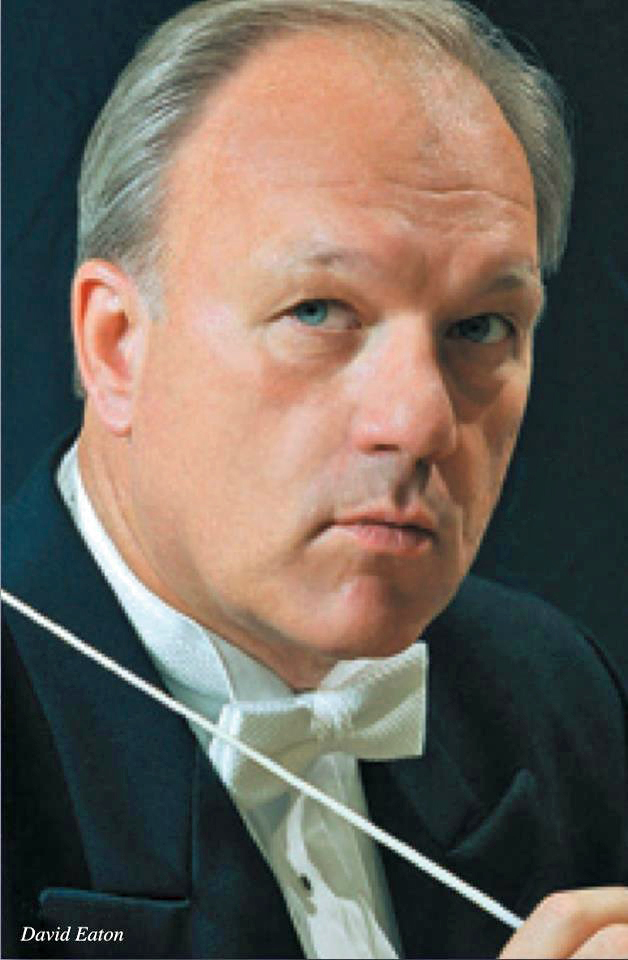
david_eatonI recently received a complimentary issue of classical music magazine, Listen. Of interest was the cover story wasn’t about a current firebrand on the classical music scene such as dynamic conductor Gustavo Dudamel or soprano Anna Netrebko. Nor was it about iconic figures of the past: Leonard Bernstein, Herbert von Karajan or Maria Callas. The cover story was about none other than pop music icon, Sting.

Anyone familiar with Sting’s musical career knows he has been venturing into the realm of classical music for some time. His recording of the role of Joseph the soldier in Igor Stravinsky’s The Soldier’s Tale, with Kent Nagano conducting the London Sinfonietta, dates from 1988. In recent years, he has recorded the music of the English Renaissance composer, John Dowland, and is attempting to master the lute, Dowland’s primary instrument and the precursor to the modern guitar. In 2010, he recorded orchestral covers of songs from his Police days with the Royal Philharmonic Orchestra (Symphonicities).

In his Listen interview, Sting referred to the lives and music of Robert and Clara Schumann, perhaps the most famous couple in the annals of Western classical music history; both were talented composers and pianists. Sting cites a letter by Robert in which the composer refers to music as being “nothing more than resonant light.” Sting observes: “I think resonant light is exactly right; scientifically, it’s a waveform just as light, just a different part of the spectrum. I don’t know whether he knew that or whether it was just a poetic intuitive image, but certainly it’s true scientifically.”

Speaking to the metaphysical and spiritual aspects of music, Sting states, “If I have a spiritual life, [it] is one of music. I seem to be, through music, in touch with something bigger than myself or bigger than the material world; it’s a spiritual path.”

Continue Reading→—>

The Science of Spiritual Life and Death

header-image

By James M. Powell

jamesmpowell72dpi-jpg_lucidThe Principle text claims it contains truth that is of a higher and richer content than previous similar works, and that it has a more scientific method of expression.

However, much of its content, specifically concerning life in the spirit world and how we relate with it from our positions here on the earth, is left unresolved and unexplained with regard to science.

One such topic that we find without a scientific explanation is that of the grace of spiritual resurrection. What is the science of resurrection? How does a person die spiritually and subsequently be resurrected? What is the actual process of spiritual death and spiritual rebirth?

The main reason people who have been spiritually resurrected believe they have been spiritually resurrected is because they felt it happen. Such resurrected are 100% sure they’ve been spiritually reborn even though they can’t scientifically explain it.

Here is the problem. A feeling or belief does not provide the modern scientifically trained and inquisitive mind with a satisfying or reasonable justification to believe that the proposed invisible spiritual resurrection is plausible.

What if someone you know sincerely asks you to explain how spiritual resurrection actually happens and they want to hear more than to just be told to believe and it will happen?

What if they genuinely want, and all they need, is a common sense understanding of this phenomenon in order to calm their doubting or questioning intellect before they make the step to believe? After all, it is noted in the Principle that without first understanding, beliefs do not take hold.

People are no longer happy to blindly believe nor should they need to.

Continue Reading→

Redemption at Hacksaw Ridge

hacksaw-ridge-20162705_lucid

By Kathy Winings

kathy_winings_3_profileAt a time in which we see horrific images of atrocities committed in the name of religion, the new film, “Hacksaw Ridge,” provides us with a different story. It is about a young man who, because of his faith, refuses to kill and commit atrocities. “Hacksaw Ridge” is director Mel Gibson’s new biopic film that tells the story of Pfc. Desmond Doss who became the first person to win the Congressional Medal of Honor without firing a single shot and without even holding a gun.

Doss, a Seventh-day Adventist, is a conscientious objector during World War II who enlists because he believes it is his patriotic duty. However, rather than enlist as a soldier, his plan is to enlist and serve as a medic so he can save lives rather than take them. While his plan seems simple and straightforward, Doss faces two clear obstacles. One, to serve as a medic, he has to pass basic training, which requires handling a rifle. Second, he has to survive basic training with the intense attitudes and feelings of the other soldiers and commanding officers who simply do not understand someone willing to enlist but not willing to kill the enemy during war.

After Pearl Harbor, many young men were filled with rage and extreme patriotism. As we are introduced to Doss’ fellow soldiers, we see young men eager to respond to the threat posed by Japan and Germany, men eager to prove themselves in battle. It is this type of bravado that makes it hard for soldiers to understand or respect anyone who doesn’t feel the same way. As Gibson’s film makes clear, at a time when many Americans wanted revenge for that fateful day in December 1941, it was hard to believe that an able-bodied American did not want to fight and show the world that he was a true patriotic American.

Through the first half of the film, Doss’ constant battles for acceptance among his fellow soldiers are interspersed with flashbacks that give insight into how a simple young man from the Blue Ridge mountains of Virginia became a conscientious objector.

Continue Reading→

The Ethics of Care

lh_beam2_lucid

By Keisuke Noda

Keisuke_NodaThe ethics of care is an emerging discipline developed by feminist ethicists in the latter half of the 20th century. It has gradually gained support from non-feminist ethicists and is now examined not as a feminist ethics but as a possible general ethical theory.

Care ethics has three main characteristics:

  • It views the human being as interdependent, who values caring relationships and recognizes the family as the primary setting where interdependence is evident and caring relationships are cultivated.
  • It recognizes the moral value of emotional feelings and emotion-based virtues such as benevolence, empathy, receptivity, and sensitivity.
  • It acknowledges the moral value of partiality in intimate relationships, such as those defined by family ties and close friendships.

This article considers each of these characteristics, notes criticism from traditional ethicists, examines the Unificationist perspective, and suggests that it offers the basis for a global ethic.

 Interdependence. Major proponents of this theory such as Carol Gilligan, Virginia Held and Nel Noddings argue that dominant modern ethics, such as Kantian ethics and utilitarianism which they characterize as ethics of justice, were built upon the assumption that the human being is an autonomous, rational, independent individual.

Care ethicists disagree. They point out the fact that no human can survive without caring adults who nurture and raise him or her at the early stages of life. Later in life, one also becomes dependent upon others who take care of them. It is an illusory view, care ethics theorists argue, that a human being is independent. Rather, they argue that an adequate ethical theory must be built upon the understanding that human beings are essentially interdependent.

This insight is similar to the Unificationist understanding of co-existence. One’s identity is not an isolated, atomic entity. It is intertwined with others.

Continue Reading→

Messianic Succession

177700114-e1461620630182_lucid-snap-art

By Warren Lewis

Warren LewisWhen I applied for a job at Unification Theological Seminary in 1975, Unificationist John Sonneborn was assigned to introduce me to Divine Principle, a summary of the teachings of Sun Myung Moon. My future employers wanted me, at least, to have an acquaintance with the confessional point of view of my students to whom I would be teaching Church History.

When we got to the part about the migration of messiahship from person to person, from Jesus, the Messiah (Christ) of the First Advent, to — as Unificationists believe — Rev. Moon, “Lord of the Second Advent,” I brightened. “Oh!” I said, “That is similar to the idea of Peter John Olivi” (ca. 1248-1298), on whose Apocalypse commentary I have been working. “He believed that St. Francis was the second advent of Christ, in spirit.”

Dr. Sonneborn was astonished and delighted to discover that someone else in Christian history had conceived of “the second coming” as fulfilled by someone other than the person of the historical Jesus. I got the job.

During my course in Church History, we would touch on other “fulfillments” of messianic expectation:  Abraham Abulafia (13th century) and Sabbatai Zevi (17th century), Jewish messiahs; various Muslim Mahdis; and, especially Mother Ann Lee, the 18th century “Coming of Christ in the Female Line” and foundress of the Shakers.

Peter John Olivi (ca. 1248-1298)

Everyone has heard of Francis of Assisi, but who was Peter John Olivi? Why did he think St. Francis was the “Lord of the Second Advent?” How could it have come about that a devout Christian could believe that some person other than the crucified and resurrected Jesus of Nazareth could have been the Second Coming of Christ?

Olivi was born about 20 years after Francis (1181/82-1226) had died, and became a member of the religious order that St. Francis had founded in 1209. Awestruck by Francis’s holiness and miracles, Olivi devoutly followed Francis as Francis had followed Christ.

Continue Reading→

A Solution to Global Warming and Clean Energy Needs

By Jim Dougherty

Jim DoughertyToday, global warming is both a threat to our shared human environment, and, if responded to wisely, it is an opportunity to improve living conditions for people worldwide.

Over the last 250 years, the average global temperature has increased approximately 1.5 degrees Celsius. This average incremental increase in temperature corresponds almost exactly to the increase in atmospheric carbon dioxide, the primary greenhouse gas of concern, because it is emitted on such a huge scale by modern industrial civilization.

To put this in what is perhaps an unfortunate perspective, the planet-wide impact of human-caused global warming is estimated to be the equivalent of detonating about 400,000 Hiroshima-sized atomic bombs each day or 4.6 atomic bombs per second.

That heat has to go somewhere, and scientists don’t fully understand how the earth is dealing with all the extra heat. Global temperature will continue to increase if nothing is done — but it’s hard to predict how bad or what the consequences will be.

The key is not the problem but the solutions — none of the ones being proposed currently have any realistic chance of succeeding.

Despite 40 years of concerted effort, conventional clean energy technologies, while making impressive gains, do not yet have the capacity or efficiency to fully address global warming and energy needs worldwide.

In the United States, renewable energy sources account for 11.09% of U.S. energy consumption. Half of the renewables include biomass (organic) (5.5%) which is not emissions free. The remainder is made up of hydroelectric (2.83%), wind (1.98%), solar (.48%), and geothermal (.25%).

Under the best case scenario, solar would add 1% capacity per year and is still expensive at around 21 cents per kilowatt-hour. Though falling, its cost far exceeds that of natural gas which has a cost of around 5.7 cents per kilowatt hour.

Continue Reading→

God and Politics

By Scott Simonds

SSimonds_1The old adage that polite conversation should avoid politics and religion to maintain friendly relationships has never proven to be truer than during this election season.  Rather than civil discourse about the issues of the day and better approaches to addressing them, the election has become a mudslinging contest over which candidate has the most baggage and would be most disastrous in office.

Worse yet, anybody who speaks on behalf of, or against, one of the candidates is branded a bigot, a misogynist, a hog at the public trough, un-American, a fool, atheistic, even satanic by guilt through association.  Friends and relatives easily get caught up in the fray and even religious communities, Unificationism included, have become deeply divided.

As tempting as it is to base a decision on who has the better character in this election, no candidate rises to the level of a Washington, Lincoln, Franklin Roosevelt or Reagan.  At this crossroads in the American narrative, this crucial moment of decision, it behooves us to look at contemporary issues in a very broad historical context — that is, a providential context, past, present and future. The theme of the ever progressing nature of God’s providence is expressed in Ecclesiastes 3:1-8 (KJV):

To every thing there is a season, and a time to every purpose under the heaven…
A time to kill, and a time to heal; a time to break down, and a time to build up;…
A time to rend, and a time to sew; a time to keep silence, and a time to speak;
A time to love, and a time to hate; a time of war, and a time of peace.

The political pendulum swings back and forth.

Government grew, during the Great Depression and World War II, for example.  And it receded, during the 1990s under the Republican Congress.  Often, the economy grew together with government expansion.  Automobile and airplane manufacturers exploded in the aftermath of the military buildup of the Second World War.

Although government grew after the Depression and during the war, so did private industry.

Continue Reading→

Website Built with WordPress.com.

Up ↑