
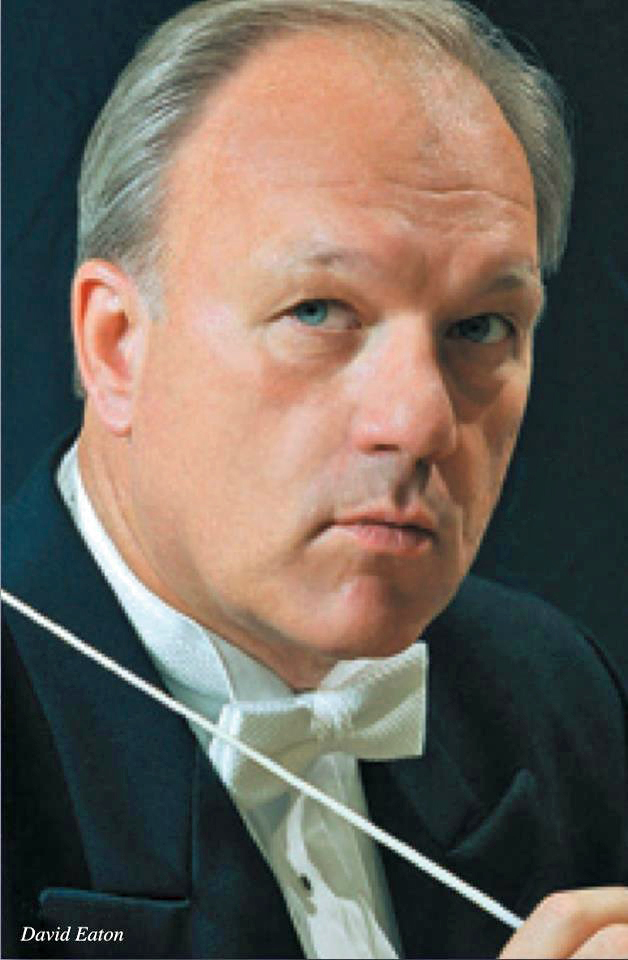
By David Eaton
 In the current iteration of the so-called “culture wars,” a primary narrative deals with the debate between those advocating a socialist modality and those advocating free-market capitalism. Unificationists have been debating the pros and cons of these modalities as well.
The 1996 Exposition of the Divine Principle references (p. 342) the Welsh socialist pioneer Robert Owen (1771-1858) in the context of establishing a culture predicated on the ideals of interdependence, mutual prosperity and universally shared values. As Divine Principle notes, our original mind and our “inmost hearts,” aspire to “the world of God’s ideal where the purpose of creation is fulfilled.”
Though Divine Principle characterizes Owen’s brand of socialism as “humanistic,” his attempts at striving for fairness and equality tend to be in accord with what might be termed, “heavenly socialism” in the context of achieving mutual prosperity.
Regarding capitalism from a God-centered perspective, we read from our founder, Rev. Sun Myung Moon, in Book 10 of Cheon Seong Gyeong:
“If America is armed with Godism, rooted in Headwing thought, Godism and free-market capitalism will become like inner and outer halves. Then, through my guidance America can progress in a perpendicular line straight toward God.”
This statement may seem to be at odds with Divine Principle’s reference to a society predicated on heavenly socialism, however, our founder defines the “-ism” in Godism as “the way of living.” Thus Godism ought to apply to all human endeavors — politics, education, commerce, journalism, and the arts and sciences. Book 10 of Cheon Seong Gyeong also emphasizes the importance of the Three Blessings as described in Genesis as the basis for a culture predicated on Godism.
Robert Owen and the Early European Socialists
I confess I didn’t know much about Robert Owen until recent debates regarding the merits of socialism with other Unificationists prompted me to investigate. Owen and early European socialist advocates, Sylvain Maréchal (1750-1803) and François-Noël Babeuf (1760-1797), pre-dated Karl Marx by several decades. Like Marx, their primary focus was on the question of how societies should live in a fair and equitable manner as the old feudalist modalities were giving way to the new ideas of the Enlightenment vis-à-vis individual rights, free markets, laissez faire economics, and private ownership.
Continue reading “Socialism and Capitalism from a Headwing Perspective”





 Recently, we have been called to resume witnessing in the Unification Movement in order to recapture the spirit of the 1970s, a time when most of its American members joined.








 Applied Unificationism
Recent Comments