Leaving a Legacy of Heart

inheritance copy

By Kim Barry

Kim BarryIn the past few years, I have studied about and met some truly amazing people and looked at the legacies they left by their lives, impacting those around them and their descendants.  We don’t often see first-hand the influence one person has had on the lives of others, but recently some of us were fortunate enough to experience this.

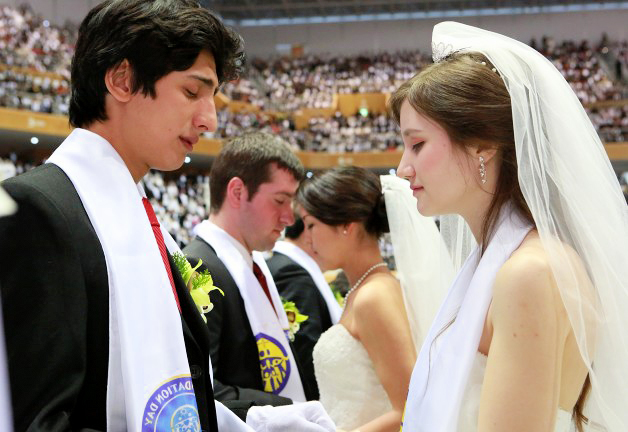
On March 1st, 400 people gathered at UTS for a seunghwa ceremony to celebrate the life and give our final farewell to Bruce Bonini.  He was not a major leader in our movement, and I’ve yet to see an announcement on an official church site about his passing. What drew so many to his final farewell?  It was his heart.

The large attendance of so many young people attested to the fact he had a big impact across generations.  Several young men gave tearful testimonies of how just a few wise, kind words from Bruce had life-altering impact on them.

Bruce was instrumental in the development of Shehaqua Family Camp in Pennsylvania, the Pocono Family Ministries, which has been such a great source of inspiration, education and community.  It would take a book to document the impact that Shehaqua has had on the lives of countless families. All of those who started and invested in that camp should be proud of its legacy. Bruce more recently had invested himself in developing a music ministry in Bridgeport, Connecticut.

Continue Reading→

The Seven Principles of Creation

Blue metal compass

By Stephen Stacey

Stacey copy_edited-1What does it mean to apply the Principle to life? Does it mean that we just understand that the world has the potential to be much more ideal than it is, and then go off and read the ideas of others who are succeeding in life? Or does it mean that within the Principle itself, and in the many speeches of Rev. Moon, there lie the principles upon which human beings can succeed in building a more beautiful world into the future.

For the last 10 years, because of my teaching work, I have had to ask this question every day. Over time, I believe I have gained new insights into how both the Principle and principle-related concepts are helpful in understanding human well-being and success.

My first deep insight was a revelation I received at 2 a.m. on a bus to Russia where I was to teach a marriage enrichment seminar eight years ago. Let’s start with a simple scenario.

If you were the head of a project team at work, what questions might you ask to be sure the project was on track? Some of your most important questions might be:

Continue Reading→

Selfishness: The Greatest Challenge of the 21st Century

toot_c08b536e0c

by Bruce Sutchar

bruce_sutcharRev. Sun Myung Moon has always maintained that truly the greatest revolution in the world is the one from selfishness to unselfishness.  Likewise, nearly every spiritual teaching has always dealt with the idea of transcending the self and being one with the universe.  From Buddha, Lao Tse and Jesus, to Eckhart Tolle, Byron Katie, and many of today’s modern writers, all have focused on this critical point. In modern psychology, Sigmund Freud and Carl Jung also wrote of the importance of the self-centered ego in explaining our everyday actions.

Jesus taught it is better to give than to receive, but for most of us, this is little more than a nice phrase to quote—one that everyone agrees with, but few try to observe.  Some spiritual disciplines even equate our condition to having a raisin heart—one all scrunched up but with minimum capacity to give and receive love.  After we marry and start having children, it finally becomes opens up, when we actually experience more joy watching our children open their Christmas presents than our own.

Each of us has only one pair of physical eyes.  These eyes see the world from our own point of view.  The Divine Principle teaches that one of the four fallen natures is seeing only from our own point of view.

Continue Reading→

God’s Original Design for Human Sexuality

golden_rings-1280x1121

By Jim Stephens

Jim Stephens_edited-1I’m almost 65, but many tell me I look very young for my age. Probably the major reason for this is I have been blessed with a wonderful wife. She understood from the beginning that one of the basic emotional, mental, and physical needs of a man, husband, and father is regular sexual relations about three times a week. And we are still doing it.

I studied engineering in college and I like things that are practical and down to earth. I encountered the revelations of Rev. Sun Myung Moon when I was 24. Over the last 40 years, I’ve had profound spiritual insights and experiences with God. For five years, I co-led with my wife the Blessed Family Department and studied all about marriage enrichment and research. More recently, I became a certified practitioner of an energy healing technique.

Recently, three men revealed to me in brief conversations that they wanted more sex with their wives. Then the pieces began falling into place and a strong impression came over me to write on this topic. Brothers and sisters could be so much happier, joyful, and fulfilled in their marriages than they are. The understanding that God “downloaded” to me I’m calling “God’s Original Design for Sex: Three Times a Week.”

Continue Reading→

The Providential Necessity of “Open” Blessings

intimacy-in-a-crowd-628x432

By Michael Mickler

Michael_MicklerUnificationists would do well to review accounts of Christianity’s rise, particularly the role of inter-marriage in its penetration of the Roman Empire.

One astute analysis is that of Rodney Stark, an eminent American sociologist of religion, who distinguishes between “primary” and “secondary” conversions in his Rise of Christianity: How the Obscure Marginal Jesus Movement Became the Dominant Religious Force in the Western World in a Few Centuries (1997) and The Triumph of Christianity: How the Jesus Movement Became the World’s Largest Religion (2011).

According to Stark, “In primary conversion, the convert takes an active role in his or her own conversion.” Secondary conversion, he says, “is more passive and involves a somewhat more reluctant acceptance of a faith on the basis of attachments to a primary convert.” Agreeing to “go along” with one’s spouse’s faith is an example of this.

Based upon this distinction, Stark argues that exogamous marriage (with pagans) and secondary conversions were “crucial to the rise of Christianity.”

Continue Reading→

“Leave It to Beaver” and a Family Perspective

Cleaver_family_Leave_it_to_Beaver_1960

by Jeff Kingsley

KIngsley copyMany of us fondly recall watching a TV show called Leave It to Beaver, that ran from 1957-63, and laughing at the antics of little “Beaver,” enjoying the give and take (and teasing) between him and elder brother Wally, while admiring the wisdom of his parents, June and Ward Cleaver. Little did we know that this show, in one sense, held the key to creating the ideal world.  Not that it was perfect or that it can “easily” be applied to the perhaps more complicated world in which we now find ourselves firmly embedded. But the main elements that comprise an ideal family were there, and as Reverend Moon often said, consonant with the great sages of the past, the true society is like an ideal family writ large.

This concept reminds me of a matryoshka doll I purchased when I was in Russia helping with the Divine Principle workshops being held in the Crimea in the early 90s. It consisted of a finely crafted set of wooden dolls of decreasing size placed one inside the other.

Continue Reading→

“You’re Not Really an Adult Until Your Father Dies”: Reaching the Highest Stage of Filial Piety

By John Redmond

IMG_9544In the current era of the development of our Unification movement, and the primacy of central blessed families, filial piety is an important measure of our behavior and an undeveloped aspect of the Divine Principle.  So what is it and how does it work?

According to Taoism.net:

“Filial piety consists of several factors; the main ideas include loving one’s parents, being respectful, polite, considerate, loyal, helpful, dutiful, and obedient.”

In our American experience, this narrow definition seems like an old-fashioned way of thinking about one’s responsibilities. The Sixth Commandment is “Honor thy father and mother,” but most Christians read that as respect, not worship.  They reserve worship and absolute obedience for the invisible God.

Confucianism does not have the common Judeo-Christian understanding of an invisible personal God. Rather, Confucius emphasized the ethical framework that automatically led to goodness, perhaps the way a good diet automatically leads to a healthy body.  His idea of the “Mandate of Heaven” was meant to occur naturally as people recognized goodness and naturally surrendered to it.

Continue Reading→

Moral Autonomy of the Blessed Couple/Family

Family

By Keisuke Noda

Keisuke_NodaThe radical nature of an idea is often exhibited by its power to transform our framework of thinking. As the word “radical” indicates (radix means “root” in Latin), a radical idea requires us to reexamine fundamental presuppositions we take for granted.

One radical concept in Rev. Moon’s philosophy is the Blessed Couple/Family. Marriage is generally understood as a social, religious, and legal union of a husband and a wife, which generates moral and legal obligations between them and their immediate family members. Marriage in the ordinary sense does not imply a change in the relationship between married individuals and God. Even within most religious traditions, which recognize marriage as sacred, a marriage blessed by God (or gods) does not alter in any way the relationship between human beings and God. Marriage is nothing more than another happy life event.

Continue Reading→

Is Evil Necessary?

4money_under_table_vignette

By Tyler Hendricks, Ecclesiastical Endorser, Unification Church of America

tyler_hendricks_edited-1Religion exists to bring about goodness, and yet most religions teach that evil is inevitable and some teach that it is a good thing. Christianity teaches that the human fall was good because it created the need for Jesus. Many follow the position of second century patriarch Irenaeus, who taught that for us to become good, evil has to exist so that we can reject it, or the fourth century patriarch Augustine, who taught that evil is the inevitable price of a greater good, freedom.

The problem is that this leads to the acceptance of evil, an ultimate resignation expressed in common phrases such as “it’s human nature,” “that’s just the way things are,” and “what can you do?” I have two reasons to refute this—and in this essay I will address Irenaeus’ view. One, I believe that a completely good world is possible. Two, I’d like to help Christians appreciate the Divine Principle.

Let’s begin by defining evil. The Divine Principle does not say that selfishness is necessarily evil. Rev. Moon even said that God has an element of selfishness: “All of our human traits originate in God. We recognize that there is some human tendency for selfishness. This is natural because at one time God Himself was self-centered. This fact may surprise you, but you must understand that before God created man and the universe, He was all alone, with no one to care for except Himself. However the very instant that God initiated creation, His full concept of life emerged. God now lives for His counterpart, not for Himself. …He exists to love, He exists to give. God is the totally unselfish existence. …When God poured all of His love, life, and ideal into His second self, He had to, in a sense, realize a profit. God knew that when He invested all He had—100 percent—His object would mature and return to Him many, many times over the fruits of love, life, and His ideal.”

The principled way to fulfill selfish desire, called in the Divine Principle “self-purpose,” is through unselfishness behavior, called “whole purpose.” The important point is that self-purpose gives way to the whole purpose. Goodness means to fulfill selfish desire through unselfish behavior—to put the whole purpose first. This is “principled behavior.” Evil means to fulfill selfish desire through selfish behavior—to put the self-purpose first. This is “unprincipled behavior.” Here, by “behavior” I include both intention and action.

So is evil, that is, unprincipled behavior, necessary so that we can reject it? The answer is, no. The principle is that the subject partner gives to the object partner, which responds to fulfill the purpose of creation. There is no necessity that either partner discontinues the proper behavior or withdraws from the relationship in order for it to succeed. Let’s look at some examples in our everyday experience.

Continue Reading

Website Built with WordPress.com.

Up ↑