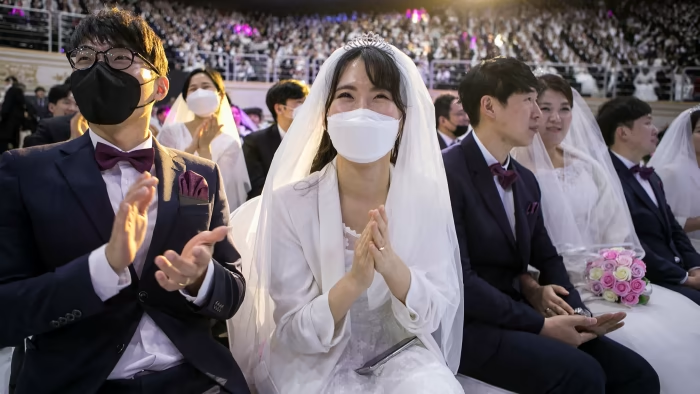
My Daughter Asks: Cult or Community?

By Eileen Williams

My daughter asked me recently, “Mom do you still think you were not part of a cult?” She had just finished watching a show about a dubious, if not dangerous, social media cult, and she caught me off guard. We’ve had these conversations before but now that she is in her thirties and I, recently turned 70, wisdom has hopefully given us a little perspective. 

Cults hold an unending fascination with the American public since the infamous Jim Jones and the diabolical Charles Manson came on the scene during the searching 70s. When I joined the Unification church in 1973 the ‘cult’ word was not a part of the daily lexicon. The language I was  drawn to in that flowered-power era were terms like kibbutz and commune, which in my youthful longings would include: sewing, farming, baking bread, and doing yoga (and eating yogurt which was only sold in ‘health nut’ stores as my mother called them).

As a teen living in a lazy American suburb where neighbors were strangers the idea of greater connectedness appealed to me. But so did a deeper understanding of Christianity. I was enamored with the rock opera Jesus Christ Superstar and C.S. Lewis and disillusioned with my Catholic upbringing, although I appreciate aspects of that now especially when the next world crisis nearly brings to my knees in prayer.

Today, cult-like groups offer people a sense of belonging in a world where despite our ability to connect like never before through social media, ironically, we feel more alienated than ever.

 “Were you able to visit home?” she continued to query me. This question has been lobbed at me before as if it were a litmus test for being held captive in a cult.

“Yes, I was.” Our church was based in New York, and since I was from Delaware, I could pop home on occasion. Not sure I wanted to more than any other self-involved eighteen-year-old. But there was, in the church milieu, the unspoken: you’re all in, or you’re not. The Unified Family, as we called ourselves, circled the wagons against deprogrammers and focused exclusively on the ‘mission’ to save America. Although members were repeatedly instilled with the importance of family values, we often sacrificed those values in service to a higher purpose.

There existed an underlying tension, a twixt and between inside the church/outside the church. There were A members and B members. Home members weren’t really considered members by those in the mainstream movement. And children born outside the faith were in a separate category altogether. Ouch. 

Through the Unification Church’s evolution and outreach work, primarily in the form of interdisciplinary conferences, this cognitive dissonance between inside the community and outside grew less jarring over time but never completely dissipated. Traces of identity crisis as a movement still reverberate from Korea to Las Vegas. It’s challenging for an international organization whose pride is in diversity to create one defining cultural experience where everyone—in or out—can feel welcomed.


Continue reading “My Daughter Asks: Cult or Community?”

The Conjugation of Love

Couple-Walking-03_sm

By Laurent Ladouce

“Marriage is a long conversation,” Friedrich Nietzsche said.

But how long, exactly? Can the conversation be eternal? Can lovers conjugate the verbs of their conjugal feelings beyond the veil? 

Nietzsche didn’t say, but Elisabeth Seidel provides insights. Her new book, Letters Beyond the Veil, is not just another volume about life after death or communicating with the dead. It’s about the languages of conjugal love on earth and in heaven. 

“Love is strong as death” said King Solomon in Song of Songs 8:6. In her Unificationist song of songs, Seidel suggests that love can be stronger than death. We learn how Dietrich and Elisabeth declared their nascent love when they were young, how they conversed while on earth, not always with romantic words, and how the quintessence of eternal love is expressed after Dietrich’s ascension in 2016. He is absent in the chores of daily life but remains a spiritual presence with whom the conversation continues on another level.

Before passing, Dietrich told Elisabeth that death is natural, as natural as life is. Those who were truly one in heart on earth continue to communicate with their beloved. Here, “truly one” means naturally one. Special powers, spiritual gifts, or techniques may help establish communication. However, a genuine and blissful communion can only come through natural feelings that connect hearts. The love after is only a prolongation of the love existing before.

Any person with a genuine heart may keep talking to the beloved, provided the couple has a record of saying love on earth and not just making love. Nietzsche said, “When marrying, you should ask yourself this question: do you believe you will enjoy talking with this woman into your old age? Everything else in a marriage is transitory, but most of the time that you’re together will be devoted to conversation.”

Why could Dietrich and Elisabeth keep a lasting love in their marriage, with the promise of living eternally together? The book provides some insights, especially this letter of Elisabeth to Dietrich: 

I miss the places where we were together: my Alpine mountains, your Austrian Alps. When we saw mountains, we felt at home. We saw God in our mountains (…). We were sharing our dreams together with our Heavenly Parent. We wanted to be victorious for the sake of our Heavenly Parent.

Here, the couple is depicted in relationship to the Creator and His creation, which is like the shrine of love. Dietrich was a typical Austrian, whereas Elisabeth was born in France, near Mont-Blanc. Nature is omnipresent in their love story. Anyone familiar with European culture remembers how the Alps have constantly inspired modern lovers since the romantic age.

Continue reading “The Conjugation of Love”

Unificationist Perspectives on the LGBTQ Phenomenon

By Mark Lincoln

About ten years ago, I was working for a large corporation in my hometown of Omaha, Nebraska. The company, like many large corporations, was eager to develop a reputation for diversity, equity and inclusion (DEI) by supporting groups within the company. Groups already existed for veterans, African-American employees, and those with disabilities. A new employee resource group for gays and lesbians had just been created.

While the campaign for gay rights had been framed as a civil rights issue, I had always seen it as a moral issue. I let my views be made known in our online company chat room. At one point, my manager called me to his office to explain that if I continued airing my views in the company chat room, I could be in danger of losing my job.

Preferring not to interrupt my breadwinner status for my family, I ended my participation in the online discussion. So ended my first public experience with the LGBTQ phenomenon. The issue was highly emotional and politicized; a hot topic with little middle ground.

About five years later, I approached a middle-aged lady in the Family Dollar parking lot asking if she would help us with our One Million Family Blessing campaign. She immediately asked me what I thought about gay people. I told her I felt sorry for them because they could not have children. That offended her. She became upset and complained to the manager. He came out to talk to me because he could see how upset the lady was, but he had received the Blessing a few days before.

So ended my second experience with the LBGTQ phenomenon leaving me dissatisfied regarding my ability to relate with the people of that community.

A few years later, after I retired, I was doing American Clergy Leadership Conference (ACLC) ministerial outreach at an Episcopal Church. I was aware that this denomination had a very liberal policy on gay ordination and marriage. Father John, the pastor, was kind enough to sit down with me for a chat. I brought up the topic of the need for the body of Christ (i.e., all Christian churches) to unite as one and use their combined strength to fight evil in the world. Seemingly out-of-the-blue, Father John asked me what I thought about homosexuals. 

This time, I was not in a parking lot talking to a local shopper. We were two ministers with a background in Biblical scriptures; a strong common base, I thought. When I answered that the Bible is very clear about homosexuality calling it wrong (Lev. 18:22), he disagreed with me, arguing that “God is a God of love, not judgment.” 

I chose the word “phenomenon” in my title because a “phenomenon” is defined as a fact or situation that is observed to exist or happen, especially one whose cause or explanation is in question. If I have learned anything about the LGBTQ phenomenon, it is that the phenomenon is very complex with a constellation of issues. 

Continue reading “Unificationist Perspectives on the LGBTQ Phenomenon”

Unrest in America: What is Going On?

By Sandra Lowen

There have “always” been enslaved peoples in the history of the world. The slavery of the Israelites and of Africans have been considered among the most heinous, however, because of their severity.

Unlike the Israelites, who were made slaves in their own or neighboring countries, Africans were carried far away across a great ocean, where nothing was familiar to them. Israelites and the Egyptians who enslaved them did not look that dissimilar, while the Africans, with their dark skin and other prominent racial features, stood out among the people around them.

Although they were ostracized from Egyptian society, there is no record of the Israelites being deprived of family, religion, language, or culture. However, African slave families were purposefully separated and placed with other Africans who did not speak their language. Learning to read or showing those skills was punishable, in a significant number of incidents, by death. Whippings and forcible rapes were a matter of course.

How were Christian White people able to do such contemptible things? They went to the Scriptures and dredged up the story of Ham, Noah’s second son, whose offspring Noah cursed to be slaves to their relatives. White religious people designated Ham to be a Black man, destined by God to be a slave to justify their treatment of the Africans.

But even this was not enough. Ultimately, they labeled the Black race as “beasts,” who, like other animals, could be beaten and maltreated. Some “studded” their slaves, forcing them to have sex even with close relatives or with the owners themselves. In the latter cases, the mixed-race offspring were not acknowledged as a part of the White family, but were banished to the slave quarters with the rest of the Blacks.

When changing political and social pressures made it no longer easy to bring slaves to America, the Whites coupled with Black women, willing or not, to make more slave offspring. At auction, these mulatto and quadroon children sold for a higher price than their black-skinned half-brothers.

Many people called for slaves to be treated better, but they were shouted down. Ultimately, in political circles, it was allowed for a Black man to count as having the value of three-fifths of a White man. Independence Day — July 4, 1776 — granted neither freedom nor citizenship to Africans in America. A slave might be freed for extraordinary service to his master or upon his owner’s death. However, there was no guarantee, even with legal papers attesting he was free, that an African might not be recaptured by “slavecatchers” and returned to servitude without recourse.

Continue reading “Unrest in America: What is Going On?”

Authenticity, Sincerity and 21st Century Witnessing

By John Redmond

Recently, we have been called to resume witnessing in the Unification Movement in order to recapture the spirit of the 1970s, a time when most of its American members joined.
I’m a veteran of those days and have come to the conclusion they are firmly behind us.  However, I am strangely optimistic about the future of our movement and of witnessing in general.

What do I mean by “witnessing?”

In the Christian ideal, it is a communication of a personal, deeply spiritual event which has affected one so positively that one feels compelled to offer that insight to others so they can achieve that experience as well.  Christianity testifies to individual salvation: your conversion and life of faith is between you, God and the Holy Spirit.

Saints in Christian tradition are individuals, both men and women, who have modeled in their lives evidence of a transcendent, loving God.

In Buddhism, one is encouraged to reach a higher consciousness, step out of the day-to-day grind, control the thoughts circling in your head, and try to feel and be aware of a higher, universal interconnectedness and add that reality to your daily life. The monks and nuns in Buddhism model that ideal.

In Unificationism, we witness to the Three Blessings and the three generation family.  Individual salvation is not enough, and creating an individual spiritual success is only the foundation for a multi-generational family and wealth.  Our salvation is not complete until we have accomplished all three goals. It stands to reason then, that our challenge is higher and deeper than individual witnessing and will require creativity and honest evaluation and persistence.

In my experience, all successful witnessing is done by example. Many of my generation joined our movement because of who they met, not because of what was said.

An English member recently told me of walking through Boston and meeting another Englishman who invited him to an event and he politely declined.  Later he met a Japanese woman who couldn’t speak English and had a confusing flyer but he went to the program anyway; he just trusted her. The Principle gets you to stay and commit, but the character of the people and their spiritual foundation allow you to listen.

Continue reading “Authenticity, Sincerity and 21st Century Witnessing”

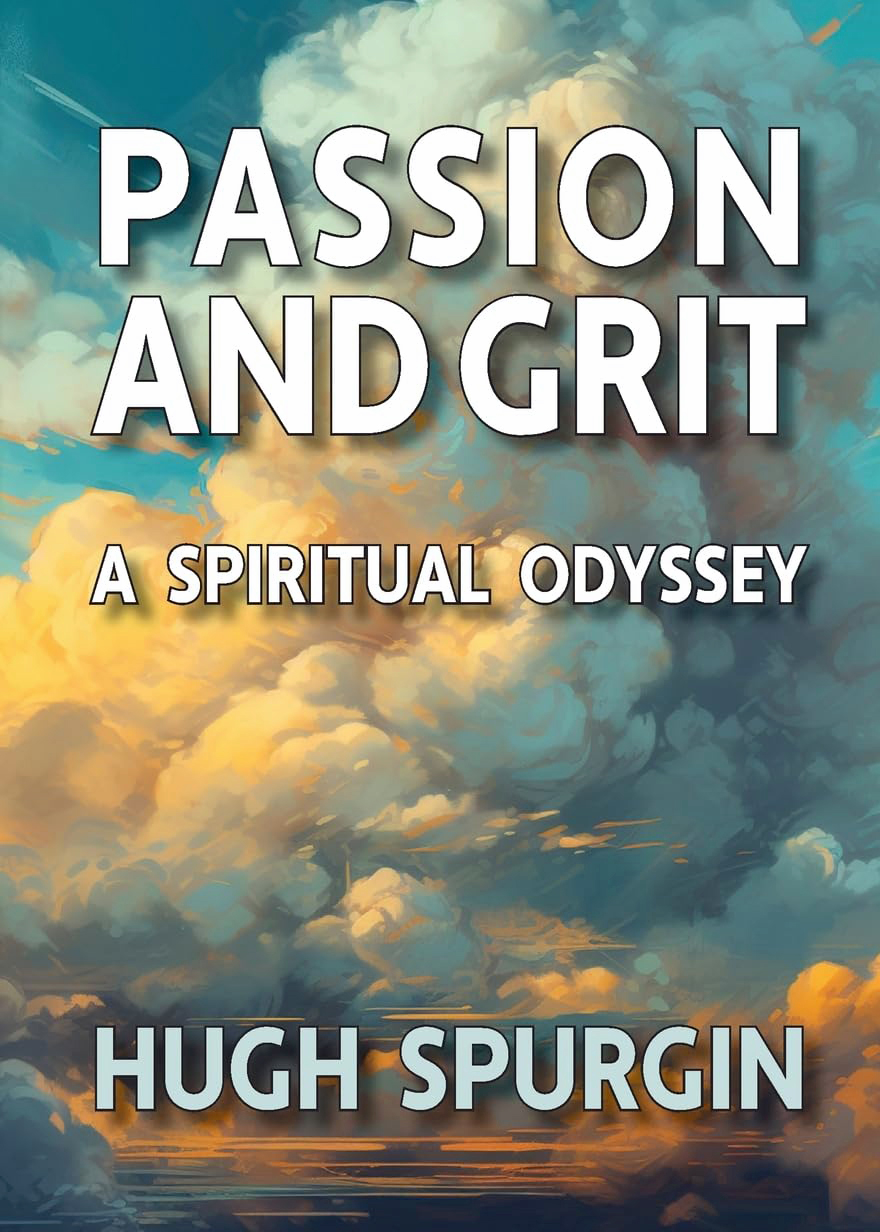
Passion and Grit: A Spiritual Odyssey

By Gordon L. Anderson

The autobiography of Hugh D. Spurgin, Passion and Grit: A Spiritual Odyssey, is the story of an early follower of the Rev. Sun Myung Moon in America. It reveals the impact of the power of a higher truth on a conscientious and idealistic person who seeks to live the most meaningful life possible.

In the 1960s and 1970s, material prosperity in the United States was high, but traditional religious doctrines had lost their power to explain the nature of reality and human happiness in a scientific world. The baby boomers were coming of age in a world of confused and conflicting values. Some accepted the establishment, others rebelled against it, but still others, like Hugh, sought constructive ways to move forward, discerning what was of value in our traditions, and what needed to change.

Rev. Moon’s teachings put Hugh on a life journey, not only a spiritual path, but as a member of a new community in which he raised his family and became a leader of a worldwide movement that has now reached millions of people. This book is both a chronicle of Hugh’s life and the development of the Unification Church, now the Family Federation for World Peace and Unification (FFWPU), and how Americans worked to bring Rev. Moon’s teachings of a higher culture and more peaceful world.

A Seeker of Truth

Hugh was born in Roswell, New Mexico, in 1945 and grew up in Terre Haute, Indiana. The family attended a Presbyterian Church and his dad was a chiropractor. Hugh liked sports and outdoor activities. After graduating from high school in 1963, he went to Indiana State University and excelled in social sciences, and went on for a master’s degree in public administration at the Maxwell Graduate School in Syracuse, New York. This landed Hugh an internship, and later a full-time administration job with the U.S. Navy in Washington, DC. He had a top-secret clearance and secure employment in the federal government.

Hugh was not content to simply pursue this career. He was always seeking answers to historical and religious problems and ways to make the world better. While studying the Baha’i faith, he was invited to hear several lectures based on Rev. Moon’s teachings at the Unified Family center in a Victorian mansion on Upshur Street. Hugh heard clear answers to some of his questions about evil, God, Jesus, and salvation. It was an eye-opening, comprehensive historical perspective on human history and civilization. It also presented principles about peacefully advancing human society. He decided to join this small group and help transform the world.

When Rev. and Mrs. Moon came to Washington, DC in 1969, they moved into Upshur House for 40 days, spending quality and personal time with Hugh and the other members who lived or gathered there. Hugh was amazed by Moon’s interracial and intercultural approach to marriage, breaking down traditional religious and ethnic boundaries with the goal of creating one world family under God.

Continue reading “Passion and Grit: A Spiritual Odyssey”

The Need for a Unificationist Blessing, Marriage and Family Theology and Education Providence

By Alice Fleisher

I experienced a flash of insight a few days ago while looking at Rev. Sun Myung Moon’s picture (who Unificationists call True Father).

The gist of the revelation was that some 30+ years ago, I was in a position to facilitate and contribute towards the development of a Unificationist Blessing, Marriage, and Family Educational (UBMFE) providence.

If that was the case, you may wonder why am I only now proposing the development of such a providence rather than 30 years ago? (I was first active in the American branch of the Unification Church’s marriage and family ministry — known as the Blessed Family Department [USA BFD] — between 1987 and 1989 and then reconnected in 2004)

In the 1970s and 1980s, the USA BFD work consisted of supporting and administrating the Blessing providence. The providence of guiding Blessed couples and families mainly consisted of preparing couples for their three-day ceremony, counseling, and the publication of two Blessing-related magazines, which included True Parents’ speeches and some educational material, called The Blessing Quarterly and The Blessing Journal.

Family education was not pressing because most couples were just starting out and few had children. However, anyone connected to the USA BFD who was even remotely observant could see we were eventually going to need education material and programs that could minister to and provide life guidance for these Blessed couples and families.

Unfortunately, budgetary concerns and administrative decisions occurred that had a major impact on the USA BFD and the development of that kind of material. Around 1990, the USA BFD was completely shut down, an action that wasn’t reversed until 2004 (due to True Father’s prodding).

Upon reflection, I believe that from the 1990s going forward, the development of mature, professional and comprehensive educational material on the Blessing, Marriage and Family derived from the revelations of True Father and Rev. Hak Ja Han Moon (who Unificationists call True Mother; together they are called True Parents) would have occurred. Sadly, such efforts were stillborn and cut-off abruptly due to the USA BFD’s demise.

It was not a coincidence that during the time the USA BFD was dormant, the Coalition for Marriage, Family, and Couples Education, LLC (CMFCE) was founded by Diane Sollee in 1996. I believe through the CMFCE and the Smart Marriages Conferences they sponsored, God worked to encourage faithful professionals who were caring for beleaguered families to identify and make available to the greater public, ministries, clinical practices, and educational programs dedicated to enriching healthy marriages and saving marriages that were in trouble. The purpose of the CMFCE, found on their website, is below. These are worthy and laudable goals.

The coalition serves as an information exchange and clearinghouse to help couples locate marriage and relationship courses; to help professionals, clergy and lay educators locate training programs and resources; to connect those with an interest in the continuing development of the field; to support community initiatives, legislation and research; and to promote the effectiveness of marriage education programs and increase their availability in the community.

Continue reading “The Need for a Unificationist Blessing, Marriage and Family Theology and Education Providence”

A Proposal to Allocate More Resources for Counseling

By Incheol Son

A two-year-old child sat on the floor in a relative’s house, wearing only one piece of knit in the cold winter. He was staring aimlessly and couldn’t recognize who had come before him.

This boy had forgotten the faces of his mother and father. He was left there all alone in “separation” from his parents who went out for witnessing. Immediately after his father saw the baby, his father escaped to the kitchen and cried quite a while.

This is the story my mother shared with me. It was about me. In fact, I have no recollection of it.

But, I surely recall the day when I tried to describe that scene in a testimony at a workshop. All those listening suddenly cried along. They were all second generation and had similar experiences as mine. I came to realize it was not just an individual but a collective one.

From a psychological point of view, however, the vulnerable little boy was exposed to an “overwhelming” event to lose his parents in his earliest years by being abandoned in what for him was a strange place. I had to face a series of similar events that continued to take place afterward, such as my mother’s sudden disappearance to go witnessing and my father’s quitting his job to become a pastor.

These experiences were very damaging to a child, though it’s been theologically justified as “indemnity” to build a condition that UC members tried to love the world more than their own children. I was educated in training programs to accept the logic as such. I tried and it worked — for a while.

I’ve even been encouraged to sublimate such primal wounds. But, they have never gone away. Rather they’ve accumulated; the emotional lump of trauma is still active inside me. And, now I realize it has kept influencing my life.

For example, I have a kind of “fear” of facing strangers, new people. Some say it’s just my character. And so I’ve also been encouraged not only to overcome it personally but to apply the ideal model of engaging in a new relationship. But, it’s like the fear of heights I have. I just react naturally to it. Fear is a psychological “symptom” of trauma.

When I served briefly as a pastor, one Japanese woman who had married a Korean man approached me for counseling. Her husband had no faith at the time and so was more like a secular man. He just joined the church because his older sister, from a senior blessed couple, had urged him to get married. The application forms were submitted and the man was able to participate in the blessing ceremony though he was not fully qualified.

On the other hand, the Japanese wife, who graduated from a renown university in Japan, entered the blessing by hope and faith. But the reality she had to face afterward in South Korea was far from what she had dreamed. Her specific difficulty she shared with me was her husband’s habit of inviting his friends over in the evenings. She had to welcome and serve those unexpected guests every time, but she, who already had two children and was pregnant with her third, couldn’t feel happiness from his habits.

Continue reading “A Proposal to Allocate More Resources for Counseling”

Spiritual Connections: Living in the Flow of God’s Love

By Gordon L. Anderson

Spiritual Connections: Living in the Flow of God’s Love (Circle of Angels Press, 201 pp., 2022) is an engaging spiritual autobiography of Nora Spurgin, who joined what was then called the Unified Family (later Unification Church) in New York in 1967. She served in many central positions as the movement led by Rev. Sun Myung Moon developed into a new global culture. Nora’s identity is shaped by her connections to others in her lifelong pursuit to be in the flow of God’s love.

Her story begins with her ancestors who came to America for religious freedom. Her sixth great grandfather authored Confessions of Faith, which is still used for religious instruction among the Mennonites. She grew up in Lancaster County, PA, in a farming community with large families, connected to her parents, siblings, extended family, and nature. Life was a mixture of hard work, fun play, and worship of God. Personal responsibility and maintaining the community was stressed. Her community was self-sufficient. Nora learned to design and sew clothes and her father even taught her every step in building a house!

At a young age, Nora’s curiosity prompted her to ask questions about her faith in comparison to Catholics and others. She studied the people she met, wanting to learn behavior patterns and whether people were genuine or putting on a façade. She learned to approach others with confidence. While Nora wanted to learn fastidiously, her parents believed outside education would corrupt children’s faith. She dropped out of high school after one year and worked at home and in a sewing factory until she turned 21 and became a free adult. Then she grabbed lots of books, studied, passed the GED exams, and set out on the world.

A Mennonite Voluntary Service program caring for children of migrant workers in Florida exposed Nora to poverty and other cultures and broadened her faith. In college, she loved philosophy and history. On weekends she visited and served people in Appalachia, and experienced charismatic spiritual events. Then she went on for her master’s degree in social work at New York University. The intellectual confrontations and big city life were far different than life on a simple Mennonite farm. Through all her encounters, she continued her search for connections to God and was prepared to meet the Unification Church.

Continue reading “Spiritual Connections: Living in the Flow of God’s Love”

Website Built with WordPress.com.

Up ↑