Finding Our Own White Bird

Movie Review of “White Bird”

By Kathy Winings

If you are a parent, a grandparent, or have taught school, you may have heard of or witnessed instances of bullying.

Society has experienced its fair share of bullies for decades. Recent statistics show that one out of four students, ages 9-17, or 20-22%, have experienced some form of bullying. Generally, more boys than girls have been bullied. One out of five “tweens” (ages 9-12) have experienced cyberbullying and 46% of bullied students have reported the bullying to adults in the school.

Bullying can be verbal, physical, emotional or a combination of these forms. The reasons for bullying are equally widespread from physical disabilities to racial/ethnic, religious or economic differences. Such statistics have challenged school boards to look for effective ways of dealing with this significant problem. This has led to programs emphasizing conflict resolution and kindness initiatives.

While there have been books and films on the topic, a new film, “White Bird”, released this autumn, takes a unique vantage point of bullying. The film takes up where the 2017 film “Wonder” ended. What makes it unique is that instead of looking at bullying from the victim’s viewpoint, it looks at the bully.

“Wonder” presented the story of 10-year-old August “Auggie” Pullman, a young boy with a facial deformity that marked him as a target for the class bully. The twist is that instead of following Auggie, it follows the bully after his expulsion from the one school and now beginning life in a new school where he does not know a soul. No longer the center of attention, Julian Albans (Bryce Gheisar) is anxious to put the expulsion behind him and quietly fit in with his new surroundings.

On his first day at school, he finds himself sitting alone during lunch, hoping to become invisible, wanting just to fit in with the right people when a young girl befriends him, welcoming him to the school and inviting him to a club meeting later in the week. Another student walks by, stops to greet Julian and promptly lets him know that he can introduce Julian to the “right” sort of people who can help him fit in. He further lets Julien know that it is a kiss of death socially to sit at this table and to be seen talking to a certain group of students. Julian immediately feels trapped. On the one hand, he wants to desperately fit in. But on the other, he doesn’t want to commit the same mistake twice.

When he got home after his first day in the new school, it was evident to his grandmother, Sara Blum (Helen Mirren), that it was a tough day for her grandson. When Julian tells Sara about the challenges of transferring to a new school, she promptly reminds him that it wasn’t a simple transfer, but he had been expelled for bullying a fellow student and that he needed to come to terms with that essential point. She then decides that the best way to help her grandson understand how horrible bullying can be and how kindness is the better path is to share her story about living in occupied France as a young Jewish girl. The film then goes back in time as she recounts her story.

Continue reading “Finding Our Own White Bird”

Drawing Parallels Between Reagan and Trump

By Serge Brosseau
I recently watched the movie “Reagan” with some friends at a local theater. It is based on the book, The Crusader: Ronald Reagan and the Fall of Communism.

We follow former KGB agent Viktor Petrovich, played by Jon Voight, recounting and commenting on the life of the 40th president to a young Russian agent. Dennis Quaid plays Reagan in a convincing way. I find that actors do well when they have affection for the characters they play, and clearly, this is the case here. The love story between Ronald and Nancy brings also a romantic touch to the narrative.

This independent production illuminates Reagan’s life of faith. It is part of a new trend in Hollywood of Christian-based productions, like the 2022 movie “Sound of Freedom” about sex trafficking, that were successful at the box office. The critics gave it mostly negative reviews, but it draws public interest as the election season is heating up.

One of the happy memories I have of my early years in the movement was the night that Reagan was elected. I joined in Berkeley, CA, in June 1977, and by November 1980, I was fundraising with a team in Little Rock, AR. We stayed at the church center where Rev. Richard Buessing was the state leader. We celebrated the election result with a few members, which we felt was very hopeful for the country. Watching the movie brought some of this back. It inspired me to draw several parallels between the presidency and the personalities of Reagan and Trump in connection with this current election season, namely Ronald and Donald.

First of all, the movie opens up with the scene of Reagan delivering a speech at the Washington Hilton on March 30, 1981. He is shot and wounded as he departs. Three people are injured, including his press secretary, James Brady. When Reagan arrived at the hospital, he was considered ‘’right at the margin of death,’’ but he recovered quickly. It is said that Reagan came to believe that God had spared his life ‘’for a chosen mission.’’ We know that True Father, Rev. Sun Myung Moon, went deep into prayer, considering how important Reagan’s life was to be spared as the nation’s political leader.

Some 43 years later, Trump is holding an open-air rally in Butler, Pennsylvania. He is shot and wounded in his upper right ear. He is one inch away from being assassinated. One man in the audience is killed, and two others are critically wounded. On the day of the rally, on July 13, True Mother, Dr. Hak Ja Han Moon, is in Las Vegas. Upon hearing of the shooting, she sends a message delivered to Trump expressing the fact that it is ‘’providential’’ that his life was spared. He has frequently stated that it was God who saved his life.

Continue reading “Drawing Parallels Between Reagan and Trump”

‘Twisters’: Taming Nature’s Fury

By Kathy Winings

Tornados were a constant for me as a child in Indiana.

Each summer, when a violent storm took place, we listened attentively to the radio for alerts warning us about a possible tornado. Our family rehearsed what to do in case one actually touched down in our neighborhood.

Fortunately, I never personally experienced a tornado or its destructive force. The closest I got to them was providing disaster relief and mitigation to the families and businesses who did experience one.

Throughout my extensive career directing the work of IRFF, a sustainable development and disaster response agency, I have witnessed the devastation that even a relatively weak tornado can do to someone’s home or business. Having witnessed first-hand the pain and devastation that results, I could relate to the disaster-based movie, Twisters, currently in theaters.

This film, directed by Lee Isaac Chung, who helmed 2020’s multiple Academy Award-nominated Minari, picks up where the 1996 movie, Twister, left off. Whereas the storm chasers in that film were trying to get special sensors into the heart of a tornado to collect vital data on its inner workings to create a more effective early warning system, now the study of tornadoes has developed beyond data collection.

In this new film, the focus is on developing a chemical compound that, once launched into the tornadoes center, will stop a formed tornado. Kate Cooper (Daisy Edgar Jones), a young, bright-eyed doctoral student who has a sixth sense about storms and tornadoes, is committed to finding a way to stop tornadoes in their tracks to prevent the loss of more homes and towns. The chemical compound is the brainchild of Kate and her fellow researchers.

However, when Kate and her research team encounter an EF-5 level tornado, the strongest kind, she loses all but one of her teammates when they are trapped by the tornado and sucked up into the storm. Her grief and sense of guilt over the loss drives her to drop her studies and leave the Oklahoma tornado alley for the safe confines of a meteorological research center in New York. 

As with many disaster-themed movies, Cooper is drawn back into the fray when the other surviving team member from her past, Javi (Anthony Ramos), contacts her and invites her to return to Oklahoma to provide much-needed wisdom and advice to his new team of storm chasers. She reluctantly agrees to give the team one week, which becomes one filled with old ghosts, nightmare images of that earlier storm, and new possibilities. 

She quickly learns how much the field of storm chasers has changed during her five-year absence. Not only did the technology become more sophisticated and powerful, but those engaged in the chase now represent a broad spectrum of individuals and groups who are not all concerned with the science of tornadoes.

Continue reading “‘Twisters’: Taming Nature’s Fury”

Extraordinary Contributions by Ordinary People: ‘Cabrini’ and ‘One Life’

By Kathy Winings

Movies were created to tell stories. These stories might be sad, funny, scary, or thought-provoking. Some, though, inspire and motivate us to be better human beings.

Two such inspiring films are powerful true stories that touch our souls. They are “Cabrini” and “One Life.” Both tell the story of individuals who left a profound mark on history through simple acts of love that saved lives and demonstrated the best in us.

“Cabrini” tells the story of Mother Francesca Xavier Cabrini, a woman who felt called to address the poverty and social inequities faced by millions of people around the world, beginning initially with the immigrant population in New York City at the end of the 19th century.

“One Life” presents the story of Sir Nicholas Winton and his dramatic efforts to rescue 669 Jewish Czech children in Prague just before the start of World War II and Hitler’s invasion of that country.

Mother Francesca Cabrini (Cristiana Dell’Anna), the founder of the Missionary Sisters of the Sacred Heart of Jesus (canonized by the Catholic Church as the first naturalized U.S. citizen-saint in 1946), was a diminutive Italian woman who was told she would not live much past age 30 due to “weak lungs.” She felt called to do missionary work in China and began petitioning the curia for permission to do so. After petitioning the Vatican for permission to do so and being told “no” repeatedly, she is finally called to Rome where she pushes for an audience with Pope Leo XIII (Giancarlo Giannini).

When he also initially denies her request, she challenges his decision until he relents. But instead of going to China, he asks her to go to New York City to address the urgent needs of the thousands of poor Italian immigrants. She is further given permission to utilize local church property in Five Points, the large neighborhood in Lower Manhattan that was home to the immigrant populations.

Cabrini and the sisters from her order leave for New York with almost no money but with the determination and courage to serve the needs of the poor. Between the dangerous nature of the area and unsupportive New York Archbishop Michael Corrigan (David Morse), the women are told to return to Italy, which they refuse to do. They are resolved to serve the community — regardless of the conditions — and waste no time in cleaning and preparing the first of many orphanages Cabrini would establish over time.

Continue reading “Extraordinary Contributions by Ordinary People: ‘Cabrini’ and ‘One Life’”

Changing the World: ‘Bob Marley: One Love’

By Colm ó Cionnaith

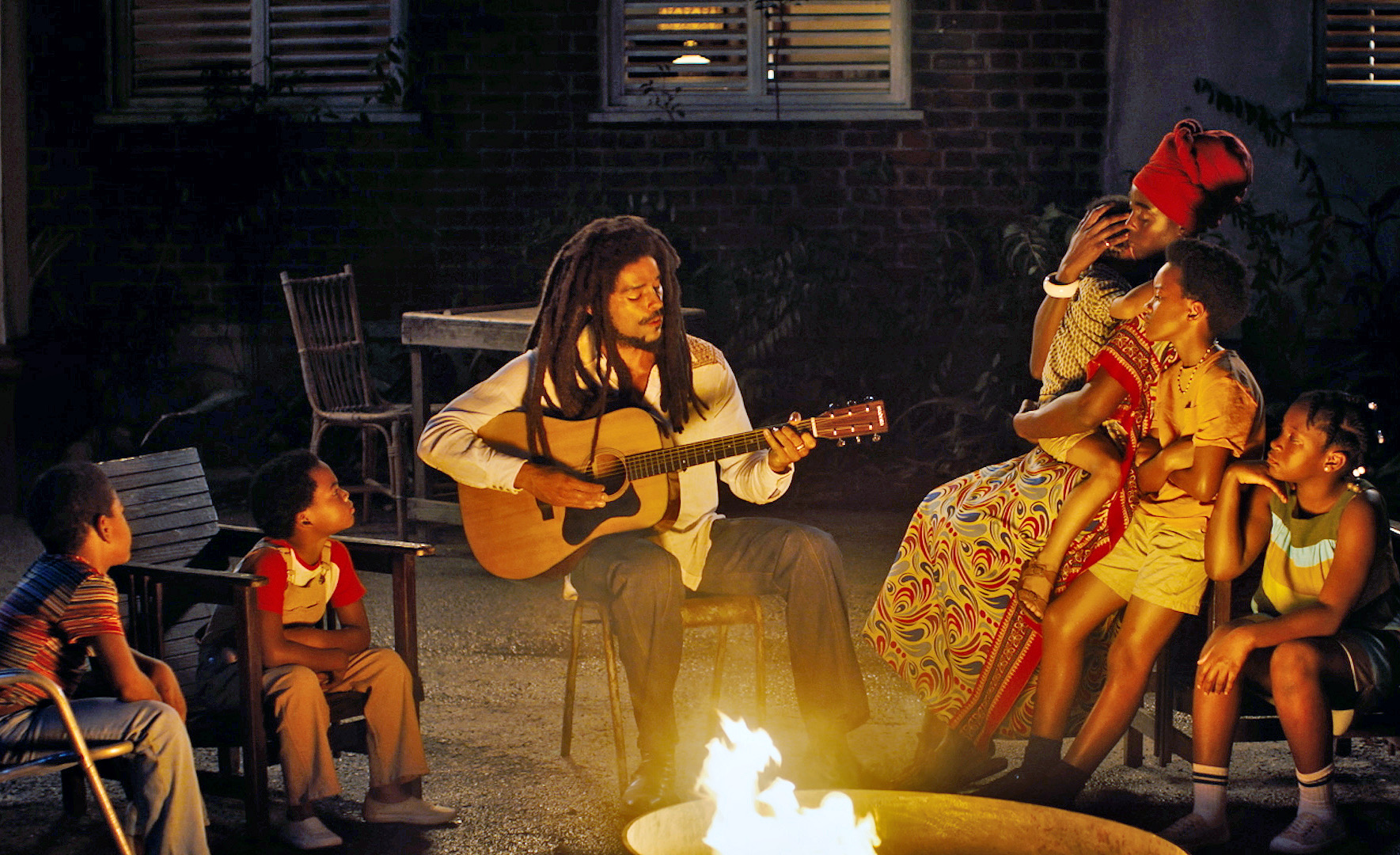
“Bob Marley: One Love” is a film I had greatly anticipated, but probably I’m the last person who should write a review, so besotted was I, no doubt along with much of my generation (“Xers”), by Marley, since coming into contact with his hypnotic reggae beat in the mid-1980s.

Since then, of course, and after playing the obligatory (since its release in the 1980s) “Legend” greatest hits album to death, I have not had that much interaction with Marley, apart from admiring his image in Dalymount Park, Dublin, where our local club, Bohemian FC, cherishes its connections to historical figures who played there, such as Bob.

However this movie is very much for the music fan, which might disappoint some who might have been eager to get deeper into the politics or even the spirituality of Bob Marley, the “Godfather of Reggae.”

The story focuses on a short period in Marley’s life, from just before his attempted assassination in Jamaica in 1976 to his premature death at 36 in 1981.The opening scenes teleport us into a Jamaica erupting in political turmoil as opposition parties are causing the nation to explode in violence and unrest.

Marley is portrayed throughout the film as a potential unifier and peacemaker, as he attempts to headline a “Smile Jamaica” concert in an effort to bring some healing and unity to the post-colonial tropical nation, still trying to forge an independent identity. His sweet, soulful, music and powerful gospel lyrics seem to point to him as a putative messianic figure of sorts, who might bring the island nation together, if only they can “Catch the Fire” of his inspired message rather than the one that threatens to burn everything down.

However, in the early scenes we learn that neither he nor Jamaica are ready for this message: divisions are still too raw and his levels of self-doubt don’t yet permit him to transcend his normal human needs for self-preservation and success.

Enter the legendary Chris Blackwell, pioneer owner of the small Island record label, who assembles a team of musicians and support staff around Marley who will launch him to worldwide acclaim, but only after he goes into an exile of sorts in an unsuspecting London, in the throes of Punk and no little racial tension, it seems.

Continue reading “Changing the World: ‘Bob Marley: One Love’”

‘Barbie’: More Than a Doll

By Kathy Winings

I grew up with Barbie. In fact, I not only had a Barbie doll, but also had Midge (Barbie’s friend), Skipper (Barbie’s little sister), Ken, and Alan (Ken’s friend). I ended up with Barbie’s sportscar and wardrobe cases. My mother helped fill the wardrobes with beautiful clothes that she designed and made for each of them.

As Barbie was an important part of me, when the “Barbie” movie premiered last summer, I expected a film filled with cliches, trite dialogue and a simple plot-line about two iconic dolls.  But after hearing some positive reviews and knowing the reputation of the director, Greta Gerwig, I decided it might be worth seeing. You can imagine my surprise when the movie was none of these things. In fact, it provides a creative context for insights on some of our current social challenges.

“Barbie” hit theaters running in July and is still going full speed with eight Oscar nominations, including Best Picture, Best Supporting Actor (Ryan Gosling) and Best Supporting Actress (America Ferrera), as well as several BAFTA nominations in the UK that include Leading Actress (Margot Robbie). Audiences will find the movie is about more than two iconic dolls as it motivates them to ask some hard questions about key social themes we face in today’s world.

The movie has two contexts — Barbieland and the Real World. Barbieland is home for three groups: Barbies, Kens and Weird Barbies. This world is idyllic and carefree with the Barbies living in well-kept houses and the Kens living on the beach. Barbieland is a matriarchal society where the Kens live to support and serve the Barbies. The streets are clean. There is an air that Barbieland is a perfect place to live with no crime or illness, no children, or any Barbie and Ken older than 30. The Weird Barbies live apart from the others because they are different. Their difference is primarily physically based, with some missing limbs or other body parts or missing hair.

As a matriarchal society, all of the jobs and leadership positions are held by the Barbies. What I found particularly refreshing was the racial and ethnic diversity of the Barbies. Of course, all of the Barbies are a perfect size 2, with perfectly styled hair, perfect skin and well-applied make-up. The Kens are also physically fit, with perfect hair and physical features. The Barbies and Kens do recognize, however, that there is such a place called the “Real World.” They don’t visit the Real World nor do those living in the Real World visit Barbieland.

Continue reading “‘Barbie’: More Than a Doll”

“The Life Ahead”: A Modern Love Story

By Kathy Winings

A new Netflix film, “The Life Ahead,” brings back to the screen the legendary Sophia Loren after more than a decade since her last film. Her performance in this film shows that age does not matter when it comes to giving an Oscar-worthy performance.

Directed by her son, Edoardo Ponti, and adapted from the novel, The Life Before Us by Romain Gary, “The Life Ahead” is the story of Madame Rosa (Loren), a Holocaust survivor and former prostitute who understands the challenges of young streetwalkers who are mothers, and Momo, a 12-year-old street-wise orphan from Senegal.

Finances are tight and as Rosa is preparing to sell her silver candlesticks, a young African street boy rushes in, pushes her down and steals her bag as she is waiting in line. The boy, Momo, played by young new actor Ibrahima Gueye, has been placed in the care of a local older physician, Dr. Coen, a friend and doctor for Rosa.

When he learns what Momo has done, he takes him to Rosa to apologize to her for stealing her silver.  Rosa, a crusty elderly woman who has seen it all, is skeptical of his sincerity, questions his apology, but grudgingly accepts it. The doctor then tries to convince Rosa to take the boy for a short period of time — just a few weeks or two months at most — believing she can do more for Momo than he can.

It is clear that he cares for Momo but his medical practice doesn’t allow him to spend the time and guidance the boy needs and he thinks Rosa has the grit that will be good for Momo and she can provide the guidance to try to set him on the right path. Of course, her response is, “Are you nuts? Over my dead body!” But she eventually relents and agrees to take him in for a short time.

Continue Reading—>

‘Parasite’ and Viewing a Film in One’s Imagination to Overcome Cultural Barriers

By Incheol Son

You may be curious about the Korean movie “Parasite.” The film and its director, Bong Joon Ho, won Best Picture and Best Director at the Academy Awards in February. Bong and “Parasite” also won Oscars for Best Original Screenplay and Best International Feature Film.

Their winning streak began at the 2019 Cannes Film Festival last May by winning the Palme d’Or. Wins followed at the Golden Globe Awards, the Screen Actors Guild Award (for Outstanding Performance by a Cast in a Motion Picture), and the British Academy Film Awards, to name a few. “Parasite” became the first South Korean film to receive an Oscar, as well as the first in a language other than English to win Best Picture.

Parasite,” or “Gisaengchung” (기생충) in Korean, was Bong’s descent into the “real world” from his previous films about social inequality such as “Snowpiercer” (2013) and “Okja” (2017). “Snowpiercer” was impressive because well-known Western actors and actresses were cast. I wondered, “Did they follow Bong’s direction with respect in every scene?” Later I learned they respected him a lot.

As Bong said, winning the Best Picture Oscar would not have been possible without the long-running success of the globalization of Korean culture or hallyu (한류, the Korean Wave) over the past 20 years. Especially, the boy band BTS has swept the Western world for several consecutive years. The West is now ready to recognize a new kind of cultural expression. I’m reluctant, however, to say that “Parasite” is from the East. It’s because the movie is rooted in Western culture as a motion picture. It’s like riding in a Hyundai sedan but never thinking it’s Korean.

Continue Reading—>

Religion, Sci-Fi and the Age of Disposable Human Bodies

By Ronald Brown

As I stood by one of the burning gats on the bank of the sacred Ganges River, I couldn’t help but contemplate the Hindu approach to death.

Christians, Jews, and Muslims view the death of the body as the end of our earthly existence. The individual then goes on to either heaven or hell if he or she is religious, or we simply cease to exist if we do not subscribe to one or the other of the major world religions. For Hindus, on the other hand, one body is disposed of and the person takes on another to continue his or her spiritual voyage.

As I watched one worn-out garment after another being consumed by flames, I couldn’t help but think of challenges disposable human bodies will pose for Christians in the future.

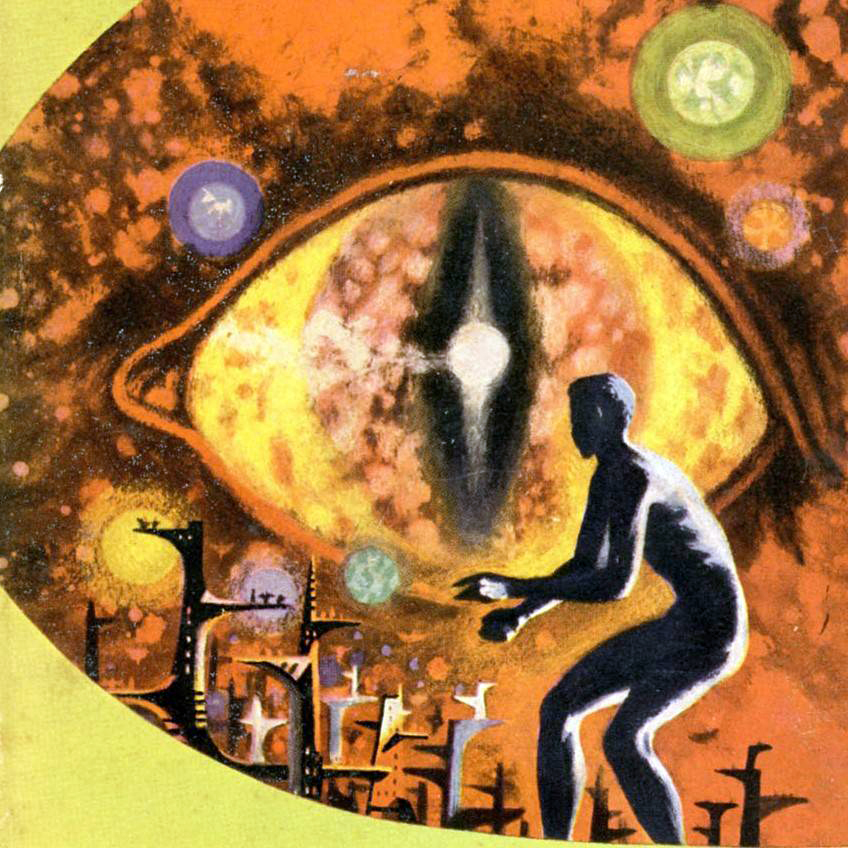
Unfortunately, the only serious discussion I found of this topic was not by religious thinkers but rather in serious Sci-Fi literature such as Arthur C. Clarke’s 1953 novel, Childhood’s End. Transcendent evolution is also a theme in “2001: A Space Odyssey,” a film co-written by Clarke and director Stanley Kubrick.  I contend religious leaders must begin to confront this urgent question.

The time has come for humans to ponder their post-body existence and the freedom this will result in.

For too long religions have not only venerated the human body but idolized it. At the dawn of the 21st century, humans are slowly ending their millennia-long romance with physical bodies and are surging into the brave new bodiless world. The profound influence material bodies have exerted on human religions is coming to an end. Before the age of embodied humans is relegated to the trashcan of human history, I chronicle in this article the impact of material bodies on religions.

The body in world religions

Judaism, Christianity and Islam place great emphasis on the human body.

Continue Reading—>

Website Built with WordPress.com.

Up ↑