Rationality and Unification

Unification copy

By Keisuke Noda

Keisuke_NodaThe idea of “Unification” is central to the Unification Movement. The current reality of the movement is that there is no clear path toward this ideal. This lack of a path, be it conceptual or real, is critical to a movement that carries the banner of “unification” both in doctrine and title.

This issue can be approached from various angles. I examine two types of “rationality,” instrumental and dialogical, and how they are tied to two different understandings of and approaches to “unification.” By highlighting the benefits of dialogical rationality and the type of unification associated with it, I call for further discussion of the idea of unification. This article makes a reference to Hans-Georg Gadamer’s “Philosophical Hermeneutics.”

Why Rationality?

“Rationality” is a key issue in philosophy. Why do we need to care about “rationality” in philosophy and otherwise? Reasoning supports the presentation of a case, justification of a claim, or the establishment of an argument. The question then is what type of reasoning is used, consciously or unconsciously. Whatever type of rationality is used guides the discourse at a most fundamental level, and is critical to understand what kind of reasoning dominates one’s process of thinking. When one solves math problems, for example, he or she may use calculative rationality; in making moral judgments, one may use “prudence,” which requires experience and a sense of balance.

Instrumental Rationality

What is the primary or even dominant rationality today? Martin Heidegger, Jürgen Habermas, and other thinkers identified it as “instrumental rationality.” They argue that instrumental rationality has been dominating discourse since modernity without our even being aware of it; that is, we use reason as an instrument to realize pre-set goals and purposes in the most efficient manner.

The instrumental use of reason is common in the technological era, which seeks efficiency and control. Its exclusive focus is gaining what you want in the most efficient and cost-effective way. This type of reasoning is efficient and effective in handling material. Modern technological developments and production were so successful, they argue, that we consciously or unconsciously adopted this type of reasoning in all spheres of life.

Continue Reading→

Let’s Start Selling the First Blessing Again

1302885286

By Graham Simon

gs-1308Running a successful business is not easy. Statistics show that 50% of new businesses fail within the first five years. Companies wishing to survive in a competitive marketplace have to ask themselves such basic questions as:

  • Are the management, organization and financing of the company fit for purpose?
  • How can we best market our product or service?
  • Has the sales force sampled the product or service and are they sufficiently motivated to go out and sell it?
  • How great is the demand for the product or service we are offering?

While a spiritual organization may be very different from a firm, there are many parallels too. Any spiritual organization that seeks to grow through proselytizing can usefully look at itself and ask these same four questions. This approach is particularly pertinent when attempting to discover why the Unification Movement has failed to grow in the West over the past quarter century.

Let us address each question in turn.

Are the management, organization and financing of the movement fit for purpose?

In the U.S. and UK of late, a lot of change has occurred in the management, organization and financing of the FFWPU. In the UK, the FFWPU is constituted as a charity. The trustees of the charity have successfully turned around the finances of the movement over the last five years. Last month, the membership was presented with a detailed proposal, which had been more than nine months in the making, for the restructuring of the UK movement. The proposal sets out a plan for improving both the operational management of the charity and fulfilment of its providential aspirations. However, while all of this is important, it is not essential to the expansion of the Providence, because if any one of us is truly motivated, we are quite at liberty to franchise the “product” that the FFWPU is offering and sell it ourselves. We call the franchise tribal messiahship.

Continue Reading→

Reimagining: Getting Back on the Bus

Bus at ASU

by Jeff Kingsley

KIngsley copyThe red carpet had been unraveled, and the enthusiastic crowd greeted the bus as it rolled onto the Belvedere holy ground last summer.  As it came closer, I could read the words clearly emblazoned across the front, “God’s Hope for America: Remember · Revive · Reimagine.”

Reading those words made my mind wander back to a time when I was 24 years old and was listening intently to a lecturer, not much older than I, speak about how God had intended the world to be a much better place — a place in which God’s love and heart would be at the center of all societal interactions (i.e., political, economic, artistic, medical, etc.) rather than a never-ending quest for more money or greater power and prestige.  I was so inspired by those words because several months earlier I had taken a leave of absence from my graduate program in search of such a group, and I knew then that I wanted to become part of this noble crusade.

Now, seeing this bus, 34 years later, I wondered if, through all the difficulties and disappointments, both on a personal and institutional (church) level, this vision were still possible to achieve.  And if we should keep striving to achieve it, how can we “reimagine” in order to accomplish that?

As part of a “reimagining” process, I think we need to begin by asking certain questions. How can we present a consistent message to the public which reflects our unique Unificationist perspective?  What could someone who walks into one of our churches for the first time see, feel and experience which could not be found anywhere else?  How can we express our message in a way which will inspire more people inside and outside (even those who have left) our Church to want to take an active role in our Movement?

The distinctive message which I believe we should clearly and consistently present to the public is that God’s desire, from the very beginning, has been to realize the kingdom on earth in a substantial way.  Reverend Moon emphasized that message in many of the early holy songs that he wrote, such as “Garden of Restoration.”

Continue Reading→

Will We Ever Walk Justly?

Mother Emanuel

By Kathy Winings

kathy-winings-2Headlines across the United States on June 18 blared the news of yet another shooting. The evening before, 21-year-old Dylann Roof walked into the historic Emanuel A.M.E. Church in Charleston, South Carolina, spoke with its pastor, Rev. Clementa Pinckney, and participated in the weekly Bible study that had just begun. Towards the end of the session, Roof rose uttering racist remarks, pulled out a gun and began firing. He killed nine people, including Pinckney; three survived. The shooting has been called a hate crime, and Roof reportedly left a manifesto indicating he wanted to foment a race war.

The shooting is just another example of acts of injustice that haunt us every day. One would think that in the 21st century, amid cries for greater peace and harmony, and with a more educated populace, that incidents of injustice would be lessened and efforts to bring about a more just society would be more successful. Yet we continue to live with a seemingly endless parade of justice issues coming to the fore on a daily basis. We read of religious radicalism and fanaticism, poverty, starvation, human trafficking, global warfare, violence, sexual abuse, racial discrimination, internecine fighting — to name just a few. With all of our knowledge, wisdom, wealth, understanding of history, and our sophistication, why is it still so difficult to achieve a more just and loving world? What are we missing?

As Unificationists, we turn to Unification thought and theology to try to make sense of injustice and to answer the question of what it takes to live justly in the 21st century. However, Unification thought and theology are limited in terms of presenting a practical answer as to why it is so difficult to create a just world. At best, Unification thought and theology use only broad strokes to meet this challenge by presenting theories concerning ontology, original human nature, universal values, ethics, order and equality. Therefore, our challenge is to take these theoretical concepts and develop them to give a more effective practical understanding of how to address injustice.

Continue Reading→

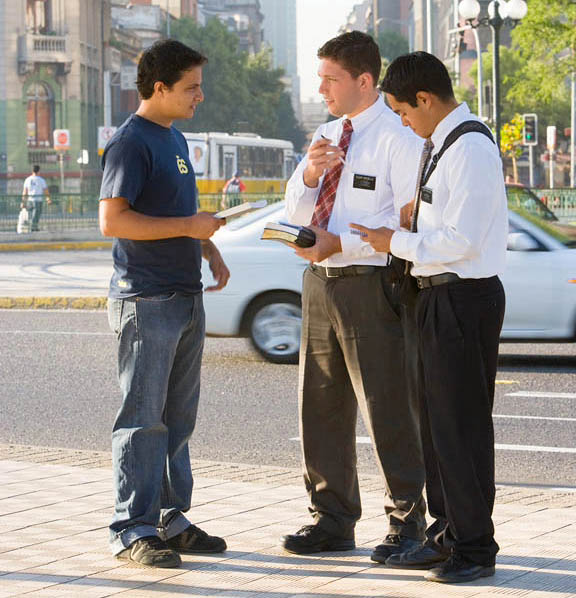
Mormon Lessons for the Unification Church

mormon-church-missionary

By Takayoshi Sugawara

TakaSugawaraThe rise of The Church of Jesus Christ of Latter-day Saints (LDS or Mormon Church) is an incredible story of a persecuted Christian offshoot that has grown to become the most successful, new global religion in the 14 centuries since Islam. It boasts 4.5 million active members worldwide (15 million recorded), and the church itself is estimated to be worth $40 billion. Its membership has included a 2012 U.S. presidential candidate.

All this membership, wealth, and a permanent footing in mainstream consciousness was achieved within a 185 years of its founding. This is a monumental achievement. Rodney Stark, a highly regarded sociologist of religion, declared this ascent to be “one of the great events in the history of religion.”

In contrast, the Holy Spirit Association for the Unification of World Christianity (Unification Church) is a new faith experiencing difficulties in all these areas. Currently, the church finds itself in much turmoil in areas such as finances, leadership and growth. If the Unification Church is to survive and grow, changes need to be implemented.

It is fortunate for the Unification Church that the Latter-day Saints have proved it possible for a new religion to find success globally, bucking declining trends experienced by other Christian sects. Many studies of the Church of the Latter-day Saints have attempted to explain its enviable growth. Let’s consider ways the Unification Church might attempt to replicate its success.

To begin with, the development of the two faiths are strikingly similar. A charismatic leader raised in the Christian faith started a new religion upon experiencing a supernatural vision. After initial growth and success, both their fledgling churches experienced severe persecution from their communities, and the founders were jailed several times during their ministries. And now, the factionalism that Unification Church is experiencing soon after the death of its founder is eerily similar to the “Succession Crisis” experienced by the Mormons following the assassination of its founder.

Continue Reading→

Neo-Confucian Principle(s) in the Thought of Sun Myung Moon

sun_an_moon_yin_yang__acrylic_painting_by_meta_mask-d79b5nh

by Thomas Selover

2014-04-23 15.01.09 croppedReverend Moon was arguably one of the most influential of modern Koreans, and certainly one of the most controversial. In order to better understand his thought, it is natural and helpful to pay attention to Korean cultural influences, including Confucian and Neo-Confucian content, which have helped to shape the patterns of his thinking.

In his autobiography, As a Peace-Loving Global Citizen, Rev. Moon recounts his early childhood in an environment where fervent Christian revivalism was spreading in a society deeply imbued with Confucian patterns of life and thought. He noted,

When I turned ten, my father had me attend a traditional school in our village, where an old man taught Chinese classics… At school, we read the Analects of Confucius and the works of Mencius, and we were taught Chinese characters.

Through this education, he developed a life-long love of Chinese characters, and he delighted in expounding new insights from the form of the characters. This article explores some family resemblances between Neo-Confucian thought and Unification thought in four areas, hoping to shed some intriguing light in both directions.

Li  理 as “Principle”

The first evidence of Neo-Confucian content is in the phrase “Divine Principle” or “The Principle,” used in ordinary Unification parlance as shorthand for Rev. Moon’s teachings, particularly insofar as those teachings are understood to be revelatory. Because the Divine Principle (DP) text relies on biblical quotations to advance its philosophical and theological points, it has generally been  viewed in relation to Christian theology. However, the background for many of the ideas contained in the DP book, including the title itself, can be traced to Confucian and Neo-Confucian themes instead.

In Neo-Confucian thought, li (principle) signifies the inherent principles of the natural world, as well as our human ability to understand those principles (intelligibility). For Neo-Confucian thought, li are immanent in the world of experience, rather than being primarily conceptual or formulaic.

Continue Reading→

The True Value of a College Education

81zwdOmr1RL

The following is adapted from the book From Rogers Park to Hanover Park, the adventures of a Jewish boy growing up in the neighborhoods of Chicago and his 40 years in Reverend Sun Myung Moon’s Unification Church, published by Rev. Bruce Sutchar.

By Bruce Sutchar

bruce_sutcharWhen you grow up in a Jewish home with grandparents who were both doctors and parents who were both college graduates, the only question is which college, not whether you are going to college.  And when you go to a college basketball game and one of the colleges you are considering makes an incredible comeback to win, you have answered the second question of where.

There is a famous ad campaign for the United Negro College Fund that says: “A Mind is a Terrible Thing to Waste.”  But is it really better to go to college? In my case, God liberated me from my university’s cultural influence to rekindle the values I had fully believed in before going off to school.

I have a friend who went to college for one semester and flunked out.  He then got a job at the Post Office and 30 years later he retired with a million dollars and no college loans.  My cousin is proud of the fact that he feels he is the only Jewish boy in Skokie who did not go to college.  After high school he visited and fell in love with Israel.  He returned home for a time, so his parents could digest the idea of him not going to college.  Eventually he emigrated, married a darling French artist and is now living on the richest kibbutz in Israel, near the Red Sea.

But I digress — I went to high school during the Vietnam War era.  My father had been a navigator in Italy in World War II and I’m so old that I remember when the words “under God” were put into the Pledge of Allegiance. In fact, my fifth grade school teacher used to begin each day by selecting someone to lead our reading of the 23rd Psalm in our public school.  Years later she is still my favorite teacher and her class was the only time I ever got straight A’s.

Continue Reading→

The Crossroads: Finding One’s Path as a Second Generation Member

crossroads1

By Jenny Cox

Jenny CoxI think many members of the second generation are standing at a spiritual crossroads. One course leads the way we’ve been going our entire lives: the way of our parents, the way of the Blessing, the way of inheriting the faith tradition we were born into. The other course lies outside, through what we fondly call the fallen world.

Kind of a scary ultimatum, isn’t it?

In a time of many transitions and new starts — life goals, career ambitions, even marriage prospects knocking at one’s door — it’s almost too much for a young person to handle at one time. All of the most critical decisions of one’s life seem to be clustered in this tender three-to-four year gap between teenagehood and college graduation. On top of that, add the fact that most young people, in their late teens and early twenties, are still desperately trying to find themselves.

Young people are especially vulnerable to the whims of the world, as they are also expected, and sometimes herded, to go to college during this pivotal, impressionable stage of their lives. I regret to say that, while colleges do provide a wealth of knowledge and opportunity, college campuses are also rife with harmful influences. In such an environment, confusion on many levels is likely to trouble a young person’s mind; some would even say this is calculated.

At college, students are presented with a smorgasbord of various ideas and intellectual concepts. While a few of these may be true, it is difficult for a young person to discern between truth and mere conjecture, between fact and theory. When a theory is well-supported and popularly acknowledged as gospel, it is easy to be compelled to go along with the common opinion that it is fact. Uneducated young people are in this position to judge a vast array of conflicting ideologies without a point of reference. If they are already uncertain about their own identity and beliefs, by what standards will they be able to judge the rest of the world, especially when that world is speaking from a position of authority and experience?

Continue Reading→

My Dream Concerning Seminary Education

UTS in snow

By Young Oon Kim

(This article originally appeared in The Cornerstone, Vol. 1, No. 8, February 1977)

Image71Some years ago, I urged Reverend Moon to start a seminary for the training of our future leaders. At first there was no way to see that dream realized but we never gave up hope. So you can imagine how happy we were with the purchase of Barrytown (1974) and the actual establishment of Unification Theological Seminary (1975). But there is more to a seminary than buildings, textbooks, the hiring of professors and selection of students. As necessary as all these are, even more important is the purpose we have and the spirit we seek to create.

In my opinion, there is no need for another theological seminary like those the traditional churches now have. What value would there be in duplicating Harvard, Union, Chicago or Princeton? We must provide something different, something extra, a superior education for a new way of life.

To help you to understand what our seminary’s function should be, could be and must be, let me briefly remind you of what education has been in the past.

Because of the numerous barbarian invasions and the fall of the Roman Empire, the church was forced to become a school teacher. In the Dark Ages there was nothing but the church available to keep the light of learning from being extinguished. Therefore in the monasteries or attached to the cathedrals, schools were set up to preserve the wisdom of the past and transmit it to the younger generation. These schools were often only modest creations but they provided the foundation for what was to follow.

As Christians, men of the Middle Ages believed that one should “love thy God…with all thy mind” like Jesus taught. Religion involves what you think as much as how you pray. So the schools were connected with the church, financed by the church and usually staffed by clergymen. In addition to such external characteristics of medieval schooling, education even in the humanities was built upon a spiritual foundation and was designed to realize a spiritual quality of life. Until our own time the motto of Harvard University was “For Christ and His Church.”

Continue Reading→

Website Built with WordPress.com.

Up ↑