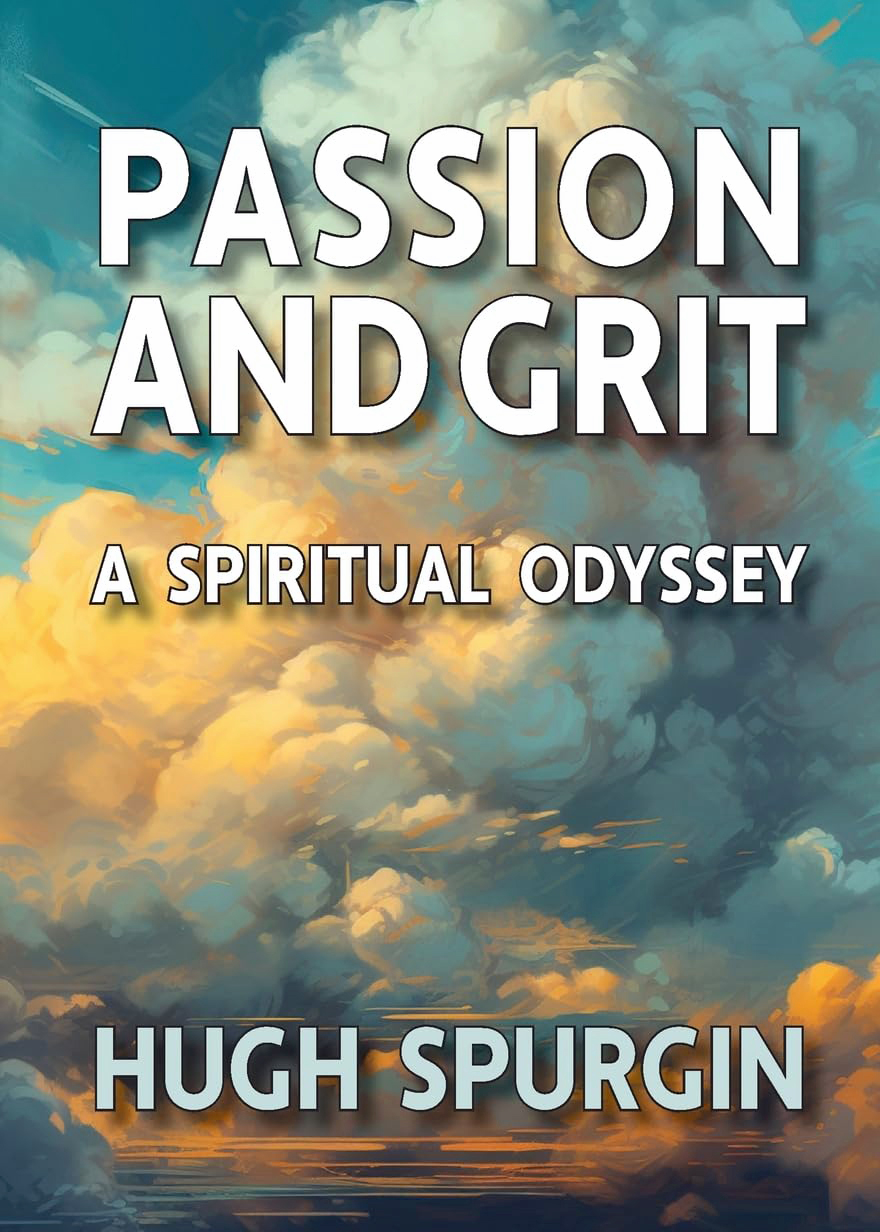
Passion and Grit: A Spiritual Odyssey

By Gordon L. Anderson

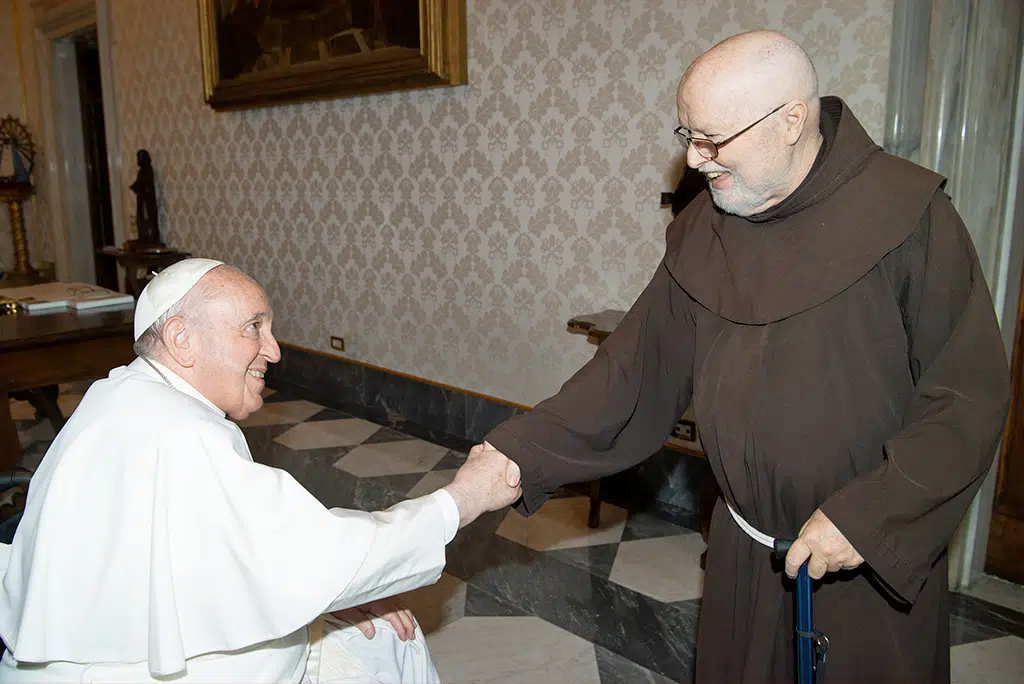
The autobiography of Hugh D. Spurgin, Passion and Grit: A Spiritual Odyssey, is the story of an early follower of the Rev. Sun Myung Moon in America. It reveals the impact of the power of a higher truth on a conscientious and idealistic person who seeks to live the most meaningful life possible.

In the 1960s and 1970s, material prosperity in the United States was high, but traditional religious doctrines had lost their power to explain the nature of reality and human happiness in a scientific world. The baby boomers were coming of age in a world of confused and conflicting values. Some accepted the establishment, others rebelled against it, but still others, like Hugh, sought constructive ways to move forward, discerning what was of value in our traditions, and what needed to change.

Rev. Moon’s teachings put Hugh on a life journey, not only a spiritual path, but as a member of a new community in which he raised his family and became a leader of a worldwide movement that has now reached millions of people. This book is both a chronicle of Hugh’s life and the development of the Unification Church, now the Family Federation for World Peace and Unification (FFWPU), and how Americans worked to bring Rev. Moon’s teachings of a higher culture and more peaceful world.

A Seeker of Truth

Hugh was born in Roswell, New Mexico, in 1945 and grew up in Terre Haute, Indiana. The family attended a Presbyterian Church and his dad was a chiropractor. Hugh liked sports and outdoor activities. After graduating from high school in 1963, he went to Indiana State University and excelled in social sciences, and went on for a master’s degree in public administration at the Maxwell Graduate School in Syracuse, New York. This landed Hugh an internship, and later a full-time administration job with the U.S. Navy in Washington, DC. He had a top-secret clearance and secure employment in the federal government.

Hugh was not content to simply pursue this career. He was always seeking answers to historical and religious problems and ways to make the world better. While studying the Baha’i faith, he was invited to hear several lectures based on Rev. Moon’s teachings at the Unified Family center in a Victorian mansion on Upshur Street. Hugh heard clear answers to some of his questions about evil, God, Jesus, and salvation. It was an eye-opening, comprehensive historical perspective on human history and civilization. It also presented principles about peacefully advancing human society. He decided to join this small group and help transform the world.

When Rev. and Mrs. Moon came to Washington, DC in 1969, they moved into Upshur House for 40 days, spending quality and personal time with Hugh and the other members who lived or gathered there. Hugh was amazed by Moon’s interracial and intercultural approach to marriage, breaking down traditional religious and ethnic boundaries with the goal of creating one world family under God.

Continue reading “Passion and Grit: A Spiritual Odyssey”

The Next Great Awakening Through the Convergence of Science and Religion

By John Redmond

Students of human history are very aware of patterns and cycles that define our intergenerational experiences. The hope is that by discovering the systemic causes of failures in the past we can prevent or reduce the consequences of failures in the current age.

Karl Marx hypothesized that the important cycles of history were the ones defined by the conflict dialectic and that the arc of history is bending toward worldwide socialism, where material wealth is uniformly distributed.

In the Divine Principle, history moves by the Principles of Restoration in cycles, but the length of the cycles is dependent on the providential response of the central figure and chosen people of an age.  The arc of providential history creates a society spiraling upward in increasing beauty, truth and goodness, in addition to the abundance of material prosperity.

The last 400 years of human history have been a golden age of prosperity by any historical measure.  There is widespread anxiety that the scientific forces unleashed by the Enlightenment will cause humanity to end in disaster as previous golden ages have. Elon Musk said he’s determined to create another populated planet in case humans render earth uninhabitable.  The Dark Ages, which followed the Roman Empire and birth of Jesus, led to 1,000 years of dystopia.

Recent political polarization, exacerbated by Internet information algorithms, have created toxic levels of political discourse in America.  This was predicted by Marx, who thought that escalating conflict created conditions for a revolution that would destroy an old structure so that it could be replaced.

The Divine Principle also predicts that conflict can clarify roles of a subject and object, but that in cases where the opponents can be reconciled to a higher truth, a system of higher complexity, unity and effectiveness can be created.

A good example of this success is the creation of the United States.  The mounting conflict of the American colonies with England from the 1770s could have resulted in some representation in England, lower taxes, or a humiliating loss.  However, the Founding Fathers and Mothers of America were moved to create something new and higher than a simple political win, and indeed, America has been the indispensable nation for the last 100 years.

It seems that human history may be at a turning point from both the materialist and spiritual points of view.  What are the forces that affect that turning point and how can we influence the course of history to create an upward spiral rather than a 1,000 year decline?

History has some precedents for how society has been shaped by spiritual and religious movements.

This response from ChatGPT, an artificial intelligence chatbot, was to the question: “What were the Great Awakenings and what were the consequences for America?”

“The First Great Awakening took place in the 1730s and 1740s. It was sparked by preachers such as Jonathan Edwards and George Whitefield, who emphasized the importance of personal conversion and a direct relationship with God. The movement had a profound impact on colonial society, as it challenged traditional religious authority and hierarchical structures. It led to the growth of new religious denominations, such as the Baptists and Methodists, and promoted ideas of equality and individualism.

Continue reading “The Next Great Awakening Through the Convergence of Science and Religion”

Traditional Roman Catholicism vs. Franciscan Mysticism: A Case Study for Unificationists

By Ron Pappalardo

Recently, a significant reconciliation took place between two opposing factions within Roman Catholicism.  In light of divisions plaguing the Unification faith community at present, it is instructive to look at how this reconciliation took place.

After watching a video on Franciscan Mysticism by Father Richard Rohr, it occurred to me that there is quite a contrast between traditional Roman Catholic theology, such as found in the Baltimore Catechism I studied as a child in parochial schools, and Franciscan Mysticism.

Here, I examine the possibility — perhaps even probability — that these two traditions contradict each other in various ways. I briefly describe the different theological positions of traditional Roman Catholicism versus Franciscan Mysticism. If these positions do contradict each other, then there might have been, and still may be, tension and conflict within Catholicism at large between these two traditions. I investigate this possibility and discuss any attempts that have been made to deal with and perhaps resolve these intrafaith tensions.

Traditional Roman Catholicism

Roman Catholicism teaches that all human beings since the fall of “our first parents,” Adam and Eve, have been born with original sin, making necessary the coming of Christ for the purpose of redeeming us from sin through his crucifixion.

These teachings are clearly stated in the Baltimore Catechism, an official text used to educate Catholics and prospective converts about the basic doctrine of the Catholic Church. Most Catholics, in the United States at least, studied this text as part of the curriculum of their parochial school education, or by attending Confraternity of Christian Doctrine (CCD) classes usually held on Saturdays. The catechism book is presented in a “question and answer” format, with each question identified by a unique number. It was originally written in 1885; the following questions have been selected from the 1941 revised edition:

47. Q. What is the sin called which we inherit from our first parents?

A. The sin which we inherit from our first parents is called original sin. Because of this sin, it was necessary for Jesus Christ to be born. His purpose was to redeem humankind by dying on the cross.

60. Q. Did God abandon man after he fell into sin?

A. God did not abandon man after he fell into sin, but promised him a Redeemer, who was to satisfy for man’s sin and reopen to him the gates of heaven.

83. Q. Why did Christ suffer and die?
A. Christ suffered and died for our sins

103. Q. What do we mean when we say that Christ sits at the right hand of God, the Father Almighty?

A. When we say that Christ sits at the right hand of God, the Father Almighty, we mean that Our Lord as God is equal to the Father, and that as man He shares above all the saints in the glory of His Father and exercises for all eternity the supreme authority of a king over all creatures.

Continue reading “Traditional Roman Catholicism vs. Franciscan Mysticism: A Case Study for Unificationists”

The Need for a Unificationist Blessing, Marriage and Family Theology and Education Providence

By Alice Fleisher

I experienced a flash of insight a few days ago while looking at Rev. Sun Myung Moon’s picture (who Unificationists call True Father).

The gist of the revelation was that some 30+ years ago, I was in a position to facilitate and contribute towards the development of a Unificationist Blessing, Marriage, and Family Educational (UBMFE) providence.

If that was the case, you may wonder why am I only now proposing the development of such a providence rather than 30 years ago? (I was first active in the American branch of the Unification Church’s marriage and family ministry — known as the Blessed Family Department [USA BFD] — between 1987 and 1989 and then reconnected in 2004)

In the 1970s and 1980s, the USA BFD work consisted of supporting and administrating the Blessing providence. The providence of guiding Blessed couples and families mainly consisted of preparing couples for their three-day ceremony, counseling, and the publication of two Blessing-related magazines, which included True Parents’ speeches and some educational material, called The Blessing Quarterly and The Blessing Journal.

Family education was not pressing because most couples were just starting out and few had children. However, anyone connected to the USA BFD who was even remotely observant could see we were eventually going to need education material and programs that could minister to and provide life guidance for these Blessed couples and families.

Unfortunately, budgetary concerns and administrative decisions occurred that had a major impact on the USA BFD and the development of that kind of material. Around 1990, the USA BFD was completely shut down, an action that wasn’t reversed until 2004 (due to True Father’s prodding).

Upon reflection, I believe that from the 1990s going forward, the development of mature, professional and comprehensive educational material on the Blessing, Marriage and Family derived from the revelations of True Father and Rev. Hak Ja Han Moon (who Unificationists call True Mother; together they are called True Parents) would have occurred. Sadly, such efforts were stillborn and cut-off abruptly due to the USA BFD’s demise.

It was not a coincidence that during the time the USA BFD was dormant, the Coalition for Marriage, Family, and Couples Education, LLC (CMFCE) was founded by Diane Sollee in 1996. I believe through the CMFCE and the Smart Marriages Conferences they sponsored, God worked to encourage faithful professionals who were caring for beleaguered families to identify and make available to the greater public, ministries, clinical practices, and educational programs dedicated to enriching healthy marriages and saving marriages that were in trouble. The purpose of the CMFCE, found on their website, is below. These are worthy and laudable goals.

The coalition serves as an information exchange and clearinghouse to help couples locate marriage and relationship courses; to help professionals, clergy and lay educators locate training programs and resources; to connect those with an interest in the continuing development of the field; to support community initiatives, legislation and research; and to promote the effectiveness of marriage education programs and increase their availability in the community.

Continue reading “The Need for a Unificationist Blessing, Marriage and Family Theology and Education Providence”

The Abundance Mentality, with Biblical References

By Esfand Zahedi

As many teachers and prophets have taught, and as supported by scientific and historical evidence, our experience is largely shaped by our perception.

A person who expects the worst, or the commonplace, is very unlikely to attract positive things or even see them if they surround him. A person with faith or a good attitude is likely to invite good experiences and frame seemingly negative events in a positive light.

If faith doesn’t lead to a life-affirming and optimistic attitude, it can hardly be called faith. Faith should lead to the conviction there is a universal answer to our inner desires and an infinite supply of good things for all; that nothing can be “too good to be true” if goodness and truth have the same Source. Convictions like these constitute what I call an “Abundance Mentality.”

Many human fears are unnecessary and debilitating. Jesus declared, “I came that they may have life, and have it abundantly” (John 10:10). When the multitude came to Jesus with their troubles, he comforted them and — without affirming their thoughts of scarcity — pointed to the infinite abundance and responsiveness of the Father.

How much of our trouble arises simply from want of faith? A mentality or attitude contains an element of faith when the mind assumes a truth that transcends immediate experience. Seeking to define “faith,” I find this a solid definition: “Now faith is the assurance of things hoped for, the conviction of things not seen… By faith we understand that… what is seen was made out of things which do not appear” (Heb. 11:1, 3).

Things seen (our outer conditions) were made out of things unseen (our inner beliefs). With our minds we frame the world around us, be it a world of selfishness and poverty or a world of harmony and wealth. The greatest benefits life has to offer are obtainable by changing the mind. By change of mind is meant not a mere change of opinions, but the transition to a new mentality. The word “repent,” from the Greek metanoia, means “to change the mind.”

“Repent, for the kingdom of heaven is at hand” (Matt. 3:2).  Change your minds, for all the wonderful and good gifts of life are readily available, within your reach. We have the freedom to change our minds from a state of poverty and doubt to a state of wealth and assurance; to abandon the Scarcity Mentality and put on the Abundance Mentality.

The Bountiful Father

God is our Bountiful Parent; able, willing, and ready to do all things. The Divine Will is, however, to accomplish things through us. “[By] the power at work within us [He] is able to do far more abundantly than all that we ask or think…” (Eph. 3:20).

The beliefs of the Abundance Mentality apply to the abundance of food, water and natural provisions. Nature offers the resources that can produce more goods than can be counted. If we are connected to the Source, then every resource can be resupplied again and again without limit. There is no real shortage in nature.

Continue reading “The Abundance Mentality, with Biblical References”

Unearthing My DNA: The Lost Sister

By Eileen Williams

It’s natural to presume that family are the people who think like us, are born into the same cultural group, share similar political stances, and even look like us. A homogenous comfort zone called “family” might be nice to ponder, but the reality is often a far cry from this rosy Rockwell-esque tableau.

The unexpected discovery of a half-sibling made me re-think “family” and my place in it down to my very core. To put this in a Unificationist perspective: the reality of tribal messiahship with diverse members spanning two coasts and two continents sometimes requires both flying far and digging deep.

It was Thanksgiving 2020, and I was participating in a Zoom meet-up through my local library with Libby Copeland, author of The Lost Family: How DNA is Upending Who We Are. That might make a good Christmas present for someone, I thought, unawares that the very person to benefit from the book would be me.

Inspired by Copeland’s case studies delving into family heritage — its twists, turns, and surprises, the medical miracles, the family drama — I turned to my sister Mary: “Let’s buy ourselves Ancestry.com DNA test kits for Christmas.”

Mary and I were curious about where in Ireland our relatives came from; she was readying to visit my father’s second cousins in Germany. However, we had not anticipated that we were about to “out” our own family skeleton, although that doesn’t seem a nice way to describe a newly-found half-sister.

After Christmas, I received my test results, and there staring back at me from the Ancestry.com website was a photo of a woman tagged as a first degree relative. I determined after a few stunned moments that she could neither be aunt, niece, nor cousin but rather was/must be a half-sister (really?).

She had lurked on the Ancestry.com site for two years hoping to “strike” a match. I would come to learn that she had longed most of her adult life for someone — anyone — she could call family. And strike a match she did.

Although myself and three of my siblings had managed to forge a bond despite the childhood rupture of divorce, my younger adopted sister cut all ties with the rest of us. Sadly, family is not always what folks want to find, and sometimes it’s even those we want to lose. Yet, here on the site was a half-sister hoping desperately to discover family connections.

The first thing I learned about DNA testing is people can inherit different pieces of DNA from their ancestral gene pool. One does not neatly inherit 25% of your genetic traits from each grandparent, and then 12.5 % from each great grandparent; rather hereditary traits are expressed in a random manner.

My sister and I share a 58% DNA match, which is normal for siblings or fraternal twins; identical twins share a 100% DNA match. My sister has a higher percent of Scottish DNA than I do (ah, the red in her hair!).  My half-sister was a 27% DNA match with me.

All humans share 99.9% percent DNA in common, so why bother researching your genealogy at all?  Some DNA test sites suggest you can form meaningful connections from doing this — second and third cousin discoveries, famous relatives. Maybe your ancestors go back to a signer of the Declaration of Independence, as a proud friend of mine discovered.

Continue reading “Unearthing My DNA: The Lost Sister”

A Proposal to Allocate More Resources for Counseling

By Incheol Son

A two-year-old child sat on the floor in a relative’s house, wearing only one piece of knit in the cold winter. He was staring aimlessly and couldn’t recognize who had come before him.

This boy had forgotten the faces of his mother and father. He was left there all alone in “separation” from his parents who went out for witnessing. Immediately after his father saw the baby, his father escaped to the kitchen and cried quite a while.

This is the story my mother shared with me. It was about me. In fact, I have no recollection of it.

But, I surely recall the day when I tried to describe that scene in a testimony at a workshop. All those listening suddenly cried along. They were all second generation and had similar experiences as mine. I came to realize it was not just an individual but a collective one.

From a psychological point of view, however, the vulnerable little boy was exposed to an “overwhelming” event to lose his parents in his earliest years by being abandoned in what for him was a strange place. I had to face a series of similar events that continued to take place afterward, such as my mother’s sudden disappearance to go witnessing and my father’s quitting his job to become a pastor.

These experiences were very damaging to a child, though it’s been theologically justified as “indemnity” to build a condition that UC members tried to love the world more than their own children. I was educated in training programs to accept the logic as such. I tried and it worked — for a while.

I’ve even been encouraged to sublimate such primal wounds. But, they have never gone away. Rather they’ve accumulated; the emotional lump of trauma is still active inside me. And, now I realize it has kept influencing my life.

For example, I have a kind of “fear” of facing strangers, new people. Some say it’s just my character. And so I’ve also been encouraged not only to overcome it personally but to apply the ideal model of engaging in a new relationship. But, it’s like the fear of heights I have. I just react naturally to it. Fear is a psychological “symptom” of trauma.

When I served briefly as a pastor, one Japanese woman who had married a Korean man approached me for counseling. Her husband had no faith at the time and so was more like a secular man. He just joined the church because his older sister, from a senior blessed couple, had urged him to get married. The application forms were submitted and the man was able to participate in the blessing ceremony though he was not fully qualified.

On the other hand, the Japanese wife, who graduated from a renown university in Japan, entered the blessing by hope and faith. But the reality she had to face afterward in South Korea was far from what she had dreamed. Her specific difficulty she shared with me was her husband’s habit of inviting his friends over in the evenings. She had to welcome and serve those unexpected guests every time, but she, who already had two children and was pregnant with her third, couldn’t feel happiness from his habits.

Continue reading “A Proposal to Allocate More Resources for Counseling”

Spiritual Connections: Living in the Flow of God’s Love

By Gordon L. Anderson

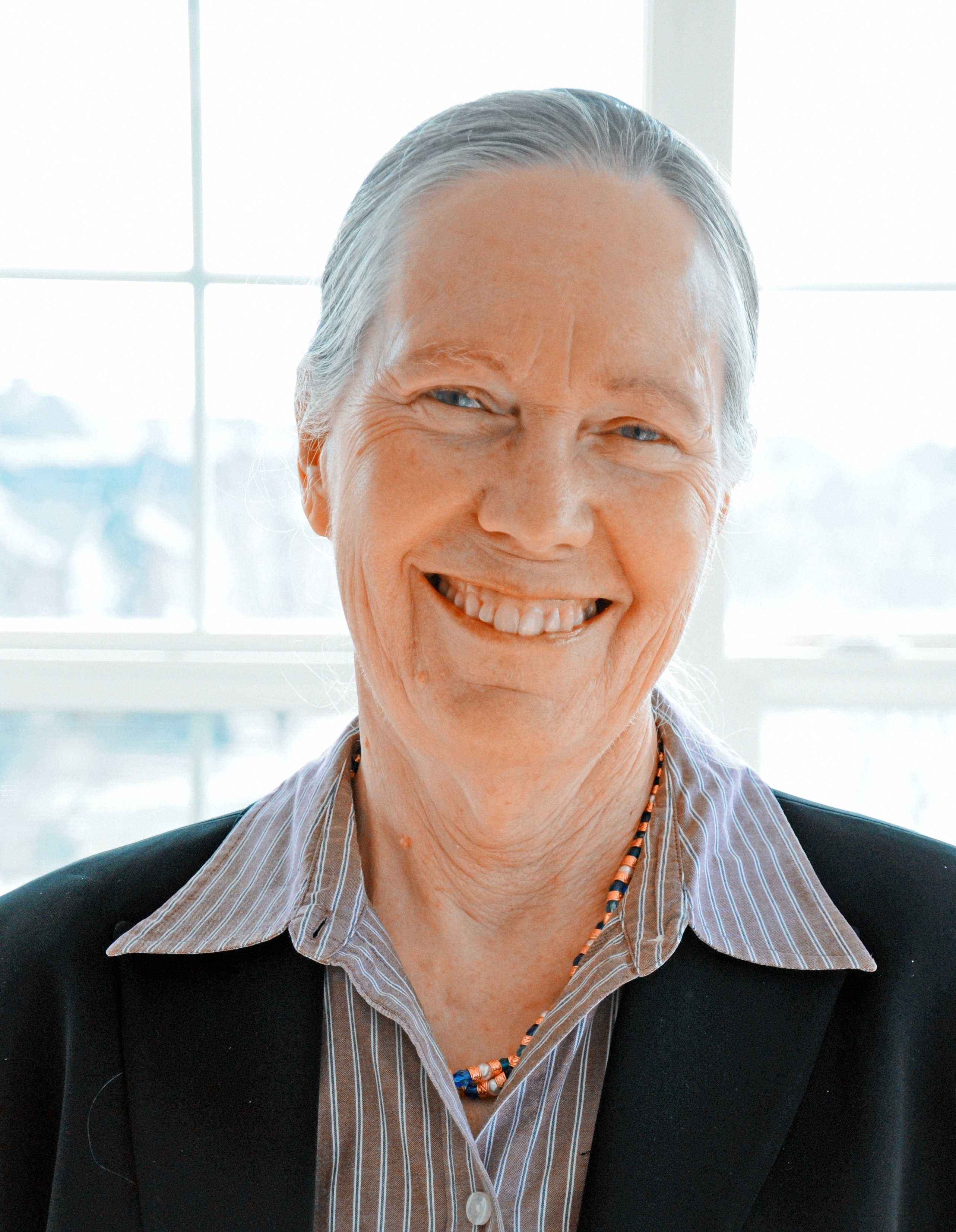
Spiritual Connections: Living in the Flow of God’s Love (Circle of Angels Press, 201 pp., 2022) is an engaging spiritual autobiography of Nora Spurgin, who joined what was then called the Unified Family (later Unification Church) in New York in 1967. She served in many central positions as the movement led by Rev. Sun Myung Moon developed into a new global culture. Nora’s identity is shaped by her connections to others in her lifelong pursuit to be in the flow of God’s love.

Her story begins with her ancestors who came to America for religious freedom. Her sixth great grandfather authored Confessions of Faith, which is still used for religious instruction among the Mennonites. She grew up in Lancaster County, PA, in a farming community with large families, connected to her parents, siblings, extended family, and nature. Life was a mixture of hard work, fun play, and worship of God. Personal responsibility and maintaining the community was stressed. Her community was self-sufficient. Nora learned to design and sew clothes and her father even taught her every step in building a house!

At a young age, Nora’s curiosity prompted her to ask questions about her faith in comparison to Catholics and others. She studied the people she met, wanting to learn behavior patterns and whether people were genuine or putting on a façade. She learned to approach others with confidence. While Nora wanted to learn fastidiously, her parents believed outside education would corrupt children’s faith. She dropped out of high school after one year and worked at home and in a sewing factory until she turned 21 and became a free adult. Then she grabbed lots of books, studied, passed the GED exams, and set out on the world.

A Mennonite Voluntary Service program caring for children of migrant workers in Florida exposed Nora to poverty and other cultures and broadened her faith. In college, she loved philosophy and history. On weekends she visited and served people in Appalachia, and experienced charismatic spiritual events. Then she went on for her master’s degree in social work at New York University. The intellectual confrontations and big city life were far different than life on a simple Mennonite farm. Through all her encounters, she continued her search for connections to God and was prepared to meet the Unification Church.

Continue reading “Spiritual Connections: Living in the Flow of God’s Love”

A Remedial Shift to the Esau-Jacob Model: An Internal Monologue

By Incheol Son

As a second-generation Unificationist, I’ve suffered for a long time from the Cain-Abel model, a prototype relationship that has been applied to almost all kinds of personal as well as official relationships in the Unification movement.

The Cain-Abel model in the Divine Principle is one of the key concepts that have long been promoted. It describes the nature of relationships inside the first human family that ended with great tragedy. The relationship was of the two offspring of the first human ancestors, Adam and Eve. It was the start of a subsequent series of unhappy historical events for God after their fall.

On the other hand, there’s the very successful story of the grandchildren of Abraham, the model of Esau-Jacob, which has not been promoted that much relative to the Cain-Abel model. Yet, it was surely a restored and successful relationship and thus it laid the foundation for the birth of the Messiah, Jesus, from the family’s lineage. The reason why this latter model has been less promoted is the Esau-Jacob model is full of fallen human nature such as deception, running away, fighting back, betrayal, and total surrender in fear.

But, I believe now is the time we may need to intentionally move on to the next phase and start promoting the Esau-Jacob model more than habitually sticking to the first tragic Cain and Abel model. This is mainly because a trauma has been bequeathed to us, especially to the second and third generations, as a scar deep in our spirit. We’ve been inculcated with such traumatic and guilty feelings from early on, even from the mother’s womb, in the cradle, at Sunday service, to the university, the church, and providential organizations.

Fortunately, I am now somewhat recovered from such traumatic feelings.

The release from these traumatic feelings occurred when I realized the Cain-Abel model did not fit with reality all the time and was not the only model we could apply to human relationships. I rediscovered there was another model of human relationships between Esau and Jacob that had brought a great victory to the history of the providence. Yes, it is full of less admirable aspects of human nature such as deception. But I believe Abel should have been wiser in front of his elder brother Cain. It would have been much better than being killed by him. Abel should have been able to lie to Cain sometimes for the sake of the higher good. The first lie or deception in human history would have been much better than falling victim in the first homicide.

Continue reading “A Remedial Shift to the Esau-Jacob Model: An Internal Monologue”

Website Built with WordPress.com.

Up ↑