From Unification Thought to Unification Philosophy

the-thinker

By Keisuke Noda

Keisuke_NodaUnification Thought, as systematized by the late Dr. Sang Hun Lee, is currently the only major “philosophical” exposition of the Divine Principle in the Unification Movement. While some appreciate Unification Thought, others find its contents puzzling. I am both fascinated and perplexed by Unification Thought. In this article, I articulate some critical areas to be explored in transitioning from Unification Thought (UT) to Unification Philosophy.

Self-examination

What is the heart of philosophical discourse? It is self-examination. Many may recall from high school or college the Socratic method or the emphasis on self-examination. Self-examination is intrinsic to the discipline of philosophy. Philosophy examines its points of departure, presuppositions, approaches, and processes of reasoning. It questions and tries to justify its own discourse: why, how, and where it can start, proceed, and finally conclude.

UT lacks in the area of self-examination. It is a reiteration of various truth-claims from the Divine Principle (DP) with some additional truth-claims. It presupposes various assumptions from the DP without critically examining them.

In philosophy, the reader does not necessarily share the same assumptions with the author. Yet, readers can learn from and gain irrefutable insight through the author’s rigorous process of reasoning. For this reason, non-believers can enjoy reading Augustine and gain invaluable insight and theists can learn from reading Nietzsche and Sartre, who were radical atheists. Readers learn more from honest and sharp critiques than mediocre apologetics.

The lack of critical self-examination is the most glaring deficiency of Unification Thought, which therefore makes it unattractive to some readers.


Continue Reading→

Blogging about 101 Proofs for God

Eye Nebula

By Jim Stephens

Jim Stephens_edited-1Three years ago I was sitting in bed praying. I had been thinking a lot about what I was going to do with the rest of my life. I was 62 and thinking 30 more years was about all there was left at the most.

The thought occurred to me to pray something like this: “Heavenly Father, I know your situation is pretty tough up there because things are so messed up down here. I’ve only got about 20 good years left that I might be able to help You. What can I personally do for you with the time I’ve got left?”

The answer came in a pretty clear understanding: “My children don’t know me. Even the ones who believe in me don’t really know Me. They have no defense against the attacks of the atheists, scientists, and evolutionists who claim science and truth are on their side. It is an all-out war for the minds and hearts of my children.”

I could feel there was vast loneliness, sadness and frustration in God’s heart with this situation.

“Proofs for God” were needed. Most believers, when confronted by atheists, had very shallow proofs for God and typically could only think of a few.

I felt like God wanted me to help with this situation. So I decided to write “101 Proofs For God for the Common Man.”

Each proof would be short so anyone could read it in two or three minutes. I would cover all kinds of topics from logical proofs to serious scientific explanations and the latest research. I would avoid heavy theological and philosophical proofs. I’d write proofs that even middle-schoolers could understand. I would do the research on the latest discoveries and summarize it for their easy understanding.

I chose to post each proof as I wrote it on Blogspot. Later, I created a website that contains the full list of them. My goal is to finish #75 by the end of the year and get to #101 by the end of 2015. Then I want to turn it into a book.

Continue Reading→

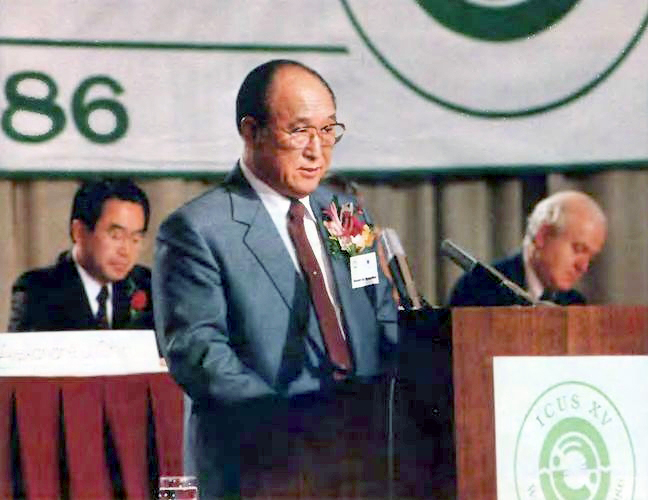
Lessons from Reverend Moon’s New Culture Strategy

ICUS XV Washington 1986

By Glenn Strait

“Do you think you can create a new culture of peace by sitting down?”

— Sun Myung Moon

Glenn_Strait_edited-1From 1972-92, Reverend Moon invested huge resources in creating new culture. During this same period, he also invested vast resources in defeating international communism, while he simultaneously conducted major evangelical outreach efforts and established a global footprint of his movement.

The foundation for each of these components was a system of thought — Unification Thought, Victory Over Communism, and Divine Principle, respectively. My focus is Rev. Moon’s strategy for creating new culture.

In strategizing with God about how to usher in God’s ideal, peaceful and happy world, he determined his grand strategy would include a component focused on creating new culture undergirded by a new and comprehensive ideological framework built on the foundation of Divine Principle itself. Working directly with Dr. Sang Hun Lee, Rev. Moon elaborated upon Divine Principle to create Unification Thought to serve as that ideological framework.

My windows onto Rev. Moon’s new culture strategy were, from 1972-85, working on the core secretariat of the annual International Conference on the Unity of the Sciences (ICUS), and, from 1985-2004, as editor for natural sciences of The World & I monthly magazine.

Rev. Moon’s strategy had originally intended The World & I to be the vehicle for spreading new culture, as the magazine published articles written by academics and other prominent people inspired by Unification Thought. These authors were to have gained that inspiration in Unification Thought through their participation in ICUS and other conferences spun from it. One of my objectives on the editorial staff of the magazine was to assure that this pool of prepared authors became writers for the magazine.

Continue Reading→

Charting a Family Course Through Stormy Seas

3 Gen Family

By John Clark

JohnClarkThere is a lot of turmoil these days, both in our church and the world at large. It is a time of tremendous change. No one can confidently predict where we will be in five or ten years. To be a good ancestor, we should take responsibility for making a lineage tradition that will help guide our descendants through turbulent times and good times. Each of our descendants should feel a personal identity as part of a blessing lineage working to make true love foundations on the earth. This is what I want to accomplish as a first generation Unification Church member.

We have long preached world peace through ideal families, but what exactly does our ideal family look like? Are we known for creating such families or merely for organizing conferences that promote them? Are we better at making great families or at sacrificing our families? Our children would be best qualified to answer that last question. We need to be a movement that creates great families.

The world at large is also facing many problems. Economic crises and war threaten our future. It is easy to get depressed by the trend of current events. We need to demonstrate a strong way to survive and prosper through difficult times.

We should seek to distill our faith in practice so it is an undeniable truth in our children’s consciences. One of the great ethics of our faith is the true love lineage. We should give our children many happy, unforgettable family experiences when they are young so they will naturally want to seek happiness by continuing the same family tradition with their own children. True love lineage has a strong identity and responsibility for all family members.

Many of our youth programs would benefit by using true love lineage as the basis of their curriculum, rather than a general schedule of Divine Principle lectures. Long boring lectures probably drive most young minds away from the church and captivate only a small percentage of the children’s imaginations. If they are excited from the workshop, they can read a certain number of pages in Divine Principle every day the rest of the year as homework.

Continue Reading→

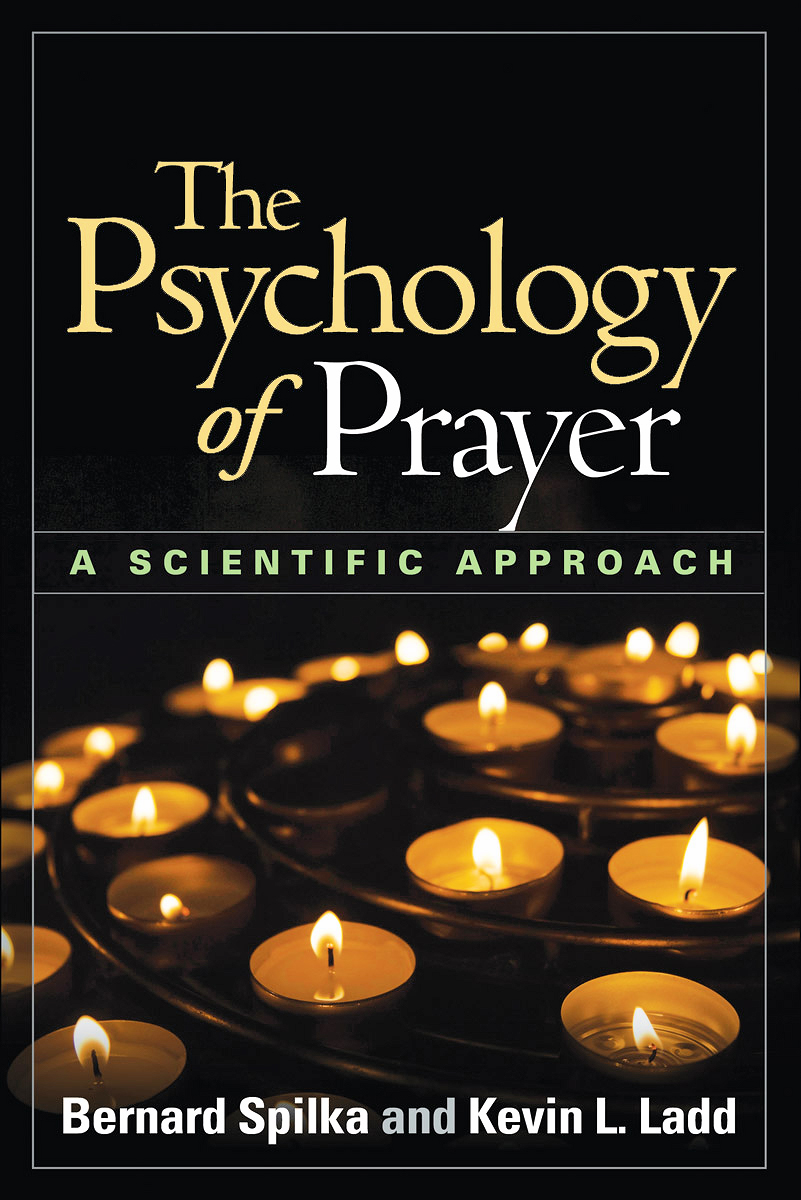
Book Review: “The Psychology of Prayer”

9781462506958

By Josephine Hauer

HauerThe Psychology of Prayer: A Scientific Approach, by Bernard Spilka and Kevin L. Ladd, New York: The Guilford Press, 2012. Excerpted from the Journal of Unification Studies, Vol. XIV, 2013. Dr. Hauer (UTS Class of 1990) is a family specialist with the Administration for Children and Families, U.S. Department of Health and Human Services.

The Psychology of Prayer: A Scientific Approach offers a dense yet remarkably useful tour de force through the last 30 years of social scientific research on prayer. It is a major contribution that highlights the expanding role of prayer in the psychology of religion. While authors Bernard Spilka and Kevin Ladd view prayer as a critically important personal religious activity, their discussion is uncompromisingly scientific and offers substantive insights and recommendations for an empirical study of this rich human experience. Locating prayer as a psychological phenomenon, the authors offer a straightforward conceptualization: “Prayer is the psychology of religion in action and literally reflects virtually every facet of behavioral scientific psychology, from its neural roots to complex social responsivity.”

This book is a useful introduction to the various ways researchers have approached prayer psychologically. My own experience of prayer seems to be more expansive than the categories covered, but this is understandable since empirical approaches necessarily slice up experience into quantifiable pieces. People have been praying for thousands of years, and it is heartening to see that social scientists are beginning to chart this vast territory replete with religious and psychological meanings.

Spilka and Ladd accomplish a remarkable undertaking, given the range of studies critically scrutinized. As respected leaders in this field, these authors stake out prayer’s central place in the psychology of religion….

⇒ Click to read the full book review from the 2013 Journal of Unification Studies.

Continue Reading→

The Hoon Dok Family Church Breakthrough in Brazil

Home Group Festival

By George Kazakos and Glenn Strait

“I want all of you to learn from the Brazilian [and Philippine] situation and take it with you back to your home. …If you are willing to change, miracles can happen.”

True Mother during the Foundation Day 2014 meetings (paraphrase)

George KazakosGlenn_Strait_edited-1

Right now in Brazil many people are joining. Their strategy does not involve new individual ideas. We have heard most of the ideas and strategies before. What is distinctive is the way it is being done, not what’s being done. We Americans humbly need to learn from our brothers and sisters of FFWPU Brazil.

In the post-Foundation Day era of Cheon Il Guk when “True Parents have perfected, concluded, and completed the providence of restoration [through indemnity] and have begun a new era” (True Mother, “Korea Global Joint Worship Service,” May 11, 2014), we can expect to discover new openings for personal and collective growth.

The Brazilian Hoon Dok Family Church model appears to demonstrate one such opening by integrating some of the functions of Inreach, Outreach, and Education into the mutually reinforcing components of Small Groups, Witnessing, and One-on-one Divine Principle Teaching.

Within that model, revitalization of the church community, though profound in itself, is likely not as significant as the witnessing breakthrough that taps directly into the networks of new members. This development would be essential for achieving their growth pattern of starting slowly then later accelerating rapidly.

Continue Reading→

Perverse Incentives: When Uncle Sam Becomes Dr. Ruth

Capitol in Shadow copy

by Richard Panzer

Richard_PanzerEvery area of life involves choices that have a moral dimension. Whether we enter careers in business, education, government, science, health, art, or religious ministry, each one of us needs to be aware of incentives that could bring us closer to or further away from the original purpose that motivated us to begin with. After all, each system has its own openly stated, or sometimes hidden, incentives.

In this context, the recent article by Scott Simonds provides a valuable discussion about the role of government and its benefits to society. He makes compelling arguments, and certainly there are many dedicated people doing important work in government service, but if one looks closely, it also becomes apparent that governmental incentives can lead to the opposite of what any fair-minded person would want.

The federal Temporary Assistance to Needy Families (TANF, or welfare) program, where substantial benefits are offered to mothers with dependent children based on one main condition — that the mothers not be married — is just a small part of a larger, disturbing pattern.

Simonds expresses doubt that religious agencies would be able to take on the burden of caring for the needy in this country. Maybe so, but when Uncle Sam gets involved there are often strings attached. Consider government actions that force religious organizations that do help those in need to choose between following government regulations and the dictates of their faith. Catholic adoption agencies in Massachusetts, Illinois, and Washington, DC, have been forced to shut down because they believe that, all else being equal, it is best for orphans to be placed with an adopting mother and father who are married. Isn’t that what most Americans believe? Isn’t that what you and I believe? Even if not, shouldn’t there be room for diversity in adoption agency policies? After all, isn’t the goal to help more, not less, orphans find loving homes? How does shutting down faith-based agencies help needy orphans?

Continue Reading→

Crossing the Jordan: From a Led to a Self-Governed People

Journey to the Heartland of Mongolia

By Peter Stephenson

Peter StephensonWithout serious reform, the Unification Movement cannot be a role model for Cheon Il Guk and is in no position to guide any people or society.

We are a movement that teaches the Principle, but do not reflect the Principle. In evangelical outreach the most apt motto for our movement would be, “Do as we say, not as we do.” Our most fundamental error has been the belief that following directions trumps the Principle and exempts us from its requirements. Our operating philosophy has been to channel all energies into the single purpose of convincing the leading lights of the world that Rev. Moon is the Messiah, assuming that everything would take care of itself once we had achieved this.

Our obsession with this “shortcut” has blinded us to the reality that people and the world do not work this way. Ultimately, people don’t prioritize the teachings that make the most sense. The idea that we could just theologically strong-arm them into believing was always going to fail.

Nomadic vs. Agrarian/Settled people

We are nomads. Nomadic people are foragers and opportunistic hunters who work an area while the pickings are good and after exhausting those resources, move onto to other lands. This lifestyle does not promote population growth and it is all such people can do to even maintain their numbers as the harsh existence of the nomad ensures a high loss rate.

The historic and even current, evangelical attitude of the Unification Movement has been nomadic in nature as we sought only to invest in those who were short-term prospects — what we euphemistically refer to as “prepared people.” There are only a small percentage of any society who are of this type though and if we track our world movement’s activity over the past 50 years, we can discern this nomadic behavior of exhausting the resources of a particular region before moving on to other lands.

Continue Reading→

Applied Unificationism’s First “Blog-iversary”

blog_anniversary_online_2

The Applied Unificationism (AU) Blog launched a year ago on May 1, 2013. Its hosts, Unification Theological Seminary and Barrytown College, as schools for people seeking to understand how to bridge faith and reality, aimed to create a site where worthy ideas applying Unificationism to all aspects of society can be discussed among members and friends of the FFWPU and related organizations. In a time of transition since the passing of our Founder, we have also sought to make it a place where the future of the Family Federation and its work may be thoughtfully discussed.

Since then, the AU Blog has received 48,000 hits from over 150 countries with more than 200 email followers, published over 75 articles and posted 400 comments. Our material is regularly linked to from Facebook (where we get the majority of our referrals), email listservs, the UTS Alumni site, and occasionally the FFWPU-USA opinion page. We began a Twitter account last year (@UTS_AU_Blog) and will create a Facebook page soon.

At the end of last year, we unveiled a new site design that has been very well-received, and from January have published a number of articles that generated a large number of site hits, in one case almost 1,000 in a day. Article contributors have expanded from largely UTS faculty to a broad and international range of writers, which continues to grow each month. In April, we began a new feature: film and book reviews, and especially encourage reviews from second generation Unificationists. As always, we welcome new op-ed/commentary submissions of 1,000-1,500 words.

And if you haven’t already, please “Follow” the AU Blog by signing up on the home page to receive an email each time we post something new.

If you like what the AU Blog is trying to achieve, please consider sending a monthly (or even one-time) donation to UTS/Applied Unification Blog.

This will specify the use of your donation for this Blog. Use the Donation Page on the Barrytown College website and select the “Applied Unificationism Blog” on the pulldown menu.

Continue Reading→

Website Built with WordPress.com.

Up ↑