Lessons from Apple under Steve Jobs

Apple-Tech-LiberalArts-680x327-1-520x250

By Mark P. Barry, Lecturer in Management, UTS
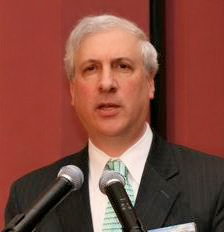
Mark Barry Photo 2When Steve Jobs took over in 1997, Apple — the company he co-founded in 1976 but from which he was fired nine years later — was just 90 days from bankruptcy. When he stepped down as CEO in August 2011, weeks before his death, Apple had just become the most valuable company (by market valuation) in the world. It remains so today. Apple, Inc., makes perhaps the most popular consumer products in the world, with instantly recognizable names such as the Mac, the iPhone and the iPad. Most observers agree that Apple changed the world. It did so through a passion to make the best products possible (but with just a few, focused product lines), a unique management style, and the goal of marrying technology and the liberal arts. From Apple’s example of success, there are lessons for Unificationists.

Steve Jobs was a very difficult person to work under. He was prone to calling people either geniuses or bozos; he could be wickedly cruel to those who received his ire. He often invoked his “reality distortion field” to convince others to believe the opposite of what was otherwise obvious. But he had a passion for excellence and would settle for nothing less. That’s why in the end people wanted to work under him. They knew he would make breakthroughs that no one else of his generation could.

Since his passing, many call him a combination of Thomas Edison and Henry Ford. And Apple’s greatest achievements occurred with Job’s “second coming,” the years after he returned to the company’s helm, in which Apple was the most productive and innovative. Jobs was not only a great visionary, but he had tremendous willpower to accomplish what he wanted no matter what the odds.

Jobs had been ill with pancreatic cancer since 2003. Though the tumor was removed, cancer recurred by 2008, necessitating a liver transplant the next year. He knew he could not lead Apple forever, that his time was very limited. In fact in his last years, Jobs led Apple under considerable pain and physical weakness. He sought to institutionalize Apple’s culture so that it would carry on with great energy and continuing success after his passing. He established an internal Apple University to teach employees the fundamentals of Apple’s corporate DNA and creative culture. The last thing Jobs wanted after his passing was for managers to ask, “What would Steve do?” He felt that tendency was what hurt the Walt Disney Company after the death of its founder.

Continue Reading

Principled Governance or Politics as Usual?

capitol-dome

By Gordon L. Anderson, UTS Class of 1978

GordonUnificationists live in a contemporary culture that champions democracy and instills the idea that politics is about influencing government to provide things or benefits that we desire. Like others in society, Unificationists generally support political parties and special interest lobbies designed to pressure lawmakers into delivering goods and services they believe in.

Politics is War by Other Means

However, “politics” in this sense is the application of “fallen nature” and not of Unificationism. In On War, Carl von Clausewitz described politics as “war by other means.” He meant that people engage in politics to manipulate the government in their fight for control over resources and power, or to gain another benefit for themselves at the expense of society. In this war by other means, people often use the rhetoric of justice and goodness and advocate rectifying the perceived social problem using everyone’s tax dollars. This political behavior is divisive and socially destructive. To the extent Unificationists engage in politics as a form of war, they are at odds with principled governance.

Unificationism is about principles. The main text is the Divine Principle, whose primary hypothesis is that principles underlie the entire created order, and that knowledge of and application of these principles is essential for living a life of happiness. This idea of collective happiness is not unique in political theory. Aristotle began his Politics by stating that the end of politics is human happiness. James Madison, in “Federalist 62,” reaffirmed that the object of government is the happiness of the people. Indeed, Buddha, Confucius, and the founders of the world’s great civilizations sought to explain how people should live and societies be organized in order to be happy.

Principled Governance is the administration of a society to achieve common ends

Any system, whether it is a social institution, the human body, a mechanical machine, an entire social system, or the universe, is governed by principles. When the principles that maintain a system cease to operate, the system breaks down and disintegrates. The design of any system requires knowledge of the purpose for which the system is being created, and the principles necessary for the system to fulfill that purpose.

Continue Reading

Educating the Whole Person: A Unification Improvement

Office training

By John Redmond, Chief Financial Officer, UTS

IMG_9544I spent ten years as a corporate training manager for community colleges.  My job was to go out to industry, large and small, and help design training for manufacturers.  Local manufacturing companies are highly prized as economic development engines.  Every job created by a medical products company for instance, whose customers are national and international, creates five to six other local jobs — teachers, tire salesman and restaurants owners to name a few.  Any improvement in the efficiency or effectiveness of a manufacturing company improves the community around it.

One thing I noticed is that modern companies hire very few people just because they have a strong back or only obey orders.  Karl Marx had a theory that people are just economic animals,  programmable entities that are interchangeable, like light bulbs.  He called it the Labor Theory of Value, and many companies built their success on this model in the 19th and early 20th centuries.  Since then, forklifts and robots have replaced a lot of the strong back, quick fingers work that used to characterize American labor.  Marxists adjusted their theory to include intellectual labor. They said the brain produces ideas like a gland secretes hormones.  This works for engineers, who work with “stuff” and can work alone, but it does not explain the modern creative wave that gave us, for instance, Apple, Inc., or GPS navigation systems.  Successful education in the real world includes creating the conditions that allow a continuous flow of “cool” ideas that can be marketed in “cool” ways and make lots of cash and stock options.

In modern companies, workers get promoted if they are responsible and creative and can play well with others. The creative ideas that a team can unleash often overshadow that of a lone genius toiling away in a lab.

Continue Reading

Website Built with WordPress.com.

Up ↑