The God that Failed: When Selfishness is Legislated as Law of the Land

AlanGreenspan

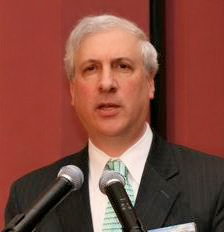
Alan Greenspan, Federal Reserve Chairman from 1987-2006

By Wayne Hankins

HankinsHistory is written from the lives of good leaders with vision and principle, or bad leaders who led their people and countries to ruin and suffering because of their peculiar values, beliefs or ideas they felt were right and true. However, in following their ideal, something far different than they could have ever imagined or wanted came to be. When simply bad or false beliefs are carried to their logical ending, bad things follow. I will discuss the relationship between the ideology of Objectivism as defined by its creator, Ayn Rand, and the economic crash of 2008. I look closely at the steward of America’s monetary and regulatory policies, the Federal Reserve (the “Fed”). To correctly comprehend the workings of the Fed during the last two decades in large measure is to understand the beliefs of its past chairman (1987-2006), Alan Greenspan.

At 18, Greenspan first read Ayn Rand’s The Fountainhead and was immediately hooked on her views of individual rights and their broader expression economically within laissez-faire capitalism. He saw this also as a moral argument against totalitarian communism.

Continue Reading→

The Blind Leading the Blind (or, Life without True Parents)

Detail from “The Blind Leading the Blind” by Sebastian Vrancx.

By Gordon Anderson

Gordon“The blind leading the blind” can be used to describe Western politics and education today. There are, of course, very smart and shrewd politicians or scientists. But, when it comes to knowledge of where we want to go and how to get there, our present culture can be described by this ancient metaphor taught in the Bible, the Upanishads, and Roman classics. As Sextus Empiricus wrote in Outlines of Scepticism: “Nor does the non-expert teach the non-expert — any more than the blind can lead the blind.”

A civilization contains the accumulated experiences of those who have come before, and civilizations continue to adopt new discoveries. However, in the 20th century, the West largely put aside civilizational wisdom, taught by families and religions, and attempted to substitute it with a new-found faith in modern science and the state. The Encyclopedia Britannica exemplified this shift.

Continue Reading→

A Unification View on Universal Healthcare

Hands

“Am I my brother’s keeper?” (Gen. 4:9)

by Franco Famularo, UTS Class of 1994

ro.vis1b_3343.famularo.f51Obamacare. Universal healthcare. Private Insurance. Long lines in the U.K. Even longer lines in Canada.  Forty million people without health insurance in the U.S.  Mega-insurance companies fleecing people. Big pharma. Small business owners getting wiped out by medical mishaps.

If you live within earshot of American talk radio or TV news as I do, you will have heard some or all of the above. Discussing universal healthcare in the United States can be most contentious.

European, Canadian, Japanese, Korean, Russian, African, Asian, and American Unificationists will all approach this topic differently. Is there a Unification position on universal healthcare? Do the current systems available to residents of various countries reflect the ideal in any way?

Living a mere 45-minute drive from the Canada-U.S. border has caused me to ponder this topic and I’ll submit my conclusion first.

Neither government-run healthcare nor a system that is privately operated can be trusted to do a good job in providing adequate healthcare within the current circumstances. Human beings still lack the Godly virtues to keep the best interest of the public in mind and fall short, since none has mastered “living for the sake of others.”

The issue is not whether publicly funded or privately run healthcare is better. The problem is the moral and ethical quality of human beings and the solution lies in a moral reformation. When those involved in providing healthcare (government, medical practitioners, administrators, etc.) are comprised of individuals with the highest Godly qualities of the human spirit, an “ideal” health system will emerge.

My interest in the universal healthcare issue was strongly stimulated back in 1993 when UTS classmates Eric Holt, Jerry Chestnut and I took on the challenge at the annual UTS debate of defending Bill Clinton’s proposal to the U.S. Congress.  This helped us to see both sides of the American arguments at the time.

I was born in Canada and have lived here most of my life. For ten years, I spent extensive periods in Germany, the U.K. and the U.S. and was able to observe the various healthcare systems to some degree. They are not all alike.

Last year, some of us listened to presentations under the banner of the “Freedom Society” that addressed the issue to some extent. Proposals were made for a return to the days where churches, charities and families took care of healthcare needs.  I can remember the time before universal healthcare was established in Canada when doctors did house calls and Catholic nuns cared for the sick. I have strong doubts that returning to such a system is plausible. We also heard severe criticism of the U.K. and Canadian healthcare systems. I simply had to laugh as I listened to the ill-informed comments which reflected more the well-known American talk radio show hosts than reality in Canada or the U.K.

Continue Reading→

A Unificationist View of Ayn Rand

ayn_rand_1_fs

By Wayne Hankins

HankinsAyn Rand is a writer and philosopher who understood that “something” is terribly wrong with humankind and had the courage to seek the answers to it. Like others before her who tackled this subject, her writings are controversial. For years, I enjoyed her beautiful use of language in expressing her beliefs and telling her stories. She was a powerful and appealing writer. Yet, I now find some of her beliefs very troubling and need to be seriously reevaluated. As a Unificationist, I’ve had to fairly examine her writings, then ask: was her understanding of humankind’s nature correct and is her solution going to solve our dilemma of constant conflict and create a world of goodness and peace?

Ayn Rand, born Alisa Rosenbaum in Russia, was a writer of great passion, whose ideas were born out of the chaos of the Bolshevik Revolution. As a 12-year-old, she saw her nation crumble before her eyes and be recreated under Lenin’s view of how life should be lived. That was Communism. Her father’s business was seized because private property was declared illegal. The state acquired power over the rights of the individual in determining what talents would best serve society. Expressing individualism and self-determination became dangerous, if not illegal, ways to live. Cooperation and collectivism became Russia’s national goals and it was expected everyone would work for the public good, putting the state before self.

To understand Rand’s views of life, one must comprehend the extreme times she lived in. Her philosophy came to be best expressed in The Fountainhead and Atlas Shrugged, her two major works. They are controversial, well read, and now making a comeback, particularly in conservative political ideology.

Her philosophy was expressed by the two main character’s speeches at the climatic moments in each novel. In The Fountainhead, Howard Roark is an architect who, at his trial, defends blowing up the building he designed after his design was altered by a less talented colleague. In Atlas Shrugged, John Galt speaks to a crumbling America from his rundown apartment along the New York waterfront, explaining why the country is in the condition it is, as well as why he persuaded the greatest minds and talents in the nation to abandon a corrupt and dying country in order to save it.

Rand’s stated beliefs are: There is no God. There is only the mind of man and that is supreme. The mind is not a collective or function of the state but an individual attribute. It is our highest value and greatest asset. The most important viewpoint is the individual viewpoint. Only our mind and its proper use can insure our survival. This is the unique creative power of man that no other life form on earth has. A man must think and work alone; the creative process is guided by an individual thought, not a collective brain.

Continue Reading→

A Challenge for the Divine Principle in the Postmodern Era

Facebook Connectivity 2010

A 2010 map displaying the connectivity of Facebook’s 1.1 billion global users (click to enlarge).

Keisuke Noda, Professor of Philosophy, Barrytown College of UTS

Keisuke_NodaCan the Divine Principle be attractive to others in the 21st century, or at least for the next 10 or 20 years as our Church’s 2020 goals envision? In Unificationist communities, that question has sparked the development of practical or technological methods of communication/presentation. People have created and re-crafted charts, slides, and PowerPoint presentations and will continue to do so.

The development of these materials is certainly a worthy endeavor, but another way to pose this question is to ask how the Principle answers the questions of the era or the “spirit of the time” (Zeitgeist). Although believers claim that religious teachings reflect truth that is eternal, ideas affirm their validity by responding to the questions of the era. Leading ideas must in fact “lead” the time by demonstrating their validity to people who are desperately trying to find their way. Thus, Unificationists must understand the intellectual climate that we live in if the Principle is to become a leading idea.

During the late 20th century, the United States and other developed countries underwent a major shift rooted in the comprehensive critique of modernity. It is imperative for any intellectual to understand this shift and the intellectual horizons that frame the climate today, known as postmodernism.

What Is Postmodernism?

Postmodernism is a concept that describes a general intellectual stance or tendency towards modernity. As the term post (“after”) modernism indicates, postmodernism is a departure from modernism based on a critical assessment of modernity. It is, in essence, skepticism towards basic assumptions of modernity. Postmodernism is a broad term which encompasses all social cultural spheres including architecture, art, literature, literary criticism, business, management, politics, economics, philosophy, religion, and others. It is a term that can be seen as describing the spirit of the age (Zeitgeist). Postmodernism is distinguished from being just a “trend” because of its lasting and penetrating effects on all spheres of life.

Modernity, as postmodernists see it, is a social, cultural, political wave that lasted for centuries, from the Enlightenment to the late 20th century. Despite the diverse views and ideas encompassed within modernity, modernity was based on certain assumptions that postmodernists later questioned.  Postmodern thinkers have taken a variety of approaches, but the following are a few basic criticisms of modernity by Jean-François Lyotard, a French philosopher.

Continue Reading

Designing and Managing Ethical Organizations

code-of-ethics

By Denis Collins, Professor of Management, Edgewood College

denis127So, you want to create heaven on earth! Unificationists are well aware that people should be at their spiritual best all the time — which means at work too. We spend a great deal of our time on earth working. Some Unificationists have created businesses, some work in church businesses, and others work hard for non-member businesses and organizations.

Unfortunately, work is often organized in a way that is spiritually stifling and degrading. Everyone is morally flawed and, as such, we do things at work that damage, rather than heal and grow, our spirits. For instance, employees are sometimes tempted, or instructed, to mislead customers about product quality, or to treat each other disrespectfully.

Yet business owners and managers possess a unique position to significantly impact the spiritual development of others and, in the process, heal themselves by designing ethical organizations and reinforcing ethical behaviors at work. Unificationists, grounded in church providential theory, should be at the forefront of designing and managing ethical organizations.

How can organizations be designed to maximize ethical behaviors that help people spiritually flourish? This question was one of the reasons why I quit my corporate job in 1978 and joined the Unification Church. It remained on my mind while studying at Unification Theological Seminary from 1980-83, and it has dominated my teaching, writing and research for more than 20 years as a professor of business ethics at the University of Wisconsin-Madison, University of Bridgeport, and now Edgewood College.

I have developed a systematic Optimal Ethics Systems Model based on the 90 best practices in business ethics, sorted into eleven integrated elements. The model begins with determining the ethics of job candidates and then orienting them to the organization’s code of ethics and ethical decision-making process. It recommends conducting ethics and diversity training on at least an annual basis and implementing an ethics reporting system. Managers must model ethical leadership, and work with employees in developing ethical work goals and performance appraisals.

The last three elements of the model include adopting the best practices for environmental management and community outreach, and assessing the performance of each element. By systematically implementing all the Optimal Ethics Systems Model elements, an organization will not only attract employees desiring to experience spiritual transformation through work on a daily basis, but also have in place structures, policies, and processes that will aid employees with their daily spiritual development and engage them in a transcendent vision (An assessment checklist of the 90 best practices is available upon request by emailing the author).

Continue Reading

Is ‘Living for the Sake of Others’ Really a Good Idea?

giveandtake-cover

by Richard A. Panzer, President, Unification Theological Seminary

Richard_PanzerIn a cynical and dangerous world, idealists are often seen as deluded people who don’t know how the real world actually works. Many religions teach the value of selfless giving or “living for the sake of others,” but is that a realistic way of life? Couldn’t that lead to being used or exploited by others? Is this just a Sunday School truism for the naïve and weak? Don’t nice guys finish — last?

Adam Grant, a professor at the Wharton School, one of the world’s leading business schools, has devoted the past two decades to studying people who practice high levels of giving in their lives. In his new book, Give and Take: A Revolutionary Approach to Success, Grant argues that a substantial body of research shows that people who generously give to others — those he calls “givers” — are happier and more successful than both those who merely seek to “match” what others give to them and “takers” whose every action is calculated by their own self-interest.

According to Grant, neuroscience evidence shows that giving activates the reward and meaning centers in our brains. These benefits are not limited to giving money: they also show up for giving time. One study of more than 2,800 Americans over age 24 showed that volunteering predicted increases in happiness, life satisfaction, and self-esteem—and decreases in depression—a year later. Other studies show that elderly adults who volunteer or give support to others actually live longer.

But do the benefits of giving work in the “dog eat dog” world of business? Grant cites examples of “givers” in the business world. One is Kevin Liles, who worked as an intern for free for Def Jam records and rose to become its president. As an intern, Liles was the first to arrive at work and last to leave. As a promotion director, Liles was responsible for one region, but went out of his way to promote other regions too. Grant says, “Everybody started to look at Kevin as a leader, because they all looked to him for direction. He gave until people couldn’t live without him.

What about people who work in sales? According to Grant, top sales people are not high-powered and pushy. He cites the example of Kildare Escoto, the top-selling optician at Eye Care Associates. Escoto says, “My job is to ask the patient questions, and see what the patient needs. My mind-set is not to sell. My job is to help. My main purpose is to educate and inform patients on what’s important. My true concern in the long run is that the patient can see.”

Continue Reading

Fostering a Strategic Relationship with China: A Unification Perspective

thumb_psa5206

China’s President Xi Jinping met President Obama at Sunnylands, California in early June.

By Mark P. Barry, Lecturer in Management, UTS

Mark Barry Photo 2In April 2007, I attended a conference that gathered at the Cheon Jeong Gung “Peace Palace” in Cheongpyeong for True Parents’ Day. After Rev. Moon’s Founder’s Address, I walked out to the Palace terrace with a Chinese guest and friend who was a retired senior officer in the People’s Liberation Army and head of one of China’s major think tanks. In the heart of Cheongpyeong, we discussed the outlines of a joint conference on cross strait relations held later that year in Macau. Given the significance of where we stood, I couldn’t help but feel there was a spiritual imperative behind the discussion of future efforts at cooperation with a Chinese delegate.

In 1998, I often showed my students a PBS documentary on China’s efforts to modernize from abject poverty. By 2010, China overtook Japan as the world’s second-largest economy. To some, we now live in a bipolar world of two superpowers, the U.S. and China. More than ever, China has to be reckoned with by the United States, by the two Koreas — and by the Unification Movement itself.

On a global level, U.S. relations with China must be handled very judiciously. But for North and South Korea, China is their large neighbor, which has inescapable implications. For the international Unification Movement, based in South Korea, it would be wise to foster a strategic relationship with China; that is how one must deal with a nation that may otherwise misunderstand you and cause difficulty.

Recently, China has begun to speak about a “new type of great power relationship” with regard to the United States, the established hegemonic power. What China means is to distinguish the “new type” from the “old type” of great power relationship previously witnessed in history. The question is how these two continental powers can take a different course than previous great powers who were in competition. In history, conflict and war between two major powers sometimes occurred not simply by the increase in material power of the rising challenger but because of the fear it instilled in the established power.

What this implies is that trust-building between the two great powers is vital for the success of a new type of great power relationship. President Obama’s June meeting in California with Chinese President Xi Jinping was a start. The challenge is to find a way to share responsibilities and resolve current problems. China and the U.S. need to identify common ground in the realm of ideas and philosophy, as well as in the sustainability of existing markets and the economy.

Continue Reading

An End to World Hunger?

123080hungry

By Michael Mickler, Professor of Church History, UTS

Michael_MicklerJesus said the poor will always be with us. He didn’t say they had to starve. Ending world hunger was one of Rev. Moon’s consuming passions. “Feeding others” was a deeply-rooted tradition in his family of origin and a persistent theme throughout his life and ministry.

In his autobiography, As a Peace-Loving Global Citizen (2010), Rev. Moon devotes several sections to the problem of hunger. In an early section, “The Joy of Giving Food to Others,”  he states:

By the time I was born and was growing up, much of the wealth that my great-grandfather had accumulated was gone, and our family had just enough to get by. The family tradition of feeding others was still alive, however, and we would feed others even if it meant there wouldn’t be enough to feed our family members. The first thing I learned after I learned to walk was how to serve food to others.

A later section titled, “A Grain of Rice is Greater Than the Earth,” describes his experience of hunger, in fact near-starvation, in a North Korean labor camp.

Rev. Moon’s upbringing and experiences led him to conclude, “True peace will not come as long as long as humanity does not solve the problem of hunger.”

He addressed the problem directly in two of his autobiography’s concluding sections. In the first, “Solution to Poverty and Hunger,” he took the position that “Simply distributing food supplies by itself will not resolve hunger.” He instead advocated a two-step approach: “The first is to provide ample supplies of food at low cost, and the second is to share technology that people can use to overcome hunger on their own.”

In the next section, “Going Beyond Charity to End Hunger,” Rev. Moon voiced a more internal perspective. He asserted, “The important point is concern for our neighbors. We first need to develop the heart that, when we are eating enough to fill our own stomachs, we think of others who are going hungry and consider how we can help them.”

In his view, “To solve the problem of hunger we must have a patient heart that is willing to plant seeds.”  As a Peace-Loving Global Citizen highlights a number of his initiatives. These included the purchase of trucks to be used for the distribution of food to the poor in the United States; projects to process and store large quantities of fish; research into high-protein fish powder; a model farm project in the outback of Brazil; and support for technical schools and light industrial factories.

Continue Reading

Website Built with WordPress.com.

Up ↑