God and Politics

By Scott Simonds

SSimonds_1The old adage that polite conversation should avoid politics and religion to maintain friendly relationships has never proven to be truer than during this election season.  Rather than civil discourse about the issues of the day and better approaches to addressing them, the election has become a mudslinging contest over which candidate has the most baggage and would be most disastrous in office.

Worse yet, anybody who speaks on behalf of, or against, one of the candidates is branded a bigot, a misogynist, a hog at the public trough, un-American, a fool, atheistic, even satanic by guilt through association.  Friends and relatives easily get caught up in the fray and even religious communities, Unificationism included, have become deeply divided.

As tempting as it is to base a decision on who has the better character in this election, no candidate rises to the level of a Washington, Lincoln, Franklin Roosevelt or Reagan.  At this crossroads in the American narrative, this crucial moment of decision, it behooves us to look at contemporary issues in a very broad historical context — that is, a providential context, past, present and future. The theme of the ever progressing nature of God’s providence is expressed in Ecclesiastes 3:1-8 (KJV):

To every thing there is a season, and a time to every purpose under the heaven…
A time to kill, and a time to heal; a time to break down, and a time to build up;…
A time to rend, and a time to sew; a time to keep silence, and a time to speak;
A time to love, and a time to hate; a time of war, and a time of peace.

The political pendulum swings back and forth.

Government grew, during the Great Depression and World War II, for example.  And it receded, during the 1990s under the Republican Congress.  Often, the economy grew together with government expansion.  Automobile and airplane manufacturers exploded in the aftermath of the military buildup of the Second World War.

Although government grew after the Depression and during the war, so did private industry.

Continue Reading→

Unificationists in the Voting Booth

election-2016

By Joshua Hardman

hardmanThe 2016 presidential election is just six weeks away, and American Unificationists appear evenly split between the nominees of the two major political parties, with many believing they must decide between two highly imperfect choices. In a survey of 208 Unificationists I conducted in March, only 17% of respondents said Hillary Clinton or Donald Trump was their first choice.

Respondents were asked to rank their number one and two choices for the presidency from the five remaining major party candidates: Hillary Clinton, Bernie Sanders, Ted Cruz, John Kasich, and Donald Trump. The survey also included questions presenting respondents with general election hypotheticals.

Survey respondents were first procured by posting a message on the Facebook group “UC House and Travel Network,” a platform used by thousands of people around the world. I then had the help of pastors in major communities who made announcements and/or put a link to the survey in their community emails. Most respondents were from the East Coast, California and the Midwest.

This survey is not a perfect sample of the voting Unificationist population, and it is important to keep in mind that much has happened since it was conducted. The survey, therefore, is best taken as a snapshot in time, while its predictive value for the general election is limited.

With this in mind, I will mainly focus on the questions about the primary elections. Every state has different rules about who can vote in a party primary, complicating any nationwide analysis. The purpose of the survey, however, was to gauge voters’ inclinations rather than how they would, or could, actually vote.

Fifty percent of respondents identified as Republicans, 25% as independents, 16% were Democrats, 8% had yet to register to vote, and less than 1% were registered with a third party.

Continue Reading→

The Best Policy Ideas of the 2016 Presidential Candidates

election-primary-vote-generic-default

By Gordon Anderson

GordonThe 2016 Presidential Election has raised a number of good policy ideas for the improvement of American society and government. Unfortunately, no single candidate endorses all of the best ideas, and, more unfortunately, every candidate who has good ideas seems to have more bad ones. Part of the reason is the development of a system that encourages candidates to be loyal to political parties and large campaign contributors rather than to middle-class citizens and the nation as a whole.

In my view, the best candidate would be one who supported all of these policies:

  • Bernie Sanders’ revival of the Glass-Stegall Act
  • Hillary Clinton’s call to overturn the Citizen’s United Supreme Court decision
  • Rand Paul’s foreign policy that is against U.S.-imposed regime change
  • Donald Trump’s middle-class tax policy
  • Carly Fiorina’s reforms of government bureaucracy

None of these policies are promoted by the establishment, which is why there is increased criticism of existing party platforms and why “outsiders” are polling so well with voters. Even most candidates that seek party endorsement are promising to reform the system.

The explanations for the value of my list of the best policies I describe below are adapted from a longer post on my blog, Life, Liberty, and the Pursuit of Happiness, Version 4.0, which includes further critique and commentary on the candidates and their policies. I have not discussed all candidates, only selected the most constructive policies being promoted.

Preparation to vote knowledgeably is an important role of the citizen in a democracy, and I encourage everyone to read through all the policy positions on candidates’ websites before their vote. A responsible voter will compare the strengths and weaknesses of a candidate in all areas of governance, and not just find agreement with a candidate’s rhetoric on a single issue.

Continue Reading→

How America Can Help Reunite the Korean Peninsula

True Parents Kim

By Mark P. Barry

Mark Barry Photo 2In May, Mrs. Hak Ja Han Moon, speaking in New York, asked America to fulfill its role to help reunite the Korean Peninsula. She said:

…[T]he United States needs to fulfill its responsibility. In order to do so, Korea and the Korean Peninsula needs to become the top issue for the United States. …The homeland of God, Korea, needs to become one nation. And I hope the United States will stand on the forefront of this great task.

Now is the best opportunity yet for the U.S. to take forward-looking steps to make a breakthrough in Korea. August 15 is the 70th anniversary of Korean independence — and of the division of Korea, for which America bears a great share of responsibility. It is clear no other nation can make the difference in bringing about reunification.

Last month, the U.S. reestablished diplomatic relations with Cuba which were frozen in the Cold War since 1961. It also reached a nuclear agreement with another long-standing enemy, Iran, with the hope it will lead to an evolution in Iranian behavior. Now is the time for America to encourage, with seriousness and focus, the two Koreas and the regional powers — Japan, China and Russia — to establish permanent peace in the Peninsula.

On July 27, the three Korean War veterans in Congress, Rep. Charles Rangel, Rep. John Conyers, and Rep. Sam Johnson, introduced legislation calling for a formal end to the Korean War. As I wrote two years ago on this blog, a peace treaty is necessary to end the 1950-53 Korean War, and is the requisite first step toward eventual reunification. Little has changed since I wrote those words. But the opportunity for the American President to take bold actions in his final year and a half in office should not be missed.

Continue Reading→

The “Invisible Hand” and “Reverse Invisible Hand”

Invisible Hand

by Gordon Anderson

GordonThe economic debates we hear between the right and left today tend to be wars of words based on unscientific suppositions, or statements of faith. Thus, the battles between economic ideologies that often underpin the rhetoric of Republican and Democratic candidates tend to reflect the type of belief we would call “primitive religion” if it were a discussion of some other aspect of human life. Both statements that “an invisible hand of the market can bring happiness to all” and “government redistribution can bring happiness to all” are suppositions that contain an element of magic akin to the common religious belief that “if you are faithful to scripture, God will bless you.”

The Book of Job in the Old Testament is about a faithful man who suffered afflictions, not blessings. The Holocaust is another example of a people faithful to scripture not being protected by their God. Similarly, poverty in the West serves as evidence that a free market economic system does not automatically lead to the happiness of all who live under it. And, the collapse of communism in the USSR is evidence that government allocation of economic resources leads to economic collapse and misery. It is time to move beyond the naïve rhetoric of our inherited economic dogmas and attempt to understand why they rely on a lot of magic and how the scientific study of human economic nature can lead to better solutions.

The Invisible Hand 

In the debates between left and right, free marketers on the right often cite Adam Smith and his “invisible hand” of the market, while socialists on the left consider the invisible hand to be an article of faith. The socialists are right. The term “invisible hand” is a non-scientific name given by Smith to explain a phenomenon he observed. Like the idea “the tree god makes the wind blow,” this type of supposition is a label attached to an observed phenomenon to describe human experience and observation without scientific explanation.

What Smith referred to as the invisible hand has been studied scientifically by psychologists and economists who understand that, in competitive market environments, human beings pursuing their own ends are forced to serve others or starve. In a free market transaction, the seller has to provide something to the buyer that he is willing to pay for, and both buyer and seller “win.”

Continue Reading→

Reconsidering Divine Principle’s Call to Create a Socialist Ideal

Capitalism-Socialism

By Jack LaValley

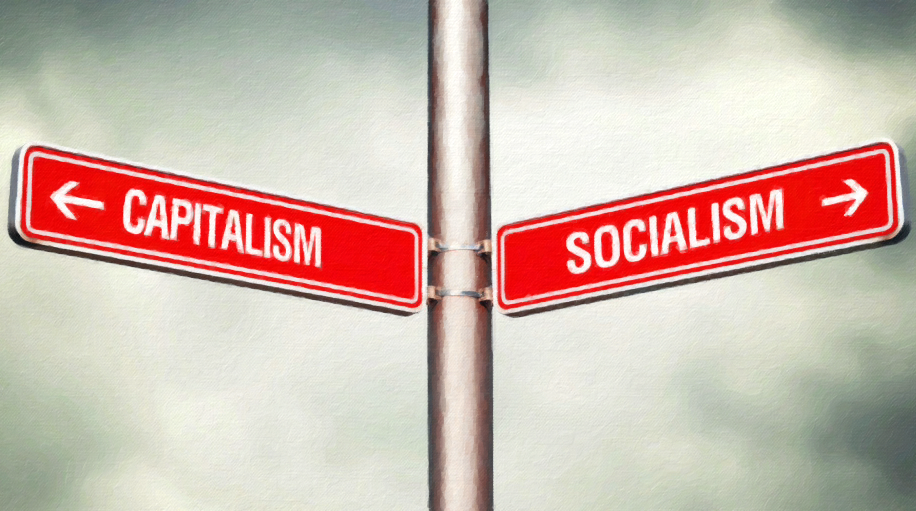
Jack LaValleyDivine Principle claims the ideals and values embedded in capitalist democratic free markets will give way to a socialist ideal:

“Because human beings are created to live in an ideal society, they will inevitably pursue a socialistic ideal as they strive for freedom and democracy and further search into their original nature (Exposition of the Divine Principle, p. 342).”

Regarding the economic system organized in a socialist society, Divine Principle:

“God’s plan is to develop a socialistic economy, although with a form and content utterly different from the state socialism that communism actually established (p. 341).”

Let’s examine Divine Principle’s call for the creation of a socialist ideal.

In the last 150 years, the Western capitalist system has proved better than any other method devised to produce politically and legally free individuals, distribute products via the free market mechanism and create material prosperity for the individual. In America — still the most prosperous country in the world — people enjoy the freedom to pursue material comfort, a stable democracy, limited government, and peace.

Yet great numbers of individuals in our midst suffer from various forms of mental illness. Available data in the United States on destructive acts such as suicide, homicide, alcoholism, illicit drug use, and a multitude of other psychologically-based disorders, can give us cause to ask if there might be something wrong with our way of life and the aims we are striving for.

Mental health professionals identify three causal factors to mental illness: biological; psychological, and environmental. Outside of genetic factors, brain trauma injuries and neurological disorders, mental illness is often viewed as a deviation from expected social norms and behaviors. Those individuals who break with established social norms and behaviors are viewed as abnormal or mentally ill.

One extreme example of this can be found in the 1970s anti-cult deprogramming phenomenon.

Continue Reading→

Creating a System That Reflects Our Own Values

Handsinair

by Alison Wakelin

Alison WakelinRecurrent woes are symptomatic of an underlying problem, and Unificationists are experiencing issues with stewardship of external resources. This has potential to create deep rifts unless we manage the transition from a system where a leader could remove manpower and resources from any project at a moment’s notice, and place both elsewhere. In moving beyond continued emergency status, we must establish stability and settlement in accordance with our own values.

The Western world is struggling with its relationship with the creation, just as are Unificationists. Americans and Europeans are facing a new reality of poverty and real challenges to economic growth. We find ourselves trapped in a system where governments have caused the population to become dependent on government income and support, and we seem powerless to go beyond this state of affairs.

But there are solutions, and we must look clearly, then make the requisite changes.

Firstly, women especially do not find it acceptable that any person should be impoverished and left to die by a system that demands they must work in order to survive, and yet cannot come up with enough jobs, let alone reasonable incomes. We cannot accept that humans should be thrown away because they didn’t work hard enough. A reasonable distribution is not a distant goal to be desired, but an immediate reality that must be accomplished.

When it comes to inequality, people get upset (depending on where they are in the distribution), but so far none of the attempts to put things right have worked. This is because any plan encompassing the ownership of property comes up against very deeply hidden barriers.

Historically, there was plenty of land and villages could easily be arranged so that each householder had access to land and the crops he could grow. Simple arrangements for simpler times – and simplicity is usually the best guide even when things seem to have gotten very complicated.

Continue Reading

No One is Minding the Store in Our Two-Party System

the-collection-of-20-healthier-halloween-candy-choices-2

by Gordon Anderson

GordonMany people do not like President Obama’s executive actions on immigration, but in his November 20 speech, he stated that if Congress did not like his solution they could pass their own bill for his signature. The failure of Congress to pass an immigration bill reflects a larger problem in the U.S. political system: our current two-party system.

Political parties, almost by definition, do not serve the nation. Rather, they serve the interests of their financial contributors, who do not contribute to the nation, but seek to get something for themselves from the government. With our current two-party system, no one is minding the store. The current U.S. Government can be compared to a Wal-Mart in which people bribe a security guard to get in the store, and, once they do, take what they want from the shelves without paying at the cash register. Our elected representatives are those security guards, and, instead of representing the people, they have become operatives of political parties.

American political parties are coalitions of economic interests justifying themselves through ideological rhetoric. They have become the factions that so worried the U.S. Founders, particularly James Madison:

By a faction, I understand a number of citizens, whether amounting to a majority or a minority of the whole, who are united and actuated by some common impulse of passion, or of interest, adverse to the rights of other citizens, or to the permanent and aggregate interests of the community.

— James Madison, The Federalist 10

U.S. government policies today are determined primarily by political parties, not by citizens. As much as possible, political parties place party loyalists on the ballot as candidates. Once elected, party contributors prepare legislation and hire lobbyists to help these loyalists shepherd it through.

Continue Reading→

To Promote the General Welfare

Hands_1

By Scott Simonds and Megan Simonds

SSimonds_1In my previous article, “The Freedom Society: Headwing Thought or Tea Party Politics?”, I said I would next take up the issue of government spending on human services.

megan-simondsThe political right advocates for smaller government, addressing domestic issues of poverty and healthcare through private enterprise.

The left advocates for government agencies and programs to provide healthcare, a safety net for people temporarily in need and ongoing support for citizens who cannot “enjoy the blessings of liberty” independently as social responsibilities.

The right claims that government power should be limited to the common defense, brick and mortar infrastructure, law-making and law enforcement. For them, government’s basic purpose is to protect individual rights and freedoms and should keep its hands off the free market system.

Although there is nothing inherently wrong with this worldview, it is not complete. The Preamble to the U.S. Constitution includes the phrase:

…[To] promote the general Welfare, and secure the Blessings of Liberty…

The right argues that protecting the free market system is promoting the general welfare. But is there such a thing as equal opportunity in a purely capitalist society? Do the values derived from capitalist principles, such as independence, self-reliance and faith, apply in every circumstance?

In fact, values such as “justice” and “compassion” (for those who cannot survive independently in civilized society) often conflict. Success and failure, right and wrong, are not as clear cut as some would have us believe.

Continue Reading→

Website Built with WordPress.com.

Up ↑