“Concussion”: David and Goliath

will_smith

by Kathy Winings

kathy-winings-2I am not a football enthusiast. It’s because I simply do not understand the sport.

This may sound strange since I grew up in Indiana and Hoosiers love football and basketball — especially on the collegiate level. As a young girl, I enjoyed watching basketball because I understood the game. But football was another matter altogether.

As a member of my high school marching band, I had to play at all football home games. Imagine sitting there in the stands cheering our football team to victory yet not having a clue as to what was happening on the field. Tight ends, quarterbacks, safeties, wide receivers, centers, first and down; and what about those numbers that a player is shouting out before everyone goes head to head in the scrimmage. It was all Greek to me. Football just did not make sense to me.

And of course, my brother and father camped out in the living room on weekends rooting for (yelling, more like it) their favorite collegiate or professional football team. Needless to say, I had no clue who was winning or how they could win. My freshman year at Indiana University was much the same. All I learned about football that year was that the late John Pont, the head coach for IU’s team, was one of the top college coaches in America and that the varsity football players received special meals every day and drove around in brand new sports cars.

Though I still don’t understand football, I do know it has captured the attention and loyalty of millions of fans. I also understand there are billions of dollars tied up in the game and thousands of people earn their living from the sport, one way or another, and that football means millions of dollars in revenue for the cities that host a professional team. This does not begin to scratch the surface of the popularity and economics of the Super Bowl, where television advertisers pay millions to promote their product.

I also understand the furor caused by a quiet, unassuming forensic neuropathologist from Nigeria when he discovered what came to be called “chronic traumatic encephalopathy,” or CTE, after conducting autopsies on several former NFL players beginning in 2002.

Continue Reading→

The Divine Nexus of Music and Mathematics

1424268047

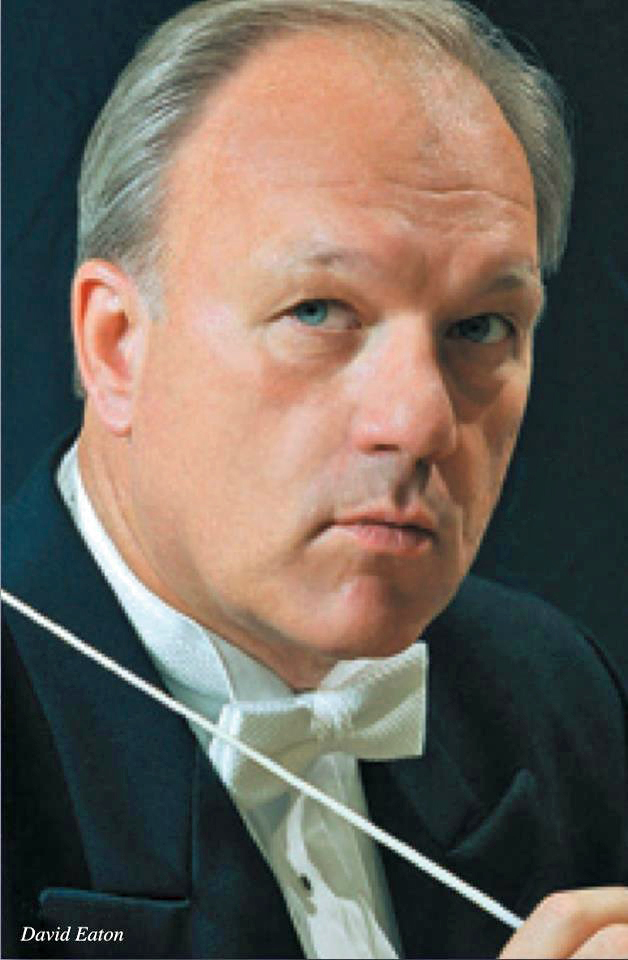
By David Eaton

david_eatonI have this fantasy.

I’d love to see a debate on a liberal arts college campus between members of the sociology department, those who bemoan the heritage of European culture at every turn, and members of the music faculty who revere the music of Bach, Chopin and Wagner.

It would be fascinating to witness the spectacle of the sociology contingent trying to convince the musicians that they have it all wrong regarding the music of their cherished composers.

But do musicians in the academy really have it all wrong regarding Western culture? Are those who argue there may be “immutable truths” that govern music — its creation and realization — completely obtuse to sociological or cultural prejudices as postmodernists would have us believe?

Though we might debate the cosmological and metaphysical aspects of music, a cursory examination of music (regardless of cultural sphere) reveals that the laws and principles that govern music production are rooted in mathematics and physics.

This understanding dates back to Pythagoras in Greece and the Sumerians of Mesopotamia. Nevertheless, we have come to a point in our postmodern culture where any allusion to “certainty,” “universals” or “immutable truths” is, more often than not, met with skepticism, even abject derision.

This mindset originated with Nietzsche, Marx, Stirner, Hegel, and others whose abnegation of religion and “absolutes” infected Western culture at the beginning of the 20th century.

That pernicious legacy persists today.

Paradoxically, those who disparage religion love the music that is the progeny of a decidedly religious culture. Nietzsche, a cultural revolutionary and an earlier admirer of Richard Wagner’s operas, said, “Life without music would be a mistake.”

Continue Reading→

The Mission Butterfly of Early Christianity and the Nature of Unificationism

CrossShadow

By Rohan Stefan Nandkisore

EditorLooking at history, we see that the rise of democratic societies — some of which even base their constitutions on the ideology of Jesus Christ — has brought about freedom on a scale never before experienced. Yet, we also witness an erosion of those highly treasured values.

Countless people, mainly Christians, died to attain these values that we take for granted today; this includes underground missionaries of the Unification Church in the former Soviet Union and East European countries, whose sacrificial missions sometimes led to imprisonment and even death, and was referred to as “mission butterfly.”

We need to revitalize these virtues as expressed in Reverend Moon’s peace messages in order to not lose them. As a journalist, I discovered interesting aspects of early Christianity that offer valuable lessons from the past.

There is a basilica in Fulda, Germany, which contains the relics of Boniface, given the honorable title “Bishop of the Germans.” I was wondering for a long time how come a missionary from Wessex (England) Christianized the German lands in the 7th century? Geographically, Britain is much further from Rome and the Mediterranean than Germany.

The answer to this riddle dates back to the times of Emperor Augustus, 9 A.D., during the childhood of Jesus. Augustus mourning “Varus, Varus, give back my legions” is still remembered today. Arminius, a Cherusk, caused the annihilation of three Roman legions in the Teutoburger forest. Subsequently, the Romans withdrew from large areas of German lands and never returned. As a result, it did not become Christianized, but Britain did after it came under the control of the Roman Empire at least until the Hadrian fortress fell.

Continue Reading→

“Bridge of Spies” and Teachable Moments

By Kathy Winings

kathy-winings-2I was just a small child when the Berlin Wall and Cold War took center stage in the news. Though my parents did not speak of such things while I was growing up, my father did talk about the “Red Scare” and “those Communists.” Of course, I would not understand what that meant until I was much older. I could not even imagine the level of fear that many people must have felt during this period of American history with its talk of spies and counterespionage.

I do remember hearing about a pilot, Francis Gary Powers, who was shot down and captured by the Russians. But I did not know the full story and had no idea of the maelstrom that surrounded this episode in history – at least not until I saw “Bridge of Spies.”

Director Steven Spielberg, together with writers Matt Charman, Ethan and Joel Coen, has captured the intense feelings of the Cold War era and the issues surrounding the trial of a real-life Russian spy, an American U2 spy plane pilot, and an American student caught on the wrong side of the Berlin Wall in his latest movie.

This excellent film tells the story of a successful Brooklyn, NY, insurance attorney, James B. Donovan (played by Tom Hanks), who is asked by the U.S. government to defend captured Soviet spy Rudolf Abel, who was tried for espionage in 1957. In the minds of many Americans, Abel is the personification of all that was evil in the Soviet regime. In this post-atomic bomb era of fear, the average American citizen is certain their government will do the right thing and simply sentence Abel to death, teaching the Russians a lesson they would never forget.

However, the American government sees it differently. As a potential powder keg, it is believed Abel should receive the best defense possible, or at least have the appearance of a strong defense to guard against any retaliation from Russia. What the government does not account for is Donovan’s strong sense of right and wrong. Though it is a foregone conclusion Abel will be found guilty, Donovan has the foresight to convince the presiding judge to sentence Abel to prison rather than condemn him to death.

Continue Reading→

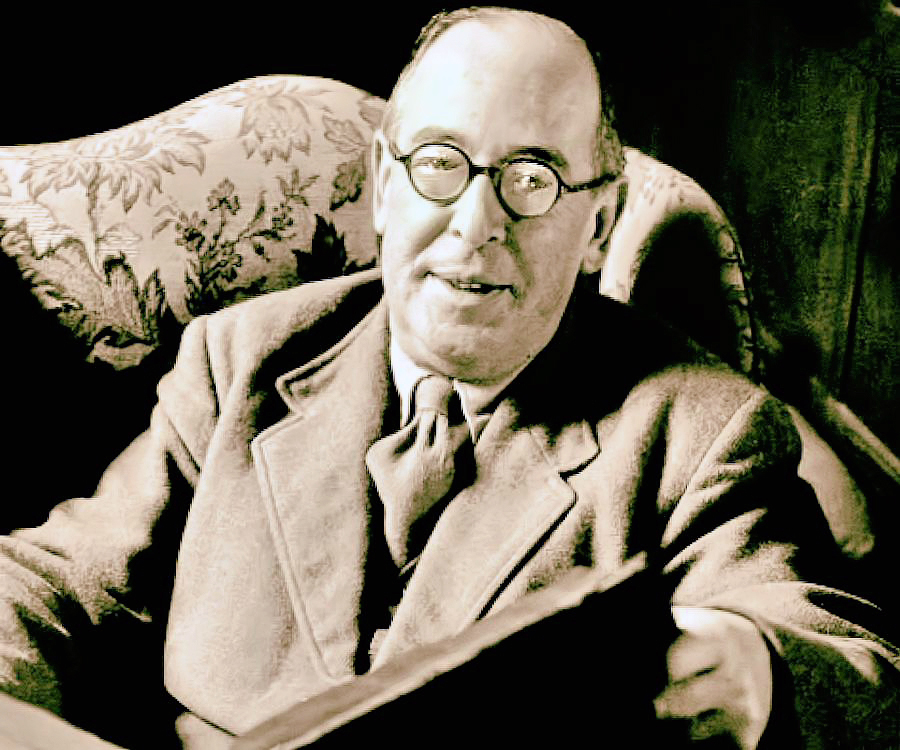
The Prescience of C. S. Lewis

c-s-lewis-3

by David Eaton

david_eatonI’m a latecomer to the writings of C. S. Lewis, but through the prompting of my eldest daughter, I finally took the plunge. Putting the finishing touches on my own book, I was looking for several religious-based literary references regarding the perils of postmodernism that might support some of my contentions regarding music, aesthetics, radical egalitarianism, multiculturalism, and the pervasive influence of the celebrity-industrial-complex.

Lewis’ work, especially, The Screwtape Letters (1942) and its sequel, Screwtape Proposes a Toast (1959), provide a trove of insight in the examination of the whys and wherefores of our “fallen” condition in the context of “right and wrong as a clue to the meaning of the universe.”

Lewis admitted that writing The Screwtape Letters was simultaneously the easiest, but least enjoyable work of his career. He apparently went into deep depression after writing it. Given the brilliant exegesis of how the “Lowerarchy” of Satan effectively infects the human soul, it’s no wonder why. The Cold War was the backdrop of the sequel and the narrative of how leftist, neo-Marxist thought subverted academia and the intellectual class in the West underscores Lewis’ work here. The sequel is more ideologically-charged than the original and the perspicacious insights are like a punch in the gut that leaves you breathless — and somewhat forlorn.

The Screwtape Letters are a series of 31 letters written by a senior demon, Screwtape, to his nephew, Wormwood. The nephew is a younger and less experienced demon, tasked with guiding a man (called “the patient”) toward “Our Father Below” (Satan) and away from “the Enemy” (God.) As Wormwood’s mentor, Screwtape explains many tricks-of-the-trade to his young charge in the process of inculcating him with methods of “the Lowerarchy” (Hell).

In the preface to The Screwtape Letters, Lewis states there are “two equal and opposite errors into which our race can fall” when we contemplate Satan. One is to deny Satan’s existence, the other is “to feel an excessive and unhealthy interest” in him. The first error is Satan’s greatest ploy — if he doesn’t really exist, why fret about him? The second error is that we too easily create common bases with the dark side by our “unhealthy interest” in him.

Continue Reading→

Rationality and Unification

Unification copy

By Keisuke Noda

Keisuke_NodaThe idea of “Unification” is central to the Unification Movement. The current reality of the movement is that there is no clear path toward this ideal. This lack of a path, be it conceptual or real, is critical to a movement that carries the banner of “unification” both in doctrine and title.

This issue can be approached from various angles. I examine two types of “rationality,” instrumental and dialogical, and how they are tied to two different understandings of and approaches to “unification.” By highlighting the benefits of dialogical rationality and the type of unification associated with it, I call for further discussion of the idea of unification. This article makes a reference to Hans-Georg Gadamer’s “Philosophical Hermeneutics.”

Why Rationality?

“Rationality” is a key issue in philosophy. Why do we need to care about “rationality” in philosophy and otherwise? Reasoning supports the presentation of a case, justification of a claim, or the establishment of an argument. The question then is what type of reasoning is used, consciously or unconsciously. Whatever type of rationality is used guides the discourse at a most fundamental level, and is critical to understand what kind of reasoning dominates one’s process of thinking. When one solves math problems, for example, he or she may use calculative rationality; in making moral judgments, one may use “prudence,” which requires experience and a sense of balance.

Instrumental Rationality

What is the primary or even dominant rationality today? Martin Heidegger, Jürgen Habermas, and other thinkers identified it as “instrumental rationality.” They argue that instrumental rationality has been dominating discourse since modernity without our even being aware of it; that is, we use reason as an instrument to realize pre-set goals and purposes in the most efficient manner.

The instrumental use of reason is common in the technological era, which seeks efficiency and control. Its exclusive focus is gaining what you want in the most efficient and cost-effective way. This type of reasoning is efficient and effective in handling material. Modern technological developments and production were so successful, they argue, that we consciously or unconsciously adopted this type of reasoning in all spheres of life.

Continue Reading→

Poetry: Encountering Philosophy and Life

Top Photo

By Susan Herrman

Susan HermannThese poems are dedicated to our True Parents of Heaven, Earth and Humankind, and reflect my pondering the lives of the philosophers I encountered in my studies at Barrytown College of UTS, especially from Dr. Keisuke Noda’s “Meaning of Life” class.

“To Season the Season of Change” was a long time contemplated — then sprung to life because a white blossom fell before me.  “To Mr. Camus, with love…” I wrote as I tried to take a positive view of the value of absurdity that Albert Camus posed. “Allegory of the Cubicle” was written as a modern-day twist to Plato’s “Allegory of the Cave” as it relates to my real-time life at my cubicle. “My Life” was written after contemplating my life, my encounter with the True Parents, and Moritz Schlick’s essay, “On the Meaning of Life.”  “Meaning” was written as part of the Senior Seminar class when I wrote poetry for the final class project.

To Season the Season of Change

The white petal falls from above

Like the snowflake a season ago

Like the leaf of autumn they dance and blow.

And yes, as the season of summer descends

With its radiant and intense beams of warmth and light

Shedding light to those below

How we must reverse our days and seasons

To come to our own true love’s season

Of radiant joy

Radiant light

Radiant love

So we must reverse our course to find our own unique season of life

Let me change my season now…

Continue Reading→

Remembering Father: A Poetic Tribute

71s2M-4lFHL

By Lloyd Howell

LloydTo “remember Father” is to remember what it is to love, to remember how to give unconditionally, to remember how to laugh when weary and burdened and how to press on in the face of enormous obstacles. The writing of this book was an attempt to come to terms not only with the departure/loss of True Father’s day-to-day earthly presence but also to grasp the impact and significance his life had on mine and the greater Unificationist community. The reflections were various and often moved me to tears. I include four poems for the reader’s interest.

The following poem began with a random thought of how pure the snow must’ve been in the remote countryside of Rev. Moon’s boyhood (north) Korea. I could easily imagine the forceful winds driving it across the land and next I realized that an invisible wind was also blowing into the life of the young Sun Myung Moon. And I understood how he opened his heart and let it take him along and thus, as I too opened my poetic sails letting this concept carry me along, the poem then became something parallel with Father’s life.

The Wind in Your Sails

Father, I can see you as a young boy –
pure as the wind-driven snow of northern Korea,
even then there was an invisible force gathering behind you
and to it you dared to open your sails
thereafter finding yourself doing strange things:
inviting beggars home for dinner,
sharing the melons of your uncle’s field
with the village boys –
even then seeds of concern for others
were taking root deep in your soul –
single-minded, nothing could stop you –
certainly not the fear of punishment.

Continue Reading→

The Internet as Intentional Communities

website-hosting-1024x780

By Andrew Stewart

I.

AndrewStewartAn anecdote often shared among Unificationists about the spirit world is that it is composed of places where like-minded people congregate together. The same largely applies to the Internet, for the most part composed of entirely intentional communities. Every decision to go to a website is mostly intentional, so where you go is very much an expression of personality.

Consider the news websites people go to, the videos they share, the comments we leave. These are all expressions of our unique online personalities. Overall, they generally reflect what we may really think, but doubly so if it’s possible to have a mask on to let no one know who we are.

This is not an assault on anonymity, but consider how anonymity removes the fear of backlash. It usually lets people find out exactly what they think when the pressures of society to conform or behave are removed. What is left is raw personality, which can be very scary, and yet very comforting. A person who behaves exactly the same way knows that they own their own behavior, and for others it lets them know what others have pushed on them. Your spirit is also likely on the same wavelengths as your online behavior, because in the spirit world there is no gap between what you think and what is created around you.

II.

Think of something which makes people very mad, and go to the comment section of any regular news story that deals specifically with that very thing. There’s no guarantee that comments will be intelligent, but people will be posting what they think or feel. Even without anonymous posting, people are probably very quick to judge that specific issue harshly, and the section escalates into an argument. Although it may be a very toxic environment, it means they are being exposed to different ways of thinking, and it is easy to disassociate that the words belong to a living breathing person with hopes and dreams.

On the other hand, it’s very easy to tell when you are in an echo chamber. Everyone agrees with what has been posted, with the things you say. There are no voices of dissent. Echo chambers are much more dangerous to be a part of, because there is no dialogue.

Continue Reading→

Website Built with WordPress.com.

Up ↑