“Noah”: The Limits of Patriarchal Religion

28NOAH-blog427

By Andrew Wilson

WilsonThe new film “Noah,” starring Russell Crowe, has received mixed reviews. It partakes of the dark dystopian and apocalyptic spirit of so many contemporary Hollywood movies that is a turn-off to people seeking more wholesome and family-oriented fare. But if you sit through it, you will at least be rewarded with an encounter with some serious theology.

This is no simple-minded Bible movie. Director Darren Aronofsky said it is “the least biblical movie ever made.” He takes considerable liberties, including not giving Noah’s three sons each a wife to accompany them in the ark and portraying the Nephilim (Gen. 6:4) as Transformer-like rock monsters that defend Noah and help him build the ark. He makes the villain, Tubal-Cain, a stowaway in the ark and gives him some fine lines where he declares his resentment against God for abandoning humanity to destruction. Many Christian fundamentalists will take offense.

But adherents of the Divine Principle can find much to cheer about.

Continue Reading→

Can an Organization Stay Great without Its Visionary Leader?

steve_jobs_by_subhraj1t-d4l06mu -2_edited-1

By Mark P. Barry

Mark Barry Photo 2Last June, in “Lessons from Apple under Steve Jobs,” I suggested what Unificationists could learn from the experience of Apple under its founder. Nine months later, and two and a half years since Jobs’ passing, Apple is facing more skeptics than at any point since its turnaround 16 years ago.

Now, many are asking whether Apple without Jobs can continue to make transformational products that will delight users. The reason is nothing Apple has introduced since fall 2011 — when Jobs died — has been innovative or disruptive, but simply modest improvements of existing products.

Has Apple lost the essence of what made it great? Is it struggling to find new vision and identity after Jobs? And what can we learn from its current experience as Unificationists?

In the business world, two and a half years is generally not sufficient time to make any judgments — except in the world of high technology, where new products are constantly introduced, superseded, disposed, and market share frequently shifts.

Continue Reading→

Selfishness: The Greatest Challenge of the 21st Century

toot_c08b536e0c

by Bruce Sutchar

bruce_sutcharRev. Sun Myung Moon has always maintained that truly the greatest revolution in the world is the one from selfishness to unselfishness.  Likewise, nearly every spiritual teaching has always dealt with the idea of transcending the self and being one with the universe.  From Buddha, Lao Tse and Jesus, to Eckhart Tolle, Byron Katie, and many of today’s modern writers, all have focused on this critical point. In modern psychology, Sigmund Freud and Carl Jung also wrote of the importance of the self-centered ego in explaining our everyday actions.

Jesus taught it is better to give than to receive, but for most of us, this is little more than a nice phrase to quote—one that everyone agrees with, but few try to observe.  Some spiritual disciplines even equate our condition to having a raisin heart—one all scrunched up but with minimum capacity to give and receive love.  After we marry and start having children, it finally becomes opens up, when we actually experience more joy watching our children open their Christmas presents than our own.

Each of us has only one pair of physical eyes.  These eyes see the world from our own point of view.  The Divine Principle teaches that one of the four fallen natures is seeing only from our own point of view.

Continue Reading→

Using Art and Culture to Effect Change

only_through_beauty_david_eaton_01

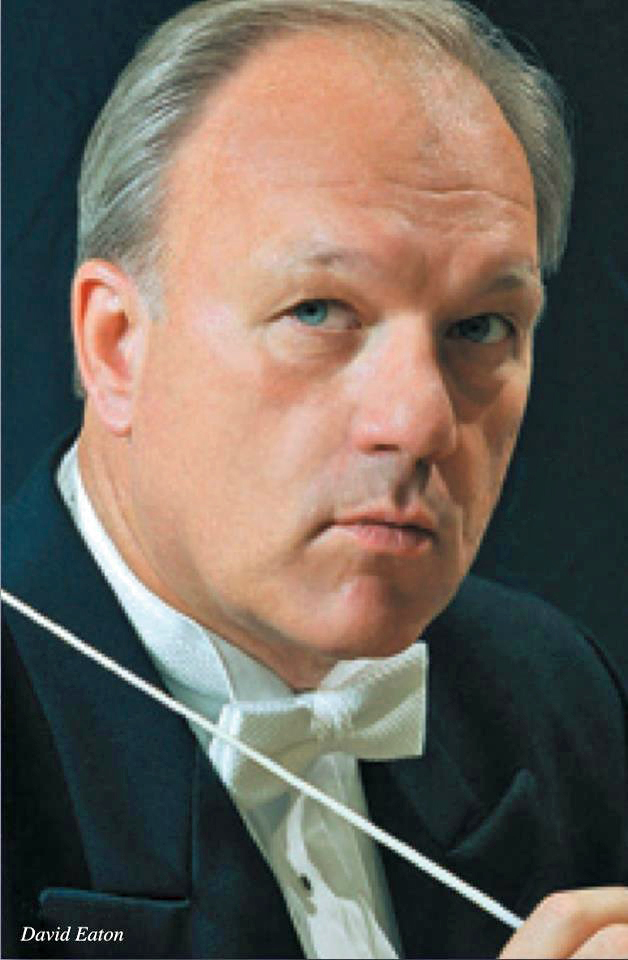
David D’Or and David Eaton share a bow with the Evergreen Symphony Orchestra at the National Concert Hall in Taipei, Taiwan.

By David Eaton, Lecturer in Music and Culture, Barrytown College of UTS

“Only through Beauty’s morning-gate, dost thou penetrate the land of knowledge.”

 – Friedrich Schiller

david_eatonAs an advocate of art and culture, it has always been my view that the beauty aspect of the truth-beauty-goodness paradigm needs to be more fully understood and supported in any attempt to realize a better world. I’ve had many opportunities to use my talent for providential purposes, both within our community and with artists who are not members of our church, and at the heart of my creative endeavors has been my motivation to use my God-given abilities as a musician to promote the ideal of godliness and to cultivate a culture of peace.

Friedrich Schiller (1759-1805), who as a young man possessed a passionate desire to study theology and become a minister, believed that one’s soul state (Seelenzustand) was edified through experiencing beauty. For Schiller, “aesthetic education” could be the basis for a moral society and help establish the freedom that political revolution conspicuously failed to achieve.

I recently returned from conducting two concerts with Israeli vocalist, David D’Or and the Evergreen Symphony Orchestra at the National Concert Hall in Taipei, Taiwan. The concert was produced by the Tzu Chi Foundation, a Buddhist organization founded in 1966 that boasts three million members and scores of chapters throughout the world. Tzu Chi (which means “relief and compassion”) is based in Taipei and has done an amazing amount of humanitarian work, including providing assistance in the aftermath of hurricanes Katrina and Sandy, the Japan tsunami and relief efforts in North Korea. The American chapter of the Tzu Chi Foundation received a national award for being the most outstanding volunteer organization in the U.S. in 2012, due primarily to their relief efforts after Hurricane Sandy.

In addition to running several schools, hospitals and free clinics in Taiwan, Tzu Chi has its own cable television network that broadcasts the news of their global relief efforts as well as programming original content that promotes 24/7 the ideals and vision of their organization. They clearly understand the importance of using mass media and art to get their message to a larger segment of the public

While in Taiwan, I was able to meet the Tzu Chi founder, Master Cheng Yen (a Buddhist nun, now 76) and several of the organization’s key leaders. They explained that music and art are important aspects of their outreach. Their belief in the spiritual power of music plays heavily into their philosophy — and their funding efforts. For the two concerts presented last month I arranged one of the Tzu Chi songs, Family, especially for this occasion.

Continue Reading→

A Unificationist View of Ayn Rand

ayn_rand_1_fs

By Wayne Hankins

HankinsAyn Rand is a writer and philosopher who understood that “something” is terribly wrong with humankind and had the courage to seek the answers to it. Like others before her who tackled this subject, her writings are controversial. For years, I enjoyed her beautiful use of language in expressing her beliefs and telling her stories. She was a powerful and appealing writer. Yet, I now find some of her beliefs very troubling and need to be seriously reevaluated. As a Unificationist, I’ve had to fairly examine her writings, then ask: was her understanding of humankind’s nature correct and is her solution going to solve our dilemma of constant conflict and create a world of goodness and peace?

Ayn Rand, born Alisa Rosenbaum in Russia, was a writer of great passion, whose ideas were born out of the chaos of the Bolshevik Revolution. As a 12-year-old, she saw her nation crumble before her eyes and be recreated under Lenin’s view of how life should be lived. That was Communism. Her father’s business was seized because private property was declared illegal. The state acquired power over the rights of the individual in determining what talents would best serve society. Expressing individualism and self-determination became dangerous, if not illegal, ways to live. Cooperation and collectivism became Russia’s national goals and it was expected everyone would work for the public good, putting the state before self.

To understand Rand’s views of life, one must comprehend the extreme times she lived in. Her philosophy came to be best expressed in The Fountainhead and Atlas Shrugged, her two major works. They are controversial, well read, and now making a comeback, particularly in conservative political ideology.

Her philosophy was expressed by the two main character’s speeches at the climatic moments in each novel. In The Fountainhead, Howard Roark is an architect who, at his trial, defends blowing up the building he designed after his design was altered by a less talented colleague. In Atlas Shrugged, John Galt speaks to a crumbling America from his rundown apartment along the New York waterfront, explaining why the country is in the condition it is, as well as why he persuaded the greatest minds and talents in the nation to abandon a corrupt and dying country in order to save it.

Rand’s stated beliefs are: There is no God. There is only the mind of man and that is supreme. The mind is not a collective or function of the state but an individual attribute. It is our highest value and greatest asset. The most important viewpoint is the individual viewpoint. Only our mind and its proper use can insure our survival. This is the unique creative power of man that no other life form on earth has. A man must think and work alone; the creative process is guided by an individual thought, not a collective brain.

Continue Reading→

A Challenge for the Divine Principle in the Postmodern Era

Facebook Connectivity 2010

A 2010 map displaying the connectivity of Facebook’s 1.1 billion global users (click to enlarge).

Keisuke Noda, Professor of Philosophy, Barrytown College of UTS

Keisuke_NodaCan the Divine Principle be attractive to others in the 21st century, or at least for the next 10 or 20 years as our Church’s 2020 goals envision? In Unificationist communities, that question has sparked the development of practical or technological methods of communication/presentation. People have created and re-crafted charts, slides, and PowerPoint presentations and will continue to do so.

The development of these materials is certainly a worthy endeavor, but another way to pose this question is to ask how the Principle answers the questions of the era or the “spirit of the time” (Zeitgeist). Although believers claim that religious teachings reflect truth that is eternal, ideas affirm their validity by responding to the questions of the era. Leading ideas must in fact “lead” the time by demonstrating their validity to people who are desperately trying to find their way. Thus, Unificationists must understand the intellectual climate that we live in if the Principle is to become a leading idea.

During the late 20th century, the United States and other developed countries underwent a major shift rooted in the comprehensive critique of modernity. It is imperative for any intellectual to understand this shift and the intellectual horizons that frame the climate today, known as postmodernism.

What Is Postmodernism?

Postmodernism is a concept that describes a general intellectual stance or tendency towards modernity. As the term post (“after”) modernism indicates, postmodernism is a departure from modernism based on a critical assessment of modernity. It is, in essence, skepticism towards basic assumptions of modernity. Postmodernism is a broad term which encompasses all social cultural spheres including architecture, art, literature, literary criticism, business, management, politics, economics, philosophy, religion, and others. It is a term that can be seen as describing the spirit of the age (Zeitgeist). Postmodernism is distinguished from being just a “trend” because of its lasting and penetrating effects on all spheres of life.

Modernity, as postmodernists see it, is a social, cultural, political wave that lasted for centuries, from the Enlightenment to the late 20th century. Despite the diverse views and ideas encompassed within modernity, modernity was based on certain assumptions that postmodernists later questioned.  Postmodern thinkers have taken a variety of approaches, but the following are a few basic criticisms of modernity by Jean-François Lyotard, a French philosopher.

Continue Reading

The Cherished Hope of Korean Unity

Two Korean Flags

Our cherished hopes are for unity
Even our dreams are for unity
We’d give our lives for unity
Come along unity.
Unity saving the people
Unity saving all nations
Come here quickly unity
Come along unity.

By Michael P. Downey

DowneyThe “Song of Unity” is a well-known and loved folk song that expresses the ardent desire of the Korean people to see their peninsula re-united into one nation. Or is that wishful thinking?

As an American living in South Korea continuously for over 13 years, it has been more than a passing interest to me what the Koreans really feel about unification. Over the years I have talked to neighbors, friends and students about this issue. More often than not, when talking to foreigners, Koreans try to figure out what you want to hear and give you some version of that. To get around this, I have developed a strategy of asking simple, direct questions.

Of course, the standard reply is that we are all brothers and at all cost we have to be united as one nation. When I probe deeper, many times quite different ideas come out. Recently I did an informal and unscientific survey using three direct questions. I asked 100 ESL students ranging from middle school students to middle-aged housewives, the following questions.

1.     Is the reunification of Korea important to you?

Almost everybody immediately said “yes.” A couple of middle school wise guys said “no, who cares.” 98% yes, 2% no.  As a follow up, I asked, “Which is more important to you, unification or getting into a top university (or, your son or daughter getting into a top university)?”  This time, 30% said unification and 62% said a top university; the rest couldn’t answer.

2.     Do you think you will see North and South Korea united in your lifetime?

 44% said “no,” 31% said “yes” and the rest said they didn’t know. For a follow up, I asked, “How do you think unification will happen?” Most replied by talking about a gradual process of easing of tensions, increasing culture and commercial exchanges and fielding joint sports teams at international events being the preferred way. Only a handful of people talked about regime change in the North.

Continue Reading

Morals and Messages from Harry Potter: Lesson Learned

sketch__harry_potter_by_woshibbdou

by Sammi Vanderstok

Sammi VanderstokWhen I was in college, I took an English course titled “Harry Potter and Global Society” that opened my eyes to the power of literature. I had taken previous English courses and read great works of many authors such as Hemingway, Steinbeck, Dickens, Shakespeare, and Joyce.  But these famous pieces of literature were placed on an ivory pedestal.  Although I knew books could impact culture, I never figured that literature itself could shape my culture or the modern world I lived in.

The fact that we studied such a generationally relevant book that was not only a part of my world and everyday life but also of every other student in that class, made the overarching lessons of literature and its power hit home.

The Harry Potter books are the number one selling book series ever published. The Harry Potter movies are the highest grossing film series of all time. As of last November, total Harry Potter book and movie sales topped $24 billion. Harry Potter creator J.K. Rowling is the first author ever to become a billionaire.

I believe her use of myth and folklore is the underlying reason why her Harry Potter series is so wildly successful. Rowling touched a need within the audience for guidance and care and provided it by creating a fantastical world that intersected and interacted with our own.

Myths and folklore are figurative stories about how people within different cultures deal with universal life issues. Every culture possesses them, and they profoundly influence how societies see the world and understand themselves.

Joseph Campbell, a scholar of mythology and specifically of the “hero-quest,” argues that “myths are [the] clues to the spiritual potentialities of the human life. [They show] what we’re capable of knowing and experiencing within.” He says myths “have to do with the themes that have supported human life, built civilizations, and informed religions over a millennia, [they] have to do with deep inner problems, inner mysteries, inner thresholds of passage.”

Rowling uses the language of myth and folklore rather than history to communicate her message. In doing so, she is indicating that moral messages gained through folklore impact people at a deeper level and are more important than the actual history of a society.

Continue Reading

Before the Sweet Chariot Swings Low, Create Happiness

Print

(This contribution appears courtesy of the Faith Fusion blog)

by Larry Moffitt

Larry_Moffitt_edited-1

Going to room temp

No matter who you are, how rich and good looking, how well you clean up after working in the garden and how much you like those danged long walks on the beach – someday you’re going to wake up dead.

You will no longer be a physical person, and will from this time forward, be a spiritual person. From the perspective of the family you left behind on earth, you will be kaput, you will have died, croaked, “shuffle[d] off this mortal coil” (in the words of Bill the Bard).

“Gone to room temp,” in the words of Larry Moffitt.

Religions differ on what happens next, but pretty much all of them insist that life on the earth is not all there is. Whatever we call it, the sweet chariot will swing low, grab you and take you… somewhere.

Furthermore, nearly all religions understand that your destination depends on how much effort you put into getting things right. Jesus said the greatest commandment is that you love other people, so that’s a clue. Jesus also seems to say at various times, that all you get is one shot at life. My Buddhist friends say you not only get unlimited “do-overs,” but that you actually have to repeat it until you get it right.

I’m not sure which one I like best for creating happiness. I’m looking for a religion that gives you refunds on broken hearts.

Think of it as a journey

Life is one long road trip buddy movie, starring us. We travel around and learn from each other. We have adventures. Everyone we meet is a test to see if we can love them. Especially those of other races and cultures – that’s where it gets real. They don’t make race erasers; you have to find it in your heart to make them family.

This would all be a lot easier if we could get a more clear connection to the other side. I’m not complaining (okay, I’m complaining), but surely the relationship between the physical and spiritual worlds was not originally meant to be this foggy. Personally, I blame the talking snake.

Continue Reading

Website Built with WordPress.com.

Up ↑