Patient Love Is More Important Than Doctrine

By John Redmond

When I was a shiny new member of our Unification Family, I was completely entranced with the Divine Principle.

I had spent the previous several years seeking an intellectual framework that could bridge the gap between Catholicism and the scientific method.  I flirted with Marxism until I got to know some of the “leadership” of the campus Marxists and was not impressed with their sense of self-importance.

However, I didn’t have any constructive way to respond to the arguments they advanced — until I encountered the Principle.

The second thing that impressed me about this group of fellow seekers, who believed as I did, was we could be a model of the things we were talking about, and together, we could heal God’s broken heart, and significantly improve the world.  Those people, currently both in and out of the various parts of the movement, remain my best and most admired friends.

I still believe that living our ideal is the primary providential responsibility of our rank-and-file members.

I fired out of three weeks of workshops with a conviction that anyone who could hear this new truth would instantly be overwhelmed and brought to the realization that we could indeed, as one elder assured me, “reach perfection in three years if we were sincere.”

I started out as a good fundraiser but frequently would get drawn into long involved discussions with interesting individuals, Christians, communists, rabbis, and drunks, frequently resulting in me missing my pickup time and my captain having to send team members into stops on my run and reminding me about what I was supposed to be focused on.

At evening programs, and in workshops, I was the guy locked in detailed arguments with guests about how “Jesus didn’t come to die” or why dialectical materialism was a limited point of view.

As Jonah Goldberg recently wrote, I was a captive of reification:

 “…’the act of treating something abstract, such as an idea, relation, system, quality, etc., as if it were a concrete object.’ This confusion of words for things is a great peeve of mine. In logic, there’s a reification fallacy, in which we confuse the model for the reality: The map isn’t the territory.”

As I came to understand, no matter how clever the argument, how powerfully and clearly stated, no one could “hear” the Principle until they were understood and accepted it as a person.  A few precepts come to mind:  “Actions speak louder than words,” “I can’t hear what you are saying because of what you are doing,” and “Always be witnessing, and sometimes use words.”

A second round of this understanding was deepened by my children.  I came to understand that “free will” is not a political concept, but the primary spiritual gift from God to all His/Her children — including mine.  Our family is now on the 400-year plan to create unity.  It may take less time but it won’t be because I explained about the Principle one more time to anyone.

As a family, we have decided that love is more important than doctrine, and that a successful defense of God is through a lifelong example rather than clever lectures.

This same lesson is now coming to our Unification Family.  The Divine Principle explains that objects grow vertically through three stages of growth and make horizontal progress through Origin, Division, Union action.

Continue reading “Patient Love Is More Important Than Doctrine”

We Had a Great Run. And We Thank Our Readers

The Applied Unificationism Blog went live on May 1, 2013, sponsored by Unification Theological Seminary (UTS). Over more than ten years, the AU Blog has explored the application of Unificationism to the wider world.

Since that time, the AU Blog has posted 400 articles and over 4,500 comments. We have received over 472,000 page views from 228,000 unique visitors in 215 countries and territories around the world. Since 2015, 80 of our articles have been re-posted on a sister site, the Family Federation for World Peace and Unification international headquarters website in Korea, which has greatly increased our visibility.

We deeply appreciate our loyal readers, whether you followed Applied Unificationism since the beginning a decade ago or only discovered us this year.

Unification Theological Seminary has decided to conclude its sponsorship of the Applied Unificationism Blog at the end of its fiscal year on June 30. On July 1, UTS will adopt a new institutional name. In addition, UTS will be initiating some new projects that may include a new journal and a conference series.

The Applied Unificationism Blog will remain live as a site through the end of 2023 and at least into early 2024. Comments submitted to any article after June 30 may continue to be posted after moderation. However, the AU Blog will no longer be accepting new article submissions for publication after that date. This could change if a new sponsor is found.

We invite you to express your thoughts and reflections about the Applied Unificationism Blog in the comments section below.

In closing, we express our appreciation to UTS for its generous support of Applied Unificationism over the years.

Sincerely and with gratitude,

The editorial committee of Applied Unificationism:

Mark P. Barry, Managing Editor
Michael Mickler
Keisuke Noda
Andrew Wilson
Kathy Winings


Photo at top: By Melissa Cassar (courtesy Unsplash)

What Can Be Done About Violence in Society?

By Alice Fleisher

There have been 23 school shootings this year that resulted in injuries or deaths, according to a recent Education Week analysis. There have been 167 such shootings since 2018.

It’s very alarming that such incidents are becoming increasingly prevalent. How are we to understand violence in society and, more importantly, to correct this disturbing trend?

Certainly, an approach must be immediate and include responses by those tasked with public safety — law enforcement, legislators, nonprofit civic action groups, and those in the judicial branch.

But tackling social problems through those venues will not result in the longer term and more comprehensive solutions we need. Such a strategy could be likened to EMTs, paramedics, and emergency room staff treating superficial wounds while ignoring underlying organ or other bodily system damage.

Surely efforts must be made to identify underlying factors that contribute to this troubling social trend weakening our societies. Those factors include, but are not limited to, the perpetration of violence upon the innocent and vulnerable, the venting of frustration and anger through violence, and the inability of people to curb their destructive impulses. Even more deadly are the bullying and dominance of individuals, groups, and larger levels of society based on a perceived division between them and us that is rampant within society.

This article has been informed by the works of scholars I encountered as part of my current graduate degree pursuit at UTS. I present my own views at the conclusion.

One scholar, Wolfhart Pannenberg (1996), notes that currently the religious and spiritual dimension of human beings has been marginalized in the public sphere. He traces this to the thinking behind and actions of the French Revolution, which, among other revolutionary initiatives, included the beheading of those in the monarchy and aristocracy who could not flee the wrath poured upon them, pitted reason against faith, and scapegoated religious institutions (generally the Catholic Church) as sources of repression and injustice, enacting a strict separation of church and state.

In this scenario, the church and religion were seen as the source of problems, not solutions. The separation of church and state in the United States is not as contentious as in many European nations, since the U.S. doesn’t have the antagonistic backstory found in Europe. In the U.S., while religion and government are separated by the Constitution, religion is still considered a potential source of social help and beneficial public service.

While the U.S. is at its core a religious (essentially a Christian) nation (see Himmelfarb, 2004), religion’s presence in the public sphere is noticeably missing. Pannenberg claims that in societies where religion has been reduced in prominence, a profound and debilitating loss of meaning can be found, which he ties to the presence of personal and social violence.

In the last two or three decades, however, it has become evident that secularization (or, as some prefer, progressive modernization) faces severe problems. The thoroughly secularized social order gives rise to feelings of meaninglessness: there is a vacuum in the public square of political and cultural life, and this invites violent outbreaks of dissatisfaction.

Continue reading “What Can Be Done About Violence in Society?”

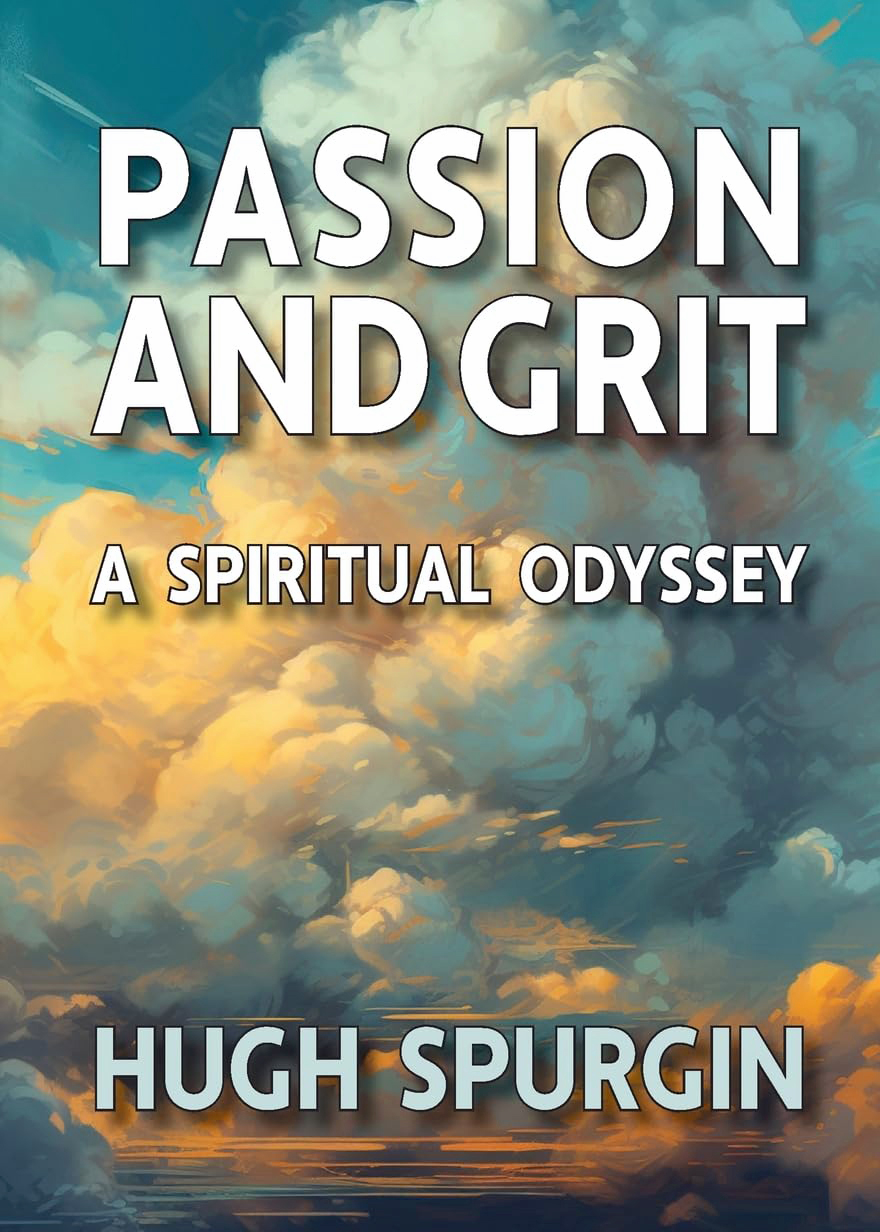
Passion and Grit: A Spiritual Odyssey

By Gordon L. Anderson

The autobiography of Hugh D. Spurgin, Passion and Grit: A Spiritual Odyssey, is the story of an early follower of the Rev. Sun Myung Moon in America. It reveals the impact of the power of a higher truth on a conscientious and idealistic person who seeks to live the most meaningful life possible.

In the 1960s and 1970s, material prosperity in the United States was high, but traditional religious doctrines had lost their power to explain the nature of reality and human happiness in a scientific world. The baby boomers were coming of age in a world of confused and conflicting values. Some accepted the establishment, others rebelled against it, but still others, like Hugh, sought constructive ways to move forward, discerning what was of value in our traditions, and what needed to change.

Rev. Moon’s teachings put Hugh on a life journey, not only a spiritual path, but as a member of a new community in which he raised his family and became a leader of a worldwide movement that has now reached millions of people. This book is both a chronicle of Hugh’s life and the development of the Unification Church, now the Family Federation for World Peace and Unification (FFWPU), and how Americans worked to bring Rev. Moon’s teachings of a higher culture and more peaceful world.

A Seeker of Truth

Hugh was born in Roswell, New Mexico, in 1945 and grew up in Terre Haute, Indiana. The family attended a Presbyterian Church and his dad was a chiropractor. Hugh liked sports and outdoor activities. After graduating from high school in 1963, he went to Indiana State University and excelled in social sciences, and went on for a master’s degree in public administration at the Maxwell Graduate School in Syracuse, New York. This landed Hugh an internship, and later a full-time administration job with the U.S. Navy in Washington, DC. He had a top-secret clearance and secure employment in the federal government.

Hugh was not content to simply pursue this career. He was always seeking answers to historical and religious problems and ways to make the world better. While studying the Baha’i faith, he was invited to hear several lectures based on Rev. Moon’s teachings at the Unified Family center in a Victorian mansion on Upshur Street. Hugh heard clear answers to some of his questions about evil, God, Jesus, and salvation. It was an eye-opening, comprehensive historical perspective on human history and civilization. It also presented principles about peacefully advancing human society. He decided to join this small group and help transform the world.

When Rev. and Mrs. Moon came to Washington, DC in 1969, they moved into Upshur House for 40 days, spending quality and personal time with Hugh and the other members who lived or gathered there. Hugh was amazed by Moon’s interracial and intercultural approach to marriage, breaking down traditional religious and ethnic boundaries with the goal of creating one world family under God.

Continue reading “Passion and Grit: A Spiritual Odyssey”

The Next Great Awakening Through the Convergence of Science and Religion

By John Redmond

Students of human history are very aware of patterns and cycles that define our intergenerational experiences. The hope is that by discovering the systemic causes of failures in the past we can prevent or reduce the consequences of failures in the current age.

Karl Marx hypothesized that the important cycles of history were the ones defined by the conflict dialectic and that the arc of history is bending toward worldwide socialism, where material wealth is uniformly distributed.

In the Divine Principle, history moves by the Principles of Restoration in cycles, but the length of the cycles is dependent on the providential response of the central figure and chosen people of an age.  The arc of providential history creates a society spiraling upward in increasing beauty, truth and goodness, in addition to the abundance of material prosperity.

The last 400 years of human history have been a golden age of prosperity by any historical measure.  There is widespread anxiety that the scientific forces unleashed by the Enlightenment will cause humanity to end in disaster as previous golden ages have. Elon Musk said he’s determined to create another populated planet in case humans render earth uninhabitable.  The Dark Ages, which followed the Roman Empire and birth of Jesus, led to 1,000 years of dystopia.

Recent political polarization, exacerbated by Internet information algorithms, have created toxic levels of political discourse in America.  This was predicted by Marx, who thought that escalating conflict created conditions for a revolution that would destroy an old structure so that it could be replaced.

The Divine Principle also predicts that conflict can clarify roles of a subject and object, but that in cases where the opponents can be reconciled to a higher truth, a system of higher complexity, unity and effectiveness can be created.

A good example of this success is the creation of the United States.  The mounting conflict of the American colonies with England from the 1770s could have resulted in some representation in England, lower taxes, or a humiliating loss.  However, the Founding Fathers and Mothers of America were moved to create something new and higher than a simple political win, and indeed, America has been the indispensable nation for the last 100 years.

It seems that human history may be at a turning point from both the materialist and spiritual points of view.  What are the forces that affect that turning point and how can we influence the course of history to create an upward spiral rather than a 1,000 year decline?

History has some precedents for how society has been shaped by spiritual and religious movements.

This response from ChatGPT, an artificial intelligence chatbot, was to the question: “What were the Great Awakenings and what were the consequences for America?”

“The First Great Awakening took place in the 1730s and 1740s. It was sparked by preachers such as Jonathan Edwards and George Whitefield, who emphasized the importance of personal conversion and a direct relationship with God. The movement had a profound impact on colonial society, as it challenged traditional religious authority and hierarchical structures. It led to the growth of new religious denominations, such as the Baptists and Methodists, and promoted ideas of equality and individualism.

Continue reading “The Next Great Awakening Through the Convergence of Science and Religion”

Website Built with WordPress.com.

Up ↑